
A crystal-clear aquarium is a thing of beauty—until you wake up one morning to find the water murky, hazy, or even milky white. Cloudiness in a fish tank that appears overnight can be alarming, especially if you’ve been diligent with maintenance. The good news is that most causes are manageable and often temporary. Understanding what triggers this sudden change is key to restoring clarity and ensuring a healthy environment for your aquatic life.
Cloudy water isn’t just an aesthetic issue—it can signal imbalances in your tank’s ecosystem that may stress or harm fish over time. Whether you’re dealing with bacterial blooms, excess nutrients, or mechanical filtration issues, identifying the root cause is essential. This guide breaks down the common reasons behind overnight cloudiness, offers actionable solutions, and provides long-term prevention strategies.
Common Causes of Overnight Cloudiness
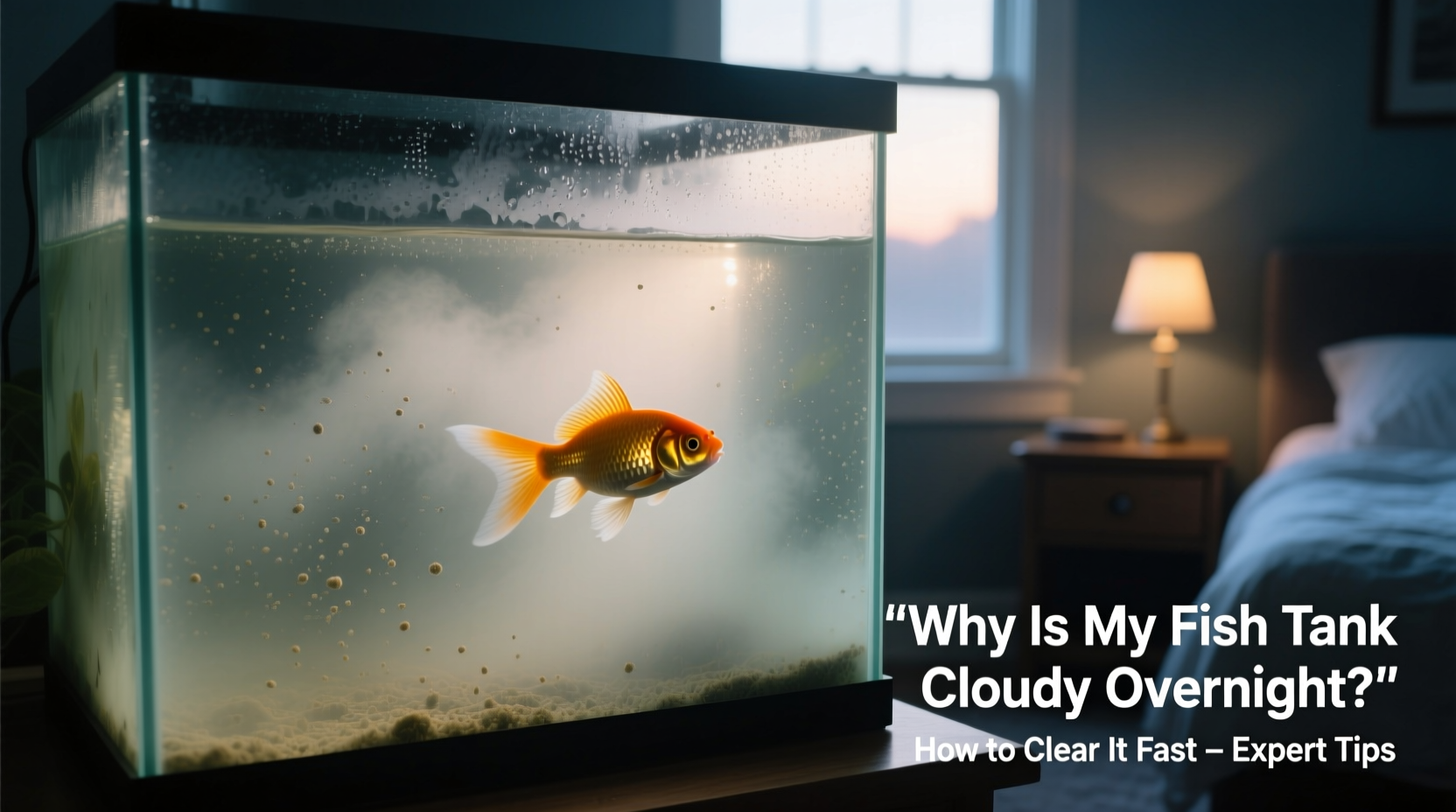
Cloudy water doesn’t appear without reason. While the visual effect might seem sudden, the underlying processes often begin hours before. The most frequent culprits include bacterial blooms, organic debris, substrate residue, and chemical imbalances.
- Bacterial bloom: A surge in heterotrophic bacteria during the nitrogen cycle, especially in new tanks, often turns water milky within hours.
- Decomposing waste: Uneaten food, dead plant matter, or fish waste releases ammonia and fine particles that cloud the water.
- Substrate disturbance: New gravel or sand stirred during setup or cleaning can release dust and fine particulates.
- Overfeeding: Excess food breaks down quickly, fueling bacterial growth and nutrient spikes.
- Poor filtration: Clogged or undersized filters fail to remove suspended particles effectively.
- Algae bloom: Though usually green, certain conditions can cause rapid microalgae growth that contributes to haziness.
Each of these factors affects water chemistry differently. For example, bacterial blooms typically occur when ammonia or nitrite levels rise, giving opportunistic microbes a food source. In contrast, mechanical cloudiness from substrate is physical rather than biological and clears faster once particles settle.
How to Clear Cloudy Water: Step-by-Step Guide
Restoring clarity requires both immediate action and ongoing monitoring. Follow this sequence based on the likely cause:
- Assess water parameters: Use a liquid test kit to check ammonia, nitrite, nitrate, pH, and phosphate. Elevated ammonia or nitrite suggests a bacterial bloom tied to cycling.
- Perform a partial water change: Replace 20–30% of the water with dechlorinated, temperature-matched water. This dilutes pollutants and removes suspended particles.
- Vacuum the substrate: Use a gravel vacuum during the water change to remove trapped debris and uneaten food.
- Clean or rinse filter media: Rinse mechanical media (sponge, floss) in old tank water—not tap water—to preserve beneficial bacteria.
- Reduce feeding: Cut back to every other day for a few days. Overfeeding is a leading trigger of post-feeding cloudiness.
- Add activated carbon (if needed): Place in the filter to absorb dissolved organics and yellowish tints, but only use temporarily (3–5 days).
- Ensure proper circulation: Check that water flow is adequate and not creating dead zones where debris accumulates.
Results should be visible within 24–72 hours. If cloudiness persists beyond that, further investigation into biological balance or equipment function is necessary.
Preventing Recurrence: Long-Term Maintenance Strategies
Clear water isn’t achieved through one-time fixes—it’s maintained through consistent habits. A stable aquarium resists sudden changes because its biological, chemical, and mechanical systems are in equilibrium.
Regular Maintenance Routine
| Task | Frequency | Purpose |
|---|---|---|
| Partial water change (20–30%) | Weekly | Dilute nitrates, remove organics |
| Gravel vacuuming | Weekly | Remove detritus and waste |
| Filter inspection/cleaning | Every 2–4 weeks | Maintain flow and efficiency |
| Test water parameters | Weekly | Monitor ammonia, nitrite, nitrate, pH |
| Check equipment function | Monthly | Ensure heater, pump, and air stones work |
This routine keeps nutrient buildup low and supports beneficial bacteria colonies. Skipping even one step can lead to gradual deterioration that culminates in sudden cloudiness.
Feeding Best Practices
Feed only what your fish consume in 2–3 minutes, once or twice daily. Remove any uneaten food after five minutes using a siphon or net. Overfeeding is the single most preventable cause of recurring cloudiness.
“Most aquarium problems start at the surface—with what we pour into the tank.” — Dr. Lena Patel, Aquatic Biologist
Case Study: Resolving a Persistent Bacterial Bloom
Mark, a beginner aquarist, set up a 20-gallon freshwater tank with tetras and live plants. Within two days, the water turned milky white. He panicked and performed a 50% water change, cleaned the filter, and added a water clarifier—all in one day. The next morning, the cloudiness returned.
After consulting a local fish store, he learned he had disrupted the developing nitrogen cycle. His ammonia was high (1.5 ppm), nitrites were rising, and beneficial bacteria hadn’t colonized yet. Following expert advice, Mark stopped all interventions except testing and light feeding. He waited 10 days, performing only small (15%) water changes when ammonia exceeded 1.0 ppm. By day 14, the water cleared naturally as nitrate appeared, confirming the cycle had completed.
The takeaway? Patience during cycling prevents counterproductive actions that prolong instability.
Tips for Specific Scenarios
Not all cloudiness is the same. Tailor your response based on timing and appearance.
- New tank syndrome: Milky white water within days of setup is likely a bacterial bloom. Avoid cleaning the filter or doing large water changes—let the cycle complete.
- Green cloudy water: Indicates a phytoplankton bloom, usually due to excessive light or high phosphate. Reduce lighting duration and test for phosphates.
- Gray or brown haze: Often caused by tannins (from driftwood) or fine particulates. Use activated carbon or let particles settle and vacuum.
- Cloudiness after medication: Some treatments kill bacteria rapidly, releasing cell debris. Increase aeration and perform a water change after treatment ends.
Frequently Asked Questions
Is cloudy water dangerous for fish?
It depends. Bacterial blooms in a cycled tank are generally harmless short-term, but high ammonia or poor oxygen levels during the bloom can stress fish. If fish gasp at the surface or act lethargic, perform a water change immediately and test parameters.
Can I use a water clarifier every time my tank gets cloudy?
Clarifiers (flocculants) clump fine particles so filters can catch them, offering quick cosmetic improvement. However, they don’t fix the root cause. Use them sparingly—only when mechanical removal isn’t enough—and always address underlying issues like overfeeding or poor filtration.
How long does it take for a bacterial bloom to clear on its own?
In a new tank, bacterial blooms typically peak around day 3–5 and resolve by day 7–10 as nitrate-producing bacteria establish. In established tanks, cloudiness from minor disturbances should clear within 24–48 hours with proper filtration.
Essential Checklist: Responding to Cloudy Water
Use this checklist to systematically address and prevent cloudy water:
- ✅ Test ammonia, nitrite, nitrate, and pH
- ✅ Perform a 20–30% water change with dechlorinated water
- ✅ Vacuum the substrate thoroughly
- ✅ Inspect and gently rinse filter media in tank water
- ✅ Reduce feeding for 2–3 days
- ✅ Ensure filter is running properly and not clogged
- ✅ Monitor for 24–48 hours before taking further action
- ✅ Resume regular maintenance schedule once clarity returns
Following this protocol ensures you’re not just treating symptoms but supporting long-term stability.
Conclusion: Clarity Starts with Consistency
A cloudy fish tank overnight doesn’t mean failure—it’s feedback. Your aquarium is communicating an imbalance, whether biological, chemical, or mechanical. With the right knowledge, most issues can be resolved within days. More importantly, they can be prevented with routine care, mindful feeding, and respect for the nitrogen cycle.
Don’t rush to extreme measures like replacing filter media or dumping chemicals. Instead, observe, test, and respond thoughtfully. Every tank goes through phases; what matters is how you manage them. Start applying these insights today—test your water, refine your maintenance, and build a resilient aquatic environment that stays clear, healthy, and vibrant.




 浙公网安备
33010002000092号
浙公网安备
33010002000092号 浙B2-20120091-4
Comments
No comments yet. Why don't you start the discussion?