
By midday, many people find their carefully applied foundation has transformed into a patchy, thick, and unflattering layer that settles into fine lines and emphasizes texture. This phenomenon—commonly referred to as “cakey” makeup—is frustrating, especially when you’ve taken time to perfect your base. While environmental factors like humidity play a role, the root cause is often a combination of product choice, skin prep, and technique. Understanding the science behind this transformation allows you to make informed decisions and maintain a fresh, natural-looking complexion from morning to evening.
The Science Behind Cakey Foundation
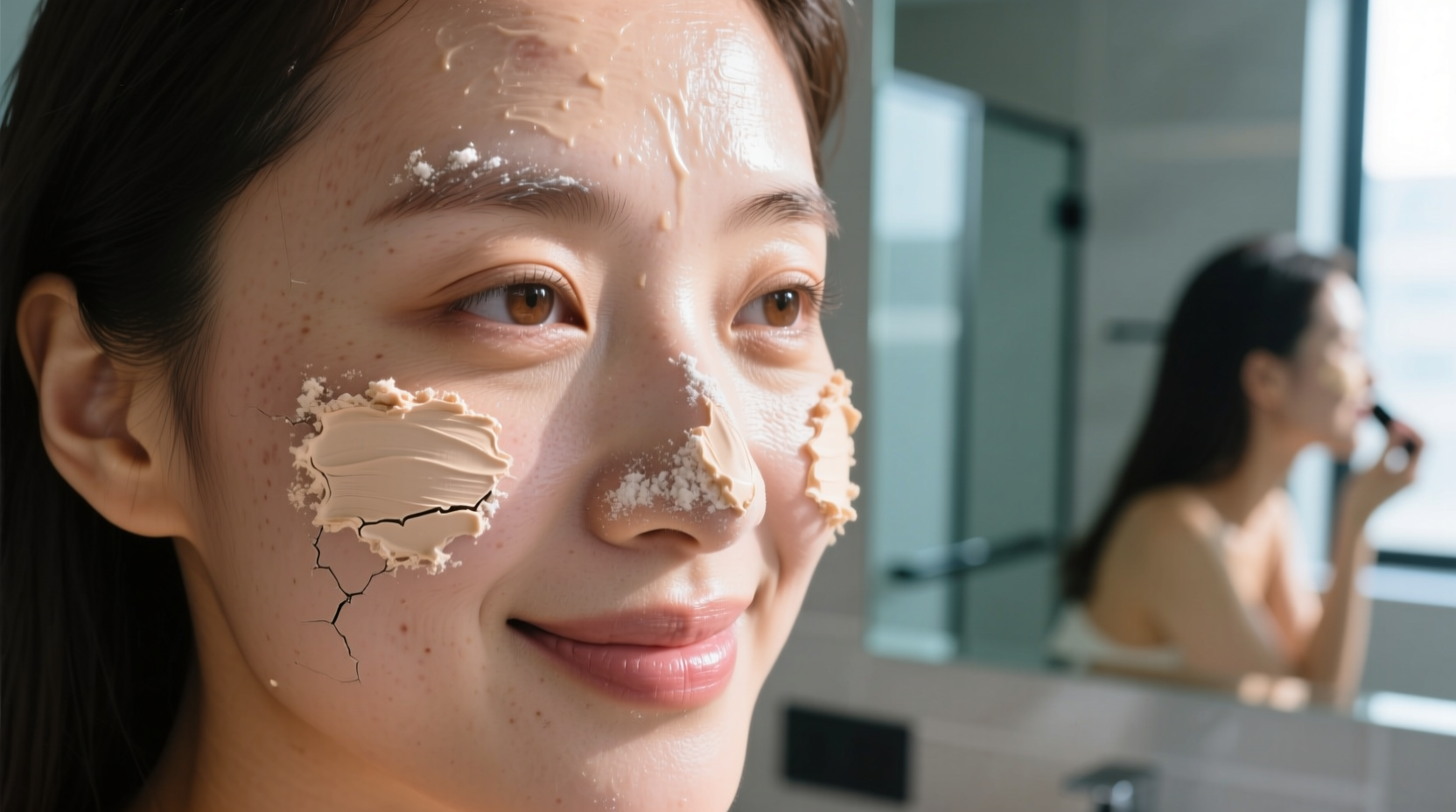
Cakey foundation occurs when excess product accumulates on the skin’s surface, often exacerbated by oil production, sweat, or moisture loss. The term “cakey” describes a heavy, dry, or powdery appearance where foundation clumps, cracks, or separates. This isn’t merely an aesthetic issue—it signals a breakdown in the harmony between your skin, the formula you’re using, and the way it was applied.
Humidity intensifies this problem. In high-moisture environments, pores dilate and sebum production increases. Water droplets in the air can react with makeup ingredients, causing emulsions to destabilize. As a result, foundation may slide, separate, or oxidize, creating uneven patches. Conversely, in dry conditions, dehydrated skin can absorb moisture from foundation, leaving behind concentrated pigment that looks flaky.
According to Dr. Lisa Park, a cosmetic chemist specializing in skincare-makeup interactions:
“Makeup longevity depends on formulation compatibility with skin biology. When occlusive ingredients trap sweat or humectants pull water from deeper layers, the surface becomes unstable—leading to caking.” — Dr. Lisa Park, Cosmetic Chemist
Common Application Errors That Cause Cakiness
Even the most expensive foundation will fail if applied incorrectly. Many people unknowingly contribute to cakiness through habits they believe are best practices.
- Over-applying product: Using too much foundation forces layers to build up, especially in areas like the T-zone or around the nose. A common misconception is that more coverage equals better results, but this leads to faster breakdown.
- Incorrect tool usage: Dense buffing brushes deposit more product than beauty sponges or stippling brushes. If not blended thoroughly, these tools leave concentrated streaks.
- Skipping primer or using the wrong type: Primer creates a smooth canvas and controls oil. Without it—or with one that doesn’t match your skin type—foundation lacks adhesion and shifts unevenly.
- Mixing incompatible products: Layering silicone-based foundation over water-based moisturizer (or vice versa) can cause pilling and separation, making the finish appear textured.
- Setting too heavily: Excessive powder locks in any imperfections already present. Translucent powders should be used sparingly and only in oily zones.
Humidity vs. Skin Type: Why Environment Matters
Climate plays a critical role in how makeup performs throughout the day. Humid environments increase transdermal water loss and stimulate sebum production, both of which disrupt foundation integrity.
For example, someone with oily skin in Miami might experience complete foundation meltdown by noon, while a person with dry skin in Phoenix could see their makeup flake due to dehydration—even without sweating.
The key is matching your routine to your environment and skin behavior:
| Skin Type | High Humidity Effect | Solution Strategy |
|---|---|---|
| Oily | Foundation slides off; shine breaks through quickly | Oil-free primer, matte liquid foundation, blotting papers |
| Dry | Makeup clings to dry patches; appears patchy | Hydrating serum, cream foundation, dewy setting spray |
| Combination | T-zone separates; cheeks stay intact | Zonal application: matte on T-zone, luminous on cheeks |
| Normal | Generally stable, but may oxidize or fade | Balanced formula, light setting, touch-up mist |
Humidity also affects product chemistry. Foundations containing volatile silicones (like cyclopentasiloxane) evaporate faster in moist air, leaving behind pigments that settle into lines. Meanwhile, water-based formulas may expand slightly due to atmospheric moisture, increasing slip and reducing wear time.
Step-by-Step Guide to Prevent Midday Cakiness
Follow this proven routine to ensure your foundation stays fresh and seamless all day, regardless of weather or skin type.
- Cleanse and Exfoliate Gently (Morning): Remove dead skin cells and residue without over-stripping. Use a mild exfoliant 2–3 times per week to prevent buildup that causes patchiness.
- Hydrate Deeply: Apply a lightweight hyaluronic acid serum followed by a moisturizer suited to your skin type. Allow 5 minutes for absorption before moving to the next step.
- Prime Strategically: Choose a primer based on your concerns—pore-minimizing for texture, mattifying for oil control, hydrating for dryness. Apply only to areas that need it.
- Apply Foundation with Precision: Use a damp beauty sponge for sheer-to-medium coverage or a stippling brush for buildable areas. Start at the center of the face and blend outward.
- Set Only Where Necessary: Focus translucent powder on the T-zone, under eyes, and sides of the nose. Avoid powdering dry areas like cheeks.
- Lock It In: Finish with a setting spray designed for your skin type—matte for oily, hydrating for dry. Hold the bottle 8–10 inches away and mist in an “X” and “T” pattern.
- Midday Maintenance: Blot excess oil with tissue paper, then spritz with facial mist. Avoid adding more powder unless absolutely necessary.
Product Selection: Is Your Foundation to Blame?
Not all foundations are created equal. Some formulations are inherently prone to caking due to ingredient composition or finish claims.
Heavy full-coverage foundations, especially those labeled “long-wear” or “matte,” often contain high concentrations of powders and film-formers. While effective for photoshoots or stage use, they can feel suffocating and crack on everyday skin.
Instead, consider:
- Water-based or serum foundations: Lightweight and breathable, ideal for humid climates.
- Hybrid formulas (tinted moisturizers or BB creams): Offer natural coverage with skincare benefits.
- Buildable liquids: Allow layering without heaviness when applied correctly.
Avoid products with high talc or mica content if you have dry or mature skin—they tend to cling to texture. Similarly, silicone-heavy primers can trap sweat underneath, leading to late-day peeling.
Real Example: Maria’s Office Commute Struggle
Maria, a marketing executive in Singapore, struggled daily with her foundation looking dull and caked by noon. Her routine included a rich night cream, no morning wash, a full-coverage foundation, and heavy powder. She blamed humidity—but the real issue was product buildup.
After consulting a dermatologist, she adjusted her routine: she began cleansing gently each morning, switched to a hydrating gel moisturizer, used a mattifying primer only on her forehead and nose, and adopted a lightweight cushion foundation. She set only her T-zone and carried a hydrating mist for touch-ups.
Result? Her makeup lasted 8+ hours without caking. The change wasn’t about fighting humidity—it was about syncing her routine with her environment and skin needs.
Checklist: Prevent Cakey Foundation in Any Climate
Use this quick-reference checklist to audit your current routine and eliminate cakiness:
- ✅ Cleanse skin gently every morning
- ✅ Exfoliate 2–3 times weekly (not daily)
- ✅ Apply hydrating serum before moisturizer
- ✅ Wait 5 minutes after skincare before makeup
- ✅ Use a targeted primer (don’t apply all over unless needed)
- ✅ Apply foundation with a damp sponge or stippling brush
- ✅ Use only a pea-sized amount initially
- ✅ Set selectively—avoid over-powdering
- ✅ Finish with setting spray matched to your skin type
- ✅ Carry blotting papers and a hydrating mist for touch-ups
Frequently Asked Questions
Can drinking more water really prevent cakey makeup?
Yes, internal hydration supports skin barrier function. Well-hydrated skin is less likely to absorb moisture from foundation, reducing flakiness. However, topical hydration remains essential—drink water, but don’t skip moisturizer.
Should I switch foundations with the seasons?
Many professionals recommend seasonal rotation. Switch to lighter, water-based formulas in summer and richer, nourishing ones in winter. This aligns with your skin’s changing needs and prevents imbalance.
Is baking causing my foundation to look cakey?
Possibly. Baking—applying thick powder and letting it sit before brushing off—can overdry the skin and emphasize texture. Reserve baking for photography or events under bright lights. For daily wear, use a light dusting instead.
Conclusion: Flawless Makeup Starts With Understanding, Not Concealing
Cakey foundation isn’t inevitable. It’s a signal—your skin communicating that something in your routine is out of alignment. Whether it’s humidity, poor prep, or product overload, the solution lies in thoughtful adjustments, not more coverage. By respecting your skin’s biology and adapting to environmental demands, you can achieve a base that looks fresh, natural, and enduring.




 浙公网安备
33010002000092号
浙公网安备
33010002000092号 浙B2-20120091-4
Comments
No comments yet. Why don't you start the discussion?