
Applying foundation should be the step that evens out your skin tone and enhances your natural glow. Yet, too often, the result is anything but flawless—instead, you're left with a thick, patchy, or cakey appearance, even after using a primer. This frustrating outcome doesn't mean you're doing everything wrong; it usually points to subtle mismatches in product choice, technique, or skincare prep. Understanding the root causes behind cakey foundation is essential to achieving that airbrushed, second-skin finish you’re aiming for.
Cakey makeup isn’t just unflattering—it can make skin appear dry, aged, or congested. The good news? Most of these issues are fixable with small adjustments. From selecting the right formula to refining your blending method, the solution lies in precision and personalization.
The Science Behind Cakey Foundation
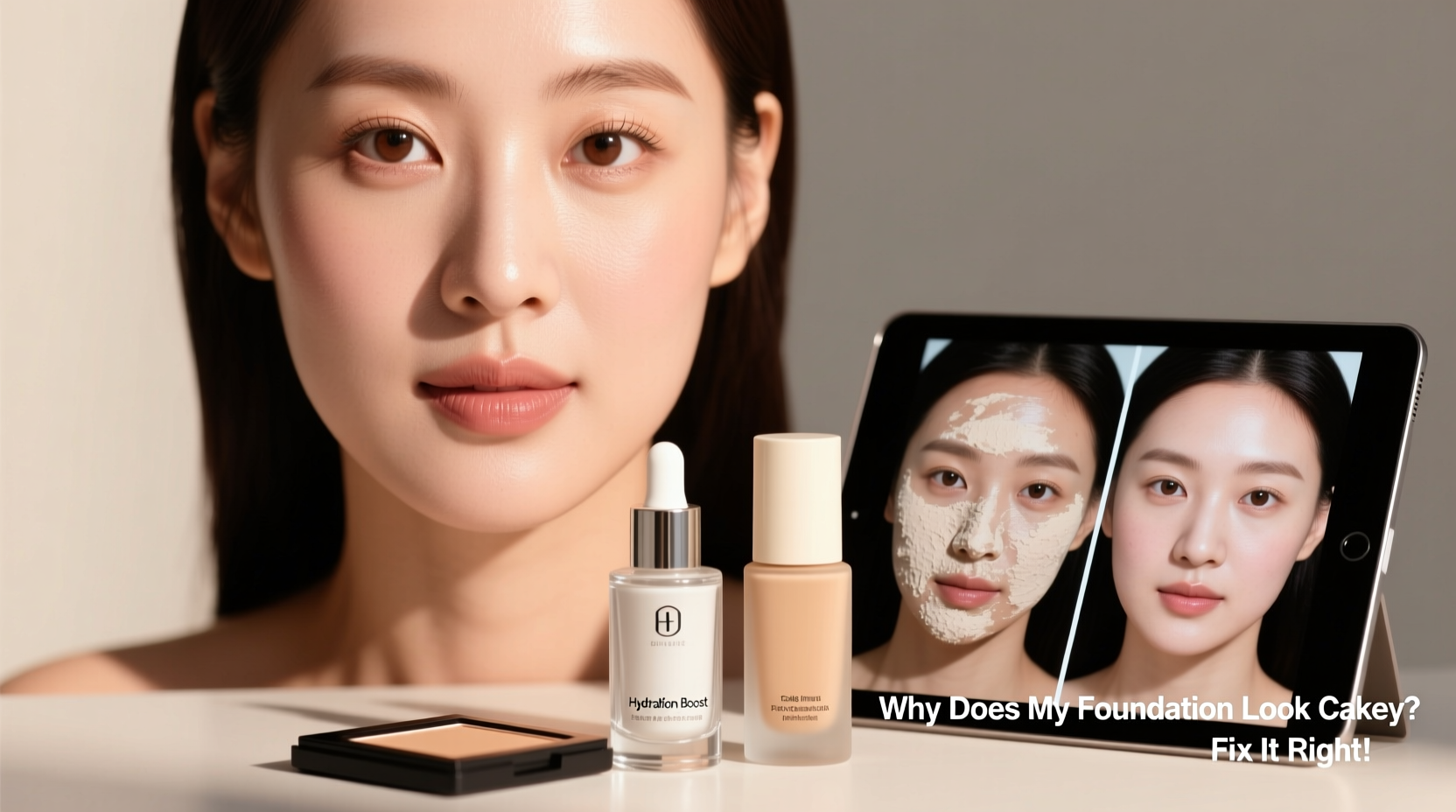
Cakey foundation occurs when product accumulates in fine lines, pores, or dry patches, creating an uneven texture. It often results from excess product buildup, improper blending, or incompatible interactions between skincare, primer, and foundation.
Even when primer is applied correctly, it can’t compensate for deeper issues like dehydration, mismatched formulas, or over-application. Primers are designed to create a smooth canvas and extend wear—they don’t correct underlying imbalances. If your skin lacks moisture or your foundation is too heavy, the primer may actually trap imperfections rather than prevent them.
Makeup artist and beauty educator Lila Chen explains:
“Primer is not a magic eraser. It enhances what’s underneath. If your skin is flaky or your foundation is overly matte, no amount of primer will save you from a cakey finish.” — Lila Chen, Professional Makeup Artist
Common Causes of Cakey Foundation Despite Primer Use
Understanding why cakeiness happens is the first step toward fixing it. Below are the most frequent culprits—even among those who follow a meticulous routine.
1. Over-Application of Products
Using too much foundation or applying multiple layers without proper blending leads to buildup. Even lightweight formulas can look heavy if applied excessively. Many people believe more coverage equals better results, but this often backfires.
2. Dehydrated Skin
Dry or dehydrated skin absorbs foundation unevenly, causing it to settle into creases and emphasize texture. When skin lacks water content, makeup clings to rough patches instead of gliding smoothly.
3. Formula Incompatibility
Mixing oil-based primers with water-based foundations (or vice versa) can cause pilling or separation. Similarly, pairing a mattifying primer with a full-coverage matte foundation may overdry the skin, resulting in a powdery, artificial look.
4. Incorrect Primer Choice
Not all primers serve the same purpose. A pore-filling silicone primer won’t help if your main issue is dryness. Using a blurring primer on already dry skin can accentuate flakes rather than conceal them.
5. Poor Blending Technique
Rushing the blending process or using the wrong tool prevents seamless integration. Stippling motions with a dense brush can deposit too much product in one area, while a dry sponge may drag and emphasize dryness.
Step-by-Step Guide to Prevent Cakey Foundation
Achieving a smooth, natural finish requires a thoughtful sequence of steps—not just slapping on products. Follow this timeline to refine your routine:
- Double Cleanse (Night Only): Remove sunscreen, oil, and impurities with an oil cleanser followed by a gentle water-based cleanser.
- Hydrate with Toner or Essence: Apply a hydrating toner or essence to damp skin to boost moisture levels before moisturizer.
- Moisturize Strategically: Use a lightweight gel-cream for oily areas and a richer cream for dry zones. Wait 5–10 minutes for absorption.
- Apply Primer Matched to Skin Type: Choose a hydrating primer for dry skin, a mattifying one for oily skin, or a color-correcting option for discoloration.
- Use a Damp Beauty Sponge: A slightly wet sponge (like a美妆蛋) blends foundation evenly and uses less product than brushes.
- Build Thin Layers: Apply foundation in small sections, blending outward. Let each layer set before adding more.
- Set Lightly: Use a translucent powder only in areas that tend to crease (under eyes, sides of nose). Avoid over-powdering.
- Finish with Hydration Mist: A facial spray sets makeup and melts any residual texture into a natural sheen.
Choosing the Right Products: A Comparison Table
Selecting compatible products is critical. The table below outlines ideal combinations based on skin type.
| Skin Type | Recommended Primer | Foundation Type | What to Avoid |
|---|---|---|---|
| Dry | Hydrating (hyaluronic acid, glycerin) | Lightweight, dewy, serum-based | Matte primers, full-coverage matte foundations |
| Oily | Mattifying (silica, clay-based) | Water-based, long-wear | Heavy creams, oil-infused formulas |
| Combination | Hybrid (moisture-balancing) | Medium coverage, satin finish | One-size-fits-all primers |
| Mature | Plumping (peptides, squalane) | Luminous, anti-aging | Flat matte finishes, powder-heavy bases |
| Acne-Prone | Pore-minimizing (non-comedogenic) | Oil-free, non-acnegenic | Thick silicones, heavy emollients |
Real-Life Case Study: Sarah’s Transformation
Sarah, a 34-year-old teacher with combination skin, struggled with cakey foundation around her nose and chin despite using a popular silicone primer. Her routine included a foaming cleanser, alcohol-based toner, thick night cream, and a full-coverage matte foundation.
After consulting a dermatologist, she learned her morning cleanse was stripping her skin, causing reactive dryness. The heavy night cream wasn’t fully absorbed by morning, leading to pilling when layered with primer and foundation.
Her revised routine:
- Switched to a cream cleanser in the AM
- Added a hydrating toner with ceramides
- Replaced her night cream with a lighter, fast-absorbing moisturizer
- Changed to a hydrating primer with hyaluronic acid
- Opted for a serum-foundation hybrid with light coverage
- Used a damp sponge for application
Within two weeks, her foundation applied smoothly, lasted longer, and no longer settled into lines. The key wasn’t using more products—it was aligning them with her skin’s needs.
Expert Tips to Fix and Prevent Cakey Makeup
Refining your approach goes beyond product selection. These actionable strategies address common oversights.
- Layer Skincare Properly: Allow each product to absorb before moving to the next. Wait at least 60 seconds after moisturizer before applying primer.
- Prime Only Problem Areas: You don’t need primer all over. Apply it only where needed—T-zone for oil control, cheeks for hydration, or forehead for smoothing.
- Use the Right Tool: A damp beauty sponge gives the most natural finish. For spot coverage, use a tapered concealer brush instead of applying full foundation.
- Mix Foundation with Moisturizer: For a sheerer, more skin-like finish, blend a drop of moisturizer into your foundation before application.
- Avoid Over-Powdering: Set only where necessary. Use a puff for pressing and a fluffy brush for dusting—never swipe heavily.
Frequently Asked Questions
Can I wear primer every day?
Yes, most primers are safe for daily use as long as they’re suited to your skin type. However, if you notice clogged pores or irritation, scale back usage or switch to a simpler formula. Always remove thoroughly at night.
Why does my foundation look worse by midday?
This often indicates a breakdown in the skincare-makeup barrier. Oily skin may break down the base, while dry skin can flake as moisturizer wears off. Try blotting oil gently and refreshing with a hydrating mist instead of adding more powder.
Is cakey foundation a sign of aging skin?
Not necessarily, but mature skin is more prone to it due to reduced elasticity and increased dryness. As skin thins, fine lines become more pronounced, and heavy formulas settle easily. Switching to radiant, fluid foundations helps maintain a youthful appearance.
Final Checklist: Achieve a Flawless, Non-Cakey Base
Follow this concise checklist before applying makeup to minimize the risk of cakeiness:
- ✅ Cleanse with a non-stripping formula
- ✅ Apply hydrating toner or essence to damp skin
- ✅ Moisturize and wait 5–10 minutes for absorption
- ✅ Choose a primer tailored to your skin’s needs
- ✅ Use a pea-sized amount of foundation
- ✅ Apply with a damp sponge using bouncing motions
- ✅ Blend into hairline, jawline, and neck to avoid lines
- ✅ Set lightly with powder only in high-movement zones
- ✅ Finish with a setting spray for cohesion
Conclusion: Rethink Your Routine, Not Just Your Products
Cakey foundation isn’t a failure of effort—it’s often a signal that your routine needs refinement, not replacement. The presence of primer alone won’t guarantee a smooth finish if the foundation formula, application method, or skincare prep is off-kilter. True makeup artistry lies in balance: the harmony between hydration and coverage, technique and tools, intention and execution.
You don’t need ten products to achieve a flawless look. Often, simplifying your routine and focusing on compatibility yields better results than layering more. Pay attention to how your skin feels in the morning, how products interact, and how your makeup wears throughout the day. Small changes compound into dramatic improvements.




 浙公网安备
33010002000092号
浙公网安备
33010002000092号 浙B2-20120091-4
Comments
No comments yet. Why don't you start the discussion?