
It starts perfectly—your foundation blends seamlessly into your skin, matches your tone exactly, and gives you that coveted airbrushed glow. But by noon, something shifts. The color darkens, turns orange, or looks muddy around the jawline. This frustrating transformation is known as oxidation, and it’s one of the most common complaints among makeup wearers. Beyond aesthetics, it can undermine confidence and lead to constant touch-ups. Understanding why oxidation happens—and how to prevent it—is essential for achieving a consistent, natural-looking base all day long. Pair this knowledge with smart color-matching techniques, and you’ll never again struggle with mismatched makeup by lunchtime.
What Is Foundation Oxidation?
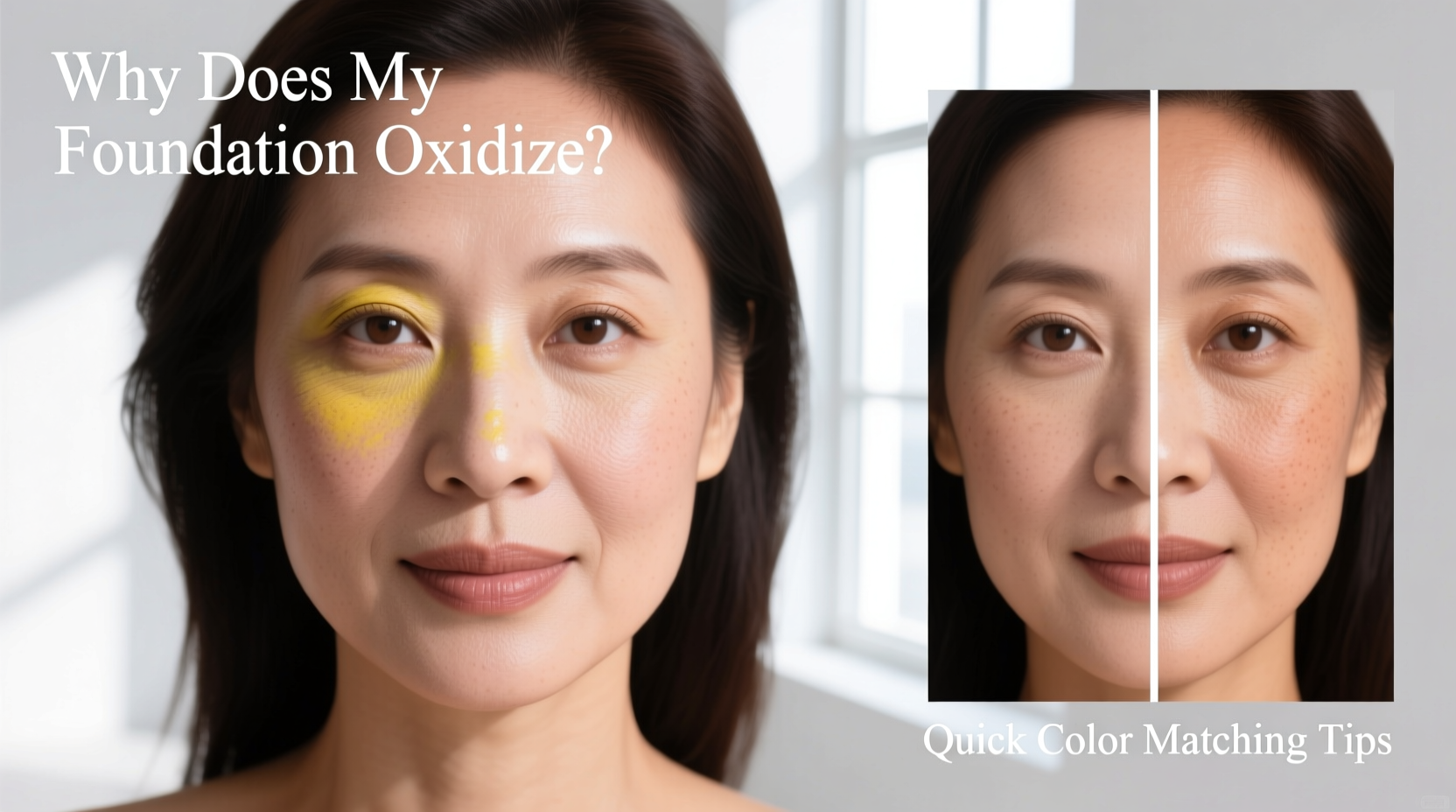
Oxidation occurs when the ingredients in your foundation react with oxygen, your skin’s natural oils, pH levels, or environmental factors. This chemical reaction causes the formula to darken after application, sometimes within minutes. While it doesn’t mean the product is “bad,” it does indicate a mismatch between your skin chemistry and the foundation’s formulation.
Unlike fading or settling into fine lines, oxidation specifically refers to a change in hue—not texture or coverage. It often appears as a shift toward orange, gray, or ashy tones, especially in shades that were already borderline too warm or cool for your undertone.
Why Does My Foundation Oxidize by Midday?
Several interconnected factors contribute to oxidation. Identifying which ones apply to you can help narrow down solutions.
Skin Chemistry and pH Levels
Your skin's natural pH, typically between 4.5 and 5.5, plays a crucial role. Foundations formulated with certain pigments or emollients may react when they come into contact with slightly acidic or alkaline skin. For example, iron oxides (commonly used for yellow and red pigments) are more prone to reacting with skin acidity, leading to darkening.
Formula Ingredients
Some ingredients are more reactive than others. Foundations containing alcohol, certain silicones (like dimethicone), or high concentrations of oils can accelerate oxidation. Conversely, water-based or mineral formulas tend to be more stable on sensitive or reactive skin.
Sebum Production
If you have oily skin, the increased sebum production throughout the day creates a breeding ground for oxidation. Oil breaks down the emulsion in foundation, allowing pigments to separate and react prematurely.
Environmental Exposure
Pollution, UV rays, and humidity also play roles. Urban environments expose skin to free radicals, which can destabilize cosmetic formulas. High humidity increases sweat and oil production, both of which trigger faster oxidation.
Application Methods
Using expired products, mixing incompatible primers, or applying too many layers can trap moisture and heat, speeding up chemical reactions. Even the tools matter—dirty sponges or brushes introduce bacteria and residue that alter how foundation behaves on skin.
“Oxidation isn't just about the product—it's the interaction between formula, skin biology, and environment.” — Dr. Lena Patel, Cosmetic Chemist & Skincare Formulation Expert
Quick Color Matching Tips to Prevent Mismatching
Choosing the right shade isn't just about finding a match at the store under fluorescent lights. True accuracy comes from understanding your undertone, testing properly, and observing how the color evolves over time.
Know Your Undertone
There are three main undertones: cool (pink/blue), warm (yellow/golden), and neutral (a mix). A mismatch here is often the root cause of oxidation-related dissatisfaction.
- Cool undertones: Veins appear blue; silver jewelry flatters your skin.
- Warm undertones: Veins look greenish; gold jewelry enhances your glow.
- Neutral undertones: Veins appear blue-green; both metals suit you equally.
Swatch and Wait
Apply three potential shades vertically along your jawline. Wait 10–15 minutes. Watch not only for initial match but also for any darkening or color shift. The shade that remains closest to your natural skin tone after this period is your best bet.
Avoid Flash-Matching Under Store Lighting
Many beauty counters use bright white lighting that distorts perception. What looks perfect indoors may appear ashy or orange outside. Always step near a window or go outside briefly to verify the match.
Consider Your Skin Changes
Seasonal shifts affect your complexion. You may need two foundation shades—one for summer and one for winter. Rotate accordingly rather than forcing one shade year-round.
Use Technology Wisely
While online shade finders and apps can offer starting points, they’re not foolproof. Use them as guides, not final decisions. Real skin texture, lighting, and camera filters limit their accuracy.
Step-by-Step Guide to Choosing a Non-Oxidizing Foundation
Follow this practical timeline to select and test a foundation that stays true from morning to night.
- Assess your skin type: Determine if you're oily, dry, combination, or sensitive. This informs whether you should prioritize matte, hydrating, or balanced formulas.
- Identify your current pain points: Are you dealing with oxidation, patchiness, or caking? Note these issues before shopping.
- Shortlist brands known for stability: Research labels like Ilia, Fenty Beauty, Kosas, or NARS, which formulate with lower-reactivity ingredients.
- Visit a retailer during midday: Your skin will reflect its natural oil balance and tone more accurately than first thing in the morning.
- Test multiple shades using the wait method: Apply samples, wait 15 minutes, then re-evaluate under daylight.
- Wear the top contender for a full day: Don’t commit after five minutes. Wear it through work, lunch, and evening to observe performance.
- Reassess weekly: Monitor changes across different weather conditions and skincare routines.
Do’s and Don’ts: Foundation Selection & Application
| Do’s | Don’ts |
|---|---|
| Do patch-test new foundations behind the ear or on the jawline. | Don’t rely solely on bottle labels or influencer endorsements. |
| Do prep skin with a pH-balancing toner before makeup. | Don’t apply foundation immediately after heavy moisturizer without waiting 2–3 minutes. |
| Do use antioxidant-rich primers (with vitamin C or E) to stabilize the base. | Don’t mix foundations from different brands unless tested for compatibility. |
| Do clean applicators weekly to prevent bacterial buildup. | Don’t ignore expiration dates—most liquid foundations last 6–12 months. |
| Do set strategically: Use translucent powder only where needed (T-zone). | Don’t over-powder, which can emphasize dryness and dullness. |
Mini Case Study: Sarah’s Struggle with Oxidation
Sarah, a 32-year-old marketing executive, loved her high-end foundation for its dewy finish and SPF protection. However, every day by 1 PM, her face looked noticeably darker, especially around the chin. She blamed herself for poor technique until she consulted a makeup artist during a bridal trial.
The artist observed that Sarah’s foundation contained high levels of iron oxide and was applied over a silicone-heavy primer. Combined with Sarah’s naturally acidic skin (due to a gentle glycolic acid routine), the mixture created an ideal environment for oxidation.
The solution? Switching to a water-based, mineral foundation with fewer reactive pigments and pairing it with an antioxidant serum instead of a silicone primer. Within days, Sarah noticed her foundation stayed consistent for over eight hours—with no midday darkening.
This real-world scenario underscores that oxidation isn’t always about shade choice—it’s often a formula-skin conflict.
Checklist: How to Prevent Foundation Oxidation
- ☑ Identify your skin’s undertone and seasonal variations
- ☑ Choose foundations labeled “non-comedogenic” and “low-reactivity”
- ☑ Avoid products with high alcohol or fragrance content
- ☑ Prep skin with a balanced skincare routine (not overly stripping or occlusive)
- ☑ Use a vitamin-rich primer to create a protective barrier
- ☑ Test shades with a 15-minute wear test in natural light
- ☑ Cleanse brushes and sponges weekly
- ☑ Replace foundation every 6–12 months
- ☑ Carry a pressed powder for touch-ups instead of layering more liquid
- ☑ Reevaluate your match twice a year with changing seasons
Frequently Asked Questions
Does oxidized foundation mean it’s expired?
Not necessarily. While expired products are more likely to oxidize due to ingredient breakdown, even brand-new foundations can oxidize based on your skin chemistry. Check the batch code and shelf life, but don’t assume expiration is the sole cause.
Can I fix oxidation after it happens?
You can’t reverse oxidation once it occurs, but you can minimize its appearance. Blot excess oil gently, then set with a neutral-toned translucent powder. Avoid adding more foundation on top, as this compounds the issue. For future applications, switch to a more compatible formula.
Are drugstore foundations more prone to oxidation than luxury ones?
Not inherently. Both affordable and high-end brands produce formulas that oxidize—and those that don’t. Focus on ingredient lists and user reviews specific to oxidation, rather than price point. Brands like Maybelline, L’Oréal, and e.l.f. now offer advanced, stable formulations competitive with premium labels.
Final Thoughts: Achieve a Flawless, Consistent Base
Foundation oxidation isn’t inevitable—it’s manageable with informed choices. By understanding how your skin interacts with makeup and taking the time to match shades thoughtfully, you gain control over your daily look. Remember, the perfect foundation doesn’t just match at first swipe; it stays true for hours, adapting to your life without fading, shifting, or betraying your tone.
Color matching isn’t a one-time event. It’s an ongoing process shaped by climate, skincare, and lifestyle. Treat it with the same care you’d give to selecting skincare or sunscreen. When you get it right, the results speak for themselves: confidence, consistency, and a complexion that looks naturally radiant from morning meetings to evening plans.




 浙公网安备
33010002000092号
浙公网安备
33010002000092号 浙B2-20120091-4
Comments
No comments yet. Why don't you start the discussion?