
Few makeup frustrations are as universal as checking your reflection at noon only to find your foundation clinging to dry patches, sliding into fine lines, or forming unflattering streaks. What began as a smooth, even base now looks patchy and tired. This phenomenon—commonly referred to as \"foundation separation\"—isn’t just a sign of poor product choice. It’s often the result of a mismatch between your skin’s needs, environmental conditions, and application techniques. The good news? You don’t need to rely on silicone-heavy primers or constant touch-ups. With a deeper understanding of what causes separation and a few smart, natural strategies, you can achieve a fresh, seamless finish that lasts from morning to evening.
The Science Behind Foundation Separation
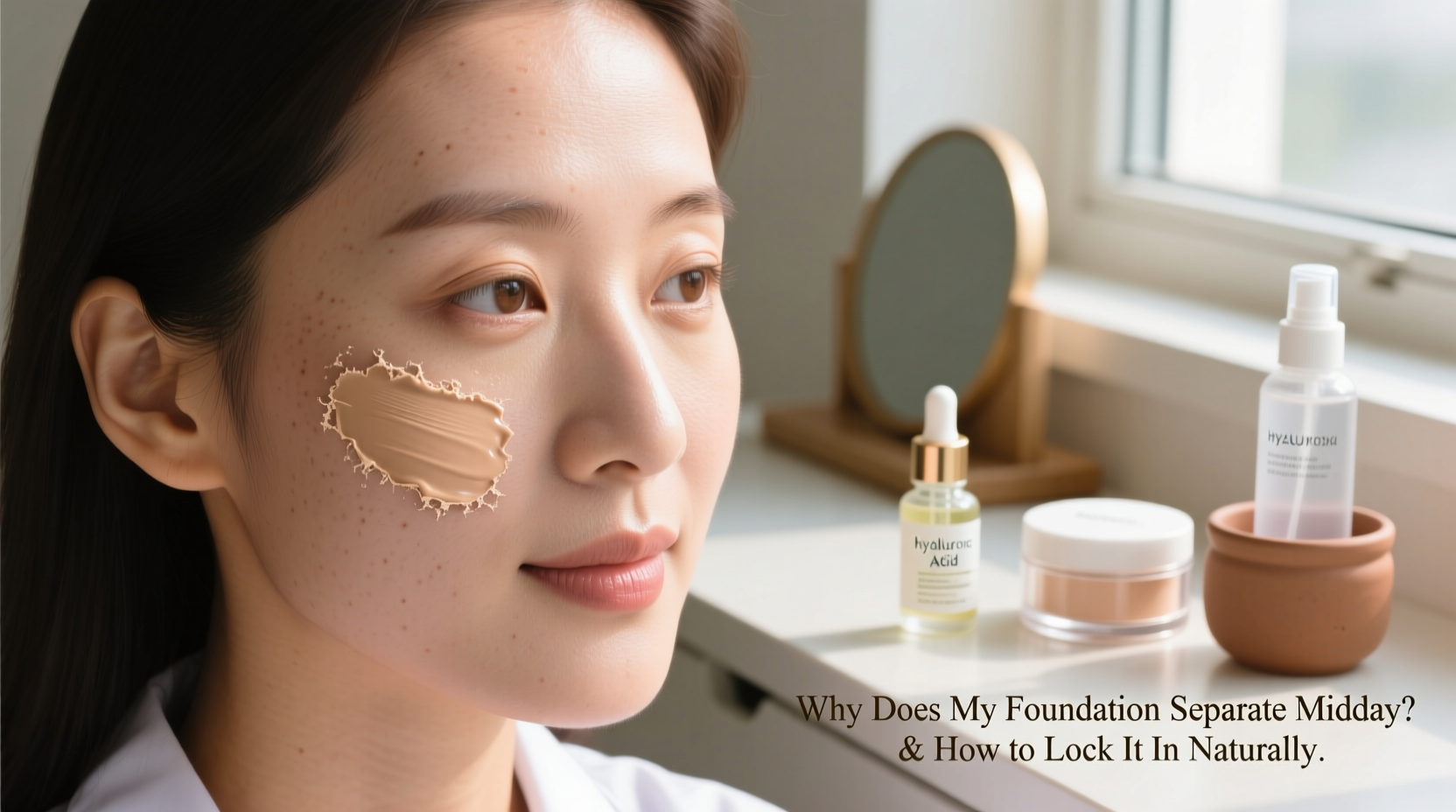
Foundation separation occurs when the formula breaks apart on the skin, leading to visible cracks, pilling, or uneven texture. Unlike fading or oxidation (where foundation darkens over time), separation involves physical disruption of the product layer. Several factors contribute to this:
- Oily Skin Activity: Sebum production increases throughout the day, especially in T-zone areas. As oil rises to the surface, it disrupts the foundation film, causing it to slide and break apart.
- Dry Skin Flaking: Dehydrated or flaky skin creates an uneven canvas. When foundation sits atop dead skin cells, it clings to some areas and lifts off others, resulting in patchiness.
- Incompatible Layering: Mixing water-based and oil-based products—or applying too many layers—can cause formulas to repel each other, leading to pilling.
- Poor Absorption: If skincare isn’t fully absorbed before makeup, it creates a slippery barrier that prevents foundation from adhering properly.
- Environmental Stressors: Humidity, heat, and pollution accelerate oil production and degrade makeup integrity over time.
Understanding these triggers is the first step toward preventing them—not by masking with heavier coverage, but by working with your skin’s biology.
Natural Ways to Prep Skin for Long-Lasting Wear
The foundation doesn’t fail—it’s often applied to a failing canvas. Skincare is the unsung hero of lasting makeup. A well-prepped face allows foundation to bond with the skin rather than sit on top of it.
Hydration Over Moisturizing
There’s a crucial difference between hydration and moisturization. Hydration refers to water content within the skin; moisturization is about sealing that moisture in. For long-wearing foundation, both are essential—but hydration comes first.
Use a hydrating toner or essence containing hyaluronic acid or glycerin immediately after cleansing. These ingredients attract water into the skin, plumping cells and smoothing texture. Follow with a lightweight moisturizer suited to your skin type. Oily skin benefits from gel-based formulas; dry skin may need ceramide-rich creams. Avoid heavy occlusives like petroleum unless absolutely necessary—they can interfere with foundation adhesion.
Balancing Oil Production Naturally
If you’re prone to oiliness, stripping the skin with harsh cleansers backfires. Over-cleansing signals the sebaceous glands to produce more oil, worsening midday shine and separation. Instead, use gentle, pH-balanced cleansers twice daily. Ingredients like niacinamide help regulate sebum production over time without drying.
“Makeup longevity starts in the skincare phase. A balanced, hydrated skin barrier supports any foundation better than any setting spray.” — Dr. Lena Torres, Cosmetic Dermatologist
Choosing the Right Foundation for Your Skin Type
No amount of technique will fix a fundamentally incompatible product. Selecting a foundation that aligns with your skin’s behavior throughout the day is critical.
| Skin Type | Recommended Formula | Ingredients to Look For | Ingredients to Avoid |
|---|---|---|---|
| Oily | Matte, water-based, or serum-foundation hybrids | Clay, silica, niacinamide | Coconut oil, shea butter, mineral oil |
| Dry | Creamy, hydrating, dewy finishes | Hyaluronic acid, squalane, glycerin | Alcohol denat., mattifying powders |
| Combination | Lightweight liquids or mousse textures | Aloe vera, green tea extract | Heavy silicones (dimethicone >5%) |
| Mature | Luminous, medium-coverage formulas | Peptides, antioxidants | Thick waxes, drying alcohols |
When testing foundations, apply a small amount to your jawline and observe for four hours. Does it fade into pores? Crack around the nose? Shine excessively? These real-time reactions reveal compatibility far better than swatching on the hand.
Application Techniques That Prevent Separation
How you apply foundation matters as much as the product itself. The goal is thin, even layers that integrate with the skin, not mask it.
Less Is More: Buildable Coverage
Applying too much foundation at once overwhelms the skin and creates excess product that moves with facial expressions and oil. Start with a pea-sized amount and build only where needed—under eyes, redness, blemishes. Use a damp beauty sponge for sheer blending or a flat synthetic brush for precision.
Set Strategically, Not Everywhere
Full-face powder application is outdated and counterproductive. Instead, use a translucent loose powder only in high-oil zones: forehead, nose, chin. Press—don’t swipe—with a small puff or sponge to avoid disturbing the foundation.
Embrace Skin Priming Without Silicones
You don’t need silicones to create a smooth base. Try natural alternatives:
- Aloe vera gel: Soothes and forms a breathable film.
- Rosewater mist: Refreshes and slightly tightens pores.
- Green tea concentrate: Reduces inflammation and oiliness.
Real Example: Sarah’s Midday Meltdown
Sarah, a 32-year-old teacher, struggled with her foundation separating along her laugh lines by 1 PM. She used a popular full-coverage matte foundation and set it heavily with powder. After switching to a hydrating serum foundation and applying only a light dusting of rice powder on her T-zone, her makeup lasted six hours longer without touch-ups. The change wasn’t in the brand—it was in the method. By reducing product load and focusing on balance, she achieved a more natural, enduring finish.
Step-by-Step Natural Lock-In Routine
This morning routine takes under 15 minutes and leverages your skin’s natural rhythms to keep foundation intact:
- Cleanse Gently: Use a milky or foaming cleanser suited to your skin. Rinse with lukewarm water.
- Hydrate Deeply: Apply a hyaluronic acid serum to damp skin. Press gently to aid absorption.
- Moisturize Lightly: Use a fingertip to dot moisturizer across cheeks, forehead, and chin. Blend outward.
- Wait 5 Minutes: Let skincare sink in completely. This prevents pilling later.
- Prime Naturally: Dab a pea-sized amount of aloe vera gel on oily areas or dry patches.
- Apply Foundation: Use a damp sponge to stipple on foundation starting from the center of the face.
- Spot-Powder: Press translucent powder only where shine appears by mid-morning.
- Mist to Seal: Finish with a spritz of antioxidant-rich facial mist (like chamomile or rosewater).
This approach avoids synthetic polymers while creating a resilient base through proper layering and timing.
Common Mistakes That Worsen Separation
Even with quality products, small errors sabotage longevity:
- Skipping Exfoliation: Dead skin buildup causes foundation to cling unevenly. Exfoliate 1–2 times weekly with a mild lactic acid toner.
- Over-Powdering: Heavy powder absorbs oil temporarily but eventually cakes and cracks. Use sparingly.
- Mixing Too Many Actives: Applying vitamin C, retinoids, and acids right before makeup destabilizes the skin surface.
- Touching Your Face: Constant contact transfers oils and bacteria, breaking down foundation faster.
- Ignoring Climate: Humid environments require lighter formulas; dry offices call for extra hydration.
FAQ: Quick Answers to Common Concerns
Can I use natural oils under foundation?
Yes, but selectively. Lightweight oils like squalane or jojoba can be used on dry areas if fully absorbed. Avoid heavy oils like coconut, which can break down foundation and clog pores.
Why does my foundation separate only around my mouth?
This area experiences constant movement and often accumulates lip balm, saliva, and oils. Ensure your lip liner and balm are fully set before foundation. Consider using a long-wear liquid lipstick to minimize transfer.
Is there a natural alternative to setting spray?
A DIY facial mist with rosewater, a drop of glycerin, and a spritz of green tea can refresh and lightly bind makeup. Store in a cool, dark bottle and use within two weeks.
Checklist: Daily Habits for Flawless Wear
- ✔️ Wash face with gentle cleanser every morning
- ✔️ Apply hydrating serum to damp skin
- ✔️ Wait 5 minutes before applying foundation
- ✔️ Use a damp beauty sponge for seamless blending
- ✔️ Spot-set oily zones with translucent powder
- ✔️ Finish with a natural facial mist
- ✔️ Blot (don’t rub) oil throughout the day
- ✔️ Remove makeup thoroughly at night
Conclusion: Work With Your Skin, Not Against It
Foundation separation isn’t inevitable—it’s a signal. Your skin is communicating imbalance, whether through dehydration, excess oil, or product overload. Rather than reaching for stronger hold or heavier formulas, recalibrate your routine to support your skin’s natural function. Focus on preparation, compatibility, and minimalism. Choose products that enhance rather than mask, and apply them with intention. When you align your routine with your skin’s needs, longevity follows effortlessly. The most beautiful makeup isn’t the one that never moves—it’s the one that looks like your skin, hour after hour.




 浙公网安备
33010002000092号
浙公网安备
33010002000092号 浙B2-20120091-4
Comments
No comments yet. Why don't you start the discussion?