
The nose is one of the most challenging areas to keep makeup intact. Even with a full face of carefully applied foundation, many people notice that within hours—sometimes minutes—their base starts cracking, sliding, or separating precisely across the bridge and sides of the nose. This frustrating phenomenon isn’t just about poor product choice; it’s often the result of a combination of skin biology, environmental factors, and application technique. Understanding why this happens is the first step toward achieving a seamless, long-lasting finish.
Foundation separation occurs when the makeup breaks apart into visible patches, often forming lines or creases, especially in areas with more movement or oil production. The nose, being both an oily zone and a high-movement area due to facial expressions, is particularly prone. But with the right skincare prep, product selection, and application methods, you can significantly reduce or even eliminate this issue.
Why Foundation Separates on the Nose: The Science Behind It
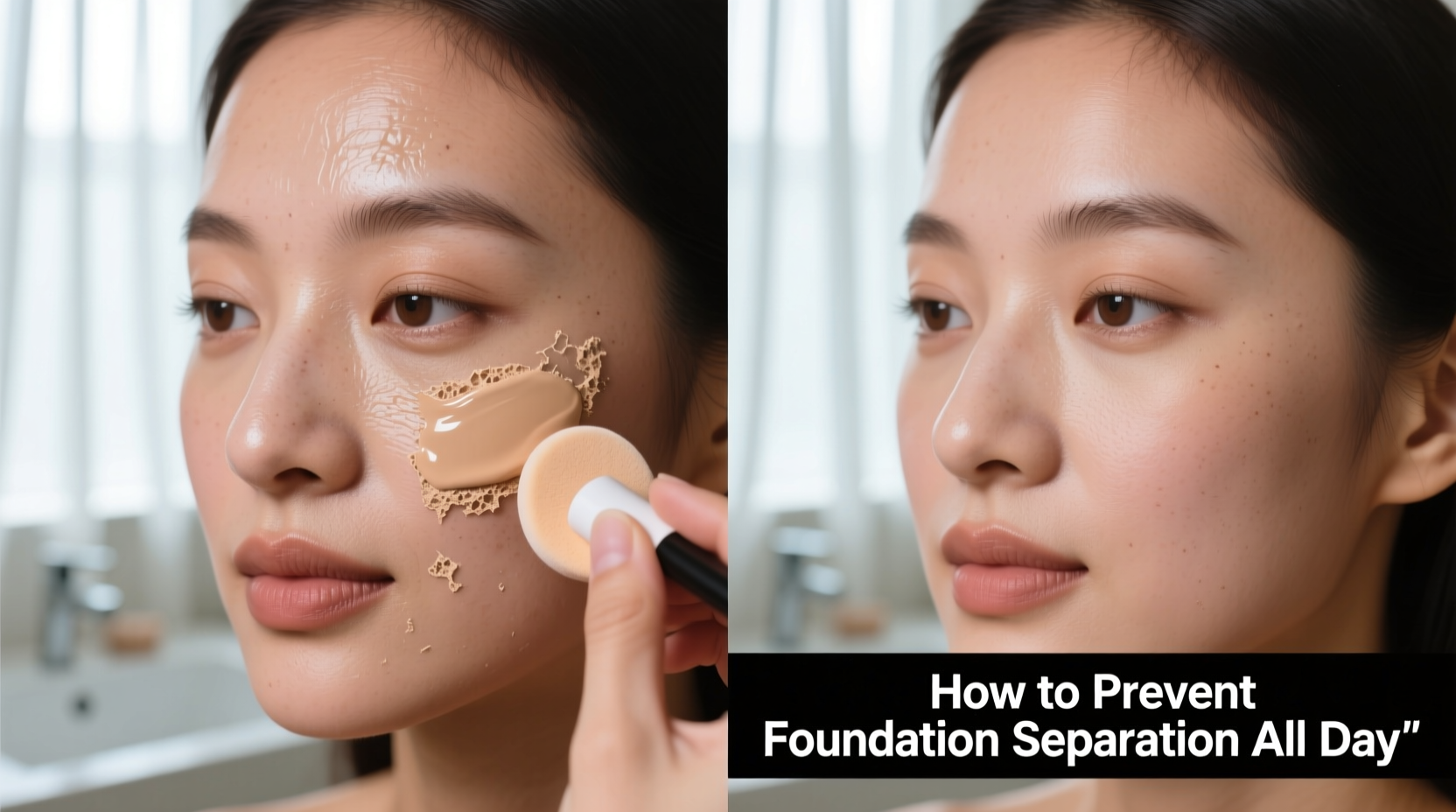
The nose sits at the center of the T-zone, which includes the forehead, chin, and nose—all areas rich in sebaceous (oil) glands. These glands produce sebum, a natural lubricant that protects the skin but can interfere with makeup longevity. When excess oil accumulates beneath foundation, it disrupts the bond between the product and the skin, causing the foundation to lift, slide, or separate.
In addition to oil, the nose has unique structural characteristics. Its curved surface and frequent micro-movements from talking, smiling, or touching create constant friction. Over time, this movement causes foundation layers to shift and crack, especially if the formula lacks flexibility or adhesion.
Another contributing factor is dehydration. Paradoxically, even oily skin can be dehydrated. When the skin lacks water, it may overproduce oil as compensation. Dehydrated skin also tends to flake, creating texture that foundation clings to unevenly. This leads to patchiness, particularly noticeable on the sides of the nose where fine pores and slight dryness are common.
Product incompatibility plays a role too. Mixing silicone-based foundations with water-based primers—or layering incompatible formulas—can cause pilling or separation. This chemical repulsion prevents proper blending and adhesion, leading to a broken-up appearance shortly after application.
Skincare Prep: The Foundation for Flawless Makeup
No amount of high-end foundation can compensate for poor skin preparation. The condition of your skin directly affects how makeup adheres and lasts. A well-hydrated, balanced canvas ensures smoother application and reduces the likelihood of separation.
Begin with a gentle cleanser suited to your skin type. For oily or combination skin, a foaming or gel cleanser helps remove excess sebum without stripping moisture. Follow with a hydrating toner that contains ingredients like hyaluronic acid or glycerin to boost water content in the skin.
Moisturizing is non-negotiable—even for oily skin. Opt for a lightweight, oil-free moisturizer that absorbs quickly. Apply it at least 5–10 minutes before makeup to allow full absorption. Skipping this step signals your skin to produce more oil, undermining your entire routine.
Sunscreen should never be skipped. Choose a mattifying or invisible finish SPF that doesn’t leave a white cast or greasy residue. Reapplying sunscreen throughout the day? Use a setting spray with SPF or blotting papers with SPF-infused powder to avoid disturbing your base.
“Makeup is only as good as the skin underneath. Invest in prep, and your foundation will stay put.” — Dr. Lena Park, Board-Certified Dermatologist
Choosing the Right Products: Formulas That Last
Not all foundations are created equal. Some are designed for dewy finishes, others for full matte coverage. For the nose area, longevity and oil control are key. Look for foundations labeled “long-wear,” “transfer-resistant,” or “matte” with buildable coverage.
Water-based formulas tend to wear better over time on oily skin, while silicone-based ones offer a smooth initial finish but may break down faster when mixed with oil. If you prefer silicone-heavy products, ensure your primer and moisturizer are also silicone-based to maintain compatibility.
Primers play a crucial role. A pore-minimizing or mattifying primer specifically designed for the T-zone creates a barrier against oil and evens out texture. Apply it only where needed—usually the nose, forehead, and chin—to avoid overloading drier areas.
| Product Type | Recommended For | Avoid If… |
|---|---|---|
| Mattifying Primer | Oily/combination skin | You have dry or sensitive skin |
| Hydrating Primer | Dry/mature skin | Your nose gets shiny quickly |
| Silicone-Based Foundation | Smooth finish lovers | You mix with water-based skincare |
| Water-Based Foundation | Oily/acne-prone skin | You need heavy coverage |
Step-by-Step Application Technique for All-Day Wear
How you apply foundation matters as much as what you use. Rushing through application or using improper tools can lead to uneven layers that separate prematurely.
- Cleanse and Tone: Start with a fresh face. Remove any residue or excess oil with a pH-balanced cleanser.
- Hydrate: Apply a light moisturizer and wait 5–10 minutes for it to absorb fully.
- Prime Strategically: Use a small amount of mattifying primer just on the nose and surrounding T-zone. Avoid applying it on dry cheeks.
- Apply Sunscreen: Use a lightweight SPF and let it set for 3–5 minutes.
- Foundation Application: Dispense a pea-sized amount of foundation. Using a damp beauty sponge or dense brush, stipple the product onto the nose rather than dragging it. Stippling presses the foundation into the skin for better adherence.
- Set Immediately: After foundation, lightly dust a translucent setting powder only on the nose. Focus on areas where you typically see shine or separation.
- Lock It In: Finish with a setting spray held 8–10 inches from the face. Let it air-dry—do not blot.
Real-Life Example: Sarah’s 12-Hour Workday Fix
Sarah, a corporate trainer in her early 30s, struggled daily with her foundation separating on her nose by 10:30 AM—just two hours after leaving home. Her job required constant interaction, making touch-ups difficult. She tried heavier foundations, setting sprays, and powders, but nothing lasted.
After consulting a makeup artist, she discovered her routine was flawed: she used a hydrating water-based primer followed by a silicone foundation—a classic recipe for pilling. She also skipped moisturizer, thinking it would make her oilier, which led to dehydration-induced oil spikes.
The fix? She switched to a silicone-based primer, added a lightweight gel moisturizer, and began using a stippling brush for foundation application. She now applies a thin layer of setting powder only on her nose and uses a mattifying setting spray. The result: her foundation stays intact for over 10 hours, even during high-energy presentations.
Common Mistakes That Accelerate Separation
Even with great products, certain habits sabotage foundation wear. Recognizing these pitfalls can dramatically improve results.
- Over-powdering: Excess powder creates a thick layer that cracks when the skin moves. Use powder sparingly and only in oily zones.
- Touching Your Face: Frequent touching transfers oil and bacteria, breaking down foundation. Be mindful of resting your hands on your cheeks or adjusting glasses.
- Layering Incompatible Products: Mixing water- and oil-based formulas leads to pilling. Stick to one base chemistry or use a compatible hybrid.
- Rushing the Routine: Applying foundation before moisturizer or sunscreen has absorbed causes slipping and separation.
- Ignoring Skin Health: Flaky or inflamed skin from lack of exfoliation or irritation creates an uneven surface. Gently exfoliate 1–2 times per week.
Prevention Checklist: Your Daily Routine for Seamless Coverage
Follow this checklist every morning to minimize foundation separation on the nose:
- ✅ Cleanse with a gentle, non-stripping cleanser
- ✅ Tone with a hydrating, alcohol-free formula
- ✅ Moisturize with an oil-free, fast-absorbing cream
- ✅ Wait 5–10 minutes before applying sunscreen
- ✅ Use a mattifying primer only on the T-zone
- ✅ Apply foundation with a stippling motion, not dragging
- ✅ Set the nose with a light dusting of translucent powder
- ✅ Lock in with a long-lasting setting spray
- ✅ Carry blotting papers—not powder—for midday shine control
Frequently Asked Questions
Can I use concealer under foundation on my nose?
It’s generally better to apply concealer after foundation. If you must use it underneath, choose a lightweight, blendable formula and apply sparingly. Too much product buildup increases the risk of creasing and separation.
Does drinking more water really help my foundation last longer?
Yes. Internal hydration supports skin health. Well-hydrated skin is less likely to overproduce oil or flake, both of which contribute to foundation breakdown. Aim for 6–8 glasses of water daily alongside topical hydration.
Is there a difference between setting powder and finishing powder?
Yes. Setting powder is designed to lock foundation in place and control oil—it’s usually applied with a brush. Finishing powder is ultra-fine and used to blur pores and reduce shine, often applied with a puff. For the nose, a light setting powder works best.
Final Thoughts: Consistency Is Key
Fixing foundation separation on the nose isn’t about finding a single miracle product. It’s about building a thoughtful, consistent routine that respects your skin’s needs and the physical demands of daily wear. From choosing compatible products to mastering application techniques, each step contributes to a flawless, enduring finish.
Start by auditing your current routine. Are you skipping moisturizer? Mixing incompatible formulas? Touching your face throughout the day? Small adjustments often yield dramatic improvements. Give your new system at least a week to evaluate results—skin adaptation takes time.




 浙公网安备
33010002000092号
浙公网安备
33010002000092号 浙B2-20120091-4
Comments
No comments yet. Why don't you start the discussion?