
It starts perfectly: a flawless base applied with care, even coverage, and a radiant finish. But within hours—often by midday—the foundation on your nose begins to crack, slide, or separate into unflattering patches. This all-too-common frustration affects makeup lovers across skin types and budgets. The good news? It’s rarely about the product alone. Foundation separation on the nose is typically the result of a combination of skin behavior, application technique, and environmental factors—all of which can be addressed.
The nose is one of the most challenging areas to maintain makeup integrity. It's oily, moves constantly with facial expressions, and has larger pores than other parts of the face. These characteristics make it prone to foundation breakdown. Understanding the root causes allows you to tailor your routine effectively, ensuring your makeup stays put from morning coffee to evening meetings.
Why the Nose Is a Problem Zone
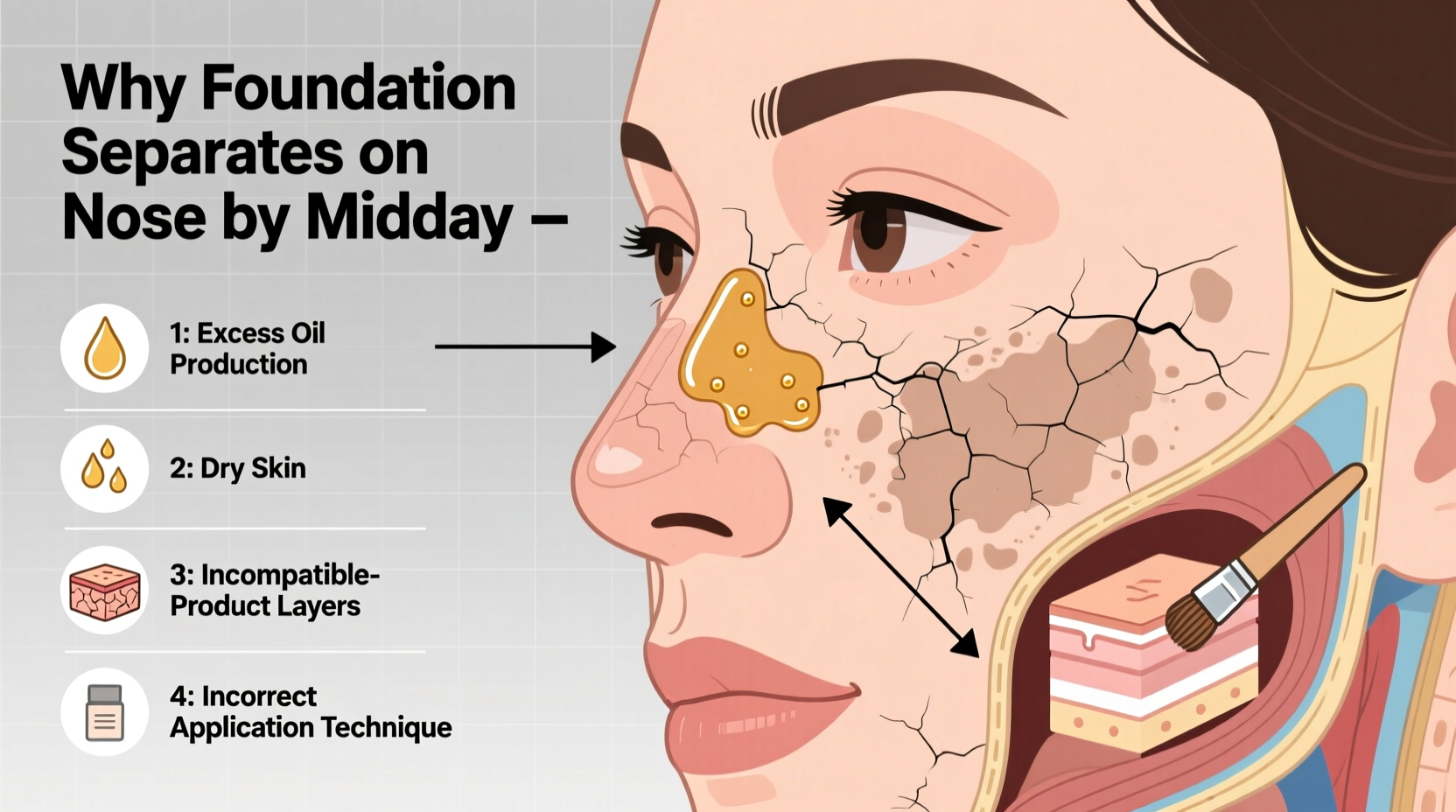
The anatomy and physiology of the nose make it uniquely difficult for foundation adherence. Unlike cheeks or forehead, the nose experiences frequent micro-movements due to talking, smiling, and breathing. Each movement stresses the thin layer of foundation, leading to cracking or lifting over time.
Skin on the nose also tends to produce more sebum. Sebaceous glands are densely packed in the T-zone, especially around the sides and tip of the nose. When oil rises to the surface, it disrupts the emulsion of liquid or cream foundations, causing them to slide or “ball up.” Additionally, enlarged pores on the nose can trap product, creating uneven texture that becomes more visible as the day progresses.
Environmental exposure plays a role too. The nose protrudes from the face, making it more susceptible to wind, humidity, and temperature shifts—all of which impact makeup longevity.
Common Causes of Foundation Separation on the Nose
Foundation separation isn’t random—it follows predictable patterns tied to specific triggers. Identifying which factors apply to you is the first step toward a lasting fix.
1. Excess Oil Production
Oily skin is the number one culprit behind midday foundation meltdown. As sebum accumulates, it breaks down the bond between foundation and skin. What starts as shine quickly turns into patchiness, especially if you’re using a silicone-based or heavy formula.
2. Inadequate Skincare Prep
Skipping moisturizer or using the wrong type can sabotage your base. Dehydrated skin absorbs oils from foundation, leaving dry patches. Conversely, overly rich creams can create a slippery layer underneath makeup, causing slippage.
3. Overlapping Products or Pilling
When skincare and makeup ingredients don’t layer well—such as silicones under water-based foundations—they repel each other, leading to pilling. This is often mistaken for poor blending but is actually a formulation conflict.
4. Using Too Much Product
Applying thick layers of foundation increases the likelihood of cracking, particularly in areas that flex. The nose doesn't need full coverage; excess product simply sits on top rather than blending into the skin.
5. Poor Primer Choice or Application
A primer that doesn’t match your skin type or concerns will do little to anchor foundation. For example, a hydrating primer on oily skin may worsen shine, while a mattifying primer on dry skin can emphasize flakiness.
6. Environmental and Lifestyle Factors
High humidity, pollution, wearing masks, and frequent touching of the face accelerate foundation wear. Even diet and hydration levels influence how your skin interacts with makeup.
“Makeup longevity starts long before the brush touches your face. It begins with skin health and intelligent product pairing.” — Lila Monroe, Celebrity Makeup Artist
Proven Fixes to Prevent Midday Breakdown
Fixing foundation separation isn’t about finding a miracle product—it’s about building a system tailored to your skin’s needs. The following strategies address both cause and effect.
Optimize Your Skincare Routine
Clean, balanced skin provides the best canvas. Use a gentle cleanser followed by a lightweight, non-comedogenic moisturizer suited to your skin type. Allow at least 5–10 minutes for absorption before applying makeup. For oily skin, consider a gel moisturizer with niacinamide to regulate sebum.
Choose the Right Primer
Select a primer based on your primary concern:
- Pore-minimizing: Silicone-based primers (like those with dimethicone) fill in texture and create a smooth barrier.
- Mattifying: Look for primers with clay, silica, or salicylic acid to control oil.
- Hydrating: Best for dry noses; avoid if you're prone to shine.
Use the Correct Foundation Formula
Match your foundation to your skin type and environment:
| Skin Type | Recommended Foundation Type | Avoid |
|---|---|---|
| Oily | Mattifying liquid, powder, or water-based | Heavy creams, oil-infused formulas |
| Dry | Hydrating liquid or serum foundation | Full-coverage matte powders |
| Combination | Lightweight, buildable liquid | One-size-fits-all thick formulas |
| Mature | Luminous, medium-coverage | Drying matte finishes |
Apply Thin Layers and Set Strategically
Less is more on the nose. Use a damp beauty sponge or small brush to press—not drag—foundation onto the area. Build coverage only where needed. After application, set the nose with a light dusting of translucent powder. Avoid over-powdering, which can mix with oil later and create caked texture.
Incorporate Setting Spray Wisely
A quality setting spray locks in makeup and helps meld layers together. Opt for formulas labeled “long-wear” or “matte.” Hold the bottle 8–10 inches away and mist in an “X” and “T” pattern. Let it air-dry—don’t fan or blot immediately.
Step-by-Step Routine for Long-Lasting Nose Coverage
Follow this timeline each morning to minimize midday separation:
- 6:00 AM – Cleanse and Tone
Wash your face with a pH-balanced cleanser. Follow with an alcohol-free toner to remove residue and prep the skin. - 6:05 AM – Hydrate Skin
Apply a pea-sized amount of moisturizer. Focus on cheeks and skip heavy application on the nose unless dry. - 6:12 AM – Apply Targeted Primer
Use a pore-blurring or mattifying primer only on the nose and T-zone. Let it set for 2 minutes. - 6:15 AM – Foundation Application
Dot a small amount of foundation on the back of your hand. Use a small stippling brush to press it onto the nose in gentle tapping motions. Blend edges seamlessly. - 6:18 AM – Conceal Selectively
Only cover redness or blemishes—avoid layering concealer over the entire nose. - 6:20 AM – Set with Powder
Use a fluffy brush to apply a translucent powder lightly over the nose. Focus on the bridge and sides, avoiding the tip if prone to dryness. - 6:22 AM – Lock It In
Mist with setting spray. Wait 30 seconds, then repeat for maximum hold.
This streamlined approach minimizes product buildup while maximizing adhesion.
Mini Case Study: Sarah’s 9-to-5 Makeup Struggle
Sarah, a 32-year-old project manager, struggled with her foundation separating every day by 2 PM. She wore a full-coverage cream foundation and set it heavily with powder, believing it would last longer. Instead, her nose developed cracks and shiny patches, requiring constant touch-ups.
After consulting a dermatological aesthetician, she revised her routine: switched to a lightweight matte liquid foundation, used a mattifying primer only on her T-zone, and reduced powder application. She also began blotting instead of reapplying powder during the day.
Within a week, her foundation lasted until 6 PM with minimal separation. The key wasn’t stronger products—it was smarter layering and respecting her skin’s natural tendencies.
Checklist: Prevent Foundation Separation on the Nose
Use this daily checklist to stay on track:
- ✅ Wash and tone face gently each morning
- ✅ Apply lightweight moisturizer, avoiding excess on the nose
- ✅ Use a targeted primer (mattifying or pore-refining)
- ✅ Apply foundation with a stippling or sponge—tap, don’t swipe
- ✅ Use minimal product on the nose—build only where necessary
- ✅ Set lightly with translucent powder
- ✅ Mist with setting spray twice (before and after powder)
- ✅ Carry blotting papers (not powder) for midday touch-ups
- ✅ Avoid touching your face throughout the day
- ✅ Remove makeup thoroughly at night to prevent clogged pores
Frequently Asked Questions
Can I use powder foundation on my nose to avoid separation?
Yes, but with caution. Pressed powder foundation can work well for oily skin, especially when applied over a hydrated base. However, using powder on dry or flaky skin can accentuate texture. If your nose tends to dry out, opt for a hydrating liquid and set only with a light dusting of translucent powder.
Does wearing a mask contribute to foundation breaking down?
Absolutely. Masks create friction and trap moisture from breathing, which softens foundation and encourages movement. To combat this, use long-wear, transfer-resistant formulas and avoid heavy layers on the upper lip and sides of the nose. Consider using a makeup grip primer designed for mask wear.
Is there a way to fix separated foundation without starting over?
Yes. Gently blot the area with a tissue or blotting paper to remove excess oil. Then, use a clean fingertip or small brush to press any lifted edges back into place. Dab a tiny amount of facial mist or hydrating essence onto a sponge and lightly press over the area to reactivate the product. Finish with a quick spritz of setting spray.
Expert Insight: The Role of Skin Health
Lasting makeup isn’t just about cosmetics—it reflects skin condition. Dermatologists emphasize that chronic foundation issues often signal underlying imbalances.
“Persistent foundation separation on the nose can indicate seborrheic dermatitis, clogged pores, or dehydration. Treating the skin, not just covering it, leads to better results.” — Dr. Rajiv Mehta, Board-Certified Dermatologist
If you’ve optimized your routine and still struggle, consider seeing a dermatologist. Conditions like rosacea, fungal acne, or excessive sebum production may require medical treatment for optimal cosmetic results.
Conclusion: Take Control of Your Makeup Longevity
Foundation separation on the nose by midday isn’t inevitable. It’s a solvable issue rooted in preparation, product compatibility, and technique. By understanding your skin’s behavior and adjusting your routine accordingly, you can achieve a seamless, enduring finish that holds up through meetings, commutes, and conversations.
Start with a clean slate—literally. Reassess your skincare, refine your application method, and choose products that complement rather than combat your skin. Small changes compound into dramatic improvements. You don’t need expensive tools or endless touch-ups—just consistency and attention to detail.




 浙公网安备
33010002000092号
浙公网安备
33010002000092号 浙B2-20120091-4
Comments
No comments yet. Why don't you start the discussion?