
By midday, many people find their carefully applied foundation starting to break apart—especially across the nose. The area may look patchy, shiny, or streaked, undermining hours of effort spent on a smooth, even base. While frustrating, this common issue isn’t inevitable. Understanding the root causes and applying targeted solutions can transform your makeup longevity. From skin preparation to product selection and technique, the reasons behind foundation separation are often more controllable than you think.
The Science Behind Foundation Separation
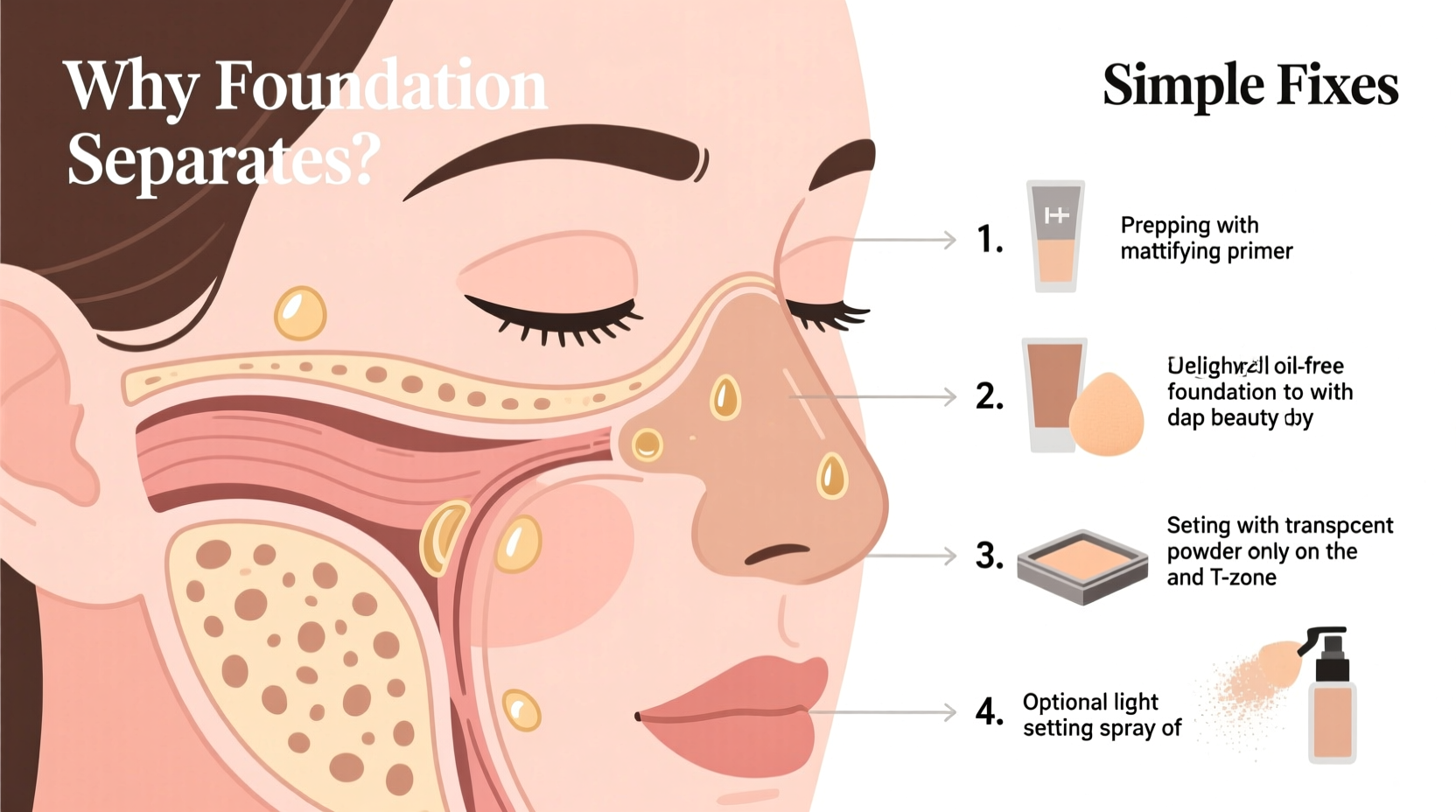
Foundation separation—also known as “makeup pilling” or “emulsion breakdown”—occurs when the formula breaks apart on the skin instead of adhering smoothly. On the nose, this is especially noticeable due to its prominent position and unique texture. The surface of the nose tends to be oilier than other facial areas, has larger pores, and experiences more friction from touching, glasses, or environmental exposure.
When foundation separates, it’s usually because of incompatibility between products or skin conditions that destabilize the formula. For example, mixing silicone-based and water-based products can cause repulsion. Similarly, excess sebum (oil) production disrupts the emulsion of liquid foundations, causing them to slide and crack.
Skin texture also plays a role. Enlarged pores trap product unevenly, while dry patches create ridges where foundation lifts. Over time, natural movement—like talking, smiling, or touching your face—exacerbates these weak points, accelerating separation.
“Makeup doesn’t fail—it reacts. When foundation separates on the nose, it’s usually responding to an imbalance in skincare, application, or environment.” — Lila Chen, Celebrity Makeup Artist & Skincare Consultant
Common Causes of Nose Area Foundation Breakdown
- Oily Skin: The T-zone, particularly the nose, produces more sebum, which interferes with foundation adhesion.
- Poor Skincare Prep: Skipping moisturizer or using incompatible products creates a patchy canvas.
- Product Layering Errors: Mixing incompatible primers, moisturizers, and foundations leads to pilling.
- Overloading Product: Applying too much foundation or powder increases the likelihood of cracking.
- Environmental Factors: Heat, humidity, and pollution accelerate oil production and makeup wear.
- Frequent Touching: Rubbing or adjusting glasses transfers oils and physically disrupts the makeup layer.
Step-by-Step Guide to Prevent Midday Nose Separation
Preventing foundation separation starts long before you pick up a brush. A strategic routine ensures your makeup bonds properly and lasts through the day. Follow this timeline for optimal results:
- Morning Cleanse (7:00 AM): Use a gentle foaming cleanser to remove overnight oil buildup without stripping moisture. Avoid harsh scrubs that irritate the nose and trigger rebound oiliness.
- Hydration Boost (7:05 AM): Apply a lightweight, non-comedogenic moisturizer. Focus on the nose but use sparingly—too much cream prevents foundation adhesion.
- Primer Application (7:10 AM): Choose a mattifying or pore-filling primer specifically for oily zones. Let it set for 2–3 minutes until tacky, not wet.
- Foundation Technique (7:15 AM): Use a damp beauty sponge or stippling brush to press foundation into the nose rather than dragging it. Build coverage gradually.
- Targeted Setting (7:20 AM): After foundation, lightly dust translucent powder only on the nose and sides. Avoid over-powdering, which dries and cracks.
- Setting Spray Lock (7:22 AM): Mist a matte-finish setting spray to fuse layers and reduce shine without disturbing the base.
- Midday Touch-Up (1:00 PM): Blot excess oil with tissue paper, then press (don’t swipe) a small amount of cream concealer or foundation only where needed. Finish with another light mist.
Do’s and Don’ts: Foundation Longevity Table
| Do’s | Don’ts |
|---|---|
| Use a mattifying primer on the nose | Apply heavy moisturizer right before foundation |
| Stipple foundation onto oily areas | Drag product across the nose with a dry brush |
| Blot oil throughout the day | Rub or wipe your nose repeatedly |
| Choose long-wear, transfer-resistant formulas | Mix silicone and water-based products haphazardly |
| Set with a fine mist of setting spray | Layer multiple powders or reapply thickly at noon |
Product Compatibility Matters
One of the most overlooked factors in foundation separation is product chemistry. Foundations are emulsions—carefully balanced mixtures of water, oil, and active ingredients. When layered over incompatible skincare or primers, they can curdle or ball up like milk in coffee.
Silicone-based primers (look for ingredients ending in -cone, like dimethicone) work well under silicone-based foundations. Water-based moisturizers pair best with water-based or hybrid foundations. Mixing the two often leads to pilling, especially in high-movement zones like the nose.
To test compatibility, apply your skincare, let it absorb, then add a small line of primer and foundation on the back of your hand. If it pills or beads, reformulate your routine. Alternatively, stick to one base type across your regimen.
Mini Case Study: Sarah’s 9-to-5 Makeup Struggle
Sarah, a 32-year-old marketing executive, wore glasses and worked in a warm office building. Every morning, she applied full-coverage foundation and felt confident. By 1:00 PM, her nose was shiny, streaked, and visibly separated—especially along the bridge where her glasses rested.
After consulting a makeup artist, she identified three key issues: her moisturizer was too rich, she used a water-based primer under a silicone foundation, and she frequently adjusted her glasses, transferring oil and disrupting the makeup.
Her solution: She switched to a gel moisturizer, used a silicone-based primer only on her T-zone, and began blotting her nose gently every two hours. She also started using a matte setting spray twice daily. Within a week, her foundation stayed intact until 5:00 PM with minimal touch-ups.
Sarah’s experience highlights how small adjustments—especially around product compatibility and physical disruption—can dramatically improve makeup performance.
Expert Tips for Oily and Combination Skin Types
If you have oily or combination skin, your nose is naturally prone to faster makeup breakdown. However, with the right strategy, you can achieve lasting wear.
- Prime Strategically: Use targeted primers only where needed. Full-face priming can lead to over-application and pilling.
- Opt for Cream-to-Powder Formulas: These transform upon contact with skin, bonding better and resisting oil.
- Avoid Overlapping Products: Skip heavy serums or oils on the nose. Reserve them for drier areas like cheeks.
- Use a Fridge-Chilled Sponge: Dampen a beauty sponge and chill it briefly. The cool temperature helps tighten pores and sets foundation faster.
“The nose is the epicenter of makeup movement. Control oil, control friction, and you control longevity.” — Marcus Reed, Lead Artist at Lumière Beauty Studio
Checklist: Fix Foundation Separation in 7 Steps
Follow this actionable checklist each morning to prevent midday breakdown:
- ✅ Cleanse with a pH-balanced facial wash.
- ✅ Apply oil-free moisturizer; wait 3 minutes to absorb.
- ✅ Use a mattifying or pore-blurring primer on the nose only.
- ✅ Choose a long-wear, non-comedogenic foundation compatible with your primer.
- ✅ Apply foundation with a stippling motion—press, don’t drag.
- ✅ Set lightly with translucent powder using a puff or small brush.
- ✅ Lock in with a matte-finish setting spray.
Frequently Asked Questions
Why does my foundation separate only on my nose and not elsewhere?
The nose typically produces more oil, has larger pores, and experiences constant movement and friction—especially if you wear glasses. These factors make it more prone to separation compared to smoother, less oily areas like the cheeks.
Can drinking more water really help my foundation last longer?
Indirectly, yes. Well-hydrated skin maintains a balanced moisture-oil ratio. Dehydrated skin overproduces oil to compensate, which breaks down foundation. Drinking water supports overall skin health, reducing excessive sebum production.
Is there a difference between foundation separating and oxidizing?
Yes. Separation refers to the physical breakdown of the product (pilling, cracking, lifting), while oxidation is a chemical reaction that changes the color of foundation over time—usually making it darker. Both can occur on the nose, but they require different fixes.
Final Thoughts: Small Changes, Big Results
Foundation separation on the nose isn’t a flaw in your skill—it’s a signal from your skin and products. By addressing the underlying causes—oiliness, improper prep, incompatible layers, or mechanical friction—you regain control over your makeup’s staying power. The solutions don’t require expensive products or complex routines. Often, it’s the smallest adjustments—like switching a primer, changing your application method, or simply waiting for absorption—that deliver the most dramatic improvements.
Flawless makeup isn’t about perfection at minute one—it’s about endurance through the day. With consistent attention to preparation, compatibility, and maintenance, you can confidently face meetings, events, and long days knowing your foundation will stay put exactly where you put it.




 浙公网安备
33010002000092号
浙公网安备
33010002000092号 浙B2-20120091-4
Comments
No comments yet. Why don't you start the discussion?