
It’s a familiar frustration: you spend time applying your foundation perfectly in the morning, only to notice shiny patches, visible lines, or an uneven texture forming across your nose by midday. Foundation separation—especially on the nose—is one of the most common makeup concerns, particularly for those with combination or oily skin. But this issue isn’t just about skin type; it stems from a mix of skincare habits, product choices, and application techniques. Understanding the root causes and implementing targeted solutions can transform your makeup routine from fleeting to long-lasting.
Why the Nose Is a Problem Zone
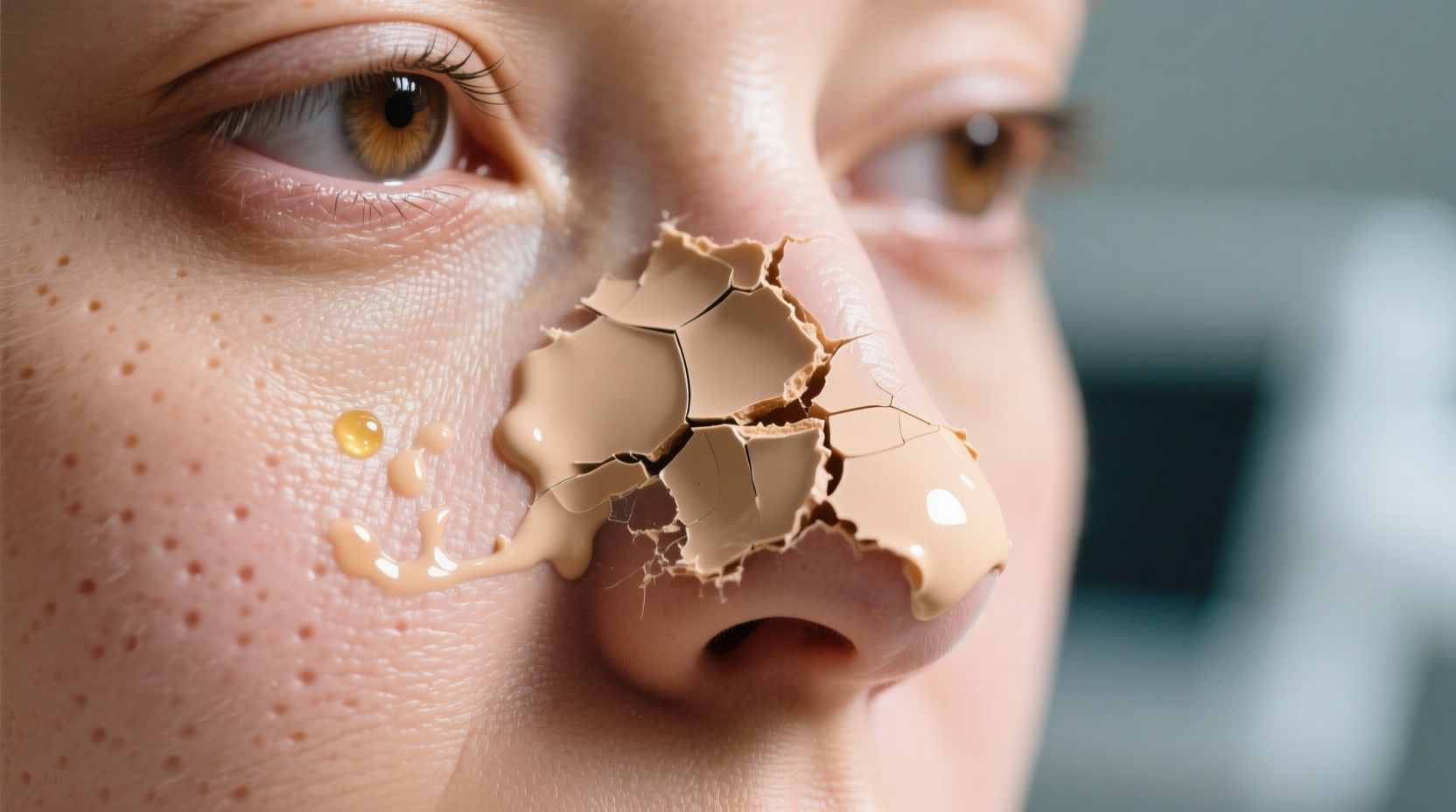
The nose is uniquely prone to foundation separation due to its anatomical and physiological characteristics. It has a high concentration of sebaceous (oil) glands, making it naturally oilier than other areas of the face. This excess sebum breaks down foundation over time, leading to creasing, pilling, and oxidation. Additionally, the nose sits at the center of facial movement—breathing, talking, and even smiling subtly shift the skin, contributing to product displacement.
Environmental factors like humidity, temperature changes, and pollution accelerate the breakdown process. Sweat and natural oils emulsify with foundation ingredients, especially if they’re not formulated for longevity or compatibility with your skin chemistry. Furthermore, the nose often receives more friction—from glasses, touching, or even resting your hand on your face—further disrupting the makeup film.
“Foundation separation on the nose is rarely just a makeup issue—it’s usually a sign that the skin underneath isn’t properly prepped or balanced.” — Dr. Lena Torres, Cosmetic Dermatologist
Common Causes of Midday Foundation Separation
Understanding what triggers separation is the first step toward preventing it. Below are the most frequent culprits:
- Excess Oil Production: Sebum mixes with foundation, breaking down its structure and causing it to slide or crack.
- Poor Skincare Prep: Dry patches or dehydrated skin cause foundation to cling unevenly, while overly greasy skin prevents proper adhesion.
- Incompatible Product Formulations: Mixing silicone-based primers with water-based foundations—or layering products that repel each other—leads to pilling.
- Overloading Products: Too many layers of moisturizer, primer, or foundation trap moisture and create instability.
- Incorrect Blending Tools: Using dry sponges or stiff brushes can drag product, creating buildup in pores and along sides of the nose.
- Touching Your Face: Frequent contact transfers oils and physically removes foundation.
Step-by-Step Routine to Prevent Foundation Separation
Long-wearing foundation starts long before you pick up a brush. A strategic skincare-to-makeup sequence ensures optimal adhesion and stability. Follow this timeline for best results:
- 6–8 Hours Before Makeup (Night Before): Use a gentle exfoliant (like a 5% glycolic acid toner) to remove dead skin cells that cause patchiness. Over-exfoliation weakens the skin barrier, so limit this to 2–3 times per week.
- Morning Cleansing: Wash your face with a pH-balanced cleanser. Avoid stripping formulas that trigger rebound oil production.
- Hydration (Wait 2 Minutes): Apply a lightweight, non-comedogenic moisturizer. Let it absorb fully—this creates a smooth canvas without greasiness.
- Primer Application (Wait 1–2 Minutes): Use a mattifying or pore-filling primer specifically on the nose. Look for ingredients like silica or dimethicone to control oil and blur texture.
- Foundation Application: Use a damp beauty sponge or stippling brush to press foundation into the skin rather than dragging it. Focus on thin, buildable layers.
- Setting Strategy: Immediately after foundation, set the nose with a translucent powder using a small fluffy brush. For extra hold, try the “baking” method for 1–2 minutes, then dust off excess.
- Finishing Spray: Lock everything in with a setting spray designed for longevity. Hold it 8–10 inches away and mist in an X and T pattern.
Product Compatibility: What Works Together (and What Doesn’t)
One of the most overlooked reasons for foundation separation is ingredient incompatibility. When products repel each other, they pill or ball up—especially in high-friction zones like the nose. The key is understanding base types: water, silicone, and oil.
| Base Type | Key Ingredients | Do’s | Don’ts |
|---|---|---|---|
| Water-Based | Water, glycerin, hyaluronic acid | Layer under water or silicone foundations; ideal for dry skin | Avoid mixing with heavy silicones unless fully absorbed |
| Silicone-Based | Cyclomethicone, dimethicone, siloxanes | Use as primer under any foundation; great for oily skin | Never apply over oil-based products—they won’t adhere |
| Oil-Based | Jojoba oil, squalane, mineral oil | Best for dry skin; use sparingly on nose if prone to separation | Avoid under silicone-heavy foundations—they’ll slide off |
To test compatibility, apply a small amount of primer and foundation to the back of your hand. If they roll or ball up when layered, they likely won’t work together on your face.
Real-Life Example: From Midday Meltdown to All-Day Wear
Sarah, a 32-year-old marketing executive, struggled with her foundation separating on her nose within two hours of application. She worked in a climate-controlled office but commuted via subway, exposing her skin to heat and humidity. Despite using high-end products, she constantly needed touch-ups.
After consulting a makeup artist, Sarah revised her routine: she switched from an oil-rich moisturizer to a gel-cream formula, applied a silicone-based mattifying primer only on her T-zone, and began using a full-coverage liquid foundation with a stippling brush. She also started blotting instead of layering powder throughout the day. Within a week, her foundation lasted until evening without separation. The key change? Balancing hydration without excess oil and ensuring all products were compatible.
Actionable Tips to Keep Foundation Intact
Essential Checklist for Flawless, Long-Lasting Coverage
Follow this checklist every morning to minimize the risk of foundation separation:
- ✅ Exfoliate 2–3 times weekly (not on application day if skin is sensitive)
- ✅ Cleanse with a gentle, non-drying formula
- ✅ Apply lightweight moisturizer and wait 2 minutes
- ✅ Use a mattifying or pore-blurring primer on the nose
- ✅ Choose a foundation suited to your skin type and climate
- ✅ Apply with a stippling motion—press, don’t drag
- ✅ Set immediately with translucent powder
- ✅ Finish with a setting spray
- ✅ Carry blotting papers, not powder, for midday touch-ups
- ✅ Avoid touching your face throughout the day
Frequently Asked Questions
Can I use a primer and still have breathable skin?
Yes. Modern primers are formulated to be lightweight and non-comedogenic. Look for labels like “oil-free,” “non-acnegenic,” or “dermatologist-tested.” Silicone-based primers form a breathable film rather than clogging pores, helping foundation adhere without suffocating skin.
Why does my foundation oxidize and darken on my nose?
Oxidation occurs when foundation reacts with oxygen, skin oils, and pH levels. The nose has higher sebum production, which accelerates this reaction. To prevent it, choose foundations with stabilizing antioxidants (like vitamin E), avoid applying too many active skincare products underneath, and opt for brands known for color stability.
Is there a difference between baking and regular setting?
Yes. Baking involves applying a thick layer of loose powder to areas prone to creasing (like under eyes or sides of nose), letting it sit for 1–2 minutes, then brushing it off. This melts the foundation slightly and sets it deeply. Regular setting uses a light dusting of powder immediately after foundation. Baking offers longer wear but can look cakey if overdone—use sparingly on the nose.
Final Thoughts: Consistency Beats Perfection
Preventing foundation separation on your nose isn’t about finding a single miracle product—it’s about building a consistent, thoughtful routine. Skin health, product compatibility, and application technique work together to determine how your makeup performs throughout the day. Small adjustments, like switching your moisturizer or changing your blending tool, can yield dramatic improvements.
Makeup longevity isn’t just cosmetic; it reflects the condition of your skin and the intelligence of your choices. By treating your nose with the same care as the rest of your face—and sometimes even more attention—you can enjoy a fresh, polished look from morning meetings to evening plans.




 浙公网安备
33010002000092号
浙公网安备
33010002000092号 浙B2-20120091-4
Comments
No comments yet. Why don't you start the discussion?