
Foundation separation—especially across the nose—is one of the most common frustrations for people with oily skin. No matter how carefully you apply your base, within hours, fine lines appear, product creases, and streaks form around the sides of your nose. It’s not just unflattering—it can make even high-end makeup look cheap and poorly applied.
The root cause often lies in a combination of skin biology, product chemistry, and application technique. But the good news is that this issue is highly preventable. With the right understanding of *why* it happens and targeted solutions—particularly the strategic use of primers—you can maintain a flawless, matte finish from morning until night.
Why Foundation Separates on the Nose: The Science Behind the Slide
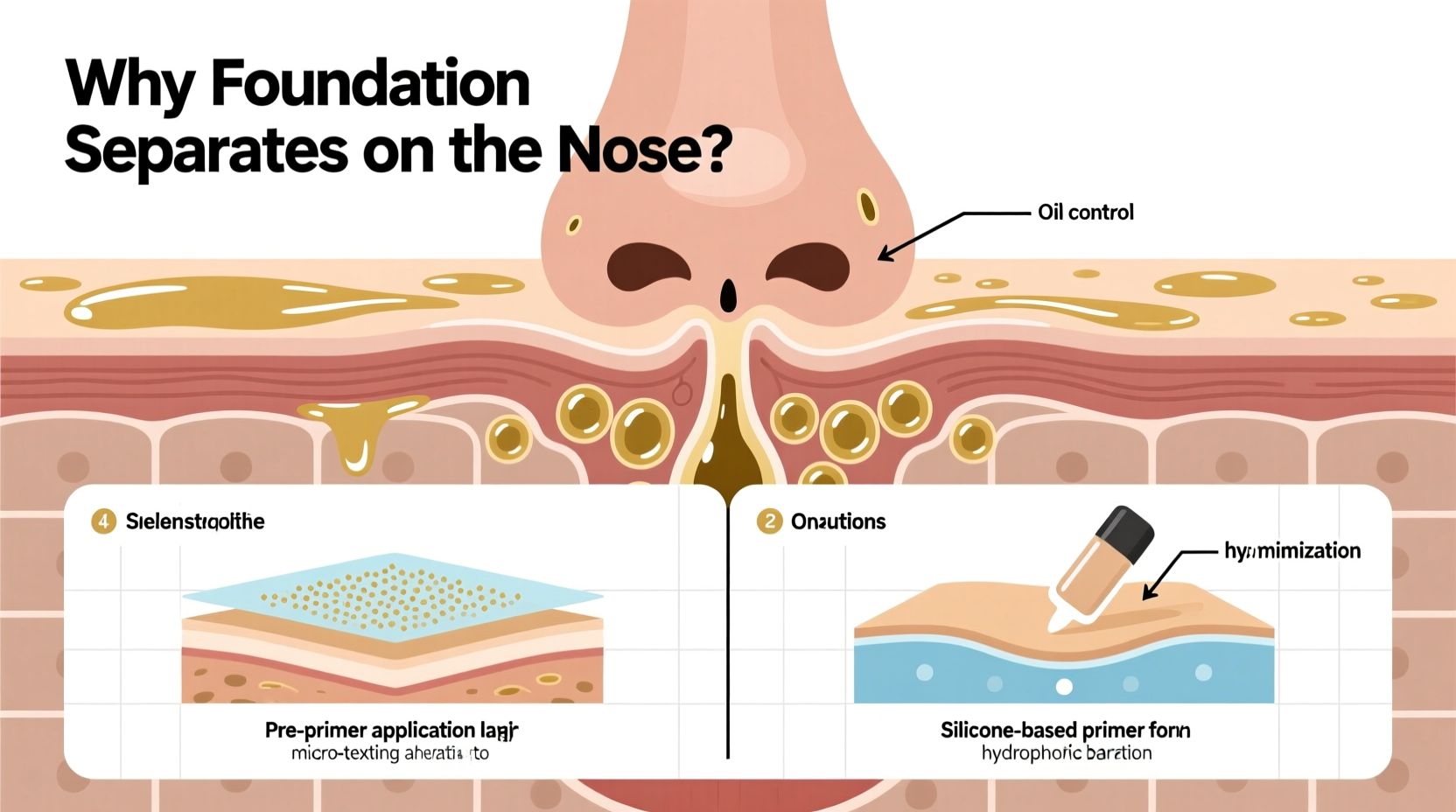
The nose is a hotspot for oil production. It contains a higher concentration of sebaceous (oil) glands than most other areas of the face. This natural sebum helps protect the skin, but when overproduced, it disrupts makeup by breaking down foundation molecules, causing them to lift, crack, or slide off unevenly.
But oil isn’t the only culprit. Other factors include:
- Pore size and texture: Enlarged pores on the nose create tiny divots where makeup settles and later separates as oils push through.
- Skin pH imbalance: Oily skin often has a lower pH, which can interfere with the adhesion of certain foundation formulas.
- Product layering: Mixing silicone-based and water-based products without proper compatibility leads to pilling and separation.
- Movement and friction: Touching your nose throughout the day (adjusting glasses, wiping sweat) accelerates breakdown.
- Humidity and temperature: Heat increases sebum flow, while humidity interferes with setting powders and primers.
Dermatologist Dr. Lena Park explains:
“The T-zone, particularly the nose, is an epicenter of sebum production. When foundation sits atop active oil secretion without a protective barrier, it’s only a matter of time before it begins to degrade.” — Dr. Lena Park, Board-Certified Dermatologist
How Primer Acts as a Shield Against Separation
A well-chosen primer doesn’t just smooth the skin—it creates a stable, adhesive surface that locks foundation in place. For oily skin, the right primer absorbs excess oil, minimizes pores, and regulates moisture balance without clogging follicles.
Primers work by forming a thin film between skincare and makeup. This film serves multiple functions:
- Controls shine by absorbing or mattifying sebum
- Creates a uniform canvas to prevent patchiness
- Enhances foundation longevity by improving adherence
- Protects against environmental stressors like pollution and humidity
Choosing the Right Primer for Oily Skin
Not all primers are created equal. For oily, acne-prone, or combination skin, focus on ingredients and formulation rather than marketing claims. Here’s what to look for:
| Ingredient | Function | Recommended For |
|---|---|---|
| Dimethicone | Creates a breathable, water-resistant barrier | All oily skin types |
| Niacinamide | Regulates oil, reduces redness, tightens pores | Acne-prone, sensitive oily skin |
| Salicylic Acid | Exfoliates inside pores, prevents clogs | Large pores, blackheads |
| Clay (Kaolin, Bentonite) | Instantly absorbs oil, provides matte finish | Very oily or humid climates |
| Alcohol Denat. (in moderation) | Dries quickly, enhances adherence | Short-term wear; avoid if dehydrated |
Avoid heavy emollients like coconut oil or shea butter in primers—they may feel luxurious but will feed oil buildup and accelerate separation.
Step-by-Step Routine to Prevent Foundation Breakdown on the Nose
Even the best primer won’t work if your routine is flawed. Follow this dermatologist-approved sequence for maximum staying power:
- Cleanse with a gentle foaming wash: Use a salicylic acid or niacinamide-infused cleanser to remove excess oil and prep the skin’s surface.
- Tone with a pH-balancing mist: A toner with witch hazel or zinc PCA helps stabilize sebum production.
- Hydrate with a lightweight, oil-free moisturizer: Dehydrated skin overproduces oil. Choose gel-based formulas with hyaluronic acid.
- Wait 5 minutes before applying primer: Let skincare absorb fully to prevent pilling.
- Apply targeted mattifying primer: Dab a pea-sized amount onto the nose and blend outward with fingertips or a sponge.
- Set with translucent powder (optional): Light dusting on the nose pre-foundation can boost grip.
- Apply foundation with a damp sponge or brush: Buff in thin layers—never drag or rub.
- Lock in with setting spray: A silica-based or oil-control formula seals the deal.
Real Example: From Midday Meltdown to All-Day Wear
Samantha, a 29-year-old sales manager in Houston, struggled daily with her foundation separating on her nose by 11 a.m., despite using high-SPF sunscreen and full-coverage foundation. She blamed her job’s constant client meetings and office AC-to-sun transitions.
After consulting a makeup artist, she overhauled her routine: she switched to a niacinamide serum, used a clay-based primer only on her T-zone, and began applying foundation with a stippling brush instead of her fingers. Within three days, her foundation stayed intact past 6 p.m. The key change? Using a primer designed to regulate oil—not just mask it.
“I used to carry blotting papers everywhere,” Samantha says. “Now I touch up once, maybe twice a day, and it’s usually just for color refresh, not because my base is failing.”
Common Mistakes That Worsen Foundation Separation
Many people unknowingly sabotage their makeup with habits that seem helpful but actually trigger breakdown. Avoid these pitfalls:
- Over-priming: Too much primer creates a slippery surface. Less is more—use a rice-grain amount for each side of the nose.
- Mixing incompatible formulas: Silicone foundation over water-based primer (or vice versa) causes pilling. Stick to compatible bases.
- Touching your face: Fingers transfer oil and bacteria. If you must adjust, use a clean sponge or tissue.
- Using expired or low-quality products: Old foundations lose emulsion stability, making them prone to cracking.
- Skipping skincare consistency: Inconsistent cleansing or moisturizing leads to erratic oil production.
“Makeup failure is rarely about the foundation alone. It’s the entire system—from cleanse to set—that determines longevity.” — Marcus Tran, Celebrity Makeup Artist
Primer Product Guide: Top Picks for Oily Skin Types
With so many options on the market, choosing a primer can feel overwhelming. Below is a curated list based on performance, ingredient safety, and user feedback:
| Product | Key Benefit | Best For | Price Range |
|---|---|---|---|
| Smashbox Photo Finish Oil-Free | Mattifies and blurs pores instantly | Daily wear, photography | $$$ |
| The Ordinary High-Adherence Silicone Primer | Affordable, minimal formula | Budget-conscious users | $ |
| Fenty Beauty Pro Filt’r Mattifying Primer | Long-wear, tropical climate tested | Humid environments | $$ |
| Glossier Invisible Shield | Multi-defense with SPF-like protection | Combination skin | $$ |
| Paula’s Choice Shine Stopper | Contains silica and antioxidants | Acne-prone, sensitive skin | $$ |
Note: Always patch-test new primers. Some silicones may cause congestion in reactive skin types.
FAQ: Your Foundation Separation Questions Answered
Can I use a pore-minimizing primer every day?
Yes, as long as it’s non-comedogenic and free from irritants. Look for lightweight, breathable formulas. Daily use can actually improve texture over time by preventing debris buildup in pores.
Should I apply primer before or after sunscreen?
Always apply primer *after* skincare and *before* sunscreen. Sunscreen is the final step in your skincare routine and should go under makeup. However, if you’re using a hybrid product (e.g., moisturizer with SPF), treat it as skincare and apply primer on top.
Why does my foundation separate even with a mattifying primer?
This could be due to product incompatibility, over-application, or underlying dehydration. Try simplifying your routine: use fewer layers, ensure your moisturizer is fully absorbed, and verify that your primer and foundation share the same base (silicone or water).
Checklist: How to Prevent Foundation Separation on the Nose
- ✅ Cleanse with an oil-controlling face wash
- ✅ Use a lightweight, non-greasy moisturizer
- ✅ Wait 5 minutes after moisturizing before priming
- ✅ Apply a mattifying, pore-refining primer to the nose
- ✅ Use a foundation compatible with your primer base
- ✅ Apply with a stippling or damp beauty sponge
- ✅ Set lightly with translucent powder if needed
- ✅ Finish with an oil-control setting spray
- ✅ Carry blotting papers—not powder—for midday touch-ups
- ✅ Wash makeup tools weekly to prevent bacterial buildup
Conclusion: Take Control of Your Base, One Primer at a Time
Foundation separation on the nose isn’t inevitable—it’s a solvable problem rooted in science, not bad luck. By understanding your skin’s behavior and selecting the right primer as a strategic defense, you can achieve a polished, enduring finish that withstands heat, humidity, and daily wear.
The key is consistency: a streamlined routine, compatible products, and mindful application. You don’t need ten steps or luxury brands—just intelligent choices tailored to oily skin’s unique needs. Start tonight by evaluating your current primer and comparing it to your skin’s demands. Make one small adjustment, then build from there.




 浙公网安备
33010002000092号
浙公网安备
33010002000092号 浙B2-20120091-4
Comments
No comments yet. Why don't you start the discussion?