
Foundation separation—especially on the nose—is one of the most common frustrations in makeup wear. No matter how carefully you apply your base, within hours, fine lines appear, product creases, and streaks form across the bridge or sides of your nose. The result? A cakey, uneven look that undermines even the most expertly blended routine. But this isn’t a flaw in your technique or a sign that you need a more expensive foundation. More often than not, it’s about understanding your skin type, prepping correctly, and using the right products in the right order. This guide breaks down exactly why foundation separates on the nose and delivers practical, science-backed solutions using primer and setting techniques that actually work.
Why Foundation Separates on the Nose: The Science Behind the Shift
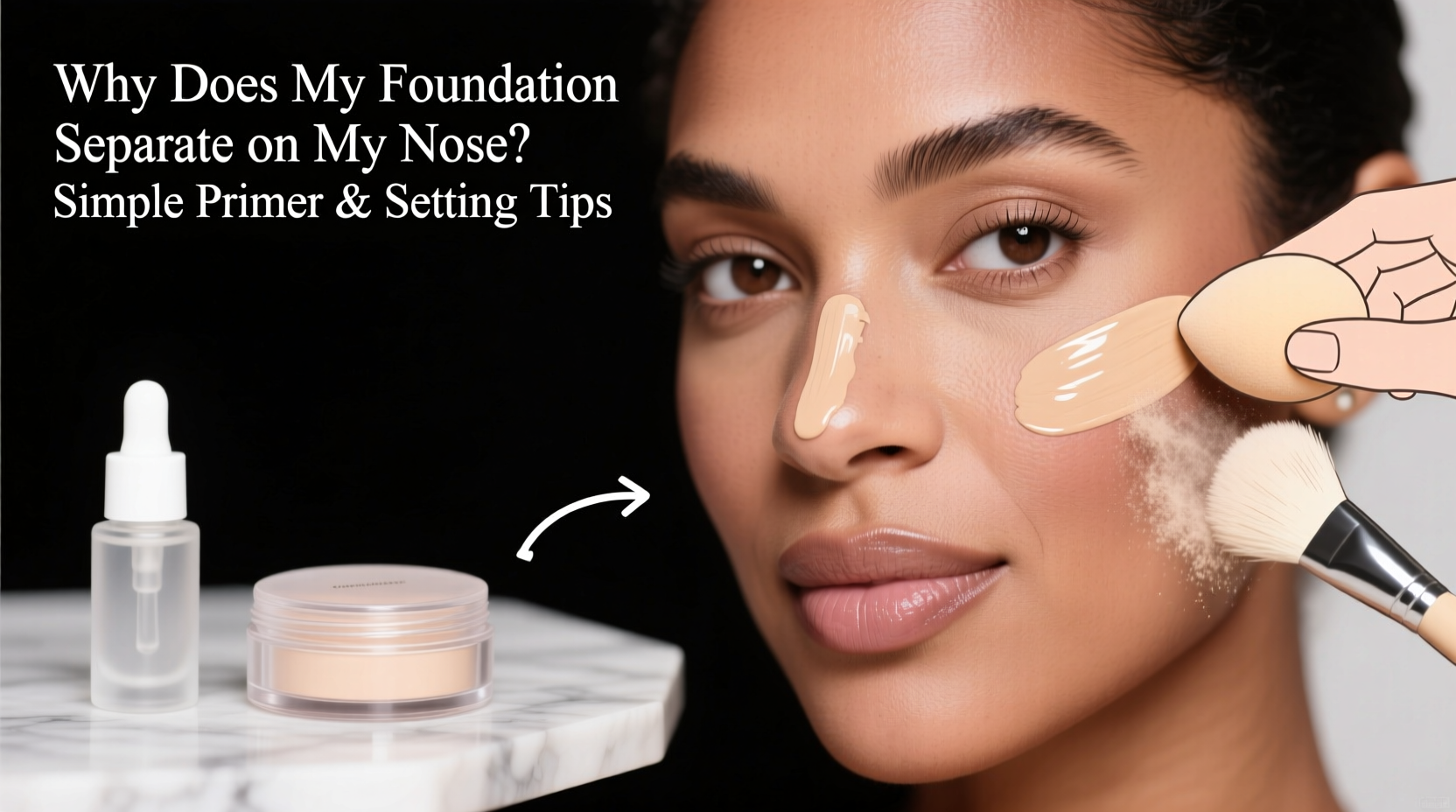
The nose is one of the most dynamic zones on the face. It’s oily, moves frequently with facial expressions, and has larger pores than other areas. These factors make it a hotspot for foundation breakdown. When foundation \"separates,\" it means the formula splits—either due to oil pushing through, moisture imbalance, or friction from touch or mask-wearing.
Skin on the nose tends to produce more sebum because it has a higher concentration of sebaceous glands. When oil rises to the surface, it destabilizes the emulsion of liquid or cream foundations, causing them to slide, crack, or lift away from the skin. Additionally, many people unconsciously touch their nose throughout the day, transferring oils and disturbing the makeup layer.
Another overlooked factor is skincare residue. If moisturizer or sunscreen hasn’t fully absorbed before foundation application, it creates a barrier that prevents proper adhesion. This leads to pilling or separation, particularly where product layers are thickest—like the nose.
“Foundation separation isn’t random—it’s chemistry. Oil, moisture, and movement disrupt the balance of your base. The fix starts long before you squeeze out the foundation.” — Lena Torres, Celebrity Makeup Artist & Skincare Formulator
The Role of Primer: Not Optional, Especially for the Nose
Primer is often treated as an optional step, but for those struggling with foundation separation, it’s essential. Think of primer as the foundation’s foundation. It evens texture, controls oil, and creates a stable canvas. On the nose, its role is even more critical.
There are several types of primers, each serving a different purpose:
- Pore-filling primers (usually silicone-based) smooth out enlarged pores and create a flat surface.
- Mattifying primers absorb excess oil and reduce shine.
- Hydrating primers help balance dry patches without adding greasiness.
- Adhesion primers contain polymers that help makeup grip the skin longer.
For nose-specific concerns, a mattifying or pore-blurring primer works best. Apply it only where needed—focus on the T-zone and sides of the nose—to avoid overloading drier areas like cheeks.
Choosing the Right Primer Formula
Not all primers behave the same. Silicone-based formulas (look for ingredients like dimethicone or cyclopentasiloxane) create a slick, water-resistant barrier ideal for oily zones. Water-based primers are lighter but may not last as long under humid conditions. For combination skin, consider a hybrid formula that balances hydration and oil control.
Step-by-Step Guide: How to Prep and Prime Your Nose for Flawless Foundation
Follow this sequence to minimize separation and extend wear time:
- Cleanse gently: Start with a mild cleanser to remove excess oil and debris without stripping the skin.
- Exfoliate 2–3 times per week: Use a chemical exfoliant (like salicylic acid) to clear clogged pores and prevent buildup that causes patchiness.
- Apply lightweight moisturizer: Choose an oil-free, non-comedogenic formula. Allow it to absorb completely—this can take 3–5 minutes.
- Use targeted sunscreen: If going outdoors, apply a matte-finish SPF and wait another 5 minutes before moving forward.
- Prime the nose area: Dab a pea-sized amount of mattifying or pore-minimizing primer onto the nose and blend outward with fingertips or a sponge.
- Wait before foundation: Let the primer set for at least one minute. This allows the film-forming agents to activate.
- Apply foundation with light layers: Use a damp sponge or brush to build coverage gradually. Avoid heavy application on the nose.
- Set immediately: Use a translucent powder just on the nose to lock everything in place.
Setting Strategies That Prevent Separation All Day
Setting isn’t just about reducing shine—it’s about sealing the foundation into place. The nose needs a strategic approach because it’s both oily and prone to movement.
Here are three effective setting methods:
- Baking: Apply a generous amount of loose powder to the nose, wait 2–3 minutes, then dust off excess. Best for long wear but use sparingly to avoid dryness.
- Press-and-go: Use a powder puff to press translucent powder into the nose. This method sets without adding thickness.
- Setting spray with a sealant effect: Look for sprays containing glycerin or polymer blends that form a flexible film over makeup.
Avoid overspraying setting spray directly onto the nose if you’re already oily—this can cause foundation to slide. Instead, mist the air and walk into it, or apply with a sponge for controlled distribution.
Best Setting Products for Oily, Prone-to-Separate Areas
| Product Type | Recommended For | Key Ingredients | Application Tip |
|---|---|---|---|
| Translucent Loose Powder | Oily skin, large pores | Silica, talc | Use a small fluffy brush for precision |
| Pressed Mattifying Powder | Touch-ups during the day | Clay, cornstarch | Blot first, then press lightly |
| Setting Spray (Matte Finish) | All-day wear, humidity | Denatured alcohol, PVP | Hold 8–10 inches away; 2–3 sprays max |
| Silicone-Based Primer | Pore filling, oil control | Dimethicone, cyclomethicone | Apply only to problem zones |
Real Example: From Midday Meltdown to All-Day Wear
Sophia, a 32-year-old project manager, struggled with her foundation separating by noon, especially along the sides of her nose. She used a hydrating serum followed by a rich moisturizer, applied foundation with a brush, and finished with a light dusting of powder. Despite the effort, she was constantly blotting and reapplying.
After consulting a makeup artist, she adjusted her routine: switched to an oil-free moisturizer, waited 5 minutes after skincare, used a silicone-based pore primer only on her nose, applied foundation with a damp sponge, and pressed translucent powder into the area. She also started using a matte finish setting spray held at arm’s length.
The result? Her foundation stayed intact for 10+ hours, even during back-to-back Zoom calls and commutes. The key wasn’t doing more—it was doing things in the right order and targeting the nose specifically.
Common Mistakes That Cause Foundation Separation
Even with good products, small errors can sabotage your base. Watch out for these frequent missteps:
- Layering too many heavy products: Thick serums or occlusive moisturizers trap moisture and push foundation off.
- Applying foundation too soon: If skincare isn’t fully absorbed, it creates a slippery layer.
- Using the wrong tools: A dense brush can drag and disturb product, while a dirty sponge harbors bacteria and oils.
- Skipping powder on oily zones: Even if you hate powder, the nose often needs it for longevity.
- Touching your face repeatedly: This transfers oil and physically lifts foundation.
Checklist: Foundation Longevity Routine for the Nose
Follow this checklist every time you do your makeup to prevent separation:
- ✅ Cleanse and tone with a pH-balanced product
- ✅ Exfoliate 2–3 times weekly (chemical preferred)
- ✅ Apply lightweight, oil-free moisturizer
- ✅ Wait 5 minutes for full absorption
- ✅ Apply sunscreen (matte finish if oily)
- ✅ Use a mattifying or pore-filling primer on the nose
- ✅ Wait 60 seconds for primer to set
- ✅ Apply foundation with a damp sponge or stippling brush
- ✅ Focus on thin layers—build only where needed
- ✅ Set the nose with translucent powder (press, don’t swipe)
- ✅ Finish with a light mist of setting spray
- ✅ Carry blotting papers for touch-ups, not powder
Frequently Asked Questions
Can I skip primer if I have oily skin?
No. Skipping primer on oily skin often makes separation worse. Instead, choose a lightweight, mattifying primer designed for oily complexions. It absorbs oil before it reaches your foundation and creates a smoother surface.
Why does my foundation separate even with powder?
This usually happens when the underlying layers aren’t compatible. For example, mixing silicone-based primer with water-based foundation can cause repulsion. Also, if powder isn’t pressed in properly, it sits loosely and fails to set the product underneath. Make sure your products are compatible and always press powder into high-oil zones.
Is there a way to fix separated foundation during the day?
Yes. Gently blot excess oil with a tissue or blotting paper. Then, use a tiny amount of concealer on a clean fingertip to spot-correct the area. Avoid layering more foundation—it will only get heavier and patchier. Finish with a quick press of powder.
Final Tips for a Seamless, Long-Lasting Base
Foundation separation on the nose is preventable—not inevitable. The solution lies in preparation, precision, and product compatibility. Treat the nose as a unique zone that requires targeted care. Invest in a quality primer that controls oil or blurs pores, allow each layer to set before moving to the next, and never underestimate the power of pressing powder into trouble spots.
Remember, flawless makeup isn’t about covering flaws—it’s about creating harmony between your skin and your products. When your routine respects your skin’s natural behavior, your foundation stays put, looks fresh, and enhances your features without drawing attention to itself.




 浙公网安备
33010002000092号
浙公网安备
33010002000092号 浙B2-20120091-4
Comments
No comments yet. Why don't you start the discussion?