
If you’ve ever applied foundation with care, only to see it crack, slide, or form unflattering patches around your nose by midday, you’re not alone. This frustrating phenomenon—foundation separating specifically on the nose—is one of the most common complaints among makeup wearers, especially those with combination or oily skin. The culprit? Usually an overactive T-zone. But understanding *why* this happens is the first step toward a smoother, longer-lasting makeup application.
The nose sits at the center of the face and naturally produces more oil than other areas due to a high concentration of sebaceous glands. When excess sebum mixes with foundation, it disrupts the product’s integrity, causing it to break down, pill, or slide off. Environmental factors, skincare choices, and application techniques also play critical roles. Solving this issue isn’t about switching foundations blindly—it’s about addressing the root causes and building a targeted routine that supports lasting wear.
The Science Behind Oily Skin and Foundation Separation
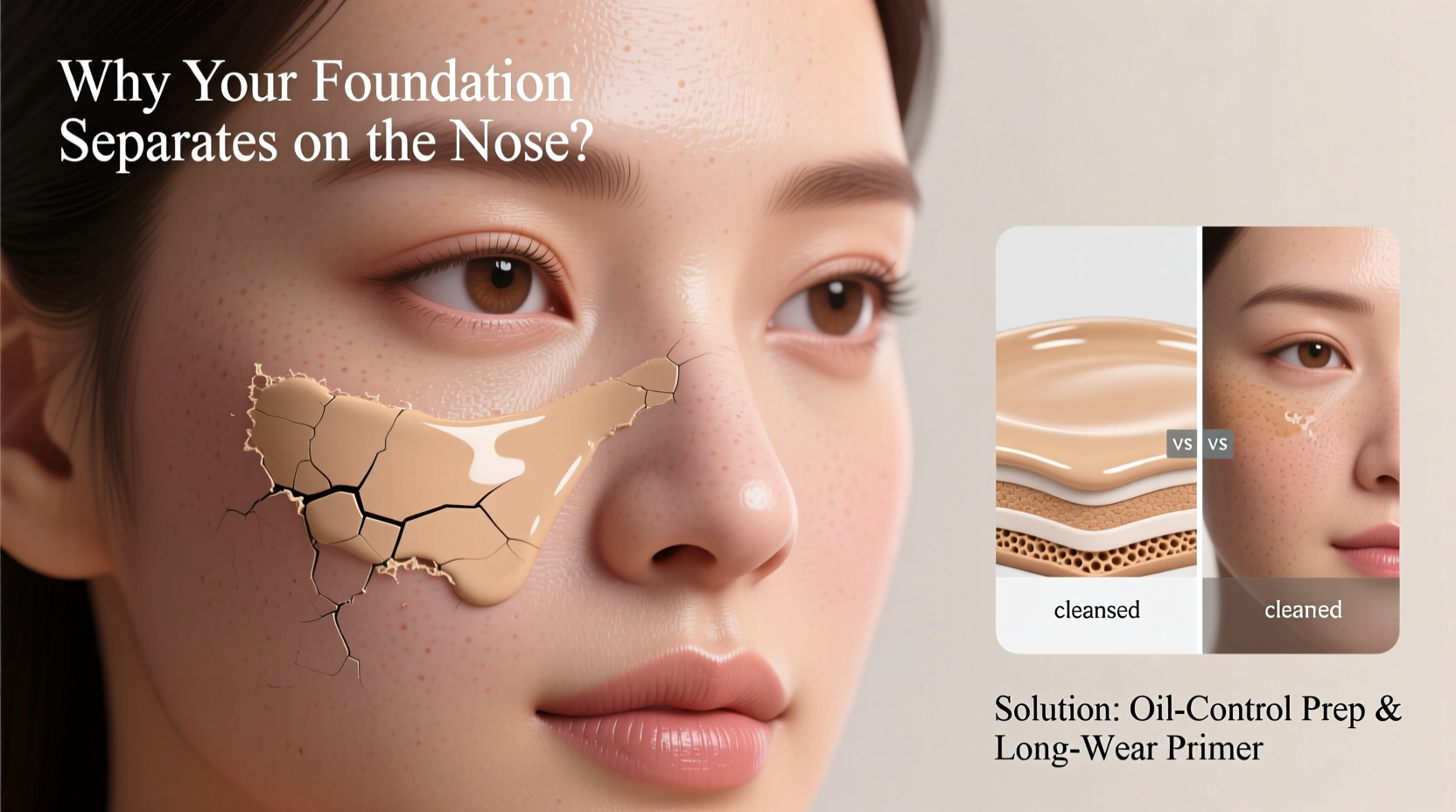
Your skin produces sebum, an oily substance that helps keep your skin hydrated and protected. However, the T-zone—comprising the forehead, nose, and chin—contains a higher density of oil glands. On the nose, in particular, these glands are clustered closely together, making it a hotspot for shine and makeup disruption.
When sebum rises to the surface, it creates a slick layer that interferes with the adhesion of foundation. Instead of blending seamlessly into the skin, the foundation begins to lift, separate, or emulsify. This process is accelerated by heat, humidity, and friction (like touching your face throughout the day). Additionally, incompatible product formulations—such as water-based foundation over silicone-heavy primers—can cause chemical repulsion, leading to pilling.
“Oil production peaks in the T-zone not just because of gland density, but also due to increased blood flow and temperature in that area.” — Dr. Lena Patel, Dermatological Researcher
It’s important to recognize that oily skin isn’t inherently problematic. In fact, it often ages more slowly due to natural moisture retention. The challenge lies in managing oil without stripping the skin, which can trigger even more sebum production through overcompensation.
Common Causes of Foundation Separation on the Nose
- Excess sebum production: The primary driver, especially in warm or humid environments.
- Incompatible skincare and makeup layers: Mixing water-based and oil-based products without proper absorption leads to pilling.
- Over-moisturizing before makeup: Heavy creams can create a slippery base, preventing foundation from adhering.
- Poor exfoliation: Buildup of dead skin cells creates texture where foundation catches and cracks.
- Touching the face frequently: Fingers transfer oil, bacteria, and friction, disrupting makeup.
- Using expired or low-quality products: Formulations degrade over time, reducing their stability on skin.
Step-by-Step Guide to Prevent Foundation Separation
Fixing foundation separation requires a holistic approach—from skincare prep to setting techniques. Follow this detailed routine for a seamless, long-wearing result.
- Cleanse with a gentle foaming cleanser – Start with a pH-balanced, non-comedogenic formula that removes impurities without over-drying. Avoid harsh sulfates that strip the skin and trigger rebound oiliness.
- Exfoliate 2–3 times per week – Use a chemical exfoliant with salicylic acid (BHA) to penetrate pores and dissolve oil and debris. Physical scrubs can irritate the nose area and worsen flakiness under foundation.
- Apply a lightweight, mattifying moisturizer – Choose an oil-free gel or serum-based moisturizer containing niacinamide, which regulates sebum production. Allow it to fully absorb—wait at least 5 minutes—before moving to the next step.
- Prime strategically – Use a pore-minimizing or mattifying primer only on the T-zone. Silicone-based primers like those with dimethicone create a smooth barrier that locks in skincare and keeps foundation intact.
- Apply foundation with the right tools – A damp beauty sponge provides sheer to medium coverage with a natural finish, while a dense brush offers more control for spot-concealing. Avoid applying too much product on the nose—build thin layers instead.
- Set immediately with powder – Use a translucent setting powder applied with a small fluffy brush or pressed lightly with a puff. Focus on the sides of the nose and any creases where separation typically occurs.
- Lock it in with setting spray – A fine mist of alcohol-free setting spray fuses makeup layers and adds flexibility, reducing cracking. Hold the bottle 8–10 inches away and use a crisscross motion.
Do’s and Don’ts: Foundation Application for Oily T-Zones
| Do | Don’t |
|---|---|
| Use oil-controlling primers on the T-zone only | Apply heavy creams directly before foundation |
| Blot excess oil throughout the day | Rub or wipe your nose with tissue |
| Choose long-wear, matte, or satin-finish foundations | Mix multiple silicone-heavy products without drying time |
| Reapply powder using a pressing motion | Layer concealer thickly on top of foundation |
| Wash makeup tools weekly to prevent bacteria buildup | Sleep in your makeup |
Real-Life Example: Maria’s Makeup Transformation
Maria, a 32-year-old marketing executive, struggled daily with her foundation breaking apart on her nose by 11 a.m., despite reapplying during bathroom breaks. She used a hydrating cream recommended for dry skin, followed by a dewy liquid foundation and minimal powder. After consulting a makeup artist, she revised her routine: she switched to a gel moisturizer, added a BHA toner into her evening regimen, and began using a mattifying primer only on her T-zone. She also started setting her nose area with a micro-fine translucent powder and carrying blotting papers.
Within a week, her foundation lasted past 6 p.m. without separation. “I finally stopped feeling self-conscious during client meetings,” she said. “The key wasn’t covering up oil—it was managing it before it became a problem.”
Choosing the Right Foundation for Your Skin Type
Not all foundations behave the same on oily skin. While dewy finishes may look radiant in photos, they often exaggerate oiliness and shorten wear time. Look for keywords like “matte,” “long-wear,” “oil-free,” or “transfer-resistant” when selecting a formula.
Hybrid formulas—such as water-based foundations with light silicones—offer a balance between comfort and durability. Mineral foundations, particularly those in powder form, are excellent for oily zones but may require additional hydration on drier areas like cheeks.
Test new foundations at the store or order samples. Wear it for a full day, noting when and where breakdown begins. Keep a log to identify patterns—this helps build a personalized makeup profile over time.
Expert Tips for Long-Lasting Wear
- Bake selectively: Apply a generous amount of loose powder under the eyes and on the sides of the nose, wait 2–3 minutes, then dust off. This technique sets foundation deeply without looking chalky.
- Use a silicone sealant: A tiny drop of facial oil or silicone serum on dry areas prevents flaking, while avoiding the T-zone keeps oiliness in check.
- Invest in a makeup fridge: Cool products feel refreshing on the skin and help minimize pore size temporarily, creating a smoother canvas.
- Reapply smartly: Instead of layering more foundation, touch up with a mattifying powder or a pressed powder compact designed for shine control.
“The secret to flawless makeup on oily skin isn’t concealment—it’s balance. Control oil where you need to, but don’t sacrifice skin health for aesthetics.” — Jamal Reyes, Celebrity Makeup Artist
Frequently Asked Questions
Why does my foundation separate only on my nose and not elsewhere?
The nose has a higher concentration of sebaceous glands compared to other facial areas. It also tends to be warmer, which increases oil production. Combined with frequent touching and movement from facial expressions, the nose becomes a hotspot for foundation breakdown.
Can drinking more water reduce oiliness and improve foundation wear?
Indirectly, yes. Proper hydration supports overall skin balance. Dehydrated skin can signal the body to produce more oil, worsening shine. Drinking enough water, along with using a lightweight moisturizer, helps maintain equilibrium.
Is it better to use powder or liquid foundation for oily skin?
Both can work, but powder foundations are generally more forgiving on oily skin, especially in hot or humid climates. Liquid foundations offer better coverage and blendability but require careful layering and setting. For best results, consider a powder on the T-zone and liquid on drier areas.
Checklist: Prevent Foundation Separation on Your Nose
- Wash face with a gentle, oil-free cleanser each morning
- Exfoliate 2–3 times per week with a BHA product
- Apply a lightweight, mattifying moisturizer and wait 5 minutes
- Prime the T-zone with a silicone-based or pore-blurring primer
- Use a long-wear, oil-free foundation suited to your skin tone
- Apply foundation with a sponge or brush—avoid fingers
- Set the nose and T-zone with translucent powder
- Finish with a setting spray in a crisscross motion
- Carry blotting papers for midday oil control
- Wash makeup tools weekly to prevent clogged pores
Conclusion: Take Control of Your T-Zone, Not Just Your Makeup
Foundation separation on the nose isn’t a makeup failure—it’s a signal from your skin. By understanding the interplay between oil production, product compatibility, and application technique, you can transform your routine from reactive to proactive. Lasting makeup starts with healthy skin, not heavy layers.
You don’t need a full product overhaul. Small, consistent adjustments—like switching your moisturizer, adding a targeted primer, or learning to blot instead of wipe—can make a dramatic difference. Over time, these habits become second nature, giving you confidence that your makeup will stay put, no matter the occasion.




 浙公网安备
33010002000092号
浙公网安备
33010002000092号 浙B2-20120091-4
Comments
No comments yet. Why don't you start the discussion?