
A malfunctioning ice maker is one of the most frustrating kitchen appliance issues, especially when you're hosting guests or simply craving a cold drink on a hot day. While modern refrigerators come equipped with built-in ice makers for convenience, they are not immune to problems. When yours stops producing ice—or worse, stops responding altogether—it's easy to assume the worst. But in many cases, the issue isn’t a failed component but a simple mechanical or environmental problem that can be resolved at home without calling a technician.
Understanding the root causes behind an inactive ice maker allows homeowners to troubleshoot effectively and avoid unnecessary repair costs. From frozen water lines to misaligned sensors, several factors can interrupt ice production. This comprehensive guide walks through the most common reasons your fridge’s ice maker stops working and provides practical, step-by-step solutions to get it back in action.
1. Power or Settings Issues: The Simple Oversights
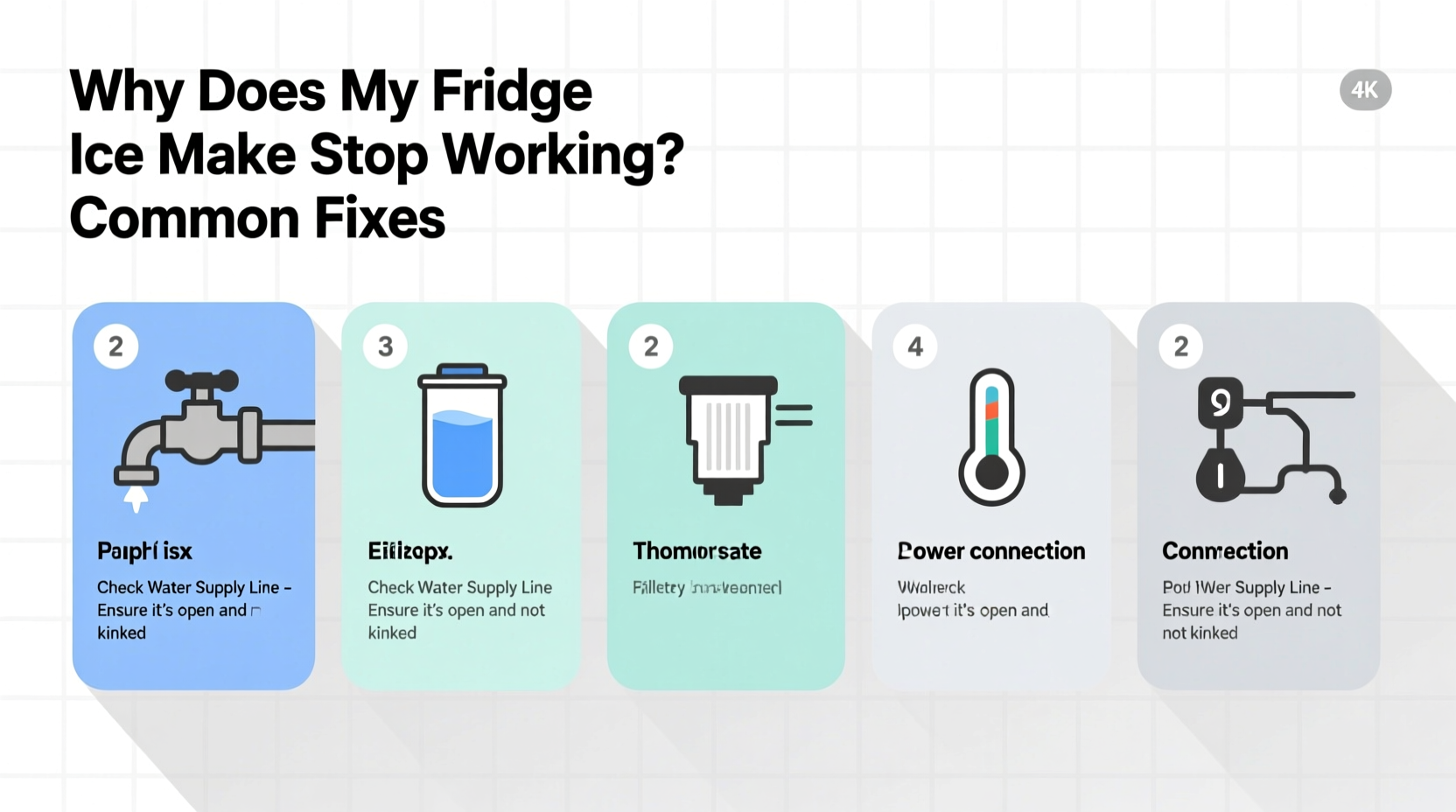
Before diving into complex diagnostics, rule out the most basic possibilities. Many users overlook settings and power-related functions that can disable the ice maker without any visible warning.
- Check if the ice maker is turned on: Some models have an on/off switch located near the ice tray or inside the freezer compartment. It may look like a small toggle or a red wire bail arm. If it’s in the “off” position or lifted up (as in older GE models), the unit won’t cycle.
- Verify control panel settings: Fridges with digital displays often include an “Ice Maker On/Off” option buried in the settings menu. Ensure it’s enabled.
- Power interruption: Has there been a recent power outage? Some ice makers require a manual reset after power loss. Unplugging the refrigerator for 30 seconds and plugging it back in may reboot internal systems.
2. Water Supply Problems: No Water, No Ice
The ice maker relies entirely on a steady flow of water. Even minor disruptions in supply can halt production completely. Here’s how to diagnose and resolve water line issues:
Inspect the Water Supply Valve
Located behind the refrigerator or under the kitchen sink, this shutoff valve must be fully open. Over time, vibrations or accidental bumps can partially close it, reducing water pressure below operational levels.
- Unplug the refrigerator for safety.
- Pull the fridge away from the wall to access the water line connection.
- Ensure the valve handle is aligned with the pipe (open) rather than perpendicular (closed).
- Turn it counterclockwise until snug, but don’t over-tighten.
Test the Water Pressure
Ice makers require between 20 and 120 psi of water pressure. Low pressure results in small or hollow ice cubes—or none at all.
- Disconnect the water line from the fridge inlet and place the end in a bucket.
- Turn the valve on briefly. You should see a strong, steady stream.
- If the flow is weak, check for kinks in the supply line or sediment buildup in the filter.
Replace a Clogged Water Filter
Most refrigerators with water dispensers also filter water going to the ice maker. A neglected filter can restrict flow significantly.
3. Frozen Water Line: A Common Winter Woe
One of the most frequent causes of ice maker failure is a frozen water fill tube. This narrow plastic or copper line runs from the back of the fridge into the freezer and delivers water directly to the mold. When exposed to fluctuating temperatures or poor airflow, moisture inside the line can freeze, blocking water delivery.
How to Tell If the Line Is Frozen
- No new ice has formed in over 24 hours.
- The water dispenser works, but the ice maker doesn’t receive water.
- Frost buildup around the fill cup above the ice mold.
Defrosting the Fill Tube
- Turn off the ice maker using the switch or control panel.
- Remove any remaining ice cubes from the bin.
- Use a hairdryer on low heat to gently warm the fill tube located at the back of the freezer compartment. Do not use sharp objects to chip ice—this can damage internal components.
- Alternatively, leave the freezer door open for a few hours to allow natural thawing.
- Once thawed, restore power and test the unit by manually pouring about 1/4 cup of water into the mold. If it freezes and ejects properly, the blockage was the issue.
“Frozen water lines account for nearly 40% of service calls we receive for non-working ice makers. Most could’ve been fixed in under an hour with basic tools.” — Marcus Reed, Appliance Repair Technician with 15 years of experience
4. Mechanical and Component Failures
If basic checks don’t resolve the issue, internal parts may be failing. These components wear out over time and require inspection or replacement.
Malfunctioning Ejector Gear or Motor
After freezing a batch, the ice maker uses a motor-driven gear to rotate the ejector blades and push cubes out. If this mechanism jams due to worn gears or excessive frost, ice remains stuck in the mold.
Symptoms include:
- Full ice tray with no ejection.
- Grinding or clicking noises during cycle.
- Partial ejection leaving some cubes behind.
Solution: For Whirlpool, Kenmore, and KitchenAid models using the standard OEM ice maker assembly, replacing the entire module (available online for $80–$150) is often more cost-effective than repairing individual gears.
Defective Inlet Valve
The water inlet valve opens to let water into the ice mold at the start of each cycle. If it fails electrically or mechanically, no water enters—despite correct pressure and settings.
To test:
- Locate the valve at the rear bottom of the fridge (usually near where the water line connects).
- Listen during a cycle attempt. A working valve produces a brief humming or clicking sound.
- If silent, use a multimeter to check for continuity. No continuity means replacement is needed.
| Component | Symptom | Solution |
|---|---|---|
| Water Inlet Valve | No water entering mold; no sound during fill cycle | Replace valve ($30–$60 part) |
| Ice Maker Assembly | Motor runs but no ejection; inconsistent cycling | Replace full unit |
| Thermostat Sensor | Unit doesn’t sense frozen ice; continuous filling | Calibrate or replace |
| Freezer Temperature | Ice forms slowly or not at all | Set to 0°F (-18°C) |
5. Environmental and Installation Factors
Even with perfect internal components, external conditions can prevent proper operation.
Freezer Temperature Too High
An ice maker requires a consistent freezer temperature of 0°F (-18°C) or lower. If the thermostat is miscalibrated or the door seal is leaking, the environment may be too warm for reliable freezing.
Check:
- Use a standalone thermometer to verify actual temperature.
- Inspect door gaskets for cracks or looseness. Clean with mild soap and water to ensure a tight seal.
- Avoid overloading the freezer, which restricts air circulation.
Improper Refrigerator Leveling
Many ice makers rely on gravity-fed mechanisms and precise alignment. If the fridge leans forward or to one side, water may pool unevenly in the mold, causing misshapen cubes or sensor errors.
Adjustment steps:
- Place a bubble level on the top shelf inside the fridge.
- Adjust the front leveling legs until the refrigerator is balanced side-to-side and slightly tilted backward (so doors self-close).
- Recheck ice production after 24 hours.
Real-World Example: The Case of the Silent Samsung
A homeowner in Denver reported her Samsung RF26XAEDBSR stopped making ice after a week-long winter vacation. The fridge was powered, the water dispenser worked, but the ice maker was unresponsive. After checking the obvious—power setting, water filter, and valve—the technician found a completely frozen fill tube. The house had dropped below 55°F while the heater was off, chilling the exterior wall where the water line passed through. The line froze just before entering the fridge. Using a hairdryer for 10 minutes and insulating the external pipe solved the issue permanently.
This case highlights how ambient temperature, installation location, and insulation play critical roles—not just internal mechanics.
Troubleshooting Checklist: What to Do When Your Ice Maker Fails
- Confirm the ice maker is turned on (switch down or digital setting enabled).
- Check that the freezer temperature is at or below 0°F (-18°C).
- Inspect the water supply valve—ensure it’s fully open.
- Test water pressure by disconnecting the line (into a bucket).
- Replace the water filter if older than 6 months.
- Look for frost around the fill tube—indicating a freeze blockage.
- Manually pour water into the mold to test freezing and ejection.
- Listen for sounds during a cycle (humming, clicking).
- Examine door seals and ensure the fridge is level.
- If all else fails, consider replacing the water inlet valve or ice maker assembly.
Frequently Asked Questions
Why does my ice maker make noise but produce no ice?
Noises like buzzing or clicking usually mean the motor or water valve is trying to operate. If no water fills the tray, the issue is likely a clogged filter, closed shutoff valve, or failed inlet valve. If water fills but doesn’t freeze, check the freezer temperature first.
Can I run the ice maker without a water filter?
Most modern refrigerators allow bypass operation temporarily. Some have a filter override button; others will operate with reduced flow. However, skipping the filter long-term risks sediment buildup and poor-tasting ice. Install a bypass plug if you’re not using filtered water.
How long does it take for an ice maker to start working after repairs?
After fixing a water issue or thawing a line, expect a delay of 6 to 12 hours. The unit needs time to cool the mold and complete its first full cycle. Avoid pressing reset buttons repeatedly—this can interfere with the timing mechanism.
Conclusion: Take Action Before Calling for Help
A non-working ice maker rarely requires immediate professional service. In most cases, the cause is something simple: a forgotten switch, a clogged filter, or a frozen line. By methodically checking power, water flow, temperature, and mechanical components, you can restore function in under an afternoon. Regular maintenance—like changing filters and cleaning the ice bin—goes a long way toward preventing future failures.
Don’t let a quiet ice maker disrupt your routine. With the right knowledge and a few household tools, you can diagnose and fix the majority of issues yourself. Save time, reduce waste, and enjoy the convenience of fresh ice whenever you need it.




 浙公网安备
33010002000092号
浙公网安备
33010002000092号 浙B2-20120091-4
Comments
No comments yet. Why don't you start the discussion?