
A refrigerator is one of the most essential appliances in any home, running 24/7 to keep food fresh and safe. While some low-level sounds are normal, a sudden or unusually loud humming noise—especially noticeable at night—can be concerning. The quiet of nighttime amplifies household sounds, making even subtle mechanical hums seem louder than they actually are. However, not all humming is harmless. Some noises signal routine operation, while others may indicate developing problems that could lead to costly repairs or premature failure.
Understanding why your fridge hums, when it’s normal, and when it requires action can save you time, money, and stress. This guide breaks down the science behind fridge sounds, identifies common causes of nighttime humming, and provides actionable steps to diagnose and resolve issues before they escalate.
How Refrigerators Work: The Source of the Hum
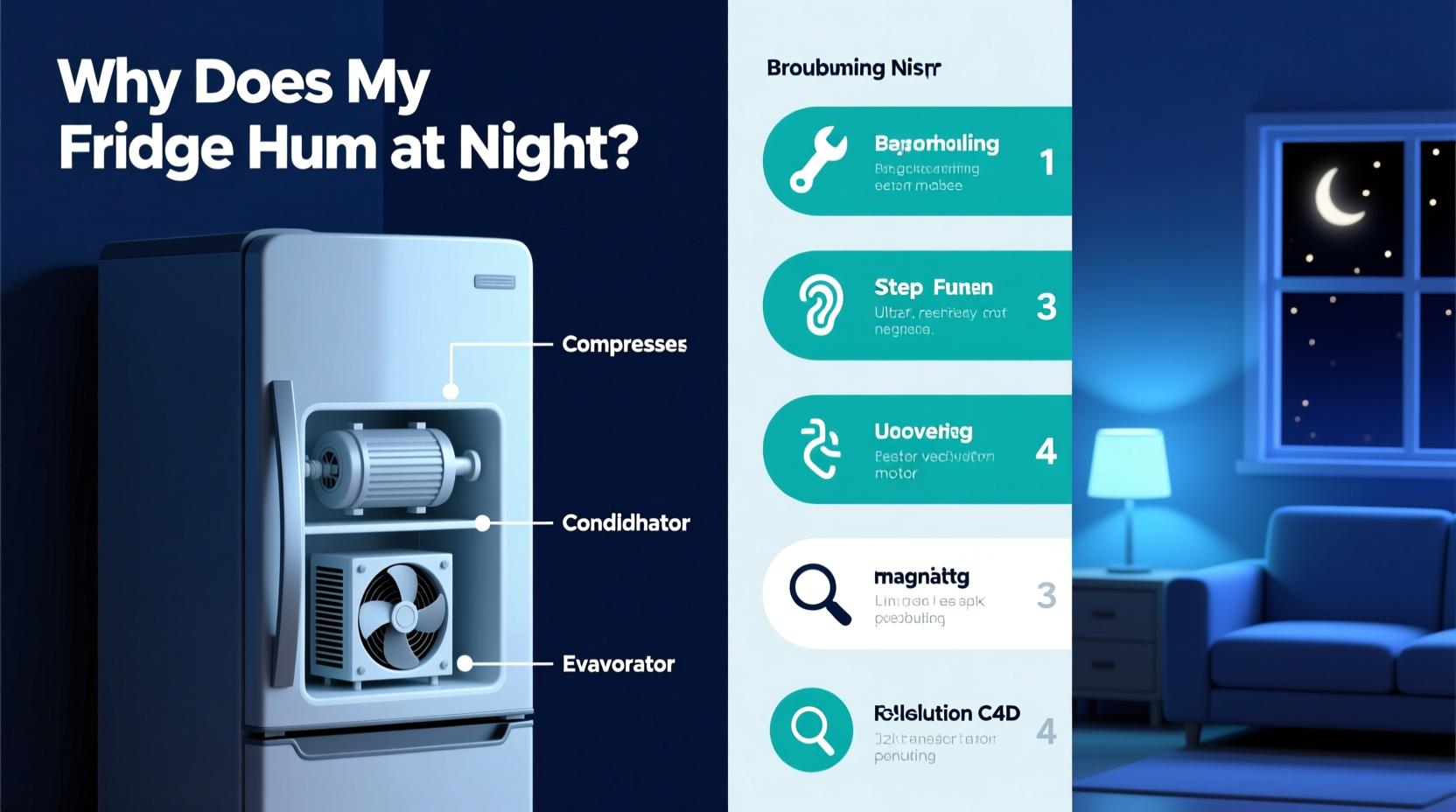
To understand fridge noises, it helps to know what’s happening inside. Most refrigerators operate on a vapor-compression cycle involving several key components:
- Compressor: Located at the back or bottom, this motor circulates refrigerant through the system. It’s the primary source of humming.
- Condenser Fan: Draws air over the condenser coils to release heat. A failing fan may produce irregular buzzing or grinding.
- Evaporator Fan: Circulates cold air inside the fridge compartment. If obstructed or worn, it may emit high-pitched whirring.
- Refrigerant Flow: As coolant moves through narrow tubing, it can create gurgling or hissing sounds—often mistaken for humming.
The compressor typically cycles on and off every 15–30 minutes, depending on usage and ambient temperature. When it activates, especially after a cooling demand, it generates a steady 50–60 Hz hum—a sound often described as “electrical” or “mechanical.” This is entirely normal under standard conditions.
“Most refrigerator hums are just part of daily operation. The real concern starts when the tone changes—becomes louder, rhythmic, or accompanied by vibration.” — Daniel Reeves, Appliance Engineer with 18 years of HVAC experience
Common Causes of Nighttime Humming
Nighttime humming is frequently more noticeable due to reduced background noise. But beyond perception, several factors can contribute to increased sound levels during evening hours:
1. Temperature Drop Triggers More Frequent Cycling
Ambient temperatures drop at night, which should reduce fridge workload. However, if doors are opened late (e.g., midnight snacks), warm air enters, prompting the compressor to run longer and more frequently. This increases audible operation during otherwise quiet hours.
2. Loose Components Amplify Vibration
Over time, screws, brackets, or panels can loosen. When the compressor engages, vibrations transfer through the cabinet, resonating against walls or floors. These vibrations often manifest as a deep, pulsing hum—especially if the fridge isn’t level or sits on a hollow subfloor.
3. Dusty Condenser Coils Overwork the System
Coils located at the back or beneath the unit dissipate heat. When clogged with dust, pet hair, or debris, the compressor must work harder to maintain temperature, resulting in louder, prolonged humming. This strain is often worse at night when airflow is already reduced in cooler environments.
4. Aging Compressor or Motor Bearings
As compressors age (typically beyond 8–10 years), internal parts wear. Worn bearings may produce a deeper, rougher hum or rhythmic knocking. This noise often begins intermittently but grows consistent over time.
5. Ice Buildup in Defrost System
If the defrost heater or timer fails, ice accumulates on evaporator coils. The fan then struggles to push air through the blockage, creating a strained, high-pitched whine that blends with the compressor’s base hum. This issue often worsens overnight as moisture condenses in still air.
Troubleshooting Checklist: What to Do When Your Fridge Hums Loudly
Before calling a technician, perform these checks to identify and potentially resolve the issue:
- Unplug the fridge briefly (30 seconds), then restore power. This resets control boards and may stop temporary electrical feedback loops causing abnormal noise.
- Check for obstructions around the rear and underside. Ensure at least 2–3 inches of clearance for airflow.
- Clean the condenser coils using a coil brush or vacuum attachment. Do this every 6 months, especially in homes with pets.
- Level the refrigerator using a bubble level. Adjust front legs until the unit tilts slightly backward (¼ inch) to ensure doors seal properly and reduce cabinet resonance.
- Inspect for loose items on top or behind the unit. Bottles, storage bins, or wall trim can vibrate sympathetically with the compressor.
- Listen closely during startup. Is the hum immediate? Or does it build gradually? A sudden, harsh hum may point to capacitor failure.
- Measure internal temperature. Use a standalone thermometer. If the fridge exceeds 40°F (4°C) or the freezer rises above 0°F (-18°C), cooling efficiency is compromised.
When Humming Signals a Serious Problem
Not all humming is benign. Certain characteristics suggest underlying faults requiring professional attention:
| Noise Type | Likely Cause | Action Required |
|---|---|---|
| Continuous, loud hum with no cycling | Failed start relay or seized compressor | Call technician; risk of overheating |
| Hum followed by clicking and shutdown | Bad start capacitor or overload protector | Replace component; do not ignore |
| Rhythmic thumping with hum | Worn compressor mounts or internal damage | Inspect mounting bolts and rubber isolators |
| High-pitched whining mixed with hum | Failing evaporator or condenser fan motor | Clean blades first; replace motor if noise persists |
| Hum only after water dispenser use | Icemaker inlet valve vibration | Check water pressure; replace valve if chattering |
Mini Case Study: The Midnight Hum That Wasn’t the Compressor
Sarah from Portland noticed her fridge developed a loud, pulsing hum every night around 10 PM. She assumed the compressor was failing, especially since the noise lasted for hours. After checking coils and leveling the unit without success, she recorded the sound and shared it in an appliance forum. A user suggested testing the icemaker. Sarah disabled it via the control panel—and the noise stopped. Further inspection revealed the water inlet valve was partially clogged, causing it to vibrate at specific water pressures common during evening municipal supply peaks. Replacing the valve cost $45 and solved the issue permanently.
This case highlights how secondary systems—not just the main cooling components—can generate misleading noises. Always consider auxiliary features like dispensers, icemakers, and digital controls when diagnosing unusual sounds.
Step-by-Step Guide to Reduce or Eliminate Fridge Hum
If your fridge's hum is disruptive, follow this sequence to minimize or eliminate the noise:
- Isolate the Source (5–10 minutes)
Stand near the fridge when it cycles on. Press your hand gently against the back panel. If vibration is strongest at the bottom rear, the compressor is the likely source. If the top or sides shake, suspect fans or loose parts. - Clear Ventilation Zones (10 minutes)
Move the fridge away from the wall. Vacuum dust from coils and fan housings. Remove any stored items blocking airflow underneath or beside the unit. - Stabilize the Unit (5 minutes)
Use a level across the top. Adjust front leveling legs until balanced. Ensure all four feet contact the floor. For tile or wood, add anti-vibration pads. - Test Electrical Supply (2 minutes)
Plug the fridge into a different outlet on another circuit. Voltage fluctuations or shared circuits with large appliances can cause motor strain and noise. - Monitor Over 24 Hours
Keep a log of when the hum occurs, duration, and whether it coincides with door openings, ice production, or other events. Patterns help pinpoint intermittent faults. - Consult a Technician if Needed
If the hum persists, especially with poor cooling, odd smells, or frequent cycling, schedule a service call. Modern diagnostics can test compressor amperage, refrigerant pressure, and control board signals.
Frequently Asked Questions
Is it normal for a fridge to hum constantly?
Modern fridges don’t run constantly, but they may cycle frequently—every 15–20 minutes—depending on usage and setting. A brief, consistent hum during operation is normal. However, non-stop humming without shutdown usually indicates a thermostat malfunction, failed defrost cycle, or compressor stuck in continuous mode. Investigate immediately if cooling performance drops.
Can a noisy fridge increase my electricity bill?
Yes. Excessive humming often means the compressor is working harder than necessary due to poor ventilation, dirty coils, or failing components. This inefficiency can increase energy consumption by 15–30%. Regular maintenance helps maintain optimal performance and lower utility costs.
Should I unplug my fridge if it starts humming loudly?
Not immediately. First, assess whether food is staying cold. If temperatures remain safe (below 40°F), you can monitor the situation. However, if the hum is accompanied by burning smells, smoke, or complete cooling loss, unplug the unit right away to prevent fire risk or further damage.
Prevention and Long-Term Care
Preventing excessive humming starts with proactive care. Treat your refrigerator like any precision machine—it rewards regular attention with quiet, efficient operation.
- Schedule biannual coil cleaning, especially before summer and winter peaks.
- Avoid overcrowding the interior, which restricts airflow and forces longer compressor runs.
- Replace water filters regularly (every 6 months) to prevent valve strain in dispensers.
- Keep software updated on smart fridges—manufacturers often release firmware patches that optimize compressor cycling.
Also, consider your kitchen environment. Placing a fridge near a dishwasher, oven, or sunny window increases its workload. Even minor heat exposure can raise internal cycling frequency, contributing to cumulative wear and noise buildup over time.
Conclusion
A humming fridge at night isn’t always a cause for alarm, but it shouldn’t be ignored either. By understanding the mechanics behind the sound, performing simple diagnostics, and taking preventive steps, you can maintain quiet, efficient operation for years. Most issues start small—a speck of dust, a loose screw, a minor imbalance—but compound into major failures if left unchecked.
Take action today: clean those coils, level your appliance, and listen closely to its rhythm. Your future self—and your peaceful nights—will thank you.




 浙公网安备
33010002000092号
浙公网安备
33010002000092号 浙B2-20120091-4
Comments
No comments yet. Why don't you start the discussion?