
Thunderstorms bring more than just rain and lightning—they can also wreak havoc on sensitive home electronics, including garage door openers. If you’ve ever stepped outside after a storm only to find your opener unresponsive, you’re not alone. Many homeowners experience this frustrating issue when electrical surges disrupt the internal circuitry of their opener units. Understanding the root causes and taking proactive steps can save you time, money, and the inconvenience of being locked out of your garage.
The vulnerability of garage door openers during storms stems from their connection to both power lines and large moving components exposed to environmental conditions. Unlike smaller appliances that can be unplugged easily, garage door openers are permanently wired into your home’s electrical system, making them susceptible to sudden voltage spikes caused by nearby lightning strikes or grid fluctuations.
How Lightning and Power Surges Damage Garage Door Openers
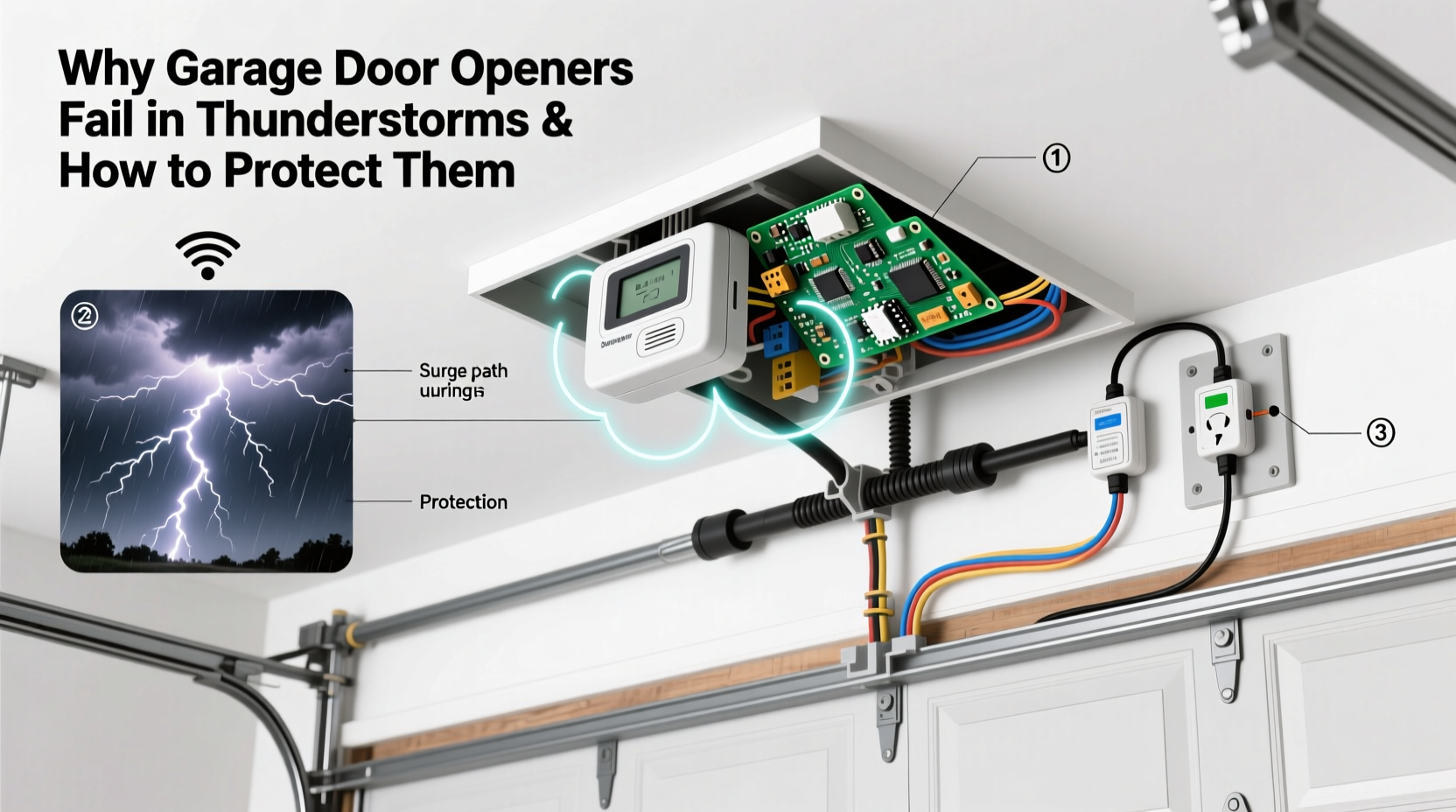
Garage door openers contain delicate electronic boards that control motor operation, remote signal reception, and safety sensors. When a thunderstorm passes overhead, even a distant lightning strike can induce a power surge through utility lines. These surges travel along the electrical grid and enter homes via outlets—exactly where your garage door opener is connected.
A direct lightning strike near your home is catastrophic but rare. More common—and equally damaging—are secondary surges. These occur when lightning hits a transformer, telephone pole, or underground line several blocks away. The resulting spike in voltage can exceed thousands of volts, overwhelming standard household circuits and frying connected devices before breakers have time to react.
The garage is particularly vulnerable because many homes route electrical service to the garage separately or use older wiring that lacks modern surge protection. Additionally, metal garage doors and tracks can act as conductors, increasing electromagnetic interference during storms. Even if the opener doesn’t short out completely, repeated exposure to minor surges degrades its internal components over time, leading to premature failure.
“Electronics like garage door openers are often the first casualties of undetected power surges. They operate on low-voltage logic boards that can't withstand more than a few hundred extra volts.” — Dr. Alan Reeves, Electrical Systems Engineer, National Home Safety Institute
Common Signs of Storm-Related Opener Damage
After a thunderstorm, certain symptoms may indicate your opener has sustained electrical damage:
- No response at all: Pressing the wall button or remote yields no sound or movement.
- Flickering lights on the unit: The built-in light blinks erratically without opening the door.
- Partial function: The door moves slightly then stops, or only works manually via the emergency release.
- Remote controls stop working: Multiple remotes fail simultaneously, suggesting receiver board damage.
- Burning smell or visible scorch marks: Indicates internal component burnout.
If any of these signs appear post-storm, the issue likely lies within the control board or motor assembly rather than mechanical wear. While some models allow for board replacement, others require full unit swaps—a costly repair that could have been prevented with proper protection.
Effective Ways to Protect Your Garage Door Opener
Preventing storm-related damage requires a layered approach combining surge suppression, grounding, and smart usage habits. Here are the most effective protective measures:
1. Install a Whole-House Surge Protector
The best defense begins at your main electrical panel. A whole-house surge protector intercepts high-voltage spikes before they enter your home’s circuits. Installed by a licensed electrician, these devices clamp down on excess voltage and divert it safely to ground.
While more expensive than plug-in strips (typically $200–$500 installed), whole-house units offer comprehensive protection for all major appliances—including HVAC systems, refrigerators, and garage equipment. Look for models with UL 1449 certification and a minimum rating of 50,000 amps for reliable performance.
2. Use an Outlet-Based Surge Protector
If a whole-house system isn’t feasible, use a high-quality surge protector specifically designed for motors and heavy-duty appliances. Avoid cheap power strips; instead, choose one rated for at least 2,000 joules with indicator lights showing protection status.
Plug your garage door opener directly into the surge protector, which should be mounted securely to avoid accidental disconnection. Remember: most surge protectors degrade over time and need replacement every 3–5 years, especially after known surges.
3. Ensure Proper Grounding
Your garage’s electrical circuit must be properly grounded to safely dissipate surge energy. Older garages, particularly those built before the 1990s, may lack adequate grounding or use outdated two-prong outlets. Upgrading to a grounded three-prong outlet and verifying correct wiring reduces fire risk and improves surge protection efficacy.
4. Unplug During Severe Storms
For maximum safety during active thunderstorms, unplug the opener entirely. Most units have a pull-cord emergency release inside the garage—use this to disconnect mechanically, then unplug the power cord from the ceiling outlet.
This manual method guarantees zero electrical exposure but requires vigilance. Consider setting weather alerts on your phone so you can act quickly when storms approach.
5. Upgrade to a Smart Opener with Built-In Protection
Newer smart garage door openers often include integrated surge resistance and diagnostic tools. Brands like Chamberlain, LiftMaster, and Genie now build models with reinforced circuit boards and cloud-based monitoring that notify you of malfunctions.
Some even feature automatic rollback after detecting abnormal current draw—an early sign of electrical stress. While not foolproof, these advancements add another layer of resilience against storm damage.
Step-by-Step Guide: Preparing Your Opener for Storm Season
Follow this seasonal checklist each spring (or before peak storm months in your region) to ensure your garage door opener is protected:
- Inspect wiring and connections: Check for frayed cords, loose terminals, or corroded contacts near the opener motor.
- Test GFCI outlets: If your garage uses GFCI-protected outlets, press the “Test” and “Reset” buttons to confirm functionality.
- Verify surge protector status: Replace any unit with a failed indicator light or age exceeding five years.
- Check grounding: Hire an electrician to test your garage circuit’s ground resistance if unsure.
- Install backup battery (optional): Some openers support battery backups that maintain limited operation during outages—useful during prolonged storms.
- Program manual override: Practice using the emergency release rope so you can open the door by hand if needed.
- Review homeowner’s insurance: Confirm coverage for lightning-related appliance damage in case repairs are necessary.
Real-World Example: How One Family Prevented Costly Repairs
In central Texas, the Martinez family experienced frequent summer storms that repeatedly damaged their garage door opener. Over three years, they replaced the unit twice—at nearly $350 each time—before consulting an electrician. Upon inspection, he discovered their garage was powered through an ungrounded subpanel fed by aging aluminum wiring.
The solution? They invested in a whole-house surge protector and rewired the garage circuit with copper wire and proper grounding. They also began unplugging the opener during severe weather. Since implementing these changes two years ago, they’ve had zero opener failures—even during record-breaking thunderstorm seasons.
“It felt excessive at first,” said Maria Martinez, “but spending $600 upfront saved us hundreds in replacements and the daily hassle of a broken garage door.”
Do’s and Don’ts: Protecting Your Opener During Thunderstorms
| Do | Don’t |
|---|---|
| Do install a UL-listed surge protector at the outlet or main panel. | Don’t rely solely on the circuit breaker—it won’t stop fast enough to prevent surge damage. |
| Do unplug the opener during active thunderstorms if possible. | Don’t use extension cords or daisy-chained power strips—they increase resistance and fire risk. |
| Do schedule periodic electrical inspections for older garages. | Don’t ignore flickering lights or intermittent operation—they may signal underlying electrical issues. |
| Do consider upgrading to a model with enhanced surge resistance. | Don’t assume newer homes are immune—surge risks exist regardless of age. |
Frequently Asked Questions
Can a lightning strike destroy my garage door opener even if it doesn’t hit my house?
Yes. Indirect strikes up to a mile away can send powerful surges through power lines, phone cables, or cable TV feeds—all of which may connect to your garage system. Even buried utilities are vulnerable to ground current surges during nearby lightning events.
Will a surge protector guarantee my opener won’t fail?
No single device offers 100% protection against extreme surges, especially from direct lightning. However, quality surge protectors significantly reduce the risk—studies show they prevent over 80% of surge-related appliance failures when properly installed and maintained.
Is it worth repairing a storm-damaged opener or should I replace it?
It depends on the model and extent of damage. If only the logic board is affected, replacement boards cost $50–$150 and can be installed in under an hour. But if the motor, gears, or rail assembly are compromised, a full replacement is usually more cost-effective and reliable long-term.
Final Recommendations and Action Plan
Your garage door opener plays a critical role in home access, security, and convenience. Treating it as just another appliance overlooks its integration with your home’s electrical infrastructure and vulnerability to environmental threats. By understanding how thunderstorms compromise electronic systems and taking deliberate steps to mitigate those risks, you ensure reliable operation year-round.
Start with simple actions: check your current setup, invest in a quality surge protector, and develop a habit of unplugging during severe weather. For long-term peace of mind, consider professional upgrades like whole-house protection and circuit grounding. These improvements not only safeguard your opener but also enhance the safety and value of your entire home.




 浙公网安备
33010002000092号
浙公网安备
33010002000092号 浙B2-20120091-4
Comments
No comments yet. Why don't you start the discussion?