
A garage door opener that stops working without warning can be more than just inconvenient—it can disrupt your daily routine, leave your home vulnerable, or even trap you inside. Unlike gradual mechanical failures, sudden malfunctions often point to specific, isolated issues rather than long-term wear. The good news is that many of these problems are easy to diagnose and fix with basic tools and a little know-how. Understanding the most common causes behind a dead opener allows homeowners to troubleshoot efficiently and avoid unnecessary service calls.
Garage door openers integrate electrical, mechanical, and wireless components, all of which must function in harmony. A failure in any one part can halt operation entirely. By systematically checking each system—from power supply to remote signals—you can identify the root cause and apply targeted solutions. This guide walks through the top reasons for sudden failure, offers step-by-step troubleshooting methods, and provides practical tips to keep your opener running reliably.
Common Causes of Sudden Garage Door Opener Failure
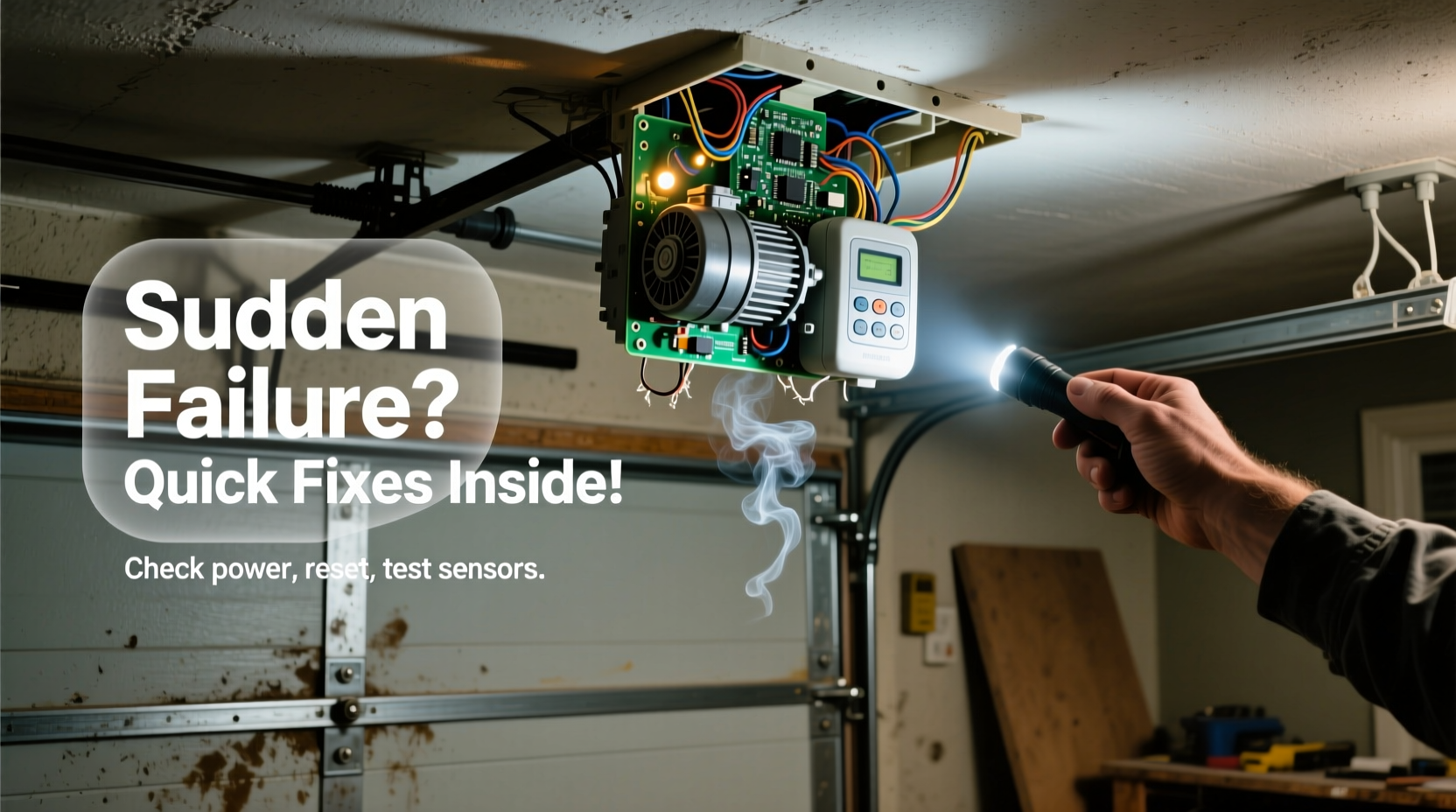
Sudden failure rarely comes from nowhere. Most issues stem from predictable sources, especially when maintenance has been overlooked. Here are the leading culprits:
- Power loss – A tripped circuit breaker, blown fuse, or unplugged unit cuts electricity instantly.
- Faulty safety sensors – Misaligned or obstructed infrared sensors prevent the door from operating as a safety measure.
- Dead remote or wall control batteries – Battery-powered devices fail silently but are often the simplest fix.
- Disengaged manual release – If the emergency pull cord was activated, the opener won’t move the door even if it’s powered.
- Obstructions in the track – Even small debris can trigger the auto-reverse feature, making it seem like the opener is broken.
- Failed logic board or motor – Less common but possible, especially in older units exposed to heat or moisture.
Each of these issues interrupts the communication chain between user input and mechanical action. Identifying where the breakdown occurs is key to restoring function quickly.
Step-by-Step Troubleshooting Guide
Follow this logical sequence to isolate and resolve the issue efficiently. Start simple and work toward complex possibilities.
- Verify Power Supply
Check if the opener is receiving power. Look for indicator lights on the motor unit. If none are lit:- Ensure the unit is plugged in (if applicable).
- Check the circuit breaker or GFCI outlet for a trip.
- Test the outlet with another device to confirm it’s live.
- Inspect Safety Sensors
Located near the base of each side of the door, these small lenses must face each other directly and remain unobstructed.- Clean the sensor lenses with a soft cloth.
- Check alignment—both lights should glow steadily (usually green or amber).
- If one is blinking red, realignment is needed.
- Test Manual Operation
Pull the emergency release cord to disconnect the trolley from the opener.- Lift the door manually to ensure it moves freely.
- If it’s too heavy or sticks, the springs or tracks may need attention.
- Reconnect by pulling the cord toward the door while operating the opener.
- Check Remote and Wall Controls
Replace batteries in remotes and test using the wall-mounted button.- If the wall control works but remotes don’t, reprogram the remote.
- Look for interference from nearby electronics or LED lighting.
- Listen for Motor Sounds
Press the wall button and observe:- No sound? Likely power or internal component failure.
- Clicking or humming? Could indicate seized gears or capacitor issues.
- Motor runs but door doesn’t move? Trolley may have disengaged or gear stripped.
Real Example: The Case of the Silent Opener
Mark returned home late one evening to find his garage door unresponsive. No lights, no sound—just silence. He checked the remote, then the wall switch, both useless. Assuming a motor failure, he prepared to call a technician. But before doing so, he remembered reading about GFCI outlets tripping due to humidity. His opener was plugged into an outdoor-rated outlet under the eaves. Sure enough, the outlet had tripped. After resetting it, the opener powered back on immediately. The entire fix took two minutes and cost nothing.
This scenario highlights how easily external factors—like weather-sensitive electrical systems—can mimic mechanical failure. Always rule out simple power issues before assuming hardware damage.
Quick Fixes You Can Do Today
Many sudden failures are resolved in under ten minutes with basic tools and spare parts commonly found at home.
| Symptom | Most Likely Cause | Immediate Fix |
|---|---|---|
| No power, no lights | Tripped breaker or unplugged unit | Reset breaker, check plug connection |
| Door reverses after starting | Misaligned safety sensors | Adjust sensor position until lights stay solid |
| Remote doesn’t work, wall button does | Dead battery or lost pairing | Replace battery; reprogram remote per manual |
| Opener hums but door won’t move | Jammed mechanism or broken spring | Manually operate door; inspect for obstructions |
| Intermittent operation | LED light interference or wiring fault | Replace LED bulbs with garage-door-compatible ones |
Expert Insight: What Professionals See Most Often
“Over 70% of ‘broken’ garage door openers we get called for are actually just misaligned sensors or tripped breakers. Homeowners overlook the basics because they assume the problem must be complex. A methodical approach saves time and money.” — Carlos Mendez, Master Technician at Precision Door Systems
Professional technicians emphasize consistency in diagnostics. Jumping to conclusions—like replacing the entire unit—often leads to wasted effort. Instead, following a standard checklist ensures accuracy and prevents overlooking minor but critical faults.
Preventative Checklist for Reliable Operation
Regular maintenance reduces the risk of sudden failure. Perform these checks every three to six months:
- ✅ Test safety sensors by waving an object between them—door should reverse upon contact.
- ✅ Lubricate moving parts (chain, screw drive, rollers) with silicone-based grease.
- ✅ Inspect tracks for dents, debris, or loose bolts.
- ✅ Verify door balance—disconnect opener and lift halfway; it should stay in place.
- ✅ Replace remote and keypad batteries annually, even if they still work.
- ✅ Clean photo eye lenses with a microfiber cloth to prevent false triggers.
- ✅ Check tension on torsion or extension springs for signs of wear or imbalance.
Adding these tasks to your seasonal home maintenance routine—such as when changing HVAC filters or servicing your water heater—helps ensure consistency.
Frequently Asked Questions
Why does my garage door opener click but not move?
A clicking sound usually means the motor is attempting to start, but the drive mechanism isn’t engaging. Common causes include a stripped gear (common in older chain-drive models), a broken belt, or a jammed trolley. If the motor hums briefly and clicks off, overheating or a failing capacitor could be the issue. First, try manually operating the door to rule out binding. If it moves freely, the problem is likely internal and may require professional repair or replacement of the gear kit.
Can LED lights interfere with my garage door opener?
Yes. Some LED bulbs emit electromagnetic interference (EMI) that disrupts the radio frequency signals used by garage door openers. This can cause inconsistent operation or complete signal loss. To fix this, replace the bulbs with “garage door opener compatible” LEDs, which are designed to minimize EMI. Alternatively, use incandescent bulbs in the opener’s light socket. This issue became widespread after homeowners upgraded to energy-efficient lighting without considering compatibility.
How do I reprogram my garage door remote?
Reprogramming steps vary by brand, but most follow a similar process:
- Locate the “Learn” or “Smart” button on the motor unit (usually near the antenna).
- Press and release the button—the indicator light will glow steadily for about 30 seconds.
- Within that window, press and hold the button on your remote until the opener light flashes or clicks.
- Test the remote. Repeat for additional remotes.
Refer to your owner’s manual for model-specific instructions. If the Learn button doesn’t activate, the logic board may be faulty.
Conclusion: Stay Ahead of Sudden Failures
A garage door opener that stops working unexpectedly doesn’t always mean a costly repair. In most cases, the issue lies in something simple—power supply, sensor alignment, or dead batteries. By understanding the system’s core components and following a structured diagnostic process, you can restore functionality quickly and confidently. Regular maintenance further reduces the likelihood of surprise breakdowns, keeping your access secure and seamless.
The key is not to panic when the opener fails. Instead, approach it methodically: check power, test sensors, verify manual operation, and assess control devices. With these strategies, you’ll solve most problems on your own and save hundreds in service fees. Don’t wait for the next failure—review your opener today, update aging components, and ensure your system is ready for years of reliable use.




 浙公网安备
33010002000092号
浙公网安备
33010002000092号 浙B2-20120091-4
Comments
No comments yet. Why don't you start the discussion?