
A garage door that reverses unexpectedly just before closing is more than an annoyance—it’s a safety concern and a sign of underlying mechanical or electrical problems. This behavior typically stems from misaligned safety sensors, worn components, or incorrect force settings. While modern garage doors are equipped with automatic reversal systems for safety, frequent or premature reversing indicates something needs attention. Understanding the root causes and knowing how to address them can restore smooth operation and prevent damage over time.
How Garage Door Safety Sensors Work
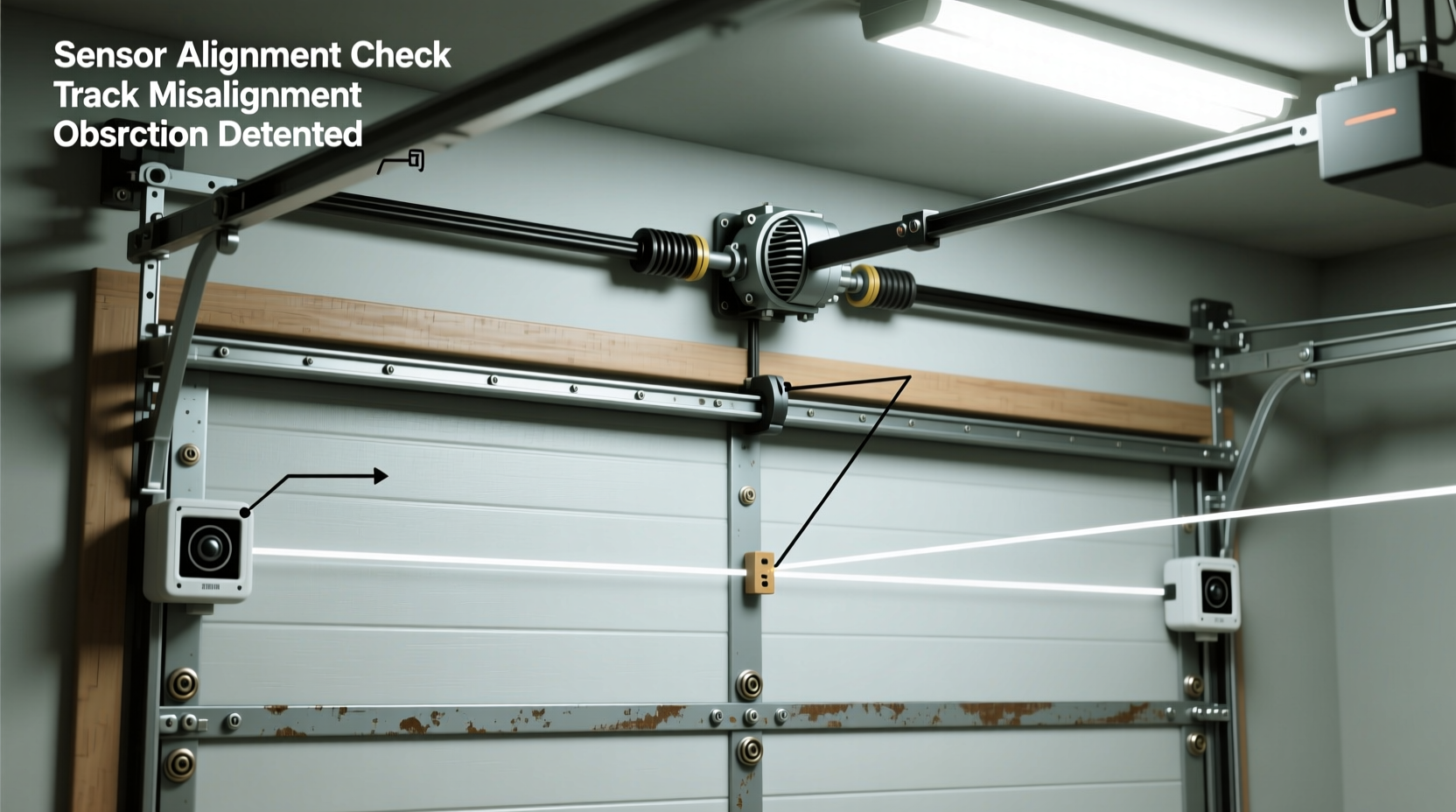
Modern garage doors use infrared safety sensors mounted near the floor on both sides of the door opening. These sensors send a beam across the doorway. If the beam is interrupted during closing—by a person, pet, or object—the door automatically reverses to prevent injury or damage. However, if the sensors are misaligned, dirty, or obstructed, the system interprets this as a blockage and triggers the reversal, even when nothing is in the way.
The sensors are usually housed in small plastic brackets about 4–6 inches above the floor. One emits an infrared beam (the \"transmitter\"), and the other receives it (the \"receiver\"). When properly aligned, a steady light on each unit confirms communication. A blinking or off light signals trouble.
Common Causes of Premature Reversal
While sensor misalignment is the most frequent culprit, several other factors can trigger early reversal. Identifying the exact cause saves time and prevents unnecessary repairs.
- Misaligned safety sensors: Even slight tilting can break the infrared beam.
- Dirt or obstructions on sensor lenses: Dust, cobwebs, or paint splatter can block the signal.
- Loose mounting brackets: Vibration from door operation can loosen brackets over time.
- Worn or damaged wiring: Rodents, moisture, or physical stress can compromise sensor wires.
- Incorrect force settings: If the door doesn’t sense resistance properly, it may reverse too soon.
- Track or roller issues: Binding or sticking can increase resistance, triggering the safety mechanism.
- Faulty logic board: Rare but possible; internal malfunctions can cause erratic behavior.
“Over 70% of garage door reversals I see in service calls are due to sensor alignment or cleanliness issues.” — Mark Reynolds, Certified Garage Door Technician with 15 years of field experience
Step-by-Step Guide to Fixing Sensor Alignment
Correcting sensor alignment is a straightforward DIY task requiring minimal tools. Follow this sequence to ensure accuracy and safety.
- Disconnect the garage door opener: Unplug the motor unit or turn off the circuit breaker to prevent accidental activation.
- Inspect both sensors: Look for cracks, dirt, or debris on the lens. Clean gently with a soft cloth and glass cleaner.
- Check the wiring: Trace the wires from each sensor to the opener. Look for cuts, chew marks, or loose connections.
- Realign the brackets: Loosen the mounting screws slightly. Adjust each sensor so the lenses face each other directly.
- Test the beam: Most sensors have indicator lights. A steady green or amber light means proper alignment. Blinking or no light indicates misalignment.
- Secure the brackets: Once the lights are steady, tighten the screws without shifting the position.
- Reconnect power and test: Press the wall button to close the door. It should close smoothly without reversing.
If the door still reverses, double-check alignment by placing a business card or thin object in front of one sensor. The door should reverse or stop. If it doesn’t, the sensors may be faulty.
Do’s and Don’ts of Garage Door Maintenance
| Do’s | Don’ts |
|---|---|
| Test safety sensors monthly using the cardboard test | Ignore blinking sensor lights |
| Clean sensor lenses with a microfiber cloth | Use abrasive cleaners on sensor housings |
| Lubricate rollers and hinges every 6 months | Overtighten sensor bracket screws, which can warp alignment |
| Check door balance by disconnecting the opener and lifting manually | Attempt realignment while the power is connected |
| Inspect tracks for dents or debris weekly | Paint over sensor lenses during garage touch-ups |
Adjusting Close Force and Limit Settings
If sensors are aligned but the door still reverses prematurely, the issue may lie in the opener’s force or travel settings. These controls determine how much resistance the door tolerates before reversing and how far it travels when closing.
Force settings are adjusted via screws or dials on the side of the opener unit—usually labeled “Up Force” and “Down Force.” To adjust:
- Locate the “Down Force” adjustment screw.
- Turn it clockwise in quarter-turn increments to increase force.
- After each adjustment, test the door. Place a roll of paper towels flat on the floor where the door closes. The door should compress the roll slightly but reverse upon contact.
- If it reverses too early, increase force slightly. If it doesn’t reverse at all, decrease force immediately for safety.
Travel limits control how far the door moves before stopping. If the “close limit” is set too short, the door may think it’s fully closed before making full contact with the ground, leading to inconsistent behavior.
- Find the “Close Limit” adjustment (often a small dial or screw).
- Turn it counterclockwise to extend closing distance.
- Test the door. It should rest evenly on the ground without lifting at any corner.
Real Example: The Case of the Phantom Obstruction
Homeowner Lisa M. in Portland reported her garage door reversing halfway down with no visible obstruction. She cleaned the sensors and checked alignment, but the problem persisted. After consulting a technician, they discovered that recent foundation settling had shifted one sensor bracket by less than half an inch—just enough to interrupt the beam intermittently. The fix? Re-leveling the bracket with a laser level and securing it with longer screws into a stud. The door operated flawlessly afterward.
This case highlights how subtle environmental changes—like temperature shifts, ground movement, or even heavy vehicle vibrations—can impact sensor performance. Regular visual checks help catch such issues early.
When to Call a Professional
While many alignment issues can be resolved at home, certain situations require expert intervention:
- Sensors show no power despite intact wiring
- Door reverses inconsistently—sometimes works, sometimes doesn’t
- Opener makes grinding or clicking noises
- Tracks are bent or rollers are cracked
- You’ve made multiple adjustments with no improvement
A certified technician has specialized tools like laser alignment gauges and diagnostic software to pinpoint hidden faults. They can also inspect spring tension, cable integrity, and motor health—components that pose serious risks if mishandled.
Preventive Maintenance Checklist
Regular upkeep prevents most reversal issues before they start. Use this checklist monthly:
- ✅ Test safety reversal: Place a thick book under the door; it should reverse on contact.
- ✅ Inspect sensor lenses for dust or smudges.
- ✅ Verify sensor indicator lights are steady (not blinking).
- ✅ Check track alignment and remove debris.
- ✅ Listen for unusual noises during operation.
- ✅ Lubricate rollers, hinges, and springs with silicone-based spray.
- ✅ Manually operate the door to check balance and smoothness.
- ✅ Tighten loose bolts on brackets and rails.
Frequently Asked Questions
Why does my garage door reverse only in the evening?
Temperature changes can cause minor shifts in track alignment or sensor positioning. Additionally, low sunlight may affect older sensors’ ability to maintain a strong signal. Clean and realign sensors, and consider upgrading to newer models if the issue persists.
Can I bypass the sensors to make the door close?
No. Disabling safety sensors is extremely dangerous and violates federal safety regulations (UL 325). The door will not function properly without them, and you risk serious injury or property damage.
How long do garage door sensors last?
Most sensors last 8–10 years under normal conditions. Signs of aging include flickering lights, delayed response, or failure to work in direct sunlight. Replace both units as a pair for optimal performance.
Conclusion: Take Action Before Small Issues Become Big Problems
A garage door that reverses before closing isn’t just inconvenient—it’s a warning sign. Whether caused by misaligned sensors, improper force settings, or mechanical wear, these issues degrade performance and compromise safety. The good news is that most problems can be diagnosed and fixed with basic tools and a methodical approach. By understanding how your door’s safety systems work and performing routine checks, you extend the life of your garage door and protect your household.




 浙公网安备
33010002000092号
浙公网安备
33010002000092号 浙B2-20120091-4
Comments
No comments yet. Why don't you start the discussion?