
If your garbage disposal emits a gurgling sound after you’ve run it—especially after attempting to troubleshoot the issue—it can be both confusing and concerning. You may have already checked for clogs, reset the unit, or run water through the system, only to hear that odd noise return. Gurgling isn’t always a sign of a major problem, but when it persists despite basic fixes, it often points to deeper plumbing issues that require attention. Understanding the root causes behind this symptom is essential to prevent backups, slow drains, or even damage to your home’s drainage system.
Gurgling sounds in plumbing are typically caused by air being forced through water in the pipes—a phenomenon known as “air aspiration.” While minor gurgling might be normal during operation, persistent or loud gurgling after using the disposal indicates an obstruction, improper venting, or a drainage conflict between fixtures. This article breaks down the most common reasons for post-troubleshooting gurgling, offers actionable diagnostic steps, and provides long-term solutions to restore quiet, efficient function to your kitchen sink.
Understanding How Garbage Disposals and Drain Systems Work
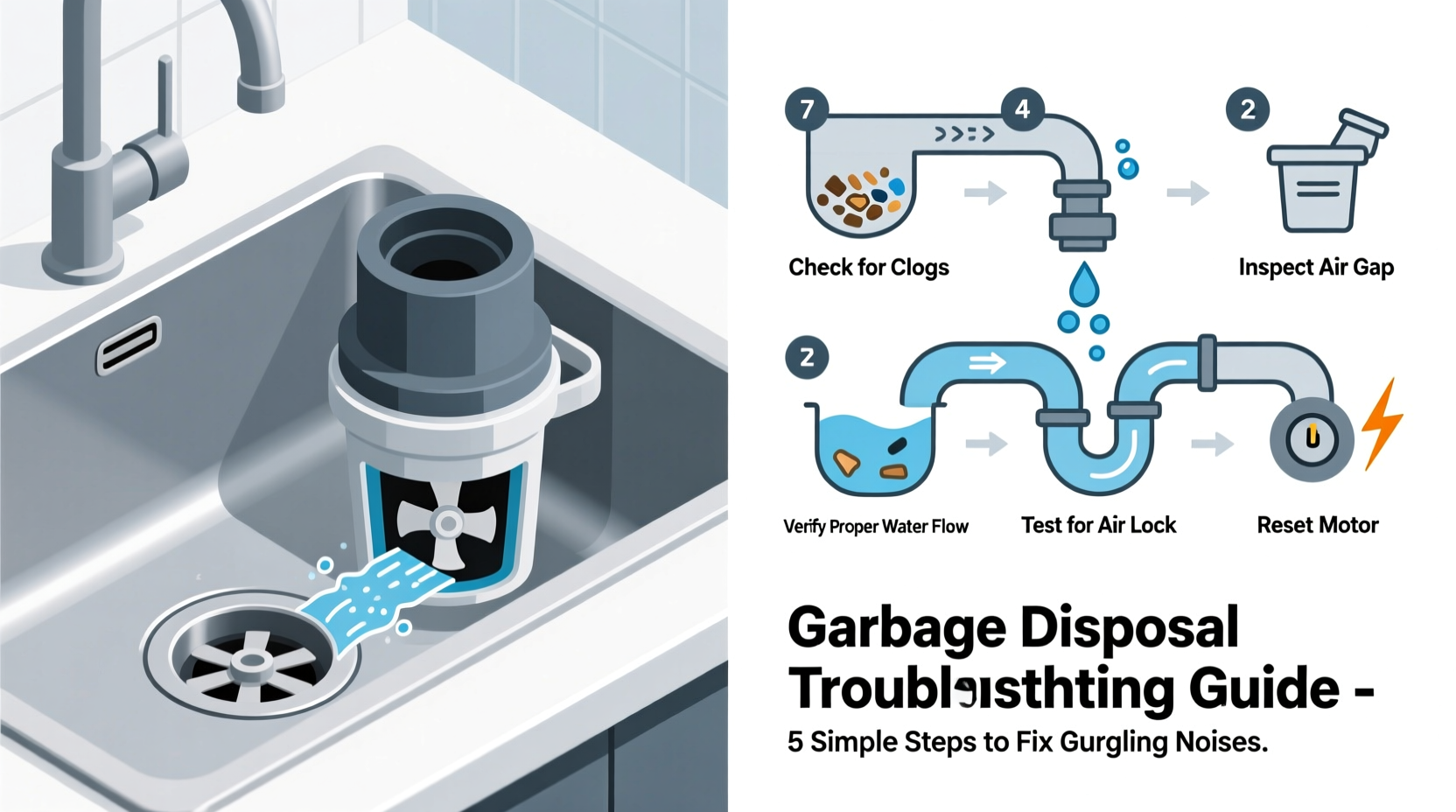
To diagnose gurgling effectively, it helps to understand the basic mechanics of your kitchen’s drainage setup. A garbage disposal is installed between the sink drain and the trap (P-trap), which connects to the main waste line. When you run the disposal, food particles are ground up and flushed down with water. From there, wastewater flows into the drainpipe and eventually into the sewer or septic system.
Crucially, every plumbing fixture—including sinks, showers, and toilets—is connected to a network of pipes that rely on proper venting. Vent pipes extend from drain lines up through the roof, allowing air to enter the system. This airflow prevents suction and maintains consistent pressure, enabling smooth water flow. Without adequate venting, negative pressure can form, pulling air through nearby traps—which creates gurgling sounds.
When your garbage disposal gurgles after use, especially after troubleshooting, it usually means something is interfering with either the free flow of water or the balance of air pressure in the system. The fact that the noise returns after attempted fixes suggests the underlying issue wasn’t fully resolved—or wasn’t correctly identified in the first place.
Common Causes of Persistent Gurgling After Troubleshooting
Even if you’ve cleared visible clogs or reset the disposal, several hidden or systemic issues can still cause gurgling. Here are the most frequent culprits:
- Partial Clog in the Drain Line: A partial blockage downstream from the disposal can restrict water flow. As water tries to pass through, it pushes air ahead of it, creating gurgling noises in the sink or adjacent fixtures.
- Improper or Blocked Vent Pipe: If the plumbing vent is obstructed by debris, ice, or nesting animals, air can’t enter the system properly. This leads to vacuum formation, causing water to siphon and gurgle in traps.
- Cross-Connection Issues: In kitchens with double sinks, a shared drain can cause one side to gurgle when the other is used. If the baffle or stopper isn’t sealing correctly, air can escape through the unused sink.
- Sewer Line Obstruction: A deeper blockage in the main sewer line can cause backup pressure, leading to gurgling in multiple fixtures, including the disposal.
- Incorrect Installation or P-Trap Configuration: If the P-trap is installed backward, too high, or with incorrect slope, it can trap air or create airlocks that result in noise.
Step-by-Step Diagnostic and Repair Process
Follow this structured approach to identify and resolve the cause of gurgling—even after prior troubleshooting attempts.
- Confirm the Disposal Is Functioning Properly
Run the disposal with cold water. Listen for grinding noises, vibrations, or hesitation. If the motor struggles, reset the unit at the bottom button and test again. A malfunctioning disposal can leave debris behind, contributing to partial clogs. - Check for Sink-Specific Gurgling
Run water only in the non-disposal sink (if you have a double bowl). Does it gurgle? If yes, the issue may lie in the shared drain or vent, not the disposal itself. - Inspect the P-Trap for Clogs
Place a bucket under the P-trap and unscrew the slip nuts. Remove the trap and clean out any debris. Reassemble tightly and test. Even small buildups can disrupt flow and cause air pockets. - Flush the Drain with Hot Water and Baking Soda-Vinegar
Pour half a cup of baking soda followed by one cup of vinegar down the disposal. Let it fizz for 10 minutes, then flush with boiling water. This helps dissolve organic residue that may be restricting flow. - Test the Air Vent
Go outside and inspect the roof vent pipe. Look for bird nests, leaves, or ice. Use a plumber’s snake or garden hose to gently clear obstructions. Alternatively, flush the vent from inside by running water at high volume in multiple fixtures simultaneously. - Check for Main Line Blockages
If gurgling occurs in toilets, showers, or floor drains when the disposal runs, suspect a main sewer line clog. Consider hydro-jetting or professional snaking if symptoms persist.
Real Example: The Case of the Recurring Gurgle
A homeowner in Portland reported gurgling in their garbage disposal after replacing the unit and clearing the P-trap. They assumed the issue was resolved—until the noise returned two days later. A plumber discovered that while the disposal and immediate drain were clear, the roof vent was partially blocked by pine needles. Once cleared, the gurgling stopped completely. This case illustrates how surface-level troubleshooting can miss systemic issues like vent blockages that only manifest under flow conditions.
Do’s and Don’ts: Maintaining a Quiet, Efficient Disposal System
| Do’s | Don’ts |
|---|---|
| Run cold water for 15–20 seconds after using the disposal to flush debris. | Never pour grease, oil, or fat down the disposal—they solidify and cause clogs. |
| Use citrus peels monthly to clean blades and deodorize. | Avoid fibrous foods like celery, corn husks, or onion skins—they tangle and jam. |
| Inspect and clean the P-trap every 6 months. | Don’t use chemical drain cleaners—they corrode pipes and harm disposal seals. |
| Ensure the air gap (if present) is unobstructed. | Don’t ignore recurring gurgling—it often worsens over time. |
“Persistent gurgling after basic troubleshooting is rarely just a nuisance—it’s a warning sign of compromised drainage dynamics. Addressing venting and partial clogs early prevents costly backups.” — Carlos Mendez, Master Plumber & Plumbing Instructor
Troubleshooting Checklist: Is Your System Fully Clear?
Use this checklist to verify all potential sources of gurgling have been addressed:
- ✅ Disposal resets properly and runs smoothly
- ✅ No visible food debris stuck in disposal flange
- ✅ P-trap cleaned and reinstalled with correct slope
- ✅ Drain line flushed with hot water and natural cleaner
- ✅ Roof vent inspected and cleared of debris
- ✅ No gurgling in other fixtures (toilet, shower) when disposal runs
- ✅ Air gap (if installed) is clean and unblocked
- ✅ No foul odors indicating stagnant water or decay
Frequently Asked Questions
Is gurgling always a sign of a serious problem?
Not always. Brief gurgling as water finishes draining can be normal. However, loud, prolonged, or recurring gurgling—especially after troubleshooting—indicates a restriction or venting issue that should be investigated.
Can a full septic tank cause gurgling?
Yes. A septic tank that’s nearing capacity can back up into the drain field or house lines, creating pressure imbalances. Gurgling in multiple fixtures, slow drains, and sewage odors are key signs. Schedule a tank inspection if your home uses septic and symptoms persist.
Why does my disposal gurgle only at night?
This could be due to lower water pressure or less concurrent usage, making air movement more noticeable. It may also coincide with temperature changes that affect pipe expansion or vapor lock. However, nighttime-only gurgling still warrants investigation, particularly if linked to outdoor temperature drops that freeze vent pipes.
Conclusion: Silence the Gurgle for Good
Persistent gurgling after troubleshooting your garbage disposal is more than an annoyance—it’s a signal that your plumbing system isn’t operating as intended. Whether due to a sneaky partial clog, a blocked vent, or a configuration flaw, the root cause requires methodical diagnosis. Surface-level fixes may offer temporary relief, but lasting results come from understanding the interplay between drainage, airflow, and fixture design.
By following the steps outlined here—inspecting traps, testing vents, and verifying system-wide performance—you can eliminate the gurgle and restore quiet, efficient function to your kitchen. Regular maintenance and awareness of warning signs will help prevent future issues before they escalate.




 浙公网安备
33010002000092号
浙公网安备
33010002000092号 浙B2-20120091-4
Comments
No comments yet. Why don't you start the discussion?