
Watching your gecko suddenly lose its tail can be alarming. One moment it’s basking calmly on a rock, the next, its tail is twitching on the enclosure floor while the gecko scurries away. This dramatic event—called autotomy—is surprisingly common among geckos and other lizards. While it may look like a serious injury, it’s actually a natural defense mechanism. Understanding why this happens, how the tail regenerates, and what you can do to support your pet through the process is essential for responsible reptile care.
The Science Behind Tail Autotomy
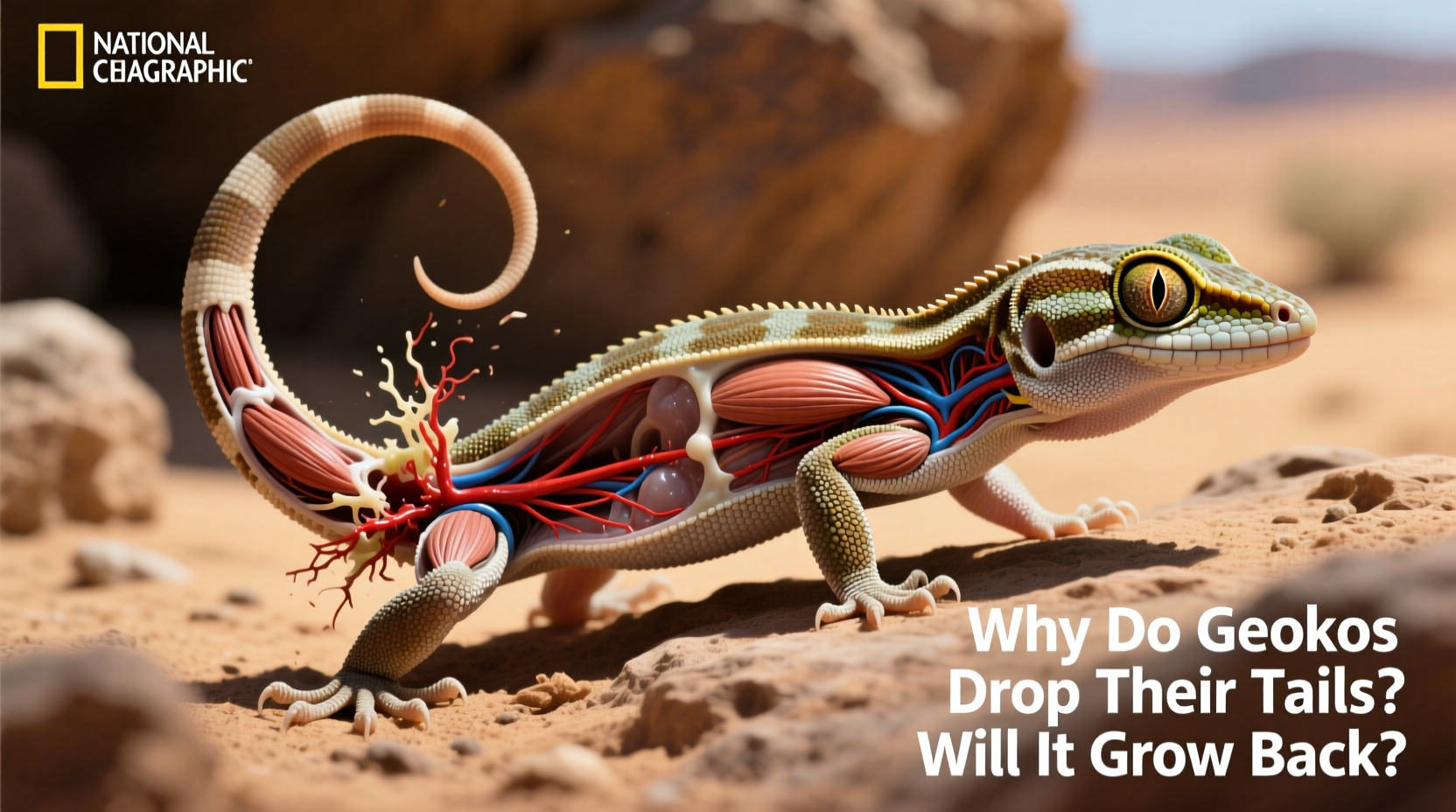
Autotomy refers to the ability of certain animals to self-amputate a body part when threatened. In geckos, this primarily involves the tail. Specialized fracture planes exist along the vertebrae in the tail, allowing it to break cleanly with minimal blood loss. Muscles immediately contract at the site to prevent excessive bleeding, and the detached portion continues to move—sometimes for several minutes—to distract predators.
This survival strategy evolved over millions of years. The wriggling tail acts as a decoy, drawing attention away from the fleeing gecko. In the wild, where threats from snakes, birds, and mammals are constant, this adaptation significantly increases survival odds. Even in captivity, where predators aren’t present, the instinct remains hardwired.
“Tail autotomy is one of the most effective anti-predator strategies in reptiles. It’s not a sign of illness but rather a testament to evolutionary ingenuity.” — Dr. Laura Simmons, Herpetologist and Reptile Behavior Researcher
Common Triggers for Tail Loss in Captivity
While geckos don’t face predators in a home environment, multiple stressors can still trigger tail dropping. Recognizing these causes helps prevent unnecessary trauma and promotes a healthier living space.
- Handling stress: Sudden grabs or improper handling, especially around the tail, can prompt autotomy.
- Poor enclosure conditions: Overcrowding, lack of hiding spots, or incorrect temperatures increase anxiety.
- Aggression from tank mates: Housing multiple geckos together often leads to territorial disputes and biting.
- Accidental entrapment: Tails caught in cage doors, decorations, or substrate can cause involuntary shedding.
- Fear responses: Loud noises, rapid movements near the enclosure, or unfamiliar pets nearby can startle geckos.
Will the Tail Grow Back? Understanding Regeneration
Yes, in most cases, a gecko’s tail will grow back—but not exactly as it was before. Unlike mammals, many lizard species possess remarkable regenerative abilities. After tail loss, a new structure begins forming within days. However, the regenerated tail differs anatomically from the original.
The replacement tail is typically shorter, smoother, and lacks the segmented appearance of the original. Instead of true vertebrae, it contains a cartilaginous rod. The coloration may also differ slightly, sometimes appearing more uniform or less vibrant. While functional for balance and fat storage, it doesn’t replicate the full complexity of the original appendage.
Regrowth speed depends on several factors, including species, age, health, and diet. Younger geckos regenerate faster than older ones. A leopard gecko, for example, may begin showing new growth within two weeks and complete regeneration in 30–60 days under optimal conditions.
| Factor | Impact on Regrowth Speed |
|---|---|
| Age | Younger = faster regeneration |
| Nutrition | High-protein diet accelerates healing |
| Temperature | Proper thermal gradient supports metabolism |
| Stress Level | Low stress improves recovery outcomes |
| Species | Leopard geckos regenerate better than crested geckos |
Step-by-Step Care After Tail Loss
Immediate and ongoing care following tail drop is crucial for preventing infection and supporting regeneration. Follow this timeline to ensure your gecko recovers smoothly.
- Stay calm and observe: Do not attempt to reattach the tail. Monitor your gecko for signs of distress or continued bleeding (rare).
- Check the wound: The stump should appear clean with slight discoloration. If there’s persistent bleeding or swelling, consult a veterinarian.
- Isolate if necessary: If housed with others, separate the gecko to reduce stress and aggression.
- Maintain hygiene: Clean the enclosure thoroughly. Remove feces daily and disinfect weekly with reptile-safe cleaner.
- Optimize diet: Offer gut-loaded insects dusted with calcium and multivitamins every feeding for the first month.
- Monitor temperature and humidity: Ensure the warm side of the enclosure stays between 88–90°F (31–32°C) for leopard geckos; adjust based on species.
- Limit handling: Avoid touching the gecko for at least 7–10 days to allow healing.
- Track progress: Note changes in stump appearance and any new tissue formation.
Species-Specific Differences in Tail Regrowth
Not all geckos respond to tail loss the same way. Some regenerate efficiently, while others either don’t regrow at all or experience limited regrowth. Knowing your gecko’s species helps set realistic expectations.
- Leopard Gecko (Eublepharis macularius): Excellent regrowth capability. Forms a firm, conical tail that stores fat effectively.
- Crested Gecko (Correlophus ciliatus): Can regenerate, but often forms a short, hairless nub. Many owners report partial or no regrowth.
- African Fat-Tailed Gecko (Hemitheconyx caudicinctus): Similar to leopard geckos, with strong regenerative potential.
- Gargoyle Gecko (Rhacodactylus auriculatus): May regrow a small bump, but rarely develops a full tail.
- Day Geckos (Phelsuma spp.): Capable of regeneration, though the new tail often has different scale texture and color.
It’s important to note that repeated tail loss weakens the regenerative capacity over time. Each episode depletes energy reserves and stresses the immune system. Preventing future incidents is key to long-term health.
Preventing Future Tail Drops: A Practical Checklist
Once your gecko has lost its tail, focus shifts to prevention. Use this checklist to create a safe, low-stress environment.
- ✅ House geckos individually unless breeding
- ✅ Provide at least two secure hides (warm and cool side)
- ✅ Use smooth, escape-proof enclosures without sharp edges
- ✅ Feed a balanced diet rich in calcium and vitamin D3
- ✅ Maintain consistent day-night cycles with appropriate lighting
- ✅ Minimize loud noises and sudden movements near the tank
- ✅ Handle gently and only when necessary
- ✅ Regularly inspect decor for loose parts or pinch points
- ✅ Keep enclosure free of excess moisture to prevent infection
- ✅ Schedule annual vet checkups with an exotic animal specialist
Mini Case Study: Recovering From Stress-Induced Tail Loss
Sarah adopted a young leopard gecko named Milo from a local pet store. Within a week, she noticed he was skittish and would dart into his hide whenever she approached. One evening, while attempting to feed him by hand, she accidentally brushed his tail against the cage door. The tail dropped instantly.
Concerned, Sarah contacted a reptile veterinarian. She learned that Milo had likely been stressed from transport and improper handling prior to adoption. Following the vet’s advice, she upgraded his enclosure with additional hides, adjusted the heat gradient, and stopped handling him for two weeks. She began feeding nutrient-rich dubia roaches dusted with calcium.
Within three weeks, a small pink bud appeared at the base of the stump. By day 50, Milo had developed a healthy, plump new tail. His behavior improved dramatically—he became more active and even allowed gentle hand-feeding. The experience taught Sarah how critical environmental stability is for gecko well-being.
Frequently Asked Questions
Can a gecko die from losing its tail?
No, tail loss itself is not fatal. However, complications such as infection, poor nutrition, or chronic stress can compromise health. With proper care, most geckos recover fully.
Should I remove the dropped tail from the enclosure?
Yes. Although some geckos may try to eat the detached tail (a behavior rooted in reclaiming lost nutrients), it can harbor bacteria. Remove it promptly to maintain hygiene.
How many times can a gecko drop its tail?
There’s no fixed limit, but each loss takes a toll. Most geckos can regenerate their tail once or twice successfully. Repeated autotomy leads to weaker regrowth and increased metabolic strain.
Supporting Long-Term Health Beyond Regeneration
Tail loss is a temporary physical issue, but the underlying causes—stress, poor husbandry, inadequate diet—are long-term concerns. A gecko that loses its tail once is more likely to do so again if conditions don’t improve. Focus on holistic care: stable temperatures, hydration, mental enrichment through climbing structures, and routine observation.
Remember, the tail isn’t just decorative. It serves vital functions: storing fat reserves, aiding balance, and contributing to social signaling. While a regenerated tail performs adequately, it’s never a perfect substitute. Prevention, therefore, is always better than recovery.
“A gecko’s tail is a window into its overall welfare. Frequent loss signals deeper issues in care or environment.” — Dr. Raj Patel, Exotic Animal Veterinarian
Conclusion
Your gecko dropping its tail is a startling but natural event. It reflects an ancient survival tactic, not a medical emergency. With attentive care, the tail will grow back, and your pet can thrive. But beyond regeneration lies a greater responsibility: creating a habitat that minimizes fear and maximizes well-being. By understanding the triggers, supporting recovery, and implementing preventive measures, you ensure your gecko lives confidently—tail intact or not.




 浙公网安备
33010002000092号
浙公网安备
33010002000092号 浙B2-20120091-4
Comments
No comments yet. Why don't you start the discussion?