
Google Maps has become an essential tool for drivers, cyclists, and pedestrians alike, offering real-time navigation, traffic updates, and alternative routes. However, many users report a frustrating experience: the app constantly reroutes them mid-drive, often suggesting detours that seem unnecessary or even counterproductive. One moment you're on a smooth highway stretch, and the next, Google Maps abruptly redirects you through back alleys or side streets with no apparent benefit. This not only disrupts your journey but can also increase travel time and fuel consumption. The root causes range from fluctuating traffic data to GPS inaccuracies and overly sensitive routing algorithms. The good news is that most of these issues can be mitigated with informed adjustments and smarter usage habits.
Why Google Maps Keeps Rerouting You
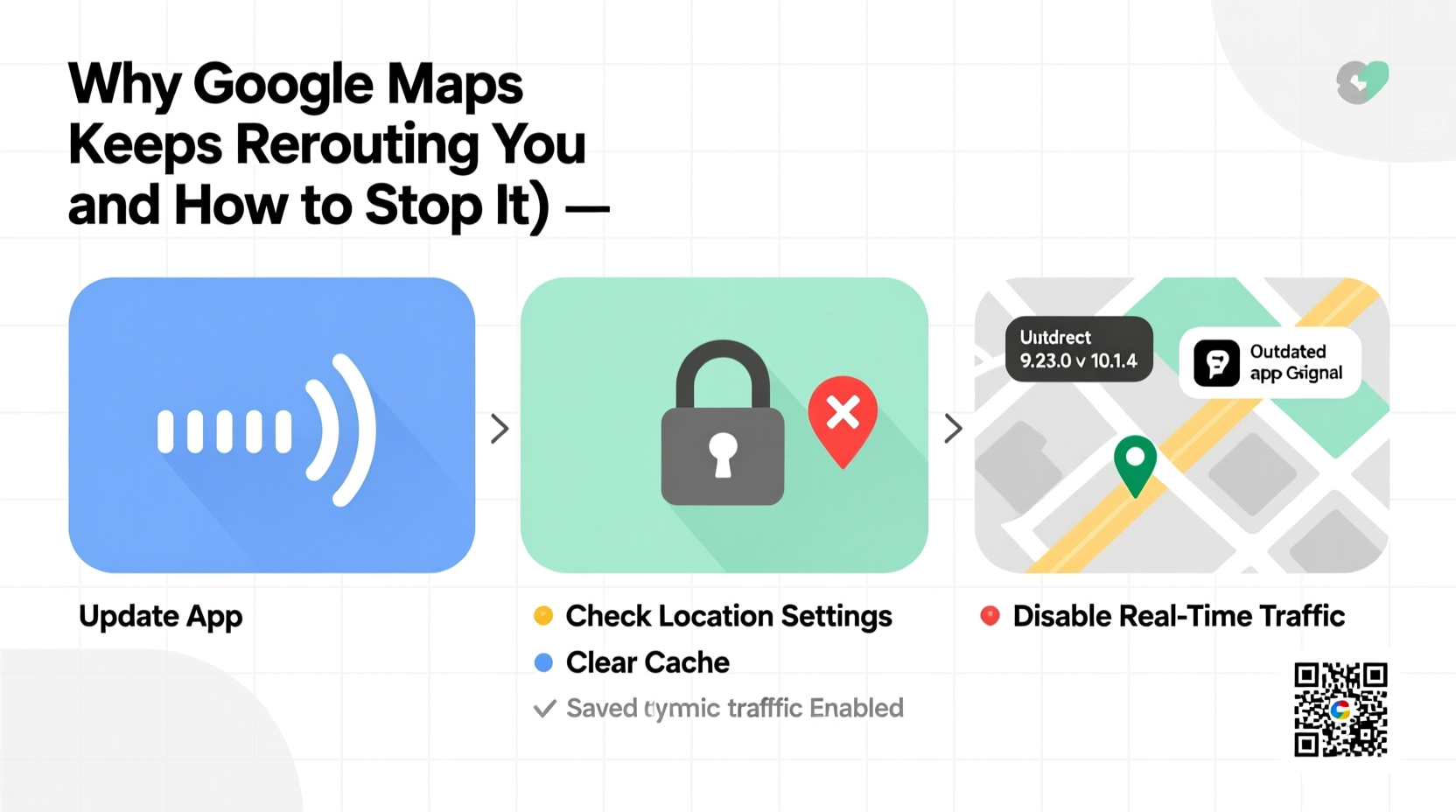
Google Maps uses dynamic routing powered by real-time data, including traffic congestion, accidents, road closures, and historical travel patterns. While this system is designed to optimize travel efficiency, it sometimes overreacts to minor changes or misinterprets data, leading to excessive rerouting.
The primary reasons behind unnecessary rerouting include:
- Traffic fluctuations: A temporary slowdown detected by nearby devices may trigger a reroute, even if the delay resolves seconds later.
- Inaccurate GPS signals: Weak satellite reception in urban canyons, tunnels, or under dense tree cover can cause the app to think you’ve deviated from the route.
- Overly aggressive algorithm: Google’s routing engine prioritizes speed and estimated time of arrival (ETA), sometimes favoring untested shortcuts over reliable main roads.
- Poor internet connectivity: Intermittent data can delay traffic updates, causing delayed or incorrect reroute decisions.
- User behavior assumptions: If Google detects you frequently take alternate routes, it may assume you prefer flexibility and reroute more often.
How to Stop Unnecessary Rerouting: Practical Fixes
While you can’t completely disable Google Maps’ adaptive routing, you can significantly reduce unwanted detours through targeted settings adjustments and usage strategies.
1. Lock Your Route Manually
When you’re confident in your current path, especially during familiar commutes, you can manually prevent rerouting. During active navigation, tap the bar at the bottom of the screen showing your ETA. Then, select the three-dot menu and choose “Lock route.” This prevents Google Maps from suggesting new paths unless there’s a major disruption like a road closure.
2. Disable Real-Time Traffic Adjustments
If you prefer consistency over adaptability, consider turning off live traffic rerouting. Go to Google Maps Settings > Navigation Settings > and toggle off “Reroute automatically.” Note: This means you won’t receive alerts about traffic jams or accidents ahead, so use this setting only when traveling on predictable routes.
3. Improve GPS Accuracy
Poor location accuracy is a major contributor to phantom rerouting. To enhance GPS performance:
- Enable high-accuracy mode in your phone’s Location settings (combines GPS, Wi-Fi, and mobile networks).
- Avoid placing your phone near metal surfaces or inside closed dash compartments.
- Use a windshield mount for clear sky visibility.
- Restart your device periodically to reset location services.
4. Preload Offline Maps
In areas with weak cellular coverage, Google Maps may struggle to fetch real-time data, leading to erratic behavior. Download offline maps for your destination and common routes via the app’s offline feature. This ensures smoother navigation and reduces reliance on unstable connections.
“Many reroute issues stem from transient signal loss rather than actual traffic problems. Ensuring stable GPS and data improves routing reliability by over 70%.” — Dr. Lena Torres, Senior UX Researcher at Mobile Navigation Lab, MIT
Step-by-Step Guide to Minimize Rerouting
Follow this sequence before and during your trip to maintain a stable, uninterrupted route:
- Plan Ahead: Open Google Maps and review your intended route before departure. Check for known delays or construction zones.
- Download Offline Map: Tap your profile icon > Offline Maps > Select Your Own Map, then define the area you’ll be traveling through.
- Adjust Navigation Settings: Go to Settings > Navigation Settings and disable “Automatic rerouting” if you want full control.
- Set Driving Mode Preferences: Under Navigation Settings, specify preferences like avoiding tolls, highways, or ferries to align with your driving style.
- Start Navigation and Lock Route: Once underway, tap the navigation bar and lock the route to prevent unsolicited changes.
- Monitor Signal Strength: Keep an eye on your GPS and network bars. If either drops, rely on preloaded map data and known landmarks.
Do’s and Don’ts: Best Practices Summary
| Do’s | Don’ts |
|---|---|
| Use high-accuracy GPS mode | Don’t navigate with battery saver enabled |
| Download offline maps for rural or low-signal areas | Don’t ignore recurring reroute patterns without checking settings |
| Lock your route once committed | Don’t place your phone in metal enclosures or under sunshades |
| Review route options before starting | Don’t assume reroutes are always optimal—verify suggested paths |
| Update Google Maps regularly | Don’t disable location permissions entirely |
Real-World Example: Commuter Frustration Solved
Consider Mark, a daily commuter in Chicago who drives 45 minutes from Naperville to downtown. For weeks, Google Maps rerouted him multiple times during his drive, diverting him onto surface streets due to what appeared to be minor congestion on I-88. These detours added 10–12 minutes to his trip and took him through unfamiliar neighborhoods.
Frustrated, Mark decided to investigate. He discovered that his phone was set to “Battery Saver” mode, which limited background data and GPS accuracy. He also found that automatic rerouting was enabled. After switching to “High Accuracy” location mode, disabling automatic rerouting, and downloading the regional offline map, Mark noticed immediate improvement. Google Maps still alerted him to traffic, but it no longer forced disruptive detours. Over the next month, his average commute time dropped by 7 minutes, and he reported feeling more in control of his journey.
When Rerouting Is Actually Helpful
It’s important to recognize that Google Maps’ rerouting isn’t inherently flawed—it’s often beneficial. The system excels in scenarios such as:
- A sudden accident blocks the freeway.
- Road closures due to construction or parades.
- Flash flooding or weather-related hazards.
- Unexpected congestion from events or emergencies.
The key is balance. You want the app to alert you to serious disruptions without micromanaging every minor fluctuation. That’s why customization—not complete deactivation—is the best approach.
Checklist: Optimize Google Maps to Reduce Unwanted Rerouting
Use this checklist before your next trip to ensure a smoother navigation experience:
- ✅ Enable High-Accuracy mode in Location Settings
- ✅ Disable “Automatic rerouting” in Navigation Settings (optional)
- ✅ Download offline maps for your route
- ✅ Mount your phone for clear GPS signal
- ✅ Turn off Battery Saver during navigation
- ✅ Review route options and select the most reliable one
- ✅ Lock your route after starting navigation
- ✅ Keep Google Maps updated via the Play Store or App Store
Frequently Asked Questions
Can I turn off rerouting completely in Google Maps?
No, you cannot fully disable rerouting, but you can minimize it by turning off “Automatic rerouting” in Settings > Navigation Settings. This stops the app from changing your route unless there’s a major obstruction like a road closure.
Why does Google Maps reroute me even when traffic looks fine?
This can happen due to aggregated data from other users showing slowdowns, GPS drift making it appear you’ve left the route, or a brief spike in traffic that quickly clears. It may also reflect predictive modeling based on historical patterns for that time of day.
Does locking the route affect traffic updates?
No. Locking the route prevents automatic rerouting, but you’ll still see traffic conditions, incidents, and speed limits along your chosen path. You can manually check for alternatives by tapping the route overview.
Conclusion: Take Control of Your Navigation Experience
Unnecessary rerouting in Google Maps is a common but solvable issue. By understanding the triggers—such as GPS inaccuracies, aggressive algorithms, and unstable connectivity—you can take meaningful steps to stabilize your navigation. Simple actions like locking your route, disabling automatic rerouting, improving signal strength, and using offline maps can transform a chaotic drive into a seamless journey. Technology should serve you, not complicate it. With the right settings and awareness, you can enjoy the benefits of real-time navigation without the frustration of constant detours.




 浙公网安备
33010002000092号
浙公网安备
33010002000092号 浙B2-20120091-4
Comments
No comments yet. Why don't you start the discussion?