
If you wash your hair in the morning and by evening it’s already flat, shiny, and clinging to your scalp, you’re not alone. Many people struggle with hair that turns greasy within 24 hours of washing, often assuming it’s due to overactive sebaceous glands or genetics. While those factors play a role, the real culprit is frequently not your biology—but your technique. Poor shampooing habits, incorrect product choices, and overlooked scalp dynamics can all accelerate oil buildup. Understanding these errors is the first step toward lasting freshness.
The Science Behind Hair Greasiness
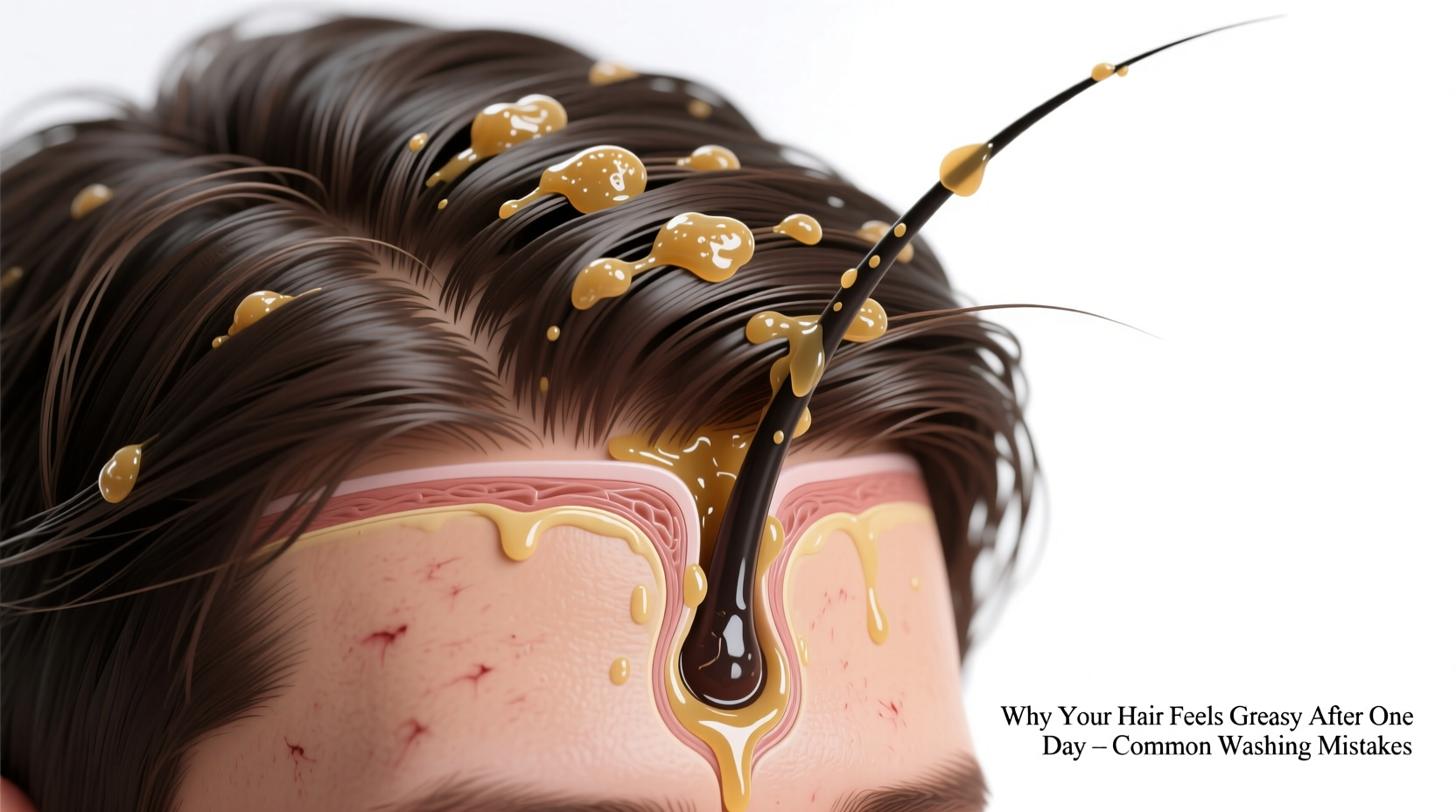
Sebum, the natural oil produced by sebaceous glands in your scalp, is essential for maintaining moisture and protecting hair from environmental damage. However, when sebum accumulates excessively on the scalp and hair shafts, it leads to that unwelcome greasy texture. Normally, it takes two to three days for noticeable oil buildup in most individuals. When greasiness appears after just one day, something in your routine is likely disrupting the balance.
The issue isn’t always overproduction. Sometimes, it’s improper cleansing that leaves behind residue, which then traps oil and dirt more easily. Other times, aggressive washing strips the scalp, triggering a rebound effect where sebum production increases to compensate for lost moisture.
“Many patients come in convinced they have ‘oily skin,’ but upon reviewing their hair care habits, we find they’re using products or techniques that disrupt their scalp’s natural equilibrium.” — Dr. Lena Torres, Board-Certified Dermatologist and Trichologist
Common Washing Technique Errors That Cause Fast Greasiness
Even if you're consistent with washing, small mistakes in your method can sabotage your results. Below are the most frequent errors that lead to rapid greasiness.
1. Not Pre-Rinsing Thoroughly
Jumping straight into shampooing without a long pre-rinse prevents water from properly saturating the hair. Shampoo needs to mix with water to activate and emulsify oils. If your hair isn’t fully wet, shampoo clumps in certain areas, leading to uneven cleaning. Meanwhile, oil and product residue remain trapped at the roots.
2. Using Too Much Shampoo
It might seem logical that more shampoo equals cleaner hair, but excess product is difficult to rinse out completely. Leftover shampoo mixes with sebum and dead skin cells, creating a sticky film that accelerates greasiness. It also irritates the scalp over time, potentially increasing oil production.
3. Focusing Only on Hair, Not the Scalp
Grease originates at the scalp, not along the lengths of your hair. Yet many people lather shampoo only on the mid-lengths and ends—areas that need less cleansing. By neglecting the scalp, you leave oil, sweat, and buildup untouched, allowing them to spread down the hair shaft as you dry and style.
4. Scrubbing with Nails Instead of Fingertips
Using your nails can cause micro-tears in the scalp, leading to inflammation and irritation. In response, the body may increase sebum output as a protective measure. Always use the pads of your fingers to massage shampoo into the scalp in circular motions.
5. Rinsing with Hard Water or Incorrect Temperature
Hard water contains minerals like calcium and magnesium that bind to hair, forming a film that weighs hair down and makes it look dull and oily faster. Additionally, rinsing with very hot water can overstimulate oil glands, while cold water may not remove residue effectively. The ideal is lukewarm water for washing and a final cool rinse to seal the cuticle.
6. Over-Washing or Under-Washing
Washing daily can strip natural oils, prompting the scalp to produce more sebum to compensate—a cycle known as “rebound oiliness.” Conversely, going too long between washes allows oil and debris to accumulate, making hair appear greasy sooner after washing because the initial cleanse has to work harder.
Product Missteps That Worsen the Problem
Your shampoo and conditioner choices significantly impact how quickly your hair becomes greasy. Even with perfect technique, the wrong products can undo your efforts.
| Product Type | Common Error | Better Alternative |
|---|---|---|
| Shampoo | Heavy sulfates or moisturizing formulas for oily hair | Sulfate-free clarifying or balancing shampoo |
| Conditioner | Applied directly to the scalp or roots | Used only from mid-lengths to ends |
| Leave-in Products | Heavy oils or silicones applied near roots | Lightweight, water-based sprays used sparingly |
| Dry Shampoo | Overused, leading to clogged follicles | Used 1–2 times weekly max, followed by thorough wash |
For example, conditioners containing dimethicone or shea butter are excellent for dry hair but can weigh down fine or oily types. Applying them near the scalp introduces unnecessary oils right where grease forms.
Step-by-Step Guide to Correct Your Washing Technique
Follow this proven routine to reset your scalp health and extend the time between washes.
- Pre-Rinse for 1–2 Minutes: Use lukewarm water to fully saturate hair and loosen surface oils.
- Apply Shampoo to Scalp Only: Pour a quarter-sized amount into palms, dilute with water, and apply directly to the scalp.
- Massage Gently for 60 Seconds: Use fingertips in circular motions to lift debris and stimulate circulation without irritation.
- Rinse Thoroughly: Continue rinsing until water runs clear—this may take longer than expected, especially with thick hair.
- Repeat if Necessary: A second wash is only needed if you use heavy styling products or live in a polluted area.
- Condition Strategically: Apply conditioner from ear level down, avoiding the roots entirely. Leave for 3–5 minutes, then rinse with cool water.
- Use a Microfiber Towel: Gently squeeze out water instead of rubbing, which can agitate the scalp and promote oil production.
- Air-Dry When Possible: Heat styling stresses the scalp; let hair dry naturally to maintain balance.
Mini Case Study: From Daily Wash to Three-Day Freshness
Sarah, a 29-year-old graphic designer, washed her fine, straight hair every morning. By lunchtime, her roots were slick and flat. She assumed her oily scalp was genetic—her mother had the same issue. After tracking her routine, she realized she was using a creamy conditioner from root to tip and rinsing for less than 30 seconds.
She switched to a lightweight, balancing shampoo and began applying conditioner only to the ends. She also extended her rinse time and started pre-washing with a 90-second soak. Within two weeks, her hair stayed fresh for nearly three days. “I thought I was doing everything right,” she said. “But changing how I rinsed made the biggest difference.”
Checklist: Are You Making These Mistakes?
- ☑ Do you skip pre-rinsing your hair before shampooing?
- ☑ Do you use more than a tablespoon of shampoo?
- ☑ Do you apply conditioner to your scalp?
- ☑ Do you scrub your scalp with your fingernails?
- ☑ Do you rinse with very hot water?
- ☑ Do you use heavy leave-in creams or oils near your roots?
- ☑ Do you wash daily without a clarifying wash once a week?
- ☑ Do you towel-dry aggressively?
If you answered yes to three or more, it’s likely technique—not your scalp—is causing fast greasiness.
FAQ
Can hard water really make my hair greasy faster?
Yes. Hard water leaves behind mineral deposits that coat the hair shaft, making it harder to remove oil and product residue. Over time, this buildup attracts more sebum and creates a dull, greasy appearance. Consider installing a shower filter or using a chelating shampoo once a week to counteract this effect.
Is it bad to use dry shampoo every day?
Regular daily use of dry shampoo can clog hair follicles and irritate the scalp, leading to increased oil production and even hair thinning over time. It’s best used as a temporary solution between washes, no more than twice a week, and always followed by a thorough scalp cleanse.
Should I stop conditioning if my hair gets greasy fast?
No—conditioning is still essential, even for oily hair. The key is placement. Focus conditioner on the mid-lengths and ends, which are typically drier and more prone to damage. Avoid the scalp entirely, and choose lightweight, water-based formulas labeled “for fine hair” or “volumizing.”
Conclusion: Take Control of Your Hair’s Freshness
Greasy hair after one day isn’t inevitable. More often than not, it’s the result of subtle but significant errors in how you wash, what products you use, and how you care for your scalp. By refining your technique—extending rinse times, targeting the scalp, choosing appropriate products, and avoiding common pitfalls—you can break the cycle of daily washing and enjoy fresher, healthier hair for longer.
Small changes compound into dramatic results. Start tonight: adjust your rinse, reposition your conditioner, and give your scalp the attention it deserves. Within weeks, you’ll notice a visible difference—not just in how your hair looks, but in how much time and effort you save.




 浙公网安备
33010002000092号
浙公网安备
33010002000092号 浙B2-20120091-4
Comments
No comments yet. Why don't you start the discussion?