
Washing your hair should leave it feeling soft, smooth, and refreshed—not tacky or coated in residue. Yet many people regularly experience a sticky, gummy, or slimy sensation on their strands shortly after conditioning. This unpleasant texture isn’t just uncomfortable—it can signal deeper issues with product choice, water quality, or application technique. The good news: sticky hair is almost always preventable and fixable. Understanding the root causes and making small adjustments to your routine can transform your hair from clingy and lifeless to light, bouncy, and healthy.
What Causes Hair to Feel Sticky After Conditioning?
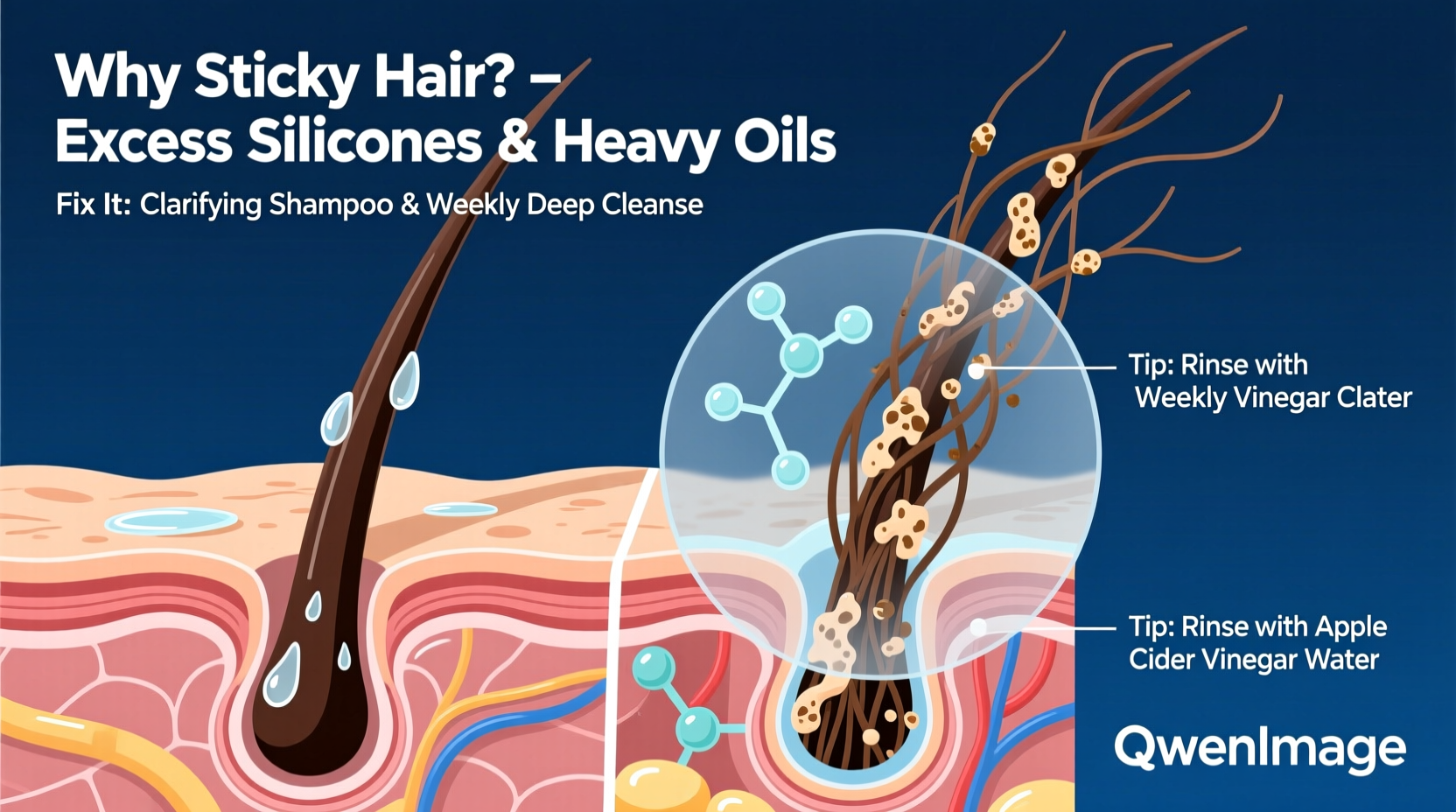
The sticky sensation after conditioning typically results from residue buildup on the hair shaft. Unlike oil or sweat, which can make hair greasy, stickiness often feels more like a film—almost as if your hair is slightly damp even when dry. Several factors contribute to this phenomenon:
- Product Buildup: Conditioners contain emollients, silicones, and humectants that coat the hair to improve manageability. Over time, these ingredients can accumulate, especially if not fully rinsed or if used too frequently.
- Hard Water Minerals: High concentrations of calcium and magnesium in tap water react with conditioner ingredients, forming insoluble deposits that cling to hair and scalp.
- Overconditioning: Applying too much conditioner, leaving it on too long, or using heavy formulas on fine or low-porosity hair can overwhelm the strands.
- Insufficient Rinsing: Not spending enough time rinsing conditioner—especially from the roots and mid-lengths—leaves behind a filmy layer.
- Silicone Trapping: Water-insoluble silicones (like dimethicone) don’t wash out easily with regular shampoos and build up over time, creating a plastic-like coating.
This residue doesn’t just feel unpleasant—it can block moisture absorption, weigh down curls, and dull shine. In severe cases, it may even contribute to scalp irritation or clogged follicles.
How to Identify the Culprit in Your Routine
Before fixing the problem, pinpoint what’s causing it. Consider these diagnostic questions:
- Do you have hard water? Check for white spots on faucets, reduced lather with shampoo, or stiff laundry. You can also purchase a water test strip online.
- Are you using silicone-heavy products? Scan your conditioner label. Ingredients ending in “-cone” or “-xane” (e.g., dimethicone, amodimethicone) are likely culprits.
- Is your hair type suited to your conditioner? Fine, straight, or low-porosity hair absorbs less moisture and can become weighed down easily.
- Are you applying conditioner correctly? Conditioner belongs primarily on the mid-lengths to ends—not the scalp or roots—unless prescribed otherwise.
A simple test: After washing and drying your hair, run your fingers through it. If it feels tacky, crunchy when dry, or attracts lint easily, buildup is likely present. A strand test—placing a single hair in water—can also help: buildup-coated hair will sink quickly due to added weight.
Step-by-Step Guide to Fix Sticky Hair
Resolving sticky hair requires both immediate action and long-term habit changes. Follow this timeline to restore balance:
Week 1: Clarify and Reset
- Use a clarifying shampoo. Choose one designed to remove buildup (look for sulfates like sodium laureth sulfate or natural alternatives like apple cider vinegar-based formulas). Wash once, focusing on the scalp and lengths.
- Rinse thoroughly with lukewarm water. Spend at least two minutes ensuring all suds are gone.
- Follow with a lightweight, silicone-free conditioner. Apply only from ear level down. Leave on for 3–5 minutes, then rinse completely.
- Air-dry without styling products. Let your hair recover and assess its natural texture.
Week 2–4: Refine Your Routine
- Limited conditioner use to 1–2 times per week if you have fine or oily hair.
- Switch to a co-wash (cleansing conditioner) on non-clarifying days if your scalp is sensitive.
- Install a shower filter if hard water is suspected—this reduces mineral deposits significantly.
- Try a monthly apple cider vinegar rinse (1 part ACV to 3 parts water) to dissolve residue naturally.
Ongoing Maintenance
Maintain clarity by using a clarifying shampoo every 3–4 weeks. Monitor how your hair responds and adjust frequency based on lifestyle (e.g., more often if you swim or use heavy stylers).
“Buildup is one of the most overlooked causes of poor hair health. Many clients come in thinking they need stronger treatments, when really, they just need a clean slate.” — Dr. Lena Torres, Trichologist & Hair Scientist
Choosing the Right Products: Do’s and Don’ts
Your product selection plays a crucial role in preventing sticky hair. Use the table below to guide smarter choices:
| Category | Do | Don’t |
|---|---|---|
| Conditioner Type | Choose lightweight, water-soluble formulas labeled “non-greasy” or “for fine hair” | Avoid heavy butters (shea, coconut) or oils if your hair is prone to buildup |
| Key Ingredients | Look for glycerin (in moderation), cetyl alcohol, panthenol | Avoid dimethicone, cyclomethicone, petrolatum unless followed by regular clarifying |
| Water Quality | Use a filtered or chelating shampoo occasionally | Don’t ignore hard water signs—mineral buildup worsens over time |
| Application | Apply only to ends; rinse for at least 60 seconds | Don’t apply conditioner to roots or leave it on longer than recommended |
Real-Life Example: How Sarah Fixed Her Sticky Curls
Sarah, a 29-year-old teacher with wavy, low-porosity hair, struggled for months with her curls feeling gummy after showers. She loved deep conditioners and left them on for 30 minutes under a cap, believing more time meant better results. But her hair dried flat, lacked definition, and attracted dust easily.
After consulting a stylist, she discovered three key issues: her well water was extremely hard, her favorite conditioner contained multiple silicones, and she applied product from root to tip. She switched to a chelating shampoo every three weeks, began using a silicone-free curl cream, and limited conditioner to her ends only. Within a month, her curls bounced back—literally. “I didn’t realize I’d been coating my hair in waterproof sealant,” she said. “Now it moves freely and actually holds volume.”
Essential Checklist to Prevent Sticky Hair
Use this checklist to audit and upgrade your hair care habits:
- ✅ Read conditioner labels—avoid heavy silicones if you don’t clarify regularly
- ✅ Install a shower filter if you have hard water
- ✅ Rinse conditioner for at least 60 seconds with cool water
- ✅ Apply conditioner only from ears down—never on the scalp
- ✅ Use a clarifying shampoo every 3–4 weeks
- ✅ Try an apple cider vinegar rinse monthly (diluted 1:3 with water)
- ✅ Avoid overlapping multiple conditioning products (e.g., leave-in + mask + oil)
Frequently Asked Questions
Can sticky hair lead to hair loss?
Not directly. However, persistent buildup can clog hair follicles, irritate the scalp, and weaken roots over time. Chronic inflammation may contribute to thinning, so addressing stickiness early supports overall scalp health.
Is it safe to use baking soda to remove conditioner residue?
Occasional use is acceptable, but baking soda has a high pH (around 9) that can disrupt your hair’s natural acidity (around 4.5–5.5). Overuse leads to cuticle damage, frizz, and breakage. A safer alternative is a diluted apple cider vinegar rinse or a dedicated clarifying shampoo.
Why does my hair feel sticky only when dry?
If your hair feels sticky when dry, it’s likely due to excess humectants (like glycerin) reacting with humidity. These ingredients attract moisture from the air, creating a damp, tacky film. Opt for conditioners with lower glycerin levels in humid climates, or seal with a light oil to minimize exposure.
Conclusion: Take Control of Your Hair Health
Sticky hair after conditioning isn’t normal—and it’s not something you have to live with. With a clearer understanding of how ingredients interact with your hair type and water supply, you can make informed choices that lead to truly healthy, residue-free results. The solution isn’t about using more products, but using the right ones, in the right way, at the right time. Start with a clarifying wash, reassess your conditioner, and refine your routine step by step. Your hair deserves to feel clean, light, and naturally beautiful—not coated in invisible residue.




 浙公网安备
33010002000092号
浙公网安备
33010002000092号 浙B2-20120091-4
Comments
No comments yet. Why don't you start the discussion?