
Washing your hair should leave it feeling clean, soft, and refreshed. So when you step out of the shower only to find your strands coated in a strange, tacky residue—almost like they’re still dirty—it’s not just frustrating, it can be confusing. You used shampoo. You rinsed thoroughly. So why does your hair feel sticky after washing?
The answer often lies in product buildup—a silent issue that accumulates over time, especially with frequent use of styling products, hard water exposure, or incompatible haircare formulas. This invisible layer coats the hair shaft, preventing moisture absorption, dulling shine, and creating that unpleasant sticky or gritty sensation. Left unchecked, it can even lead to scalp irritation, flaking, and weakened hair.
Understanding the root causes, identifying contributing factors, and knowing how to effectively remove and prevent buildup is essential for maintaining truly clean, healthy hair. This guide breaks down the science behind sticky hair, explores common culprits, and provides actionable strategies to reset your routine.
What Causes Sticky Hair After Washing?
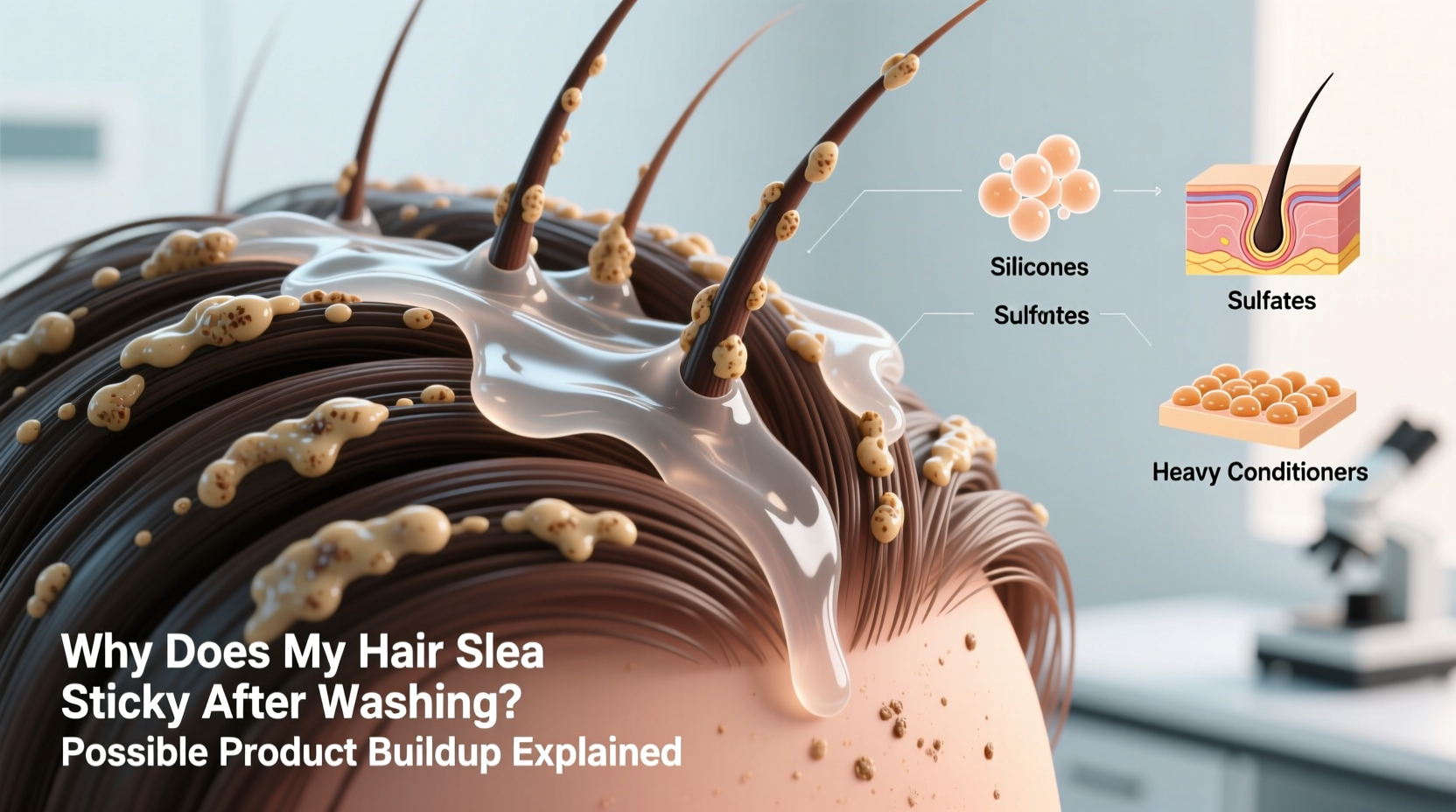
Sticky hair isn’t usually due to one single mistake. Instead, it’s typically the result of multiple overlapping factors that gradually compromise your hair’s ability to feel clean—even after washing. The most common cause? Product buildup.
Product buildup occurs when residues from shampoos, conditioners, stylers, dry shampoos, serums, and environmental pollutants accumulate on the scalp and hair shaft. Unlike dirt or oil, which water easily washes away, certain ingredients—especially silicones, waxes, and polymers—are hydrophobic (water-repellent) and resist rinsing. Over time, they form a film that traps oils, dead skin cells, and more product underneath.
This coating disrupts the hair’s natural texture, leading to:
- A gummy, sticky, or slimy feel
- Flat, lifeless hair despite washing
- Difficulty styling or holding curls
- Increased frizz and tangling
- Itchy or flaky scalp
Common Ingredients That Cause Buildup
Not all hair products are created equal. While some ingredients nourish and protect, others are notorious for lingering on the hair long after rinsing. Knowing what to look for on labels helps you avoid problematic formulas.
| Ingredient | Function | Buildup Risk |
|---|---|---|
| Silicones (e.g., dimethicone, amodimethicone) | Smooth cuticles, reduce frizz | High — unless sulfates are used to remove them |
| Mineral Oil & Petrolatum | Seal in moisture | High — forms occlusive barrier |
| Beeswax & Plant Waxes | Add hold and definition | Moderate to High — difficult to rinse |
| Acrylates & Styling Polymers | Provide hold in gels and sprays | Moderate — can crystallize and feel crunchy or sticky |
| Cationic Surfactants (e.g., behentrimonium chloride) | Condition and detangle | Low to Moderate — beneficial but can accumulate if not balanced |
Silicones, while effective at smoothing hair, are among the biggest offenders. They coat the hair shaft to block humidity and add shine, but without a clarifying agent like sulfates, they remain stubbornly in place. Over months, this creates a plastic-like layer that blocks moisture and gives hair that “unclean” feel—even right after washing.
“Many clients come in complaining of sticky hair, only to realize they’ve been using silicone-heavy conditioners daily without ever clarifying. It’s like painting layers of varnish on wood—you eventually lose the natural grain.” — Dr. Lena Patel, Trichologist & Hair Health Specialist
Other Factors That Contribute to Sticky Sensations
While product buildup is the primary suspect, other environmental and physiological factors can mimic or worsen the sticky feeling.
Hard Water Residue
If your home has hard water—high in minerals like calcium and magnesium—these can bind to hair and shampoo ingredients, forming an insoluble film known as “soap scum.” This residue leaves hair feeling stiff, coated, and oddly tacky. It also reduces lather, making you think you need more product, which only compounds the problem.
Insufficient Rinsing
Rushing the rinse phase is surprisingly common. Conditioner left near the roots, or excess shampoo trapped under thick hair, won’t fully dissolve. Focus extra time on massaging the scalp and mid-lengths during rinsing, especially if you have dense or curly hair.
Overconditioning or Incorrect Application
Applying heavy conditioners or masks directly to the scalp or roots can weigh hair down and create buildup. These products are designed for the mid-lengths to ends, where hair is drier and more porous. Using them elsewhere leads to residue accumulation and stickiness.
Scalp Sweat and Natural Oils Mixing with Products
If you exercise frequently or go long periods between washes, sebum (natural scalp oil), sweat, and leftover product can oxidize and congeal. This mixture becomes sticky and harder to remove, particularly along the hairline and nape.
Poor-Quality or Expired Products
Old shampoos or conditioners can degrade, separating into components that don’t emulsify properly. This leads to patchy application and uneven rinsing. Similarly, low-quality formulations may contain fillers or unstable emulsifiers that leave behind a filmy residue.
How to Remove and Prevent Buildup: A Step-by-Step Guide
Clearing sticky buildup doesn’t require drastic measures, but it does call for consistency and the right technique. Follow this timeline to reset your hair and maintain a clean slate.
- Week 1: Clarify Thoroughly
Use a sulfate-based clarifying shampoo once. Focus on the scalp, lathering twice if needed. Rinse with warm (not hot) water for at least two minutes. Avoid conditioning immediately after if buildup is severe—let hair breathe. - Week 2: Assess and Adjust
Switch to a gentle, sulfate-free shampoo if your scalp feels dry post-clarifying. Look for keywords like “chelating” (removes minerals) or “detox” (targets residue). Use a lightweight conditioner only on ends. - Week 3: Introduce Regular Maintenance
Incorporate a clarifying shampoo every 2–4 weeks, depending on product use. If you use heavy stylers daily, aim for every two weeks. For minimal product users, monthly is sufficient. - Ongoing: Optimize Your Routine
Apply conditioners only from ears down. Pre-poo with a light oil before washing if you notice excessive dryness. Install a shower filter if hard water is suspected.
Diy Rinse Options
For a natural alternative, try a vinegar or citric acid rinse:
- Mix 1 part apple cider vinegar with 3 parts water. Apply after shampooing, leave for 2–3 minutes, then rinse.
- Lemon juice (1 tbsp in 1 cup water) works similarly but is more acidic—use sparingly to avoid dryness.
These help dissolve mineral deposits and lift residue without stripping natural oils excessively.
Real-Life Example: Sarah’s Buildup Breakthrough
Sarah, a 34-year-old with wavy, color-treated hair, had been struggling for months with hair that felt “gummy” by day two, no matter how often she washed it. She used a silicone-rich mask weekly, a leave-in conditioner, and a gel for definition. Despite daily washing, her hair lacked volume and felt coated.
After consulting a trichologist, she learned that her weekly deep conditioner was being applied to her roots, and her sulfate-free shampoo wasn’t strong enough to remove the cumulative residue. She began clarifying every 10 days, switched to a chelating shampoo, and moved her treatments strictly to the ends. Within three weeks, her hair felt lighter, responded better to styling, and stayed fresh longer. The sticky sensation vanished.
Her experience highlights how even well-intentioned routines can backfire without proper product knowledge and application.
Do’s and Don’ts of Managing Hair Buildup
| Do | Don’t |
|---|---|
| Clarify every 2–4 weeks based on product use | Use clarifying shampoos more than once a week (can damage scalp barrier) |
| Apply conditioner only to mid-lengths and ends | Leave styling products in overnight without washing |
| Install a water filter if you have hard water | Use heavy oils or butters on fine or oily hair types |
| Rinse hair for at least 2–3 minutes after conditioning | Layer multiple silicone-based products daily |
| Check ingredient lists for non-water-soluble silicones | Ignore changes in hair texture—they’re early warning signs |
Frequently Asked Questions
Can oily hair cause a sticky feeling?
Yes, but it’s often confused with buildup. True oiliness makes hair look greasy and flat, while sticky hair feels tacky to the touch, even when visually clean. However, excess oil can trap product residue, worsening the sensation. Balancing scalp health with proper cleansing is key.
Is sticky hair a sign of dandruff or fungal issues?
Not always, but it can contribute. A clogged scalp from buildup creates a breeding ground for yeast like Malassezia, which can trigger flaking and itching. If sticky hair is accompanied by redness, persistent itch, or yellowish flakes, consult a dermatologist to rule out seborrheic dermatitis.
Can I fix sticky hair without sulfates?
Yes, but it takes more effort. Sulfate-free shampoos are gentler but less effective at removing heavy buildup. Combine them with regular clarifying treatments, pre-shampoo oils, and vinegar rinses. Look for alternatives like sodium cocoyl isethionate or decyl glucoside, which cleanse without harshness.
Take Control of Your Hair Health
Sticky hair after washing isn’t normal—and it’s not something you have to live with. By understanding the role of product buildup, recognizing the ingredients that contribute to residue, and adjusting your routine accordingly, you can restore your hair’s natural cleanliness and vitality. It starts with awareness: pay attention to how your hair feels post-wash, read labels carefully, and don’t underestimate the power of a good clarifying session.
Your hair deserves to feel truly clean—light, bouncy, and free from invisible residue. Whether you're dealing with hard water, heavy stylers, or simply an outdated routine, small, consistent changes make a lasting difference. Start today by auditing your current products and scheduling your first detox wash. Your future self—and your hair—will thank you.




 浙公网安备
33010002000092号
浙公网安备
33010002000092号 浙B2-20120091-4
Comments
No comments yet. Why don't you start the discussion?