
If you’ve ever woken up with a halo of frizz despite using high-end serums or sleeping with a silk bonnet, the culprit might be right under your head: your pillowcase. While hair care routines often focus on products and styling tools, the surface your hair rests on for 6–8 hours each night plays a surprisingly powerful role in managing frizz. The truth is, not all pillowcases are created equal—and some actively contribute to dryness, breakage, and static buildup. Understanding how fabric interacts with your hair’s texture and moisture levels can transform your morning routine from frustrating to flawless.
The Science Behind Frizz and Fabric Friction
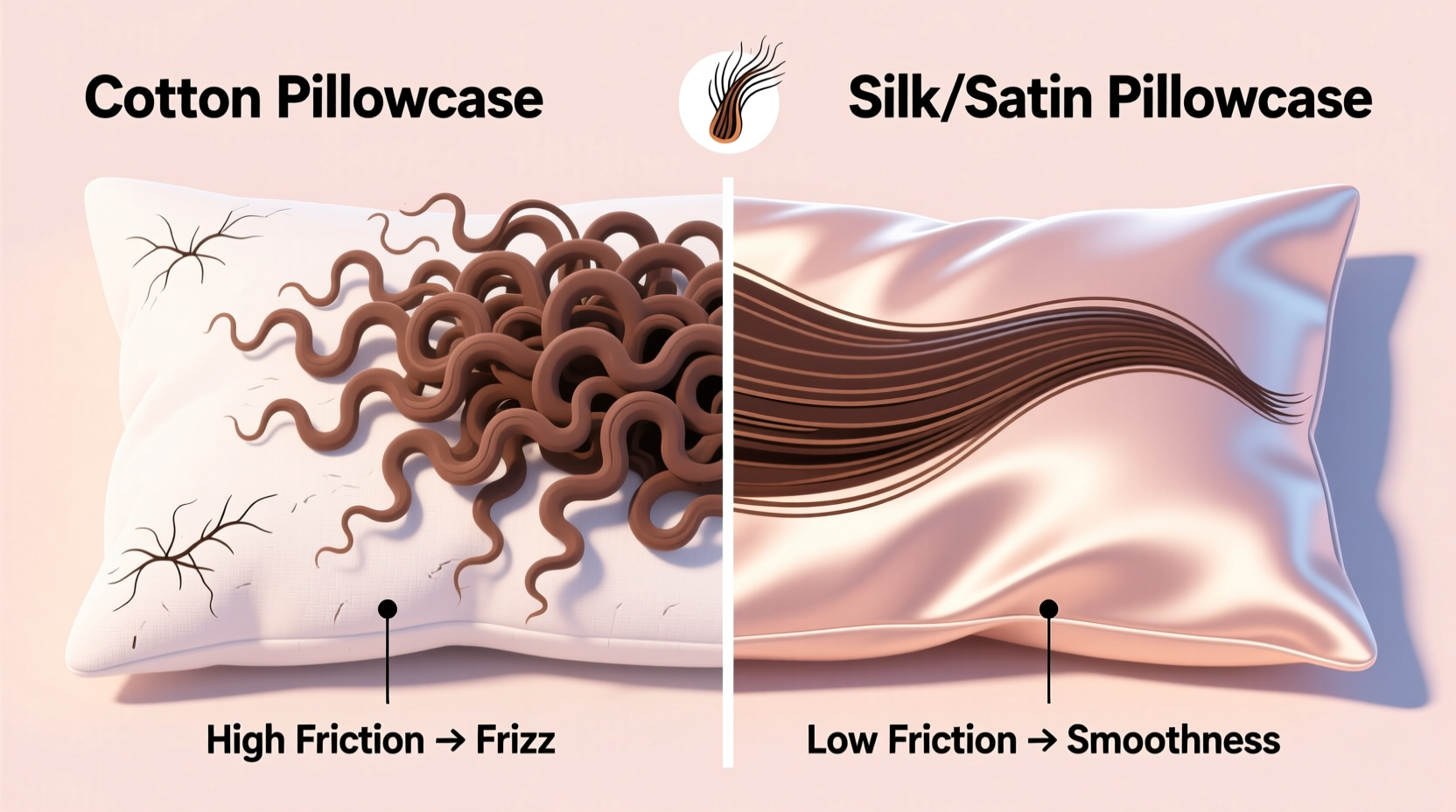
Frizz occurs when the cuticle—the outermost layer of the hair shaft—lifts and allows moisture from the air to penetrate. This is especially common in humid environments or with naturally curly, wavy, or chemically treated hair, which tends to be more porous. When the cuticle opens, strands swell and lose their smooth alignment, creating that familiar fuzzy appearance.
Fabric choice directly influences this process through friction. Traditional cotton pillowcases, while soft to the touch, have a relatively coarse weave. As you move during sleep, your hair drags across the surface repeatedly. This mechanical abrasion roughs up the cuticle, weakening its integrity over time and increasing susceptibility to environmental moisture. Additionally, cotton is highly absorbent—it pulls natural oils and hydration from your hair, leaving strands drier by morning.
In contrast, smoother fabrics like silk and satin reduce drag. They allow hair to glide rather than snag, preserving the cuticle’s flat position and minimizing dehydration. The difference isn’t just cosmetic; it affects long-term hair health, especially for those with textured, damaged, or fine hair types prone to tangling and split ends.
“Overnight friction is an underestimated factor in hair damage. Switching to a low-friction pillowcase can reduce cuticle disruption by up to 50% compared to standard cotton.” — Dr. Lena Torres, Trichologist and Hair Research Specialist
Common Pillowcase Materials and Their Impact on Hair
Not all pillowcases marketed as “smooth” deliver the same results. Below is a breakdown of popular materials and how they affect hair texture and frizz levels:
| Material | Friction Level | Maintenance of Moisture | Best For Hair Types |
|---|---|---|---|
| Cotton (Standard) | High | Poor – absorbs oils and moisture | Straight, oily, or resilient hair |
| Cotton (Percale/Pima) | Moderate | Fair – less absorbent than regular cotton | Normal to oily hair with mild frizz |
| Polyester Satin | Low | Good – non-absorbent | Dry, curly, or color-treated hair |
| Silk (Mulberry) | Very Low | Excellent – preserves natural oils | All types, especially fragile or frizzy hair |
| Bamboo (Rayon from Bamboo) | Low | Very Good – moisture-wicking and soft | Curly, coily, or sensitive scalps |
While silk is often hailed as the gold standard, high-quality satin made from polyester can offer similar glide at a lower price point. However, cheaper satin blends may trap heat or generate static, counteracting benefits. Real silk, derived from mulberry silkworms, remains unmatched in breathability and gentleness but requires careful washing. Bamboo-based fabrics are emerging as sustainable alternatives, combining softness with antimicrobial properties that benefit scalp health.
A Real-Life Shift: From Cotton to Silk
Consider Maria, a 34-year-old graphic designer with shoulder-length wavy hair. She spent years battling morning frizz, relying on leave-in conditioners and anti-humidity sprays. Despite her efforts, her hair would puff up within minutes of waking. After reading about fabric friction, she switched from a 300-thread-count cotton pillowcase to a 19-momme mulberry silk one. Within two weeks, she noticed a visible reduction in flyaways and tangles. Her waves held their shape longer, and she used significantly less product. Over three months, her hair felt stronger—fewer broken strands in the shower, less need for trims. The change wasn’t due to a new shampoo or serum, but simply reducing nightly damage at its source.
Maria’s experience reflects a growing trend: small environmental adjustments yielding outsized results. Her case underscores that frizz isn’t always a symptom of poor hair health—it can be a response to external stressors amplified over time.
How to Choose the Right Pillowcase for Your Hair Type
Selecting the ideal pillowcase involves more than just material. Thread count, weave tightness, and maintenance habits matter too. Follow this step-by-step guide to make an informed decision:
- Assess your hair type: Curly, coily, or fine hair benefits most from low-friction surfaces. Straight or oily hair may tolerate cotton but still gains from reduced breakage.
- Prioritize smooth weaves: Look for terms like “charmeuse,” “satin finish,” or “tight twill.” These indicate a glossy, slippery texture that minimizes snagging.
- Check fiber origin: Real silk should be labeled “100% mulberry silk” with a momme weight of 19 or higher. Bamboo should be “rayon from bamboo,” not synthetic blends.
- Consider care requirements: Silk needs hand washing or gentle machine cycles in cold water. Satin and bamboo are typically machine washable, making them more practical for daily use.
- Evaluate breathability: If you tend to overheat at night, opt for silk or bamboo, which regulate temperature better than polyester.
- Replace worn cases: Even high-quality pillowcases degrade after 1–2 years. Pilling, thinning, or rough patches reintroduce friction.
Do’s and Don’ts of Pillowcase Selection
| Do | Don't |
|---|---|
| Choose 19+ momme silk for durability | Buy “silk-look” polyester without checking the weave |
| Wash silk in pH-neutral detergent | Use bleach or fabric softener on delicate fabrics |
| Rotate between two cases to extend lifespan | Ignore pilling or snags—replace when texture changes |
| Pair with a loose braid or silk scrunchie | Sleep with wet hair on absorbent fabrics |
FAQ: Common Questions About Pillowcases and Frizz
Does satin really make a difference compared to cotton?
Yes. Satin—especially when tightly woven—creates far less friction than cotton. It doesn’t absorb moisture, so your hair retains natural oils and stays hydrated. Users consistently report fewer tangles, reduced frizz, and longer-lasting styles when switching from cotton to satin.
Is silk worth the higher price?
For many, yes. Genuine mulberry silk offers superior softness, temperature regulation, and longevity when properly cared for. While a quality silk pillowcase costs $50–$80, it can last 2+ years with gentle washing. Given the reduction in styling time and product use, the investment often pays for itself in hair health.
Can I use a silk pillowcase if I have oily hair?
Absolutely. Silk doesn’t increase oil production—it simply doesn’t absorb it like cotton does. Oily hair may still require regular cleansing, but silk helps distribute sebum evenly from roots to ends, potentially improving shine and reducing dryness at the tips.
Your Action Plan for Smoother Mornings
Eliminating frizz starts long before you reach for a flat iron. By reevaluating your pillowcase, you address a root cause of daily damage. Begin by auditing your current bedding: if it’s standard cotton, consider replacing it with a certified silk, high-grade satin, or bamboo alternative. Pair the switch with simple habits—like loosely braiding damp hair or using a silk scrunchie—to maximize benefits.
Track changes over four weeks. Note differences in tangle frequency, product usage, and overall manageability. You may find that your hair responds more favorably to treatments, holds styles longer, and feels stronger to the touch. These improvements stem not from a miracle product, but from consistent, intelligent care.
“The best hair routines work while you sleep. A friction-reducing pillowcase is one of the simplest yet most effective tools for maintaining smooth, healthy hair.” — Nadia Chen, Celebrity Hairstylist and Texture Specialist
Conclusion
Your pillowcase is more than a bedroom accessory—it’s a critical component of your hair care regimen. Frizz caused by cotton-induced friction and moisture loss is preventable. By choosing smoother, gentler fabrics like silk, satin, or bamboo, you protect your hair’s structure, preserve hydration, and wake up to more manageable, defined strands. This small change delivers cumulative benefits: less breakage, reduced styling time, and greater confidence in your hair’s appearance. Don’t underestimate the power of what your hair rests on. Make the switch today, and let your nights work for you instead of against you.




 浙公网安备
33010002000092号
浙公网安备
33010002000092号 浙B2-20120091-4
Comments
No comments yet. Why don't you start the discussion?