
Frizz that appears on just one side of the head is a surprisingly common yet frustrating issue. It disrupts symmetry, undermines styling efforts, and can make even well-conditioned hair look uneven. While frizz is typically associated with dryness or humidity, when it affects only one side, the cause often lies in behavioral habits, environmental exposure, or inconsistent hair care routines. Understanding the root causes—and how to correct them—is essential for achieving balanced, healthy-looking hair.
The asymmetry of frizz isn't usually due to genetics or inherent differences in hair structure between sides. Instead, it's frequently linked to daily behaviors such as sleep position, product application technique, or even dominant hand usage during styling. The good news: once you identify the triggers, correcting the imbalance is entirely within reach.
Understanding One-Sided Frizz: Common Causes
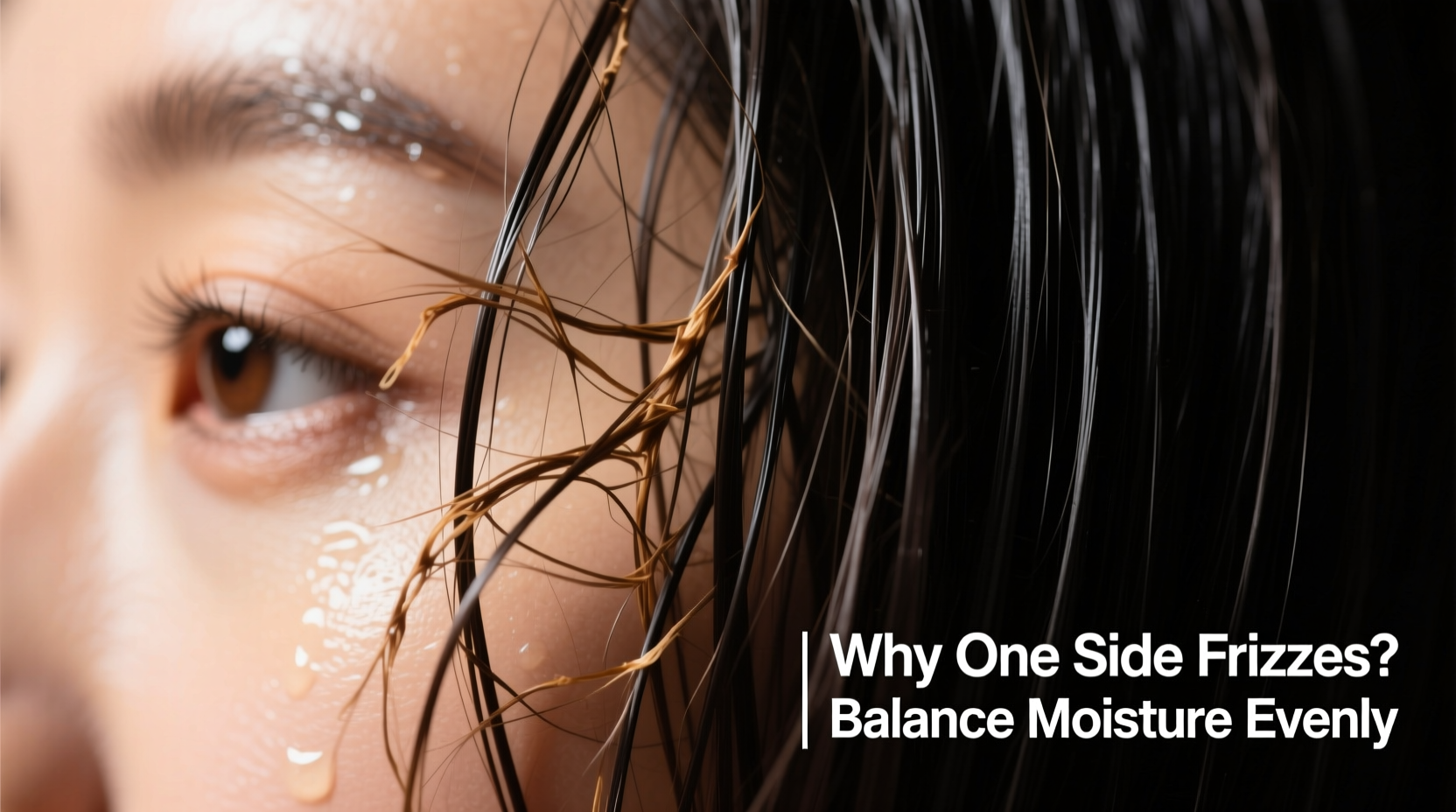
One-sided frizz doesn’t happen by accident. Hair on both sides of the scalp generally shares similar texture, porosity, and oil production—so noticeable differences point to external or habitual factors. Here are the most frequent culprits:
- Sleeping Position: If you consistently sleep on one side, friction from the pillowcase roughens the cuticle, strips moisture, and increases static—all leading to localized frizz.
- Uneven Product Distribution: Many people apply conditioner, leave-in treatments, or oils more generously on one side, especially if they're right-handed and style with their dominant hand.
- Dominant Hand Styling: Blow-drying, detangling, or smoothing products may be applied with less precision on the non-dominant side, resulting in patchy coverage.
- Exposure to Elements: Sitting near open windows in cars, working next to heaters or fans, or even sunlight through office windows can dry out one side of your hair over time.
- Asymmetrical Haircuts: A poorly balanced cut can leave one section lighter or thinner, making it more prone to puffiness and flyaways.
- Heat Tool Misuse: Overusing flat irons or curling wands on one side without proper heat protection creates cumulative damage, weakening the cuticle and inviting frizz.
The Role of Moisture Imbalance in Asymmetrical Frizz
Healthy hair maintains a balance of moisture and protein. When this equilibrium shifts—especially on one side—frizz becomes inevitable. Moisture loss occurs when the hair’s cuticle lifts, allowing water to escape or absorb too much humidity from the air. This is exacerbated by:
- Porous hair strands that absorb and release moisture rapidly
- Overwashing, which strips natural oils
- Use of sulfates or alcohol-heavy products
- Inadequate sealing of moisture with oils or butters
When one side of your hair receives less hydration or protection, its cuticle remains raised, creating a rougher texture and light-scattering effect that reads as frizz. Meanwhile, the other side—better moisturized and sealed—appears smoother and shinier.
“Moisture isn’t just about wetness—it’s about retention. If one side of the hair isn’t properly sealed, it loses hydration faster, no matter how much product you apply.” — Dr. Lena Torres, Trichologist & Hair Research Scientist
How to Balance Moisture Evenly: A Step-by-Step Guide
Correcting one-sided frizz requires consistency, mindfulness, and a structured routine. Follow these steps to ensure even moisture distribution across your entire head.
- Assess Your Routine for Bias: Record how you wash, condition, and style your hair for three days. Note whether you spend more time on one side, use more product there, or skip sections during detangling.
- Section Strategically: Divide hair into four equal quadrants (front-left, front-right, back-left, back-right). Work on each section independently during washing and conditioning.
- Apply Products Methodically: Use measuring caps for liquid products or repeat motions (e.g., 3 pumps per quadrant) to maintain consistency. Start from the nape and work forward to avoid neglecting the back sections.
- Use the “Praying Hands” Technique: Smooth products down the hair shaft using flat palms to prevent tangles and ensure even coating. Do this for every section, not just the visible front layers.
- Seal with Oil on Both Sides: After applying leave-in conditioner or cream, use a dime-sized amount of argan or jojoba oil. Warm it between palms and distribute evenly across all sections, paying extra attention to ends and the previously frizzy side.
- Protect at Night: Switch to a satin pillowcase or wear a loose satin bonnet. Rotate your sleeping position to avoid constant pressure on one side.
- Air-Dry with Care: If blow-drying, alternate directions and use a diffuser with even passes. For air drying, scrunch all sections equally and avoid touching one side more than the other.
Do’s and Don’ts for Preventing Asymmetrical Frizz
| Do’s | Don’ts |
|---|---|
| Part your hair in the center or alternate sides weekly | Always part on the same side without rotation |
| Use a wide-tooth comb starting from ends on both sides | Rush detangling and skip harder-to-reach areas |
| Reapply leave-in conditioner to the frizzy side if needed | Overload one side with heavy products causing buildup |
| Carry a travel-size smoothing serum for touch-ups | Rub hair vigorously with a cotton towel after washing |
| Get trims every 8–10 weeks to prevent split ends | Ignore split ends just because they’re on the less-visible side |
Real-Life Example: How Maria Fixed Her Left-Side Frizz
Maria, a 34-year-old graphic designer, noticed that her naturally wavy hair always fluffed up dramatically on the left side by midday. The right side remained sleek and defined. She used the same products and routine but couldn’t figure out the discrepancy.
After tracking her habits, she discovered two key issues: she was right-handed and applied leave-in conditioner mostly with her right hand, leaving the left side under-moisturized. Additionally, she drove to work daily with the driver’s side window slightly open, exposing her left hair to wind and sun.
She made three changes: first, she started applying product using the quadrant method. Second, she rolled up her window and wore a light silk scarf during commutes. Third, she switched to a satin pillowcase and began sleeping on alternating sides.
Within three weeks, the frizz on her left side reduced significantly. By week six, her waves were symmetrical and shiny on both sides. “I didn’t realize how much environment and handedness affected my hair,” she said. “Now I treat every section like it matters—because it does.”
Expert Tips for Long-Term Balance
Maintaining even moisture isn’t a one-time fix—it’s an ongoing practice. Incorporate these expert-backed strategies into your regimen:
- Clarify Monthly: Buildup from uneven product application can block moisture absorption. Use a gentle clarifying shampoo every 4–6 weeks.
- Deep Condition Weekly: Apply a hydrating mask to all sections, cover with a shower cap, and leave for 20–30 minutes. Use a timer to ensure equal treatment time.
- Check Your Tools: Replace worn combs or brushes that pull or snag on one side. Clean brushes monthly to prevent residue transfer.
- Monitor Humidity: In high-humidity climates, use anti-humidity serums or gels with humectant blockers like cetyl alcohol or silicones (in moderation).
Frequently Asked Questions
Why does only one side of my hair get frizzy after I wash it?
This often happens due to uneven product application or rinsing. You might be spending more time conditioning the front or right side while rushing the back or left. Try sectioning your hair and timing each quadrant during your wash routine to ensure fairness.
Can sleeping on one side permanently damage my hair?
No, it won’t cause permanent damage, but chronic friction can lead to cuticle erosion, increased breakage, and persistent frizz. Switching sides and using satin bedding significantly reduces this risk and allows damaged areas to recover.
Is one-sided frizz a sign of medical issues?
Rarely. In most cases, it’s mechanical or environmental. However, if accompanied by thinning, itching, or scalp changes on one side, consult a dermatologist. Conditions like seborrheic dermatitis or nerve-related oil imbalances could play a role, though they are uncommon.
Final Checklist: Achieving Balanced, Frizz-Free Hair
- ✅ Section hair into four parts during washing and conditioning
- ✅ Use measured amounts of product per section
- ✅ Apply products using the praying hands method on all sides
- ✅ Seal moisture with lightweight oil on both sides equally
- ✅ Switch sleeping positions and use a satin pillowcase
- ✅ Protect hair from wind, sun, and indoor airflow on one side
- ✅ Clarify monthly and deep condition weekly
- ✅ Get regular trims to prevent split ends from worsening frizz
Conclusion: Take Control of Your Hair’s Balance
One-sided frizz isn’t a flaw in your hair—it’s a signal from your routine. By addressing the invisible habits that create imbalance, you can transform uneven, unruly strands into a cohesive, healthy head of hair. The solution lies not in more products, but in mindful application, environmental awareness, and consistent care across every inch of your scalp.
Start tonight: wash your hair with intention, treat each section equally, and protect it as it dries. Small adjustments compound into dramatic results. Your hair deserves symmetry—not just in style, but in health.




 浙公网安备
33010002000092号
浙公网安备
33010002000092号 浙B2-20120091-4
Comments
No comments yet. Why don't you start the discussion?