
Frizz is frustrating enough when it affects your entire head, but when it appears only on one side of your hair, it can feel especially puzzling—and even more annoying. You might notice that every morning, no matter how well you care for your hair, the left or right side stubbornly puffs up, defying serums, conditioners, and styling tools. This asymmetrical frizz isn’t just a random occurrence. It’s usually the result of consistent habits, environmental exposure, or physical interactions that disproportionately affect one side of your hair. Understanding why this happens is the first step toward fixing it.
The good news is that one-sided frizz is often preventable and highly treatable once you identify the root cause. Whether it's your sleep position, brushing technique, or even your dominant hand during styling, small daily behaviors can lead to noticeable differences in texture and appearance over time. This article breaks down the most common reasons behind uneven frizz and offers practical, science-backed solutions you can start using today.
Common Causes of One-Sided Hair Frizz
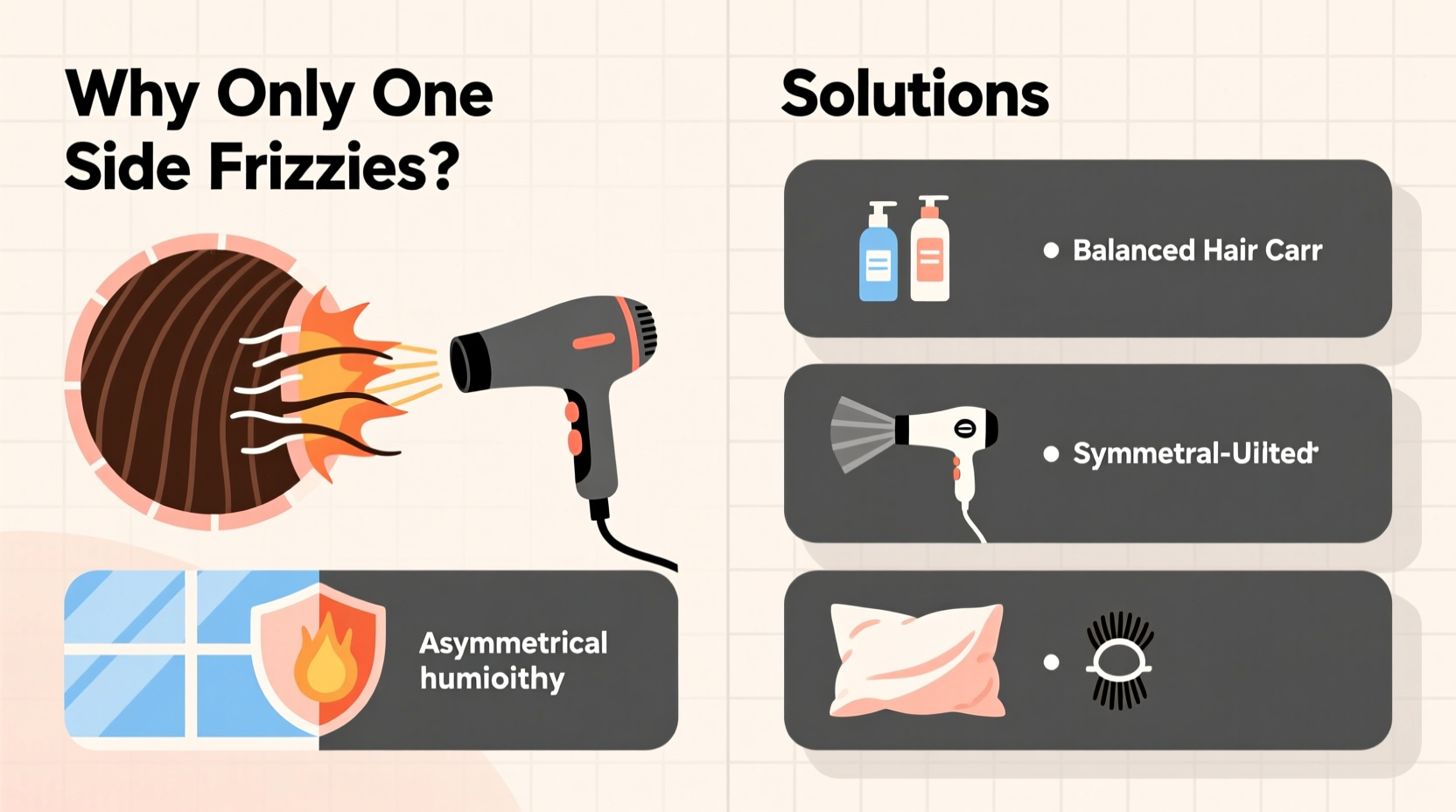
Frizz occurs when the hair cuticle lifts, allowing moisture from the air to penetrate the cortex. This causes strands to swell and lose their smooth alignment. When this happens predominantly on one side, external and behavioral factors are typically to blame. Here are the top causes:
- Sleeping Position: If you consistently sleep on one side, friction from your pillowcase can rough up the cuticle, leading to increased frizz on that side.
- Pillow Material: Cotton pillowcases absorb moisture from your hair, while synthetic fabrics create static—both contributing to frizz, especially on the side pressed against the fabric.
- Brushing Habits: Brushing from the same direction every time (e.g., always starting from the right temple) can cause uneven tension and breakage, disrupting cuticle alignment.
- Heat Styling Asymmetry: Using a flat iron or blow dryer with one hand may result in inconsistent heat distribution or repeated passes on one side, damaging the cuticle.
- Hair Parting: A long-term side part can weaken the hair along the part line due to constant pulling, making that section more prone to frizz.
- Environmental Exposure: Driving with windows down or sitting near open windows exposes one side of your hair to wind, UV rays, and pollution, increasing dryness and frizz.
- Product Application Bias: Many people unconsciously apply less product to the side they can't see in the mirror, leaving it under-moisturized.
Step-by-Step Guide to Diagnose the Cause
Before jumping into fixes, take time to pinpoint what’s really causing the imbalance. Follow this diagnostic timeline over three days to observe patterns:
- Day 1 – Observe Your Routine: Track how you brush, style, and sleep. Note which side of your head faces the pillow and whether you use more product on one side.
- Day 2 – Change Sleep Surface: Switch to a silk or satin pillowcase and alternate your sleeping position. See if frizz reduces on the previously affected side.
- Day 3 – Mirror Test: Style your hair while facing a mirror, then repeat the process with a second mirror behind you to ensure even product and heat tool application.
If frizz improves after Day 2, friction or moisture loss during sleep is likely the culprit. If it persists despite balanced product use, consider internal factors like hair damage or scalp health on that side.
Effective Fixes for One-Sided Frizz
Once you’ve identified the likely cause, implement targeted solutions. The following fixes address the most common triggers of unilateral frizz.
1. Upgrade Your Pillowcase
Cotton absorbs moisture, drying out your hair overnight. Silk or satin pillowcases reduce friction and help retain natural oils and hydration.
2. Adjust Your Styling Technique
Use both hands when applying products or heat tools. Start brushing from alternating sides each day to distribute tension evenly. When blow-drying, divide hair into quadrants and work symmetrically.
3. Reevaluate Your Hair Part
If you've had the same side part for months or years, try switching it weekly. This reduces stress on one area and encourages even oil distribution. For stubborn parts, gently massage the scalp along the old part line to stimulate circulation.
4. Apply Leave-In Conditioner Strategically
After washing, focus extra leave-in conditioner on the frizzy side. Use a wide-tooth comb to distribute it evenly without tugging. Look for formulas with humectants like glycerin (in humid climates) or occlusive agents like shea butter (in dry climates).
5. Limit Heat Exposure
Excessive heat weakens the cuticle, making hair porous and prone to frizz. If you use a flat iron daily, lower the temperature and apply a heat protectant. Aim to give the frizzy side fewer passes than the smoother side to avoid compounding damage.
Do’s and Don’ts: Quick Reference Table
| Do’s | Don’ts |
|---|---|
| Do use a microfiber towel or cotton T-shirt to dry hair gently | Don’t rub hair vigorously with a regular towel |
| Do apply products using both hands or check symmetry in two mirrors | Don’t rely solely on front mirror visibility |
| Do switch your sleeping side occasionally | Don’t always sleep on the same side |
| Do use anti-frizz serums with dimethicone or cyclomethicone | Don’t layer multiple silicone-heavy products |
| Do trim split ends every 6–8 weeks | Don’t ignore damaged ends—they worsen frizz upward |
Real-Life Example: Sarah’s One-Sided Frizz Journey
Sarah, a 32-year-old marketing executive, noticed that her right side frizzed dramatically every morning, despite using the same routine on both sides. She kept her hair shoulder-length with a deep side part to the left. After tracking her habits, she realized she always slept on her right side and used a cotton pillowcase. Additionally, when applying serum, she could only see the left side clearly in the mirror and often skipped the back-right section.
She switched to a silk pillowcase and started applying product while standing between two mirrors. Within a week, the frizz reduced significantly. She also began alternating her hair part weekly, which helped redistribute natural oils and reduce tension. After a trim to remove split ends on the frizzy side, her hair regained balance and shine.
“Many clients come in confused about uneven texture. The answer is rarely genetics—it’s usually behavior. Small adjustments in routine can yield dramatic improvements.” — Dr. Lena Torres, Trichologist and Hair Health Specialist
Checklist: Eliminate One-Sided Frizz in 7 Steps
Follow this actionable checklist to correct and prevent uneven frizz:
- Switch to a silk or satin pillowcase.
- Alternate your sleeping position nightly.
- Use two mirrors when styling to ensure even product distribution.
- Apply extra leave-in conditioner or serum to the frizzy side post-wash.
- Reduce heat styling frequency and use a heat protectant.
- Change your hair part weekly to relieve tension on one side.
- Schedule a trim every 6–8 weeks to remove damaged ends.
Frequently Asked Questions
Can hormonal imbalances cause one-sided frizz?
No, hormonal changes typically affect hair texture uniformly across the scalp. One-sided frizz is almost always due to mechanical or environmental factors rather than internal health issues. However, if you notice widespread thinning or texture changes alongside frizz, consult a dermatologist.
Is it bad to constantly fix frizz with flat irons?
Yes. Overuse of flat irons, especially on already damaged or dry hair, can permanently lift the cuticle and increase porosity. This makes hair more susceptible to humidity and leads to chronic frizz. Limit heat styling to 2–3 times per week and always use a thermal protectant.
Will changing my shampoo help with one-sided frizz?
A sulfate-free, moisturizing shampoo can improve overall hair health, but it won’t correct asymmetry on its own. Pair a good shampoo with balanced application techniques and lifestyle adjustments for best results.
Conclusion: Balance Starts with Awareness
One-sided frizz isn’t a flaw in your hair—it’s a signal from your routine. The body thrives on symmetry, and so does your hair. When one side behaves differently, it’s pointing to an imbalance in how you treat it. The solutions aren’t complicated: they involve mindfulness, consistency, and small shifts in habit. From switching pillowcases to rethinking how you hold your brush, these changes compound into visibly smoother, healthier hair.
You don’t need expensive treatments or miracle products. What you need is awareness and the willingness to adjust. Start tonight—flip your pillow, change your side, or simply apply that serum with your non-dominant hand. These tiny acts of attention can transform not just your hair, but your entire self-care mindset.




 浙公网安备
33010002000092号
浙公网安备
33010002000092号 浙B2-20120091-4
Comments
No comments yet. Why don't you start the discussion?