
Waking up with flat, oily roots just hours after washing can be frustrating—especially when you're trying to maintain a fresh look throughout the day. Greasy hair isn’t just about poor hygiene; it’s often the result of complex biological, environmental, and behavioral factors. Understanding what triggers excess sebum production is the first step toward managing it effectively. The good news? You don’t need to strip your scalp or resort to harsh shampoos. With thoughtful adjustments and gentle care, you can achieve balanced, healthier hair.
Understanding Sebum: The Natural Oil Your Scalp Produces
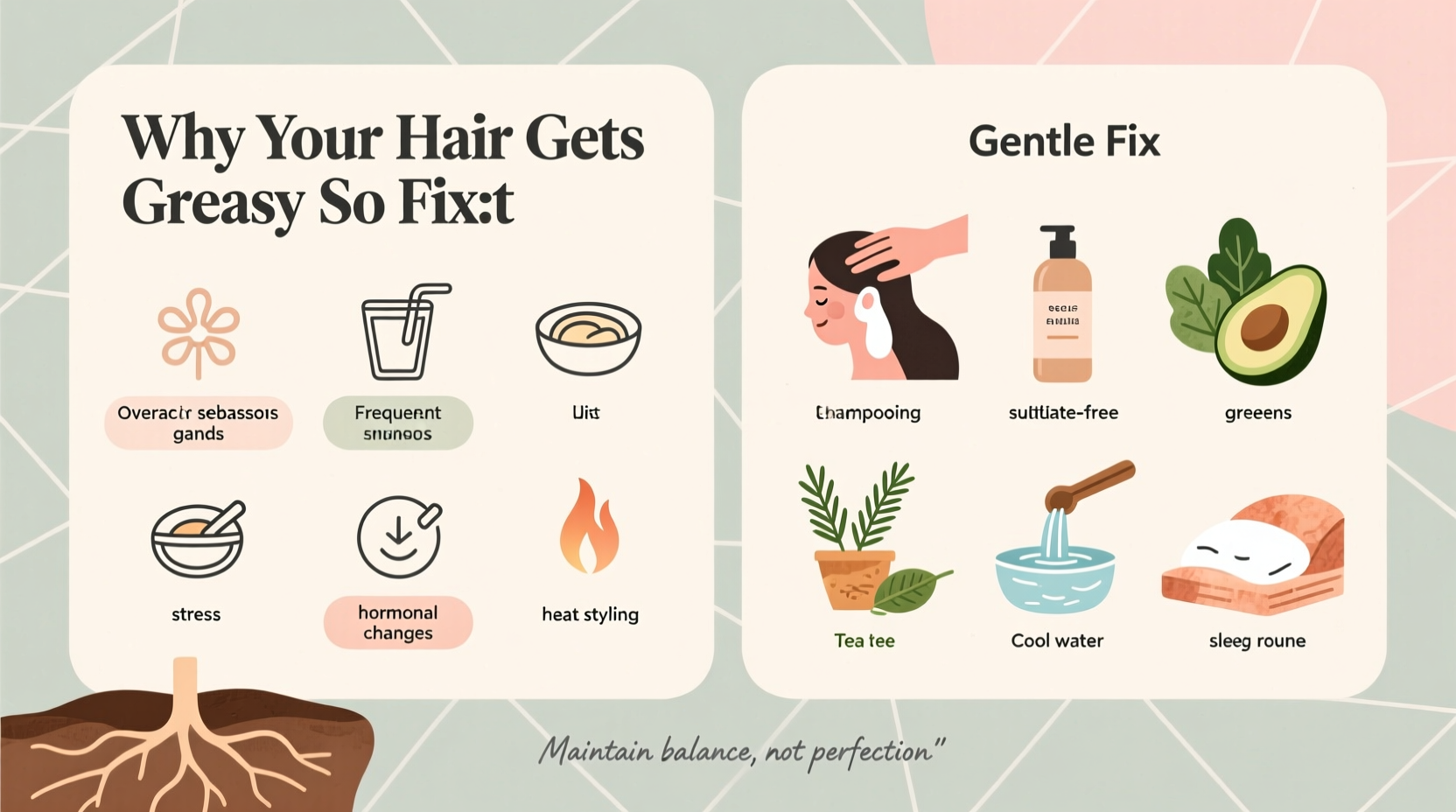
Sebum is an oily substance produced by sebaceous glands located in your scalp. Its primary role is to moisturize and protect both your skin and hair. In ideal conditions, sebum travels down the hair shaft, creating a natural barrier against moisture loss and environmental damage. However, when production becomes excessive—or when distribution is uneven—it leads to that weighed-down, shiny appearance commonly known as \"greasy hair.\"
Several factors influence how much sebum your body produces. Genetics play a significant role: some people naturally have more active sebaceous glands. Hormonal fluctuations—especially during puberty, menstruation, pregnancy, or times of stress—can also spike oil production. Additionally, external elements like humidity, pollution, and even certain hair products may contribute to the problem.
“Sebum is essential for scalp health, but overproduction can disrupt the hair’s texture and appearance. The key is balance, not elimination.” — Dr. Lena Patel, Dermatologist & Hair Health Specialist
Common Causes of Rapidly Greasing Hair
Greasy hair doesn’t happen in isolation. It’s usually a symptom of underlying habits or physiological responses. Identifying the root cause allows for targeted, sustainable solutions rather than temporary fixes.
Hormonal Imbalances
Androgens, a group of hormones including testosterone, directly stimulate sebaceous gland activity. Elevated levels—common during adolescence, menstrual cycles, or due to conditions like polycystic ovary syndrome (PCOS)—can lead to visibly oilier hair within hours of washing. Women experiencing sudden changes in oiliness should consider consulting a healthcare provider to rule out hormonal disorders.
Overwashing or Underwashing
Both extremes disrupt your scalp’s natural equilibrium. Washing too frequently, especially with strong clarifying shampoos, strips away natural oils. In response, your scalp compensates by producing more sebum—a rebound effect that worsens greasiness. Conversely, infrequent washing allows oil and dead skin cells to accumulate, clogging follicles and making hair appear dirty faster.
Touching Your Hair Too Often
Hands transfer dirt, bacteria, and natural skin oils onto your hair strands. Habitual touching, twisting, or resting your head on your hands introduces additional grease, particularly at the roots and around the hairline.
Using Heavy or Comedogenic Products
Some conditioners, serums, and styling creams contain ingredients that are too rich for fine or oily hair types. When applied near the scalp, these products can weigh hair down and mimic excess oil. Look out for silicones (like dimethicone) and heavy oils such as coconut or mineral oil if you’re prone to greasiness.
Diet and Lifestyle Factors
A diet high in refined sugars and saturated fats may increase systemic inflammation and hormone fluctuations linked to oil production. Similarly, chronic stress elevates cortisol, which has been shown to stimulate sebaceous glands. Poor sleep and dehydration can also impair skin barrier function, indirectly affecting scalp health.
Gentle Fixes That Actually Work
The goal isn’t to eliminate oil entirely but to regulate its production and manage its visibility. Harsh sulfates and daily stripping shampoos do more harm than good in the long run. Instead, adopt a gentler, more strategic approach.
Adjust Your Washing Frequency
For most people with oily hair, washing every other day strikes the right balance. This prevents overstimulation of oil glands while keeping buildup under control. If you must wash daily, opt for a sulfate-free, low-lather formula designed for frequent use.
Use the Right Shampoo and Conditioner
Choose a mild shampoo with balancing ingredients like tea tree oil, salicylic acid, or niacinamide. These help cleanse without overdrying. Always apply conditioner only from mid-length to ends—never on the scalp—to prevent adding unnecessary moisture where it's not needed.
Rinse with Cool Water
Finish your shower with a cool water rinse. Cold water helps close the cuticle and temporarily tightens pores on the scalp, reducing the rate at which oil rises to the surface.
Incorporate Dry Shampoo Wisely
Dry shampoo absorbs excess oil and adds volume between washes. However, overuse can lead to product buildup, irritating the scalp and triggering more oil. Use it sparingly, focusing on the roots, and always follow up with a thorough cleanse every few days.
Try a Scalp Massage with Lightweight Oils
Counterintuitively, massaging your scalp with lightweight, non-comedogenic oils like jojoba or grapeseed can signal your glands to reduce natural oil output through a process called feedback inhibition. Apply a teaspoon before bedtime, leave for 20–30 minutes, then wash thoroughly.
| Product Type | Recommended For Oily Hair? | Why / Why Not |
|---|---|---|
| Sulfate Shampoos | No | Strip natural oils, trigger rebound oiliness |
| Niacinamide Serums | Yes | Regulates sebum production, anti-inflammatory |
| Coconut Oil (on scalp) | No | Highly comedogenic, blocks follicles |
| Tea Tree Shampoo | Yes | Cleanses gently, antibacterial properties |
| Heavy Creams & Gels | No | Add weight, trap oil on scalp |
Step-by-Step Routine for Balanced Hair
Follow this five-day cycle to reset your scalp and gradually reduce greasiness without causing irritation or dryness.
- Day 1 – Deep Cleanse: Use a gentle clarifying shampoo to remove buildup. Avoid scrubbing aggressively; massage with fingertips for 1–2 minutes.
- Day 2 – Light Wash: Rinse with a sulfate-free shampoo. Focus only on the scalp. Follow with a lightweight conditioner on ends only.
- Day 3 – Refresh: Skip shampoo. Rinse with water and apply a spritz of diluted apple cider vinegar (1 part ACV, 3 parts water) to clarify and balance pH.
- Day 4 – Condition & Protect: Apply a leave-in conditioner to ends. Style with minimal product. Avoid touching hair throughout the day.
- Day 5 – Assess & Repeat: Evaluate oil levels. If still greasy by morning, repeat the cycle. If balanced, extend wash intervals gradually.
Real-Life Example: Sarah’s Journey to Less Greasy Hair
Sarah, a 28-year-old graphic designer, washed her fine, straight hair daily using a strong clarifying shampoo. By mid-afternoon, her roots were slick and her ponytail looked limp. Frustrated, she consulted a trichologist who identified two main issues: overwashing and using a silicone-heavy conditioner she applied all the way to her scalp.
She adjusted her routine: switching to a sulfate-free shampoo, washing every other day, applying conditioner only to her ends, and incorporating a weekly scalp exfoliation. Within three weeks, her hair stayed fresher longer. She now goes 48 hours between washes and uses dry shampoo only occasionally. “I used to think cleaning more meant cleaner hair,” she says. “Turns out, I was making it worse.”
Checklist: How to Reduce Greasy Hair Naturally
- Wash hair every other day instead of daily
- Switch to a sulfate-free, pH-balanced shampoo
- Apply conditioner only from mid-shaft to ends
- Avoid touching hair with hands throughout the day
- Use dry shampoo in moderation and wash it out regularly
- Incorporate a weekly scalp treatment (e.g., clay mask or gentle scrub)
- Replace heavy styling products with water-based alternatives
- Change pillowcases at least twice a week
- Stay hydrated and reduce intake of high-glycemic foods
- Manage stress through mindfulness or exercise
Frequently Asked Questions
Can hard water make my hair greasier?
Hard water doesn’t increase oil production, but it leaves behind mineral deposits that coat the hair and scalp, making hair feel heavy and look dull. This residue can trap oil and prevent proper cleansing. Installing a shower filter or using a chelating shampoo once a week can help mitigate this issue.
Is it bad to go to bed with wet hair?
Going to bed with damp hair isn’t inherently harmful, but it creates a moist environment on the scalp that can promote bacterial or fungal growth, potentially leading to irritation and increased oiliness. If you must sleep with wet hair, blot it dry with a microfiber towel and avoid braids or tight styles that trap moisture.
Will cutting my hair shorter make it less greasy?
Shorter hair may *appear* less greasy because oil has less distance to travel down the shaft. However, length doesn’t affect sebum production. Fine, thin hair tends to show oil faster than thick or curly hair, regardless of length. The benefit of shorter cuts is mainly visual and easier maintenance.
Final Thoughts: Balance Over Perfection
Greasy hair is rarely a sign of uncleanliness—it’s usually a sign of imbalance. Whether driven by hormones, habits, or product misuse, the solution lies in consistency and gentleness. Aggressive treatments may offer short-term relief but often lead to long-term dependency and scalp sensitivity.
Start small: adjust your washing rhythm, refine your product choices, and observe how your hair responds. Pay attention to patterns—does oiliness spike during certain times of the month or after specific meals? These clues help tailor your approach.
Healthy hair isn’t defined by how long it stays “fresh” but by its resilience, shine, and comfort. With patience and informed care, you can transform your relationship with your hair—from fighting oil to working with your body’s natural rhythms.




 浙公网安备
33010002000092号
浙公网安备
33010002000092号 浙B2-20120091-4
Comments
No comments yet. Why don't you start the discussion?