
If you’ve ever washed your hair in the morning only to find it limp, shiny, and clinging to your scalp by mid-afternoon, you’re not alone. Greasy hair is one of the most common hair concerns—especially for people with fine or straight strands. Many respond by washing more frequently, but that often makes the problem worse. The real solution lies in understanding what causes oiliness and whether “training” your scalp can help reduce dependency on daily shampooing.
The balance between natural sebum production and cleansing habits is delicate. Wash too much, and your scalp may overcompensate. Wash too little, and buildup leads to discomfort and appearance issues. This article breaks down the science behind oily hair, evaluates the concept of “scalp training,” and offers a practical roadmap to healthier, longer-lasting freshness.
The Science Behind Oily Hair
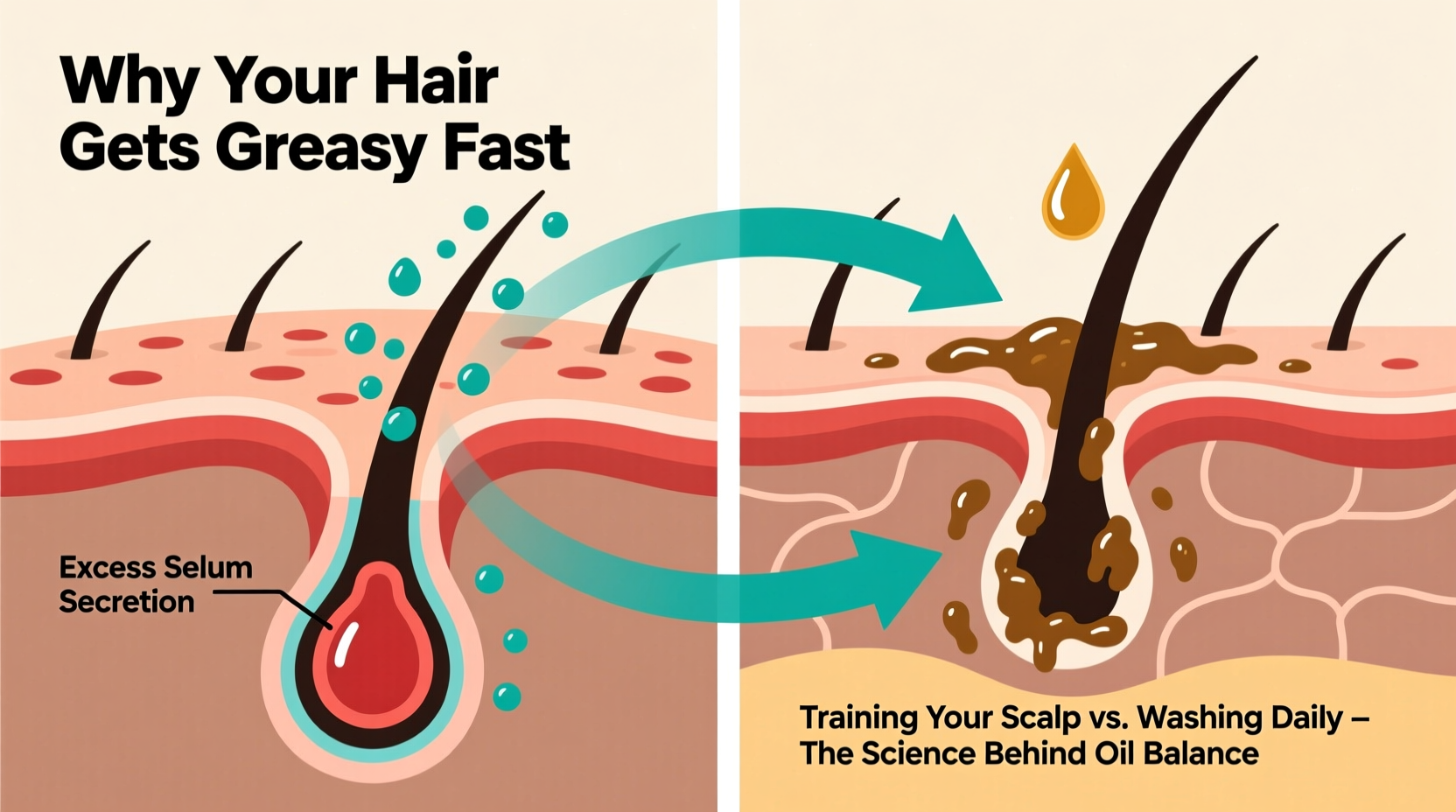
Your scalp contains sebaceous glands that produce sebum—a natural oil made of lipids, waxes, and fatty acids. Sebum travels along the hair shaft, lubricating and protecting both skin and hair. In ideal conditions, this process keeps your scalp hydrated and your hair shiny without feeling greasy.
However, several factors can disrupt this balance:
- Hormonal fluctuations: Androgens like testosterone stimulate sebum production. Changes during puberty, menstruation, pregnancy, or stress can increase oil output.
- Genetics: Some people naturally have more active sebaceous glands due to hereditary traits.
- Diet: High-glycemic foods and dairy may influence hormone levels and inflammation, potentially increasing oiliness.
- Overwashing: Frequent shampooing strips away natural oils, prompting the scalp to produce more sebum to compensate.
- Product buildup: Heavy conditioners, styling creams, or silicones can accumulate on the scalp, trapping oil and debris.
It’s important to note that greasiness isn’t always about excess oil. Sometimes, it's poor distribution. People with long or thick hair may notice roots getting oily while ends stay dry because sebum doesn’t travel all the way down the strand.
What Is Scalp Training—and Does It Work?
\"Scalp training\" refers to the practice of gradually extending the time between washes to allow the scalp to regulate its natural oil production. The theory is simple: when you stop stripping your scalp daily, it learns not to overproduce sebum.
While there’s no clinical study proving \"training\" alters gland function permanently, dermatologists acknowledge that habitual overwashing can create a cycle of dependency. Dr. Whitney Bowe, board-certified dermatologist and author of The Skincare Bible, explains:
“Your scalp is smart. When you constantly remove oil, it senses dryness and ramps up production. By spacing out washes, you give it a chance to recalibrate.” — Dr. Whitney Bowe, Dermatologist
The goal isn’t to eliminate oil—it’s to achieve equilibrium. Most people who adopt scalp training report improved texture and volume after 4–6 weeks, though results vary based on hair type, lifestyle, and product use.
It’s also worth noting that “training” doesn’t mean enduring weeks of visibly greasy hair. Strategic techniques and transitional products can ease the adjustment period.
A Step-by-Step Guide to Transitioning Off Daily Washing
Going from daily shampooing to every other day—or even every three to four days—requires patience and consistency. Here’s a realistic timeline to guide the process:
- Week 1: Prepare your routine
Switch to a gentle, sulfate-free shampoo. Avoid heavy conditioners on the scalp; apply only from mid-length to ends. Begin using dry shampoo as a bridge between washes. - Week 2–3: Extend intervals gradually
If you wash daily, skip one day per week initially. For example, wash Monday, Wednesday, Friday. Use dry shampoo on Tuesday and Thursday if needed. Focus on cleansing only the roots during washes. - Week 4–5: Assess tolerance
Try going two full days between washes. Pay attention to scalp comfort and odor. If irritation occurs, revert slightly and adjust product choices. - Week 6+: Maintain new rhythm
Most people stabilize at washing every 2–4 days. Some with coarser textures may go longer. Continue monitoring for flakiness or itchiness, which could indicate product mismatch.
This transition isn’t linear. Some days will look better than others. But with consistent effort, many notice reduced oiliness, less frizz, and improved hair strength due to preserved natural moisture.
Do’s and Don’ts During the Transition
| Do’s | Don’ts |
|---|---|
| Use dry shampoo at the roots before bed or upon waking | Apply conditioner directly to the scalp |
| Brush hair with a boar bristle brush to distribute oils | Wash hair with hot water—use lukewarm instead |
| Rinse thoroughly to prevent residue buildup | Scratch your scalp aggressively—it increases irritation and oil |
| Choose lightweight, non-comedogenic styling products | Switch shampoos too frequently; give each one 2–3 weeks |
| Protect hair at night with a silk scarf or pillowcase | Blow-dry on high heat daily—it stresses the scalp |
Real Example: How Sarah Reduced Washing from Daily to Every Three Days
Sarah, a 28-year-old graphic designer with fine, straight hair, had been washing her hair every morning for years. She noticed her roots were flat by noon, requiring touch-ups with dry shampoo. After reading about scalp health, she decided to try reducing wash frequency.
She started by switching to a sulfate-free shampoo and applying conditioner only to her ends. On non-wash days, she used a cornstarch-based dry shampoo and brushed her hair with a boar bristle brush to move oils down the shaft.
The first week was tough—her hair felt heavy and looked dull by day two. But by week three, she found she could comfortably go 48 hours without washing. At six weeks, she settled into a routine of washing every three days with no visible greasiness. Her hair felt thicker and held styles better.
“I thought I needed to wash daily to feel clean,” Sarah said. “But now I realize I was just feeding a cycle. My scalp feels balanced, and I spend way less time on hair care.”
Checklist: How to Successfully Train Your Scalp
- ✅ Switch to a mild, sulfate-free shampoo
- ✅ Limit conditioner to mid-lengths and ends
- ✅ Invest in a quality dry shampoo (aerosol or powder)
- ✅ Brush hair daily with a boar bristle brush
- ✅ Wash with lukewarm water, not hot
- ✅ Avoid heavy oils or silicones near the scalp
- ✅ Be patient—allow 4 to 6 weeks for adjustment
- ✅ Monitor for signs of dandruff or irritation
- ✅ Re-evaluate products if progress stalls
- ✅ Protect hair at night with silk or satin fabric
Frequently Asked Questions
Can I train my scalp if I have dandruff or an oily scalp condition?
Yes, but proceed carefully. Conditions like seborrheic dermatitis involve excess oil and yeast overgrowth. While reducing wash frequency may help some, others need medicated shampoos (like those with ketoconazole or salicylic acid) on a regular schedule. Consult a dermatologist before making major changes if you have a diagnosed scalp condition.
Does scalp training work for curly or coily hair?
It depends on the individual. Curly and coily hair types tend to be drier because sebum doesn’t travel easily down textured strands. These hair types often require less frequent washing already—sometimes once a week or less. For someone already washing infrequently, “training” may not apply. However, anyone over-washing due to buildup or misconceptions can benefit from adjusting their routine.
Will my hair smell if I don’t wash it every day?
Not necessarily. Odor usually comes from bacteria feeding on oil and sweat, not oil itself. Rinsing with water, using dry shampoo, or spritzing with a scalp mist containing tea tree or rosemary oil can keep your scalp fresh. If you exercise heavily, consider a quick rinse without shampoo to remove sweat without stripping oils.
Conclusion: Finding Balance for Long-Term Scalp Health
Greasy hair isn’t a life sentence—it’s often a sign that your routine is out of sync with your scalp’s needs. While daily washing might seem like the solution, it can actually worsen oiliness by disrupting your skin’s natural feedback loop. Training your scalp isn’t a miracle cure, but it’s a scientifically sound approach to restoring balance.
Success requires more than just skipping wash days. It demands thoughtful product choices, proper technique, and realistic expectations. The journey may include awkward phases, but the payoff—healthier hair, less damage, and fewer styling demands—is well worth the effort.




 浙公网安备
33010002000092号
浙公网安备
33010002000092号 浙B2-20120091-4
Comments
No comments yet. Why don't you start the discussion?