
Winter brings cozy sweaters, hot cocoa, and—unfortunately—static-prone hair. If you’ve ever walked outside only to have your strands stand straight up like a science experiment gone wrong, you’re not alone. Static electricity in hair is a common seasonal issue, especially in colder months when indoor heating dries out the air. The good news? You don’t need thick serums or greasy leave-ins to fix it. With a few smart adjustments to your routine and environment, you can keep your hair smooth, grounded, and frizz-free—all without weighing it down.
The Science Behind Winter Hair Static
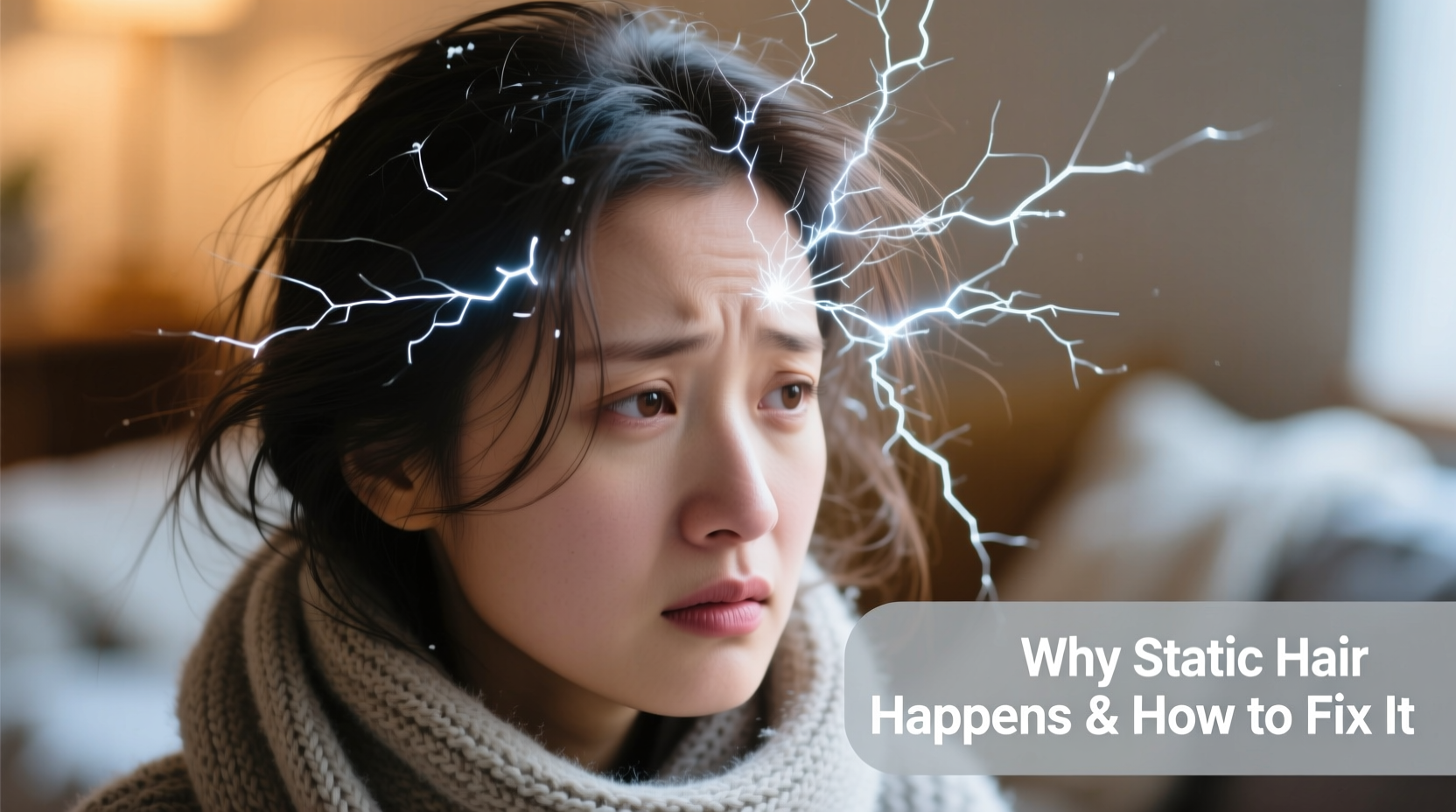
Static occurs when electrons transfer between two surfaces through friction, creating an imbalance of electrical charge. In the context of hair, this typically happens when dry strands rub against clothing (like wool hats or synthetic scarves), plastic combs, or even upholstered car seats. Because each hair strand carries a similar positive charge, they repel one another—resulting in that familiar halo effect.
Why is this worse in winter? Cold outdoor air holds less moisture than warm air. When you bring that dry air indoors and heat it, relative humidity plummets—sometimes below 20%. In such arid conditions, your hair loses moisture rapidly, becoming dehydrated and more prone to attracting and holding static charges.
“Hair acts like a sponge for environmental moisture. In low-humidity environments, it becomes brittle and electrically unstable.” — Dr. Lena Torres, Trichologist and Cosmetic Scientist
Natural oils from your scalp also struggle to travel down the hair shaft in winter, especially if you're washing less frequently or using harsh shampoos. This lack of lubrication increases surface friction, making static buildup almost inevitable without intervention.
How Lightweight Solutions Work Better Than Heavy Products
Many people reach for heavy creams, oils, or silicones to combat static—but these often backfire. While they may temporarily weigh hair down, they can make fine or medium textures look flat, greasy, or limp by the end of the day. Over time, buildup from rich formulas can also clog the scalp and reduce volume.
Lightweight alternatives, on the other hand, address the root cause—dryness and charge imbalance—without compromising texture or movement. They work by either:
- Adding trace hydration to restore conductivity
- Neutralizing electrical charge on the hair surface
- Creating a breathable protective layer that reduces friction
The goal isn’t to coat but to condition intelligently. That means choosing water-based mists, plant-derived humectants, and anti-static tools that support natural hair behavior rather than suppress it.
7 Effective Ways to Prevent Static Without Weighing Hair Down
1. Use a Humidifier Indoors
Dry indoor air is the primary culprit behind winter static. Running a humidifier in your bedroom or main living area adds moisture back into the environment, helping your hair retain hydration naturally.
Aim for 40–50% relative humidity. You can monitor levels with an inexpensive hygrometer. Cool-mist ultrasonic models are ideal—they operate quietly and disperse fine vapor evenly.
2. Switch to Natural Fiber Hats and Scarves
Synthetic fabrics like polyester, acrylic, and nylon generate high levels of static when rubbed against hair. Wool, while natural, can still be abrasive and drying unless lined.
Opt for silk-lined beanies, cotton scarves, or cashmere blends. These materials create less friction and won’t strip moisture from your strands. If you must wear synthetics, apply a light barrier first (see tip #5).
3. Choose the Right Brush
Plastic and nylon bristles build up electrical charge quickly. Instead, use tools made from conductive or anti-static materials:
- Boar bristle brushes: Distribute natural oils and reduce static through gentle friction.
- Wooden combs: Naturally dissipate charge and glide smoothly through dry hair.
- Metal combs (stainless steel): Conduct electricity away from hair—ideal for quick fixes.
Run a metal comb through your hair before stepping outside; it instantly neutralizes built-up charge.
4. Mist with DIY Anti-Static Spray
You don’t need commercial sprays loaded with silicones. A simple homemade solution works better and avoids residue.
Spritz lightly over arms-length distance, focusing on mid-lengths to ends. Reapply once every few hours if needed. Store in a cool place and replace weekly.
5. Apply Hand Lotion to Your Comb (Not Your Hair)
This pro trick delivers conditioning agents without direct contact. Rub a pea-sized amount of unscented hand lotion onto a wide-tooth comb, then run it gently through dry areas—especially around the crown and nape where static starts.
The minimal transfer creates a slip-resistant surface that prevents flyaways. Avoid applying lotion directly to hair, which can lead to greasiness and dust accumulation.
6. Rinse with Cool Water
Finish your shower with a 30-second cool rinse. Cooler water helps seal the hair cuticle, reducing porosity and minimizing the chance of electron loss. It also enhances shine and smoothness without adding product.
If full cold rinses are too uncomfortable, gradually lower the temperature at the end of your wash cycle. Even lukewarm water improves results compared to hot.
7. Sleep on Silk or Satin Pillowcases
Cotton pillowcases absorb moisture and increase nighttime friction, leading to morning frizz and static buildup. Silk or satin (polyester-based) alternatives allow hair to glide instead of tug, preserving hydration and alignment.
They also reduce facial creasing and help maintain blowouts longer—a dual benefit for low-maintenance styling.
Do’s and Don’ts: Quick Reference Table
| Do | Don’t |
|---|---|
| Use a humidifier at home | Rely solely on heavy serums |
| Wear silk-lined hats | Use plastic combs on dry hair |
| Mist with diluted conditioner | Overwash with sulfates |
| Sleep on satin pillowcases | Touch hair constantly throughout the day |
| Carry a metal comb for emergencies | Dry hair with synthetic towels |
Real-Life Example: How Sarah Fixed Her Morning Static Routine
Sarah, a graphic designer in Chicago, struggled every winter with her shoulder-length wavy hair standing on end after commuting. She tried gels, oils, and even hairspray—but nothing worked long-term without making her hair look dirty by noon.
She started tracking triggers and noticed static peaked after wearing her acrylic beanie and sitting in her office near a space heater. Her solution?
- Bought a small desktop humidifier for her workspace
- Switched to a silk-lined wool hat
- Started using a boar bristle brush daily
- Kept a travel-sized anti-static spray (water + drop of conditioner) in her bag
Within a week, her hair stayed calm all day. “I was shocked how little I had to do,” she said. “No more helmet-head. Just smoother, livelier waves.”
Step-by-Step Daily Prevention Plan
Follow this routine to stay ahead of static before it starts:
- Morning: Brush hair with a boar bristle or wooden brush to distribute oils. Avoid plastic.
- Before leaving home: Lightly mist hair with anti-static spray. Focus on areas under hats or collars.
- When putting on outerwear: Adjust your hat or scarf gently—don’t yank it over dry hair.
- Midday check: If hair feels charged, run a metal comb through it or dampen palms slightly and smooth over flyaways.
- Evening: Rinse with cool water if showering. Otherwise, brush again before bed to reset alignment.
Consistency matters more than intensity. Small habits compound into lasting improvement.
Frequently Asked Questions
Can drinking more water help reduce hair static?
Indirectly, yes. While internal hydration doesn’t directly moisturize hair (since strands are dead tissue), it supports overall scalp health and sebum production. A well-hydrated body produces better-quality oils that travel down the hair shaft, improving surface lubrication and reducing friction-related static.
Is there a difference between static and frizz?
Yes. Static is caused by electrical charge imbalance—hair literally repelling itself due to dryness. Frizz results from hair absorbing moisture from humid air and expanding unevenly, usually due to damaged cuticles. Static happens in dry conditions; frizz thrives in humidity. Different problems, different solutions.
Are there any foods that help prevent static hair?
Foods rich in omega-3 fatty acids (like salmon, flaxseeds, and walnuts) support healthy sebum production. Biotin-rich foods (eggs, almonds, sweet potatoes) strengthen the hair structure, making it less prone to breakage and dryness. While diet won’t eliminate static overnight, long-term nutrition builds resilience against environmental stressors.
Final Thoughts: Simplicity Wins Over Heaviness
Static hair in winter isn't a flaw—it's a signal. It tells you your hair is too dry, your environment is too harsh, or your tools are working against you. Rather than masking the symptom with heavy products, respond with balance: add moisture where it's missing, reduce friction where possible, and choose tools that cooperate with your hair’s natural physics.
The most effective routines aren’t complicated. They rely on understanding cause and effect—humidity affects conductivity, fabric choice affects charge, brushing method affects distribution. Once you align your habits with those principles, static becomes manageable, even rare.




 浙公网安备
33010002000092号
浙公网安备
33010002000092号 浙B2-20120091-4
Comments
No comments yet. Why don't you start the discussion?