
Hair tangling at the ends is a common frustration, especially for those growing out their hair or trying to preserve length. While split ends and breakage are often cited as culprits, tangles form due to a combination of structural damage, environmental stressors, and improper care routines. The good news? You don’t need to reach for the scissors every time knots appear. With targeted prevention strategies, you can maintain healthy, smooth ends—without sacrificing length.
The ends of your hair are the oldest part of the strand, exposed to years of styling, brushing, sun, and chemical treatments. Over time, the protective cuticle layer wears down, leaving the inner cortex vulnerable. This compromised structure catches on surrounding hairs, forming tangles that worsen with friction and dryness. Understanding the root causes—and addressing them systematically—is key to long-term improvement.
Why Hair Tangles at the Ends: The Science Behind the Knots
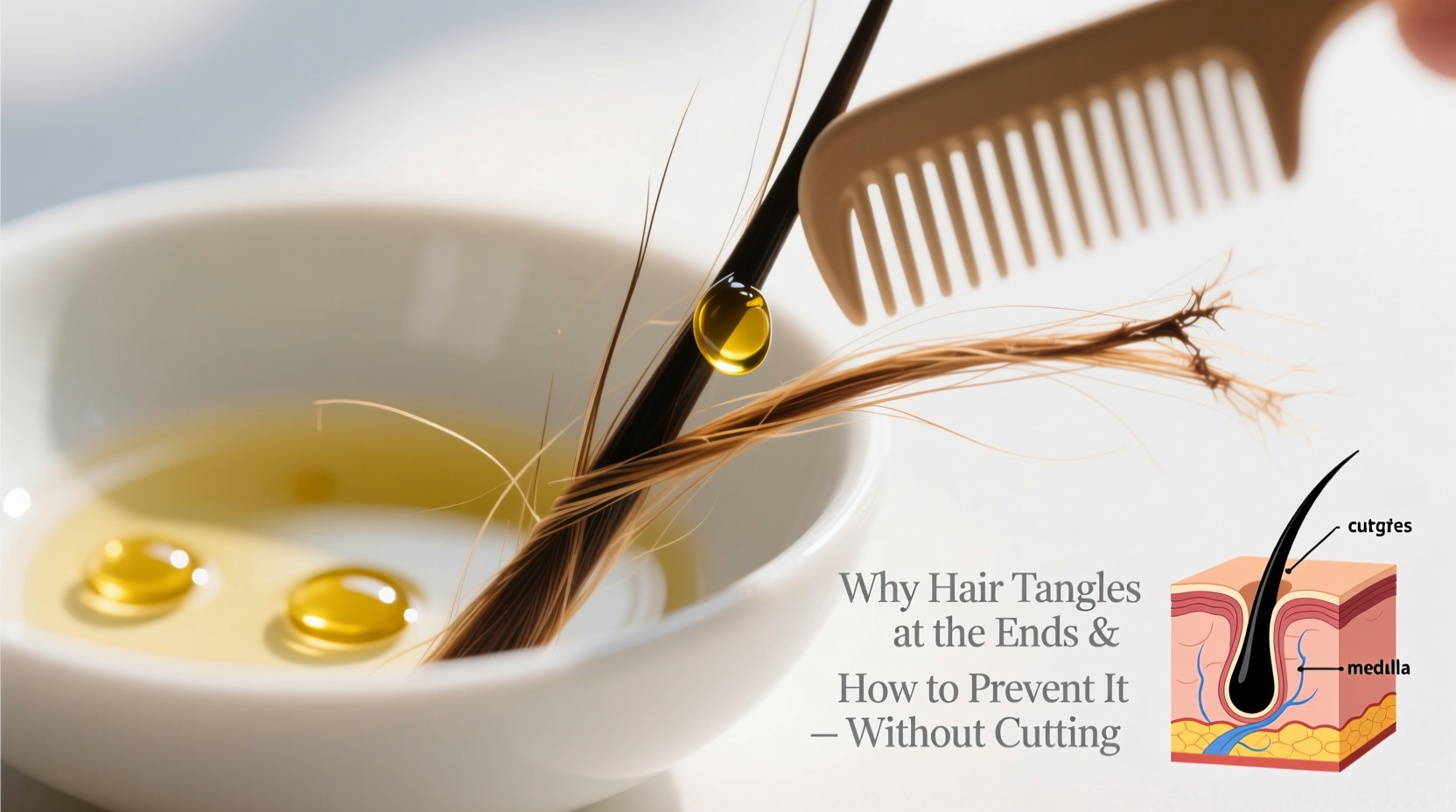
Tangling isn’t random—it’s a symptom of underlying hair health issues. The primary reasons hair knots at the ends include:
- Worn Cuticles: The outer cuticle layer protects each strand. When damaged by heat, chemicals, or mechanical stress, it lifts and snags on adjacent hairs.
- Dryness: Lack of natural oils (sebum) reaching the ends leads to brittleness. Dry hair lacks slip, increasing friction and knot formation.
- High Porosity: Damaged or naturally porous hair absorbs moisture quickly but loses it just as fast, leading to swelling and rough texture that encourages tangling.
- Mechanical Friction: Pillowcases, clothing, and aggressive brushing create constant rubbing, especially during sleep.
- Length and Texture: Longer hair has more opportunity to twist and knot. Curly, coily, or wavy textures are more prone due to their natural spiral pattern.
Unlike temporary surface knots, chronic end tangling often signals cumulative damage. Ignoring it can lead to matting, breakage, and eventually necessitate trimming—defeating the purpose of length retention.
Prevention Strategies That Work Without Cutting
Preserving hair length while improving end health requires consistency and the right techniques. Below are proven, non-invasive methods to stop tangles before they start.
1. Hydrate Deeply and Regularly
Dry ends are the most common trigger for tangles. Combat this with deep conditioning treatments 1–2 times per week. Look for products containing humectants like glycerin or honey, which attract moisture, and emollients such as shea butter or jojoba oil, which seal it in.
Avoid heavy silicones that coat the hair without nourishing it. Instead, opt for water-based conditioners that penetrate the shaft. Apply from mid-length to ends, leave on for 15–30 minutes under a warm towel or steamer to enhance absorption.
2. Use Leave-In Conditioners and Detanglers
A lightweight leave-in conditioner acts as a daily shield against dryness and friction. Apply it to damp hair after washing, focusing on the lower half. For extra protection, use a detangling spray before brushing.
Products with hydrolyzed proteins (like keratin or silk amino acids) help temporarily repair damaged cuticles, smoothing the surface and reducing snagging.
3. Brush Gently with the Right Tools
Aggressive brushing pulls strands into tighter knots. Always start from the ends and work upward in small sections. Use a wide-tooth comb or a brush designed for detangling, such as a Tangle Teezer or Denman brush.
Never brush dry, brittle hair—always apply a detangler or water-based mist first. Brushing dry curls or waves, in particular, disrupts the pattern and increases frizz and tangles.
“Detangling should be a slow, patient process. Rushing leads to breakage and reinforces the cycle of damage.” — Dr. Linette Williamson, Trichologist and Hair Research Specialist
Do’s and Don’ts: A Quick Reference Table
| Practice | Do | Don’t |
|---|---|---|
| Washing Frequency | Co-wash between shampoos if needed; use sulfate-free cleansers | Overwash with harsh shampoos that strip natural oils |
| Drying Hair | Plop or squeeze with microfiber towel or cotton T-shirt | Rub vigorously with regular towel |
| Styling | Use heat protectant below 375°F (190°C) | Apply flat iron or curler to dry, unconditioned hair |
| Sleep Routine | Braid hair or use silk bonnet/pillowcase | Sleep with loose hair on cotton pillow |
| Product Application | Apply leave-ins and oils to damp hair | Use heavy butters on dry ends only |
Step-by-Step Evening Routine to Prevent Overnight Tangling
Nighttime is when tangling accelerates due to movement and fabric friction. A simple nightly ritual can make a dramatic difference.
- Detangle Before Bed: Using a wide-tooth comb and a spritz of water or leave-in conditioner, gently remove any existing tangles starting from the ends.
- Apply a Lightweight Oil: Use 1–2 drops of argan or grapeseed oil on the ends to add slip and reduce static.
- Braid or Pineapple Hair: For straight or wavy hair, loosely braid into two plaits. For curly hair, secure in a “pineapple” (high, loose ponytail with a satin scrunchie).
- Protect with Silk: Wear a satin bonnet or sleep on a silk pillowcase to minimize friction.
- Refresh in the Morning: Undo the style gently, fluff roots, and reapply a light detangler if needed.
Real-Life Example: How Maria Reduced Tangling in 4 Weeks
Maria, a 32-year-old teacher with waist-length wavy hair, struggled with severe end tangling. She avoided trims to grow her hair longer but found herself constantly cutting out matted sections. After consulting a stylist, she implemented a new routine:
- Switched to a sulfate-free shampoo and deep conditioned weekly.
- Started using a leave-in conditioner and argan oil after every wash.
- Adopted the pineapple method with a silk scrunchie at night.
- Replaced her cotton pillowcase with a satin one.
- Stopped brushing dry hair and used a Denman brush only on damp, conditioned strands.
Within four weeks, Maria noticed fewer knots, less breakage, and easier comb-through. By week six, she no longer needed to trim tangled ends. Her hair felt stronger and looked healthier—even without a haircut.
Expert-Backed Checklist for Tangle-Free Ends
Follow this checklist consistently to see real improvements in hair manageability and end health:
- ✅ Wash with sulfate-free shampoo no more than 2–3 times per week
- ✅ Deep condition weekly with a protein-moisture balanced mask
- ✅ Use a leave-in conditioner every time you wet your hair
- ✅ Detangle only when hair is damp and coated with product
- ✅ Invest in a wide-tooth comb or detangling brush
- ✅ Apply a light oil or serum to ends daily
- ✅ Sleep on silk or satin fabric (bonnet or pillowcase)
- ✅ Avoid tight hairstyles that pull on the ends
- ✅ Minimize heat styling or always use a protectant
- ✅ Trim only when absolutely necessary—focus on sealing ends instead
This routine isn’t about perfection but consistency. Even adopting five of these habits can significantly reduce tangling over time.
Frequently Asked Questions
Can I fix split ends without cutting?
True split ends cannot be permanently repaired—they must be trimmed. However, you can temporarily seal minor splits using protein-rich conditioners or bond-building treatments (like Olaplex No. 3). These fill gaps in the hair shaft, reducing further splitting and improving manageability. But for severe splitting, cutting remains the only permanent solution.
Does drinking more water help with hair tangling?
While hydration supports overall hair health, drinking water alone won’t stop tangling. Hair gets moisture externally, not internally. However, being well-hydrated improves scalp function and sebum production, which indirectly supports healthier strands. Pair internal hydration with proper external moisturizing for best results.
Are there specific diets that reduce hair tangling?
Nutrition plays a supportive role. Deficiencies in biotin, omega-3 fatty acids, zinc, and protein can weaken hair, making it more prone to damage and tangling. Include foods like eggs, salmon, nuts, leafy greens, and legumes in your diet. Supplements may help if deficient, but topical care remains the primary defense against tangling.
Conclusion: Healthy Ends Are Achievable—No Scissors Needed
Tangled ends don’t have to mean automatic trims. By understanding the causes—dryness, friction, cuticle damage—and applying consistent, intelligent care, you can maintain length while improving hair quality. It’s not about quick fixes but sustainable habits: gentle detangling, strategic moisturizing, protective styling, and mindful handling.
Every strand you save through prevention is a victory for your hair growth journey. Start tonight—adjust your pillowcase, apply a leave-in, and braid your ends. Small actions compound into visible results. Your hair deserves patience and care, not just a剪 (cut).




 浙公网安备
33010002000092号
浙公网安备
33010002000092号 浙B2-20120091-4
Comments
No comments yet. Why don't you start the discussion?