
Waking up to a knotted mess or struggling through a brush every time you wash your hair is more than frustrating—it can be damaging. Hair tangling isn't just an aesthetic issue; it's often a sign of underlying hair health concerns. Whether you have curly, fine, long, or chemically treated hair, understanding the root causes of tangles and how to combat them with effective detangling sprays can transform your routine from painful to effortless.
Tangles form when strands twist around each other due to friction, dryness, or structural irregularities. While some degree of knotting is normal, excessive tangling points to preventable factors like moisture imbalance, mechanical stress, or unsuitable products. The right detangling spray can make all the difference—but not all are created equal.
What Causes Hair to Tangle So Easily?
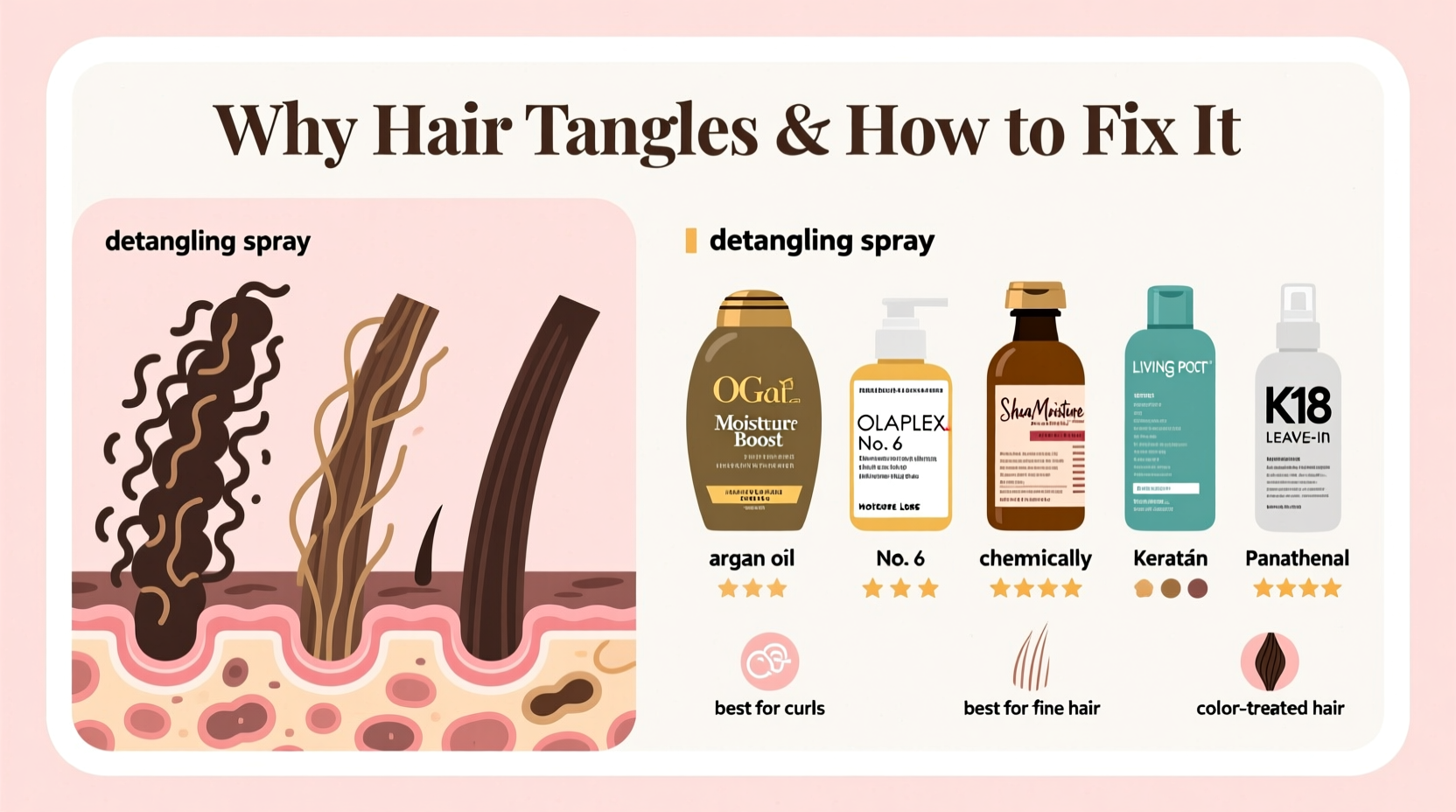
Tangling occurs when individual hair strands catch on one another, forming knots that resist combing. Several interrelated factors contribute to this:
- Dryness and Lack of Moisture: When hair lacks hydration, the cuticle lifts, creating a rough surface that snags easily. This is especially common in curly, coily, or porous hair types.
- Mechanical Friction: Sleeping on cotton pillowcases, wearing tight hairstyles, or using coarse towels increases friction, leading to breakage and tangles.
- Chemical Processing: Bleaching, coloring, relaxing, or perming alters the hair’s protein structure, weakening the cuticle and increasing susceptibility to snagging.
- Poor Detangling Habits: Brushing dry hair aggressively or starting from the roots instead of working from the ends up can worsen knots.
- Environmental Stressors: Wind, humidity, chlorine, and saltwater strip natural oils and cause swelling and frizz, both of which promote tangles.
- Hair Length and Texture: Longer hair has more opportunity to loop and knot. Curly and wavy textures naturally coil, making them prone to matting without proper care.
The Science Behind Effective Detangling Sprays
A good detangling spray does more than just loosen knots—it creates a protective barrier, restores moisture, and improves manageability. Understanding the key ingredients helps identify which formulas deliver real results.
Detanglers typically contain a blend of conditioning agents, humectants, and lubricants designed to coat the hair shaft and reduce surface friction. Common active components include:
- Dimethicone or Cyclomethicone: Silicones that smooth the cuticle and add instant slip, though they may build up over time if not cleansed properly.
- Glycerin and Panthenol: Humectants that attract moisture into the hair, improving elasticity and reducing static.
- Cetrimonium Chloride: A cationic surfactant that neutralizes negative charges on damaged hair, reducing flyaways and improving comb-through.
- Natural Oils (e.g., argan, coconut, jojoba): Penetrate the cortex or seal moisture, depending on oil type, while softening strands.
- Hydrolyzed Proteins: Strengthen weakened areas by filling in gaps in the hair’s structure, preventing further damage during detangling.
“A well-formulated detangler should offer immediate slip, short-term protection, and long-term conditioning benefits. Look beyond fragrance and claims—focus on ingredient synergy.” — Dr. Linette Lopez, Trichologist and Cosmetic Chemist
Top-Rated Detangling Sprays: What Actually Works?
With countless options on shelves and online, choosing the right detangler can feel overwhelming. To simplify the process, here’s a comparison of top-performing sprays based on effectiveness, ingredient quality, and user feedback across different hair types.
| Product Name | Hair Type | Key Ingredients | Pros | Cons |
|---|---|---|---|---|
| It’s a 10 Miracle Leave-In Product | All types, especially damaged | Keratin, silk proteins, panthenol | Multi-benefit (detangle, heat protect, strengthen), lightweight | Contains fragrance, silicone-heavy |
| Carol’s Daughter Monoi Repairing Leave-In | Curly, coily, dry | Monoi oil, hibiscus, shea butter | Nourishing, great slip, clean formula | Can weigh down fine hair |
| OGX Renewing Argan Oil of Morocco | Frizzy, thick, coarse | Argan oil, keratin, silicones | Affordable, shiny finish, strong detangling | Sulfates and parabens present |
| SheaMoisture Coconut & Hibiscus Curl & Style Milk | Curly, wavy, textured | Coconut oil, silk protein, neem oil | Deep moisture, no parabens, cruelty-free | Thicker consistency requires dilution for fine hair |
| Living Proof Instant Conditioner | Fine, color-treated, straight | Healthy Hair Molecule (OFPMA), glycerin | Weightless, no buildup, fast-acting | Premium price point |
While drugstore options like OGX deliver decent performance at low cost, high-end formulas such as Living Proof use patented technology to provide detangling without residue. For curly and textured hair, plant-based milks and creams often outperform traditional sprays due to richer emollients.
Step-by-Step Guide to Prevent and Remove Tangles
Prevention is always better than repair. Following a consistent, gentle regimen significantly reduces tangle formation. Here’s a practical, science-backed approach:
- Wash with Sulfate-Free Shampoo: Harsh detergents strip natural oils. Use a mild, moisturizing shampoo tailored to your hair type.
- Condition Liberally: Apply conditioner from mid-length to ends. Let it sit for 3–5 minutes before rinsing to allow penetration.
- Apply Detangler Immediately After Washing: While still in the shower, spray or apply a leave-in detangler generously to soaking-wet hair.
- Use a Wide-Tooth Comb: Start at the ends and gently work upward in small sections. Never yank through knots.
- Limit Towel Drying: Rubbing with a cotton towel increases frizz and cuticle disruption. Instead, squeeze out water with a microfiber towel or old cotton T-shirt.
- Protect at Night: Sleep on a satin pillowcase or wrap hair in a satin bonnet to minimize friction.
- Refresh Between Washes: Spritz a water-based leave-in or DIY mix (water + a drop of oil) to reactivate conditioning agents.
- Trim Regularly: Split ends travel up the hair shaft, causing more tangles. Schedule trims every 8–12 weeks.
Real-Life Example: Transforming Chronic Tangling
Samantha, a 32-year-old teacher with waist-length wavy hair, struggled daily with severe tangles after swimming and commuting. She used a regular shampoo and brushed her dry hair each morning, often breaking strands in the process. Her hair felt rough, looked dull, and took nearly 30 minutes to detangle after showers.
After consulting a stylist, she made three key changes: switched to a sulfate-free system, started using Carol’s Daughter Monoi leave-in spray post-wash, and began sleeping in a satin bonnet. Within two weeks, her detangling time dropped to under 10 minutes. By week six, her hair was shinier, stronger, and far less prone to knots—even after swimming.
“I didn’t realize how much friction I was adding with cotton towels and brushing dry,” Samantha said. “The right spray made it glide instead of fight.”
Dos and Don’ts of Detangling
| Do | Don’t |
|---|---|
| Use a wide-tooth comb or detangling brush | Use a fine-tooth comb on tangled, wet hair |
| Start detangling from the ends and move upward | Begin brushing from the roots down |
| Store detangler in the shower for easy access | Leave bottles in direct sunlight or extreme heat |
| Reapply detangler when refreshing styles | Rely solely on water to detangle dry hair |
| Choose alcohol-free formulas to avoid drying | Use heavy oils without washing them out periodically |
FAQ: Your Detangling Questions Answered
Can detangling sprays cause buildup?
Yes, especially those containing silicones like dimethicone. While they provide excellent slip, repeated use without clarifying can lead to residue. To prevent buildup, use a sulfate-free clarifying shampoo every 3–4 weeks or opt for water-soluble silicones (e.g., cyclomethicone).
Is it safe to use detangler on children’s hair?
Absolutely—but choose gentle, fragrance-free formulas. Kids’ hair is finer and more delicate. Products like Johnson’s No More Tears Detangler or homemade mixes (water + a teaspoon of conditioner) are effective and safe for daily use.
Can I make my own detangling spray?
Yes. A simple DIY version: mix 1 cup distilled water, 1 tablespoon aloe vera gel, 1 teaspoon vegetable glycerin, and 5–10 drops of argan or jojoba oil in a spray bottle. Shake well before each use. Store in the fridge for up to two weeks.
Final Checklist: Building a Tangle-Free Routine
- ✅ Assess your hair type and porosity before selecting a detangler
- ✅ Use conditioner every wash and follow with a dedicated detangling product
- ✅ Invest in a quality wide-tooth comb or detangling brush (e.g., Tangle Teezer, Denman)
- ✅ Switch to satin pillowcases or bonnets
- ✅ Avoid brushing dry, unconditioned hair
- ✅ Clarify monthly to remove buildup
- ✅ Trim split ends regularly to prevent knot migration
- ✅ Carry a travel detangler for on-the-go maintenance
Conclusion: Take Control of Your Hair Health
Chronic tangling isn’t something you have to live with. It’s a signal—from your hair—that it needs more moisture, gentler handling, or better products. With the right knowledge and tools, you can turn a daily struggle into a seamless, even enjoyable, part of your self-care ritual. The best detangling sprays do more than just ease combing—they protect, nourish, and lay the foundation for stronger, shinier hair over time.
Start today: examine your current routine, identify where friction or dryness creeps in, and introduce one change—whether it’s switching to a better spray or adopting a new combing technique. Small adjustments compound into dramatic improvements. Your hair deserves care that goes beyond surface-level fixes.




 浙公网安备
33010002000092号
浙公网安备
33010002000092号 浙B2-20120091-4
Comments
No comments yet. Why don't you start the discussion?