
Hamsters are small creatures with big personalities—and even bigger instincts. If you’ve noticed your hamster consistently stashing food in a single corner of its cage, you’re not alone. This behavior is both common and deeply rooted in survival mechanisms developed over thousands of years. While it might seem odd or even concerning at first glance, food hoarding is usually a sign of a healthy, instinct-driven animal. Understanding the reasons behind this habit can help you better support your pet’s physical and emotional well-being.
In the wild, hamsters live in arid environments where food sources are unpredictable. To survive periods of scarcity, they evolved to collect and store as much food as possible. Even in the safety of a home cage with regular meals, these instincts remain strong. But beyond basic survival programming, food hoarding can also be influenced by cage layout, stress levels, diet quality, and social dynamics—especially in multi-hamster setups (though rare, as most species are solitary).
The Science Behind Food Hoarding: An Evolutionary Perspective
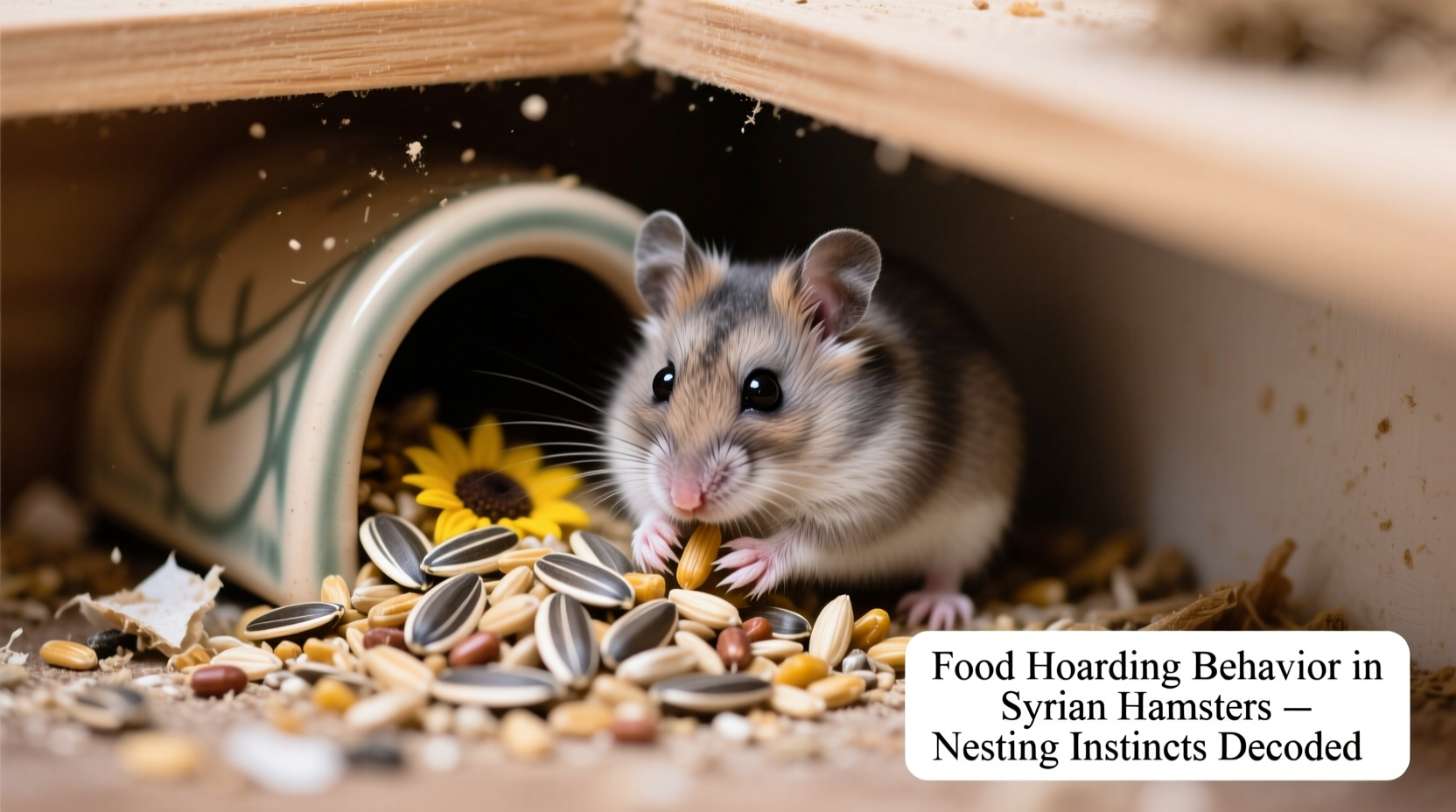
Hamsters belong to a group of rodents known as “larder hoarders,” meaning they gather food and store it in one central location rather than scattering it across multiple hidden caches like squirrels do. This strategy makes sense for animals that live in burrows. In nature, Syrian hamsters, for example, construct complex underground tunnel systems with designated chambers for sleeping, toileting, and storing food. These larders can hold several weeks’ worth of provisions, allowing them to survive droughts or harsh weather without venturing outside.
When your hamster fills a specific corner with seeds, pellets, or bits of vegetables, it’s replicating this natural behavior. The chosen spot likely mimics the safest part of its perceived territory—often near bedding, walls, or under hiding places where predators cannot easily reach. Studies have shown that hamsters prefer to store food in areas that offer visual cover and minimal foot traffic, which explains why they often pick corners far from entry points or feeding dishes.
“Food hoarding isn’t just a quirky habit—it’s a hardwired survival mechanism. Even well-fed domestic hamsters will hoard because evolution doesn’t respond quickly to changes in environment.” — Dr. Lena Torres, Small Mammal Ethologist
Nesting Habits and Environmental Triggers
Nesting and hoarding are closely linked behaviors. A hamster’s nest serves multiple purposes: insulation, security, and proximity to resources. When your pet drags food into its nesting area, it’s combining two essential needs—shelter and sustenance—into one secure zone. This is especially common during colder months or when the ambient temperature drops below 65°F (18°C), prompting the hamster to prepare for potential hibernation-like states (though true hibernation is dangerous in captivity and should be prevented).
Cage setup plays a crucial role in determining where hoarding occurs. Hamsters tend to designate zones based on function. For instance:
- A quiet back-left corner may become the primary nesting and storage site.
- The front center area might serve as an exploration and feeding zone.
- The opposite side could be used for exercise or waste elimination.
If your hamster keeps moving food to the same spot despite cleaning, it may be because that location feels safest. Sudden changes in lighting, noise, or cage furniture can disrupt established routines and cause temporary shifts in hoarding patterns. Over time, however, most hamsters re-establish their preferred larder once they feel secure again.
Is Excessive Hoarding a Sign of Stress or Illness?
While moderate hoarding is normal, certain patterns may indicate underlying issues. Watch for these red flags:
- Eating significantly less despite large stores – Could signal dental problems or digestive discomfort.
- Burying food and then abandoning it uneaten – May suggest poor diet palatability or illness.
- Hiding in the food pile constantly – Might reflect fear, overcrowding, or inadequate shelter options.
- Aggressive guarding of the hoard – Especially if new objects or hands approach, indicating high stress.
Dental disease is a common issue in older hamsters and can make chewing painful. As a result, they may collect food but avoid eating it, leading owners to mistakenly believe their pet is simply “stockpiling.” Similarly, wet tail (proliferative ileitis) or respiratory infections can suppress appetite while leaving hoarding instincts intact.
To differentiate between healthy behavior and concern, monitor your hamster’s body condition. A healthy adult should have a rounded but not bloated shape, clean fur, bright eyes, and active movement. Weigh your hamster weekly using a kitchen scale—if you notice a drop of more than 10% in body weight over a few days, consult a veterinarian experienced with small mammals.
Optimizing Cage Design to Support Natural Behaviors
A well-designed habitat encourages natural behaviors while minimizing stress. Consider these guidelines when arranging your hamster’s enclosure:
| Feature | Recommended Setup | Avoid |
|---|---|---|
| Nesting Area | Deep bedding (paper-based or aspen shavings), hide box placed in quiet corner | Pine or cedar shavings (toxic oils), open-top shelters |
| Feeding Zone | Ceramic bowl fixed to floor, away from nesting area | Plastic bowls (easily chewed), scattered loose food |
| Exercise Space | Solid-surface wheel (minimum 8” diameter), tunnels, climbing structures | Wire wheels (cause bumblefoot), vertical bars for climbing |
| Storage Observation | Allow one dedicated hoarding corner; rotate enrichment items nearby | Forcing redistribution, frequent full cleanouts |
Providing multiple enrichment opportunities helps balance instinctual drives. For example, scatter-feeding small portions encourages foraging without overwhelming the hoarding impulse. Puzzle feeders or treat balls also stimulate mental engagement and slow down consumption, reducing the likelihood of over-hoarding due to boredom.
Step-by-Step Guide to Assessing and Managing Food Hoarding
- Observe daily patterns – Note when and where your hamster collects food. Use a journal or notes app to track behavior over a week.
- Weigh weekly – Ensure your hamster maintains consistent body weight despite food storage habits.
- Inspect stored food – Check for mold, spoilage, or uneaten perishables. Remove any rotting items gently during partial cage cleaning.
- Adjust diet as needed – Offer a balanced mix of lab blocks, fresh veggies (in moderation), and occasional treats. Limit sugary or fatty foods that encourage obsessive collecting.
- Modify cage layout gradually – If hoarding interferes with hygiene, slowly shift food bowls closer to the nesting zone—but never directly inside it—to discourage migration of waste.
- Enrich the environment – Add cardboard tubes, dig boxes, or DIY mazes to redirect energy toward exploration instead of pure accumulation.
Real-Life Example: Luna the Dwarf Hamster’s Hoarding Shift
Luna, a Roborovski dwarf hamster owned by Maria in Portland, began piling food near her exercise wheel—a high-traffic area prone to spills and contamination. Concerned about hygiene, Maria tried relocating the food bowl daily, only for Luna to drag everything back within hours. After consulting a small-animal behaviorist, she learned that Luna associated the wheel’s sound with safety—likely because it masked external noises from household pets.
Rather than fight the behavior, Maria added a second hideout near the original hoarding site and introduced a quieter, larger-diameter wheel on the opposite side. She also began placing a few sunflower seeds in the new back-corner hide each evening. Within ten days, Luna had shifted her primary larder to the quieter rear zone, keeping stored food dry and protected. The case illustrates how understanding motivation—not just correcting outcomes—leads to lasting solutions.
Common Misconceptions About Hamster Hoarding
Many owners misinterpret hoarding as greed, confusion, or poor training. However, hamsters cannot be “taught” not to hoard any more than cats can be taught not to scratch. It’s an innate drive, not a learned flaw. Other myths include:
- “They don’t know how much they need.” – False. Hamsters regulate intake remarkably well, even while hoarding.
- “Hoarding means they’re hungry.” – Not necessarily. Well-fed hamsters still hoard.
- “If I remove the stash, they’ll stop.” – Counterproductive. This increases anxiety and may trigger excessive collection.
Instead of suppressing the behavior, focus on channeling it positively through proper housing and nutrition.
Frequently Asked Questions
How much food should a hamster eat versus store?
On average, an adult hamster eats about 1–2 tablespoons of dry food per day. However, they may store several times that amount depending on availability and personality. As long as the hamster remains active and maintains weight, large stores are not a concern.
Should I clean out my hamster’s food stash regularly?
Yes, but carefully. During weekly spot-cleaning, remove only spoiled or damp items. Avoid dumping the entire hoard. Instead, replace soiled bedding around it and leave most food undisturbed to preserve your pet’s sense of security.
Can hamsters share food hoards?
Rarely. Most hamsters are solitary and will defend their larder aggressively. Even siblings raised together typically become territorial after 8–10 weeks. Cohabitation is generally discouraged and increases stress-related hoarding.
Action Plan Checklist
Here’s what you can do today to support healthy hoarding behavior:
- ✅ Identify your hamster’s main hoarding zone and assess its safety and cleanliness.
- ✅ Provide deep, absorbent bedding in that area to support nesting.
- ✅ Switch to a ceramic food dish to prevent tipping and chewing.
- ✅ Introduce one new enrichment item (e.g., paper roll or dig box) near—but not in—the hoard.
- ✅ Begin tracking food intake and body weight weekly.
- ✅ Schedule a vet check if you observe lethargy, weight loss, or refusal to eat.
Conclusion: Embrace the Instinct, Enhance the Environment
Your hamster’s tendency to hoard food in one corner isn’t a problem to fix—it’s a window into a rich behavioral world shaped by evolution. By recognizing this act not as clutter but as communication, you deepen your connection with your pet. Rather than resisting natural tendencies, work with them. Design a cage that honors your hamster’s need for privacy, security, and control. Monitor health proactively, enrich daily life, and let go of the idea that “normal” means human-like predictability.




 浙公网安备
33010002000092号
浙公网安备
33010002000092号 浙B2-20120091-4
Comments
No comments yet. Why don't you start the discussion?