
Hamsters are among the most popular small pets, admired for their compact size, quiet demeanor, and entertaining behaviors. One of the most common—and sometimes concerning—sights for new hamster owners is watching their pet sprint on its exercise wheel for hours at a time, often deep into the night. While it may appear obsessive or even stressful, continuous wheel running is typically a normal expression of deeply ingrained biological instincts. Understanding the reasons behind this behavior helps pet owners provide better care and ensure their hamster’s physical and psychological well-being.
This article explores the evolutionary roots of wheel-running, the role of instinctual energy regulation, and how environment influences activity levels. It also distinguishes between healthy exercise and potential signs of stress, offering practical guidance to support a balanced lifestyle for your pet.
The Evolutionary Drive Behind Wheel Running
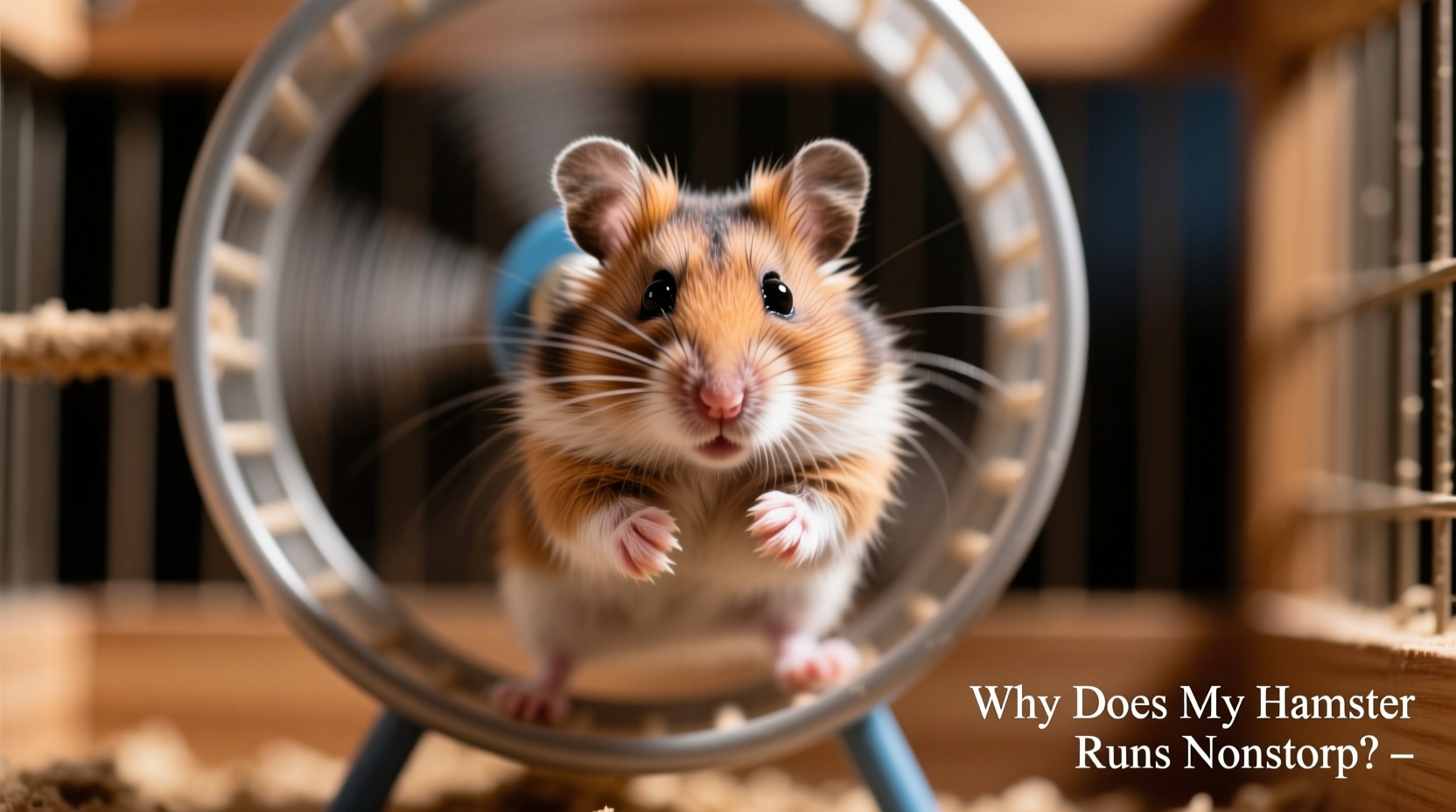
In the wild, hamsters inhabit arid regions such as the steppes of Syria, Mongolia, and northern China. These environments demand constant movement: hamsters travel up to 5–9 kilometers (3–6 miles) each night in search of food, water, and safe nesting sites. Their survival depends on stealth, endurance, and efficient navigation across open terrain. Unlike diurnal animals, hamsters are crepuscular—most active during twilight hours—which aligns with cooler temperatures and reduced predator activity.
When brought into captivity, these natural patterns don’t disappear. A domesticated hamster still carries the genetic programming of its wild ancestors. The exercise wheel serves as a behavioral substitute for long-distance foraging. Without the need to actually find food or evade predators, the physical impulse to move remains, redirected into repetitive but purposeful motion.
“Wheel running isn’t just exercise—it’s a displacement of innate survival behaviors. In confinement, locomotion becomes both a physical outlet and a psychological necessity.” — Dr. Lena Torres, Animal Behavior Specialist, University of Edinburgh
Studies in laboratory settings have shown that rodents given access to running wheels voluntarily engage in prolonged sessions, sometimes covering distances equivalent to their wild counterparts. This suggests that wheel use fulfills more than caloric expenditure; it satisfies a fundamental need to perform species-specific behaviors.
Biological and Psychological Benefits of Continuous Running
Running serves multiple functions beyond mimicking foraging. From a physiological standpoint, consistent activity supports cardiovascular health, muscle tone, and metabolic regulation. Hamsters have high metabolisms and short digestive transit times, meaning they burn energy quickly and benefit from regular movement to maintain internal balance.
Equally important are the psychological benefits. In confined spaces, lack of stimulation can lead to stereotypic behaviors—repetitive, functionless actions like bar-biting or excessive grooming. Wheel running provides cognitive engagement, reducing anxiety and preventing boredom-related distress. The rhythmic nature of running may even induce a calming, meditative state similar to what humans experience during jogging.
How Much Running Is Normal?
There is no universal standard for “normal” running duration, as individual variation exists based on breed, age, sex, and personality. However, research indicates that adult Syrian hamsters average 4–8 kilometers (2.5–5 miles) per night on a wheel. Dwarf species may run slightly less but still exhibit significant nightly activity.
What matters more than distance is context. A hamster that runs consistently through the night, pauses to eat or drink, and resumes activity later is likely expressing healthy behavior. Concern arises only when running interferes with rest, feeding, or shows signs of compulsion.
Environmental Factors That Influence Activity Levels
Captivity alters natural conditions in ways that can amplify or distort instinctual behaviors. While the wheel fulfills a vital need, certain cage setups may unintentionally encourage overuse.
- Cage size: Small enclosures limit opportunities for exploration, making the wheel the primary source of movement.
- Lack of enrichment: Absence of tunnels, chew toys, or foraging materials increases reliance on the wheel for stimulation.
- Noise and light: Disruptions during daytime sleep cycles can shift activity peaks and increase nighttime intensity.
- Wheel type: Poorly designed wheels (e.g., wire mesh, too small, or squeaky) may cause discomfort but still be used due to lack of alternatives.
A 2021 study published in Applied Animal Behaviour Science found that hamsters in enriched environments with multiple activity zones showed more varied behavior patterns and slightly reduced wheel usage—without any decline in overall activity. This suggests that diversification of outlets, not restriction of running, is key to balanced development.
Do’s and Don’ts for Supporting Healthy Wheel Use
| Do’s | Don’ts |
|---|---|
| Provide a solid-surface wheel (no wire rungs) | Use wheels smaller than 8 inches for Syrians |
| Place the wheel in a quiet corner of the cage | Allow loose bedding to enter wheel mechanisms |
| Offer alternative enrichment (tunnels, dig boxes) | Remove the wheel entirely if overuse is suspected |
| Monitor for signs of foot or limb injury | Assume all constant running is harmful |
When Running Crosses Into Compulsion: Recognizing Red Flags
While persistent wheel use is usually natural, it can occasionally reflect underlying issues. True compulsive behavior differs from instinctual running in several key ways:
- Running without breaks for 3+ hours continuously
- Neglecting food, water, or nest-building
- Visible signs of exhaustion: labored breathing, unsteady gait
- Continuing to run despite injury (e.g., bleeding feet)
- Obsessive circling even after wheel removal
These patterns may indicate stress, inadequate housing, or poor mental health. Environmental monotony, especially in barren cages, is a leading contributor to stereotypic behaviors. In some cases, neurological factors or genetic predispositions may play a role, particularly in inbred laboratory strains.
“We once observed a Roborovski hamster running nearly 14 kilometers in a single night. But because it ate normally, groomed itself, and rested intermittently, we classified it as high-drive rather than pathological.” — Dr. Alan Prescott, Exotic Mammal Veterinarian
Mini Case Study: Luna the Overactive Dwarf Hamster
Luna, a 7-month-old Campbell’s dwarf hamster, was brought to a small animal clinic after her owner reported she \"never stops running.\" Surveillance footage revealed Luna spending over 70% of her night on the wheel, rarely pausing. Initial concern pointed toward possible compulsion. However, upon inspection, the cage was found to be only 2 square feet—well below the recommended minimum of 4.5 square feet. It contained only a food bowl, a plastic house, and a small wire-wheel.
The veterinarian advised upgrading to a larger bin cage with layered bedding, adding cardboard tunnels, a digging box, and replacing the wheel with a silent 6.5-inch solid disc model. Within two weeks, while Luna remained highly active, her wheel time decreased by 30%, and she began spending more time exploring and caching food. Her overall behavior became more balanced, demonstrating how environment shapes expression of natural instincts.
Step-by-Step Guide to Optimizing Your Hamster’s Exercise Environment
To support healthy running habits and prevent potential overuse, follow this structured approach:
- Assess cage size: Ensure minimum floor space of 360 square inches (about 2.5 square feet), ideally more. Larger cages allow for diverse activity zones.
- Select the right wheel: For Syrians, use a wheel at least 8 inches in diameter; dwarfs need 6–7 inches. Opt for solid, silent models to protect feet and reduce noise.
- Add enrichment: Introduce tunnels, hideouts, chew toys, and foraging puzzles to distribute activity across different behaviors.
- Rotate toys weekly: Prevent habituation by changing one or two items every 5–7 days to maintain novelty.
- Monitor behavior: Observe your hamster at night using a red-light flashlight (invisible to rodents). Note duration of running, pauses, and other activities.
- Adjust as needed: If running dominates all waking time, gradually introduce new stimuli. Never remove the wheel abruptly, as this can increase stress.
Frequently Asked Questions
Is it bad if my hamster runs all night?
No, it’s completely normal. Hamsters are nocturnal and naturally most active at night. As long as your pet eats, drinks, rests, and shows no signs of injury, nighttime running is a healthy expression of instinct.
Can a hamster run itself to death?
Extremely rare, but theoretically possible under severe stress or illness. In practice, healthy hamsters self-regulate. If your pet collapses or appears distressed, consult a vet immediately. More commonly, underlying health issues cause lethargy, not overexertion.
Should I get a hamster ball instead of a wheel?
Hamster balls are controversial. While they offer movement outside the cage, they can cause stress due to lack of control, visibility, and inability to scent-mark. They should only be used briefly (10–15 minutes) under supervision. A high-quality wheel remains the safest, most reliable form of daily exercise.
Conclusion: Honoring Instinct, Enhancing Well-Being
Your hamster’s relentless wheel running isn’t a flaw—it’s a testament to the strength of evolution. What might look like obsession is, in most cases, a perfectly adapted response to life in captivity. By recognizing this behavior as rooted in survival, not pathology, caregivers can shift from worry to appreciation.
The goal isn’t to stop the running, but to support it within a rich, stimulating environment that honors the full range of hamster behaviors. When provided with adequate space, proper equipment, and mental challenges, even the most energetic hamster can thrive in balance.




 浙公网安备
33010002000092号
浙公网安备
33010002000092号 浙B2-20120091-4
Comments
No comments yet. Why don't you start the discussion?