
If your refrigerator’s ice maker is churning out tiny, underdeveloped ice cubes instead of the usual solid, full-sized ones, it’s more than just a minor inconvenience—it can affect how well your drinks chill and signal an underlying issue with your appliance. Small ice cubes are rarely a random occurrence; they usually point to specific mechanical or environmental problems, most commonly related to water flow, temperature, or internal blockages. Understanding the root causes and knowing how to diagnose and fix them can save you from unnecessary service calls and extend the life of your ice maker.
Understanding How Ice Makers Work
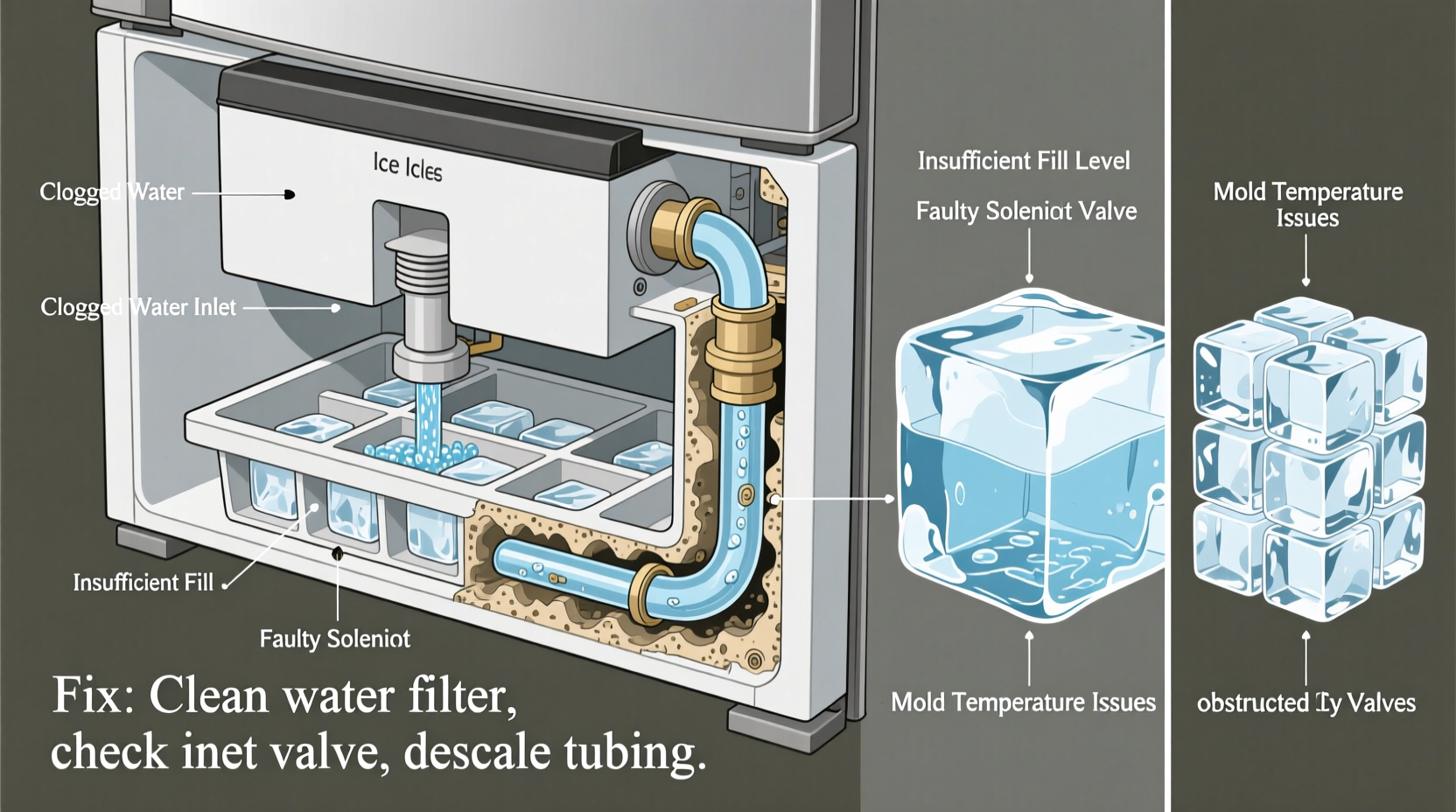
To troubleshoot effectively, it helps to know how an automatic ice maker functions. Most models operate through a cycle that includes filling, freezing, ejecting, and harvesting. A solenoid valve opens to allow filtered water into the mold. Once filled, the freezing process begins. After 60 to 90 minutes (depending on freezer temperature and model), a heating element slightly warms the mold to loosen the cubes, which are then ejected by a motor-driven arm into the storage bin.
The size and clarity of the ice depend heavily on two factors: sufficient water volume during the fill phase and consistent, low temperatures during freezing. If either condition is compromised—especially if water flow is restricted—the result is often undersized, hollow, or misshapen cubes.
Common Causes of Small Ice Cubes
Small ice cubes typically stem from one or more of the following issues:
- Inadequate water supply: Low water pressure or a partially closed shutoff valve restricts the amount of water entering the mold.
- Clogged water filter: Over time, filters become saturated with sediment and minerals, reducing flow.
- Frozen fill tube: The thin tube delivering water to the ice maker can freeze due to poor insulation or a malfunctioning water inlet valve.
- Malfunctioning water inlet valve: This part controls water entry; if worn or defective, it may not open fully.
- Incorrect freezer temperature: If the freezer runs above 0°F (-18°C), freezing takes longer and may not complete properly.
- Short fill cycle: Some models have adjustable water levels; if set too low, less water enters the mold.
Water Flow Issues: The Primary Culprit
Reduced water flow is the leading cause of small ice cubes. Even if the system appears to be working, a weak stream means the mold doesn’t fill completely. This results in shallow cubes that freeze quickly but lack mass and durability.
A telltale sign is when the cubes appear hollow on top or look like half-moons rather than full squares. In some cases, only a few cubes form per cycle, while others remain empty.
“Over 70% of ice maker complaints we see are related to water delivery problems—not the ice maker itself.” — Mark Reynolds, Appliance Technician with 15 years of field experience
Step-by-Step Guide to Diagnosing and Fixing the Problem
Follow this systematic approach to identify and resolve the issue causing small ice cubes.
- Check the water supply valve
Locate the shutoff valve behind or beneath the refrigerator. Ensure it’s fully open. Turn it counterclockwise until it stops. If it’s already open, inspect the line for kinks or compression. - Test water pressure
Disconnect the water line at the fridge and run it into a bucket. A healthy flow should fill a cup in about 10 seconds. If the stream is weak, check the home’s main water pressure or consult a plumber. - Replace the water filter
Even if the filter isn’t overdue, a clogged one can severely limit flow. Remove the old filter and install a new OEM-approved replacement. Run several batches of ice afterward to flush the system. - Inspect the fill tube for ice buildup
Turn off the water and remove the ice maker (usually involves removing a cover and a few screws). Look at the small plastic tube extending from the back wall into the fill cup. If blocked with ice, use a hairdryer on low heat to melt it—never use sharp tools. - Examine the water inlet valve
This valve, located where the water line connects to the fridge, can degrade over time. Use a multimeter to test for continuity. If it fails the test or shows signs of leakage, replace it. Part numbers vary by model, so consult your manual. - Verify freezer temperature
Place a thermometer in a glass of water and leave it in the freezer for 24 hours. Ideal operating temperature is between 0°F and 5°F (-18°C to -15°C). Adjust settings if needed and wait 48 hours to assess improvement. - Reset the ice maker
Some models benefit from a reset. Unplug the fridge for 30 seconds, then restore power. Alternatively, lift the wire shutoff arm three times in succession to initiate a diagnostic cycle (consult your manual).
Tips and Best Practices for Preventing Future Issues
Maintaining consistent ice production requires regular attention. Here are key habits to adopt:
- Flush the water system after filter changes by dispensing 3–4 gallons of water through the door.
- Keep the freezer organized to allow proper air circulation, which maintains stable temperatures.
- Listen for the “fill sound” during each cycle. A weak trickle indicates reduced flow.
- Avoid using non-OEM filters, as they may not fit properly or could introduce debris into the system.
Mini Case Study: Resolving a Frozen Fill Tube
Homeowner Lisa M. noticed her Samsung refrigerator was producing pea-sized ice chunks. She replaced the filter and confirmed the shutoff valve was open, but the problem persisted. After researching online, she removed the ice maker assembly and discovered a solid block of ice inside the fill tube. Using a hairdryer on low for five minutes, she thawed the obstruction. After reassembly, the next batch of ice was full-sized and clear. The root cause? A faulty water inlet valve that wasn’t sealing properly, allowing residual water to drip and freeze in the tube overnight.
Lisa replaced the valve ($45 part) and has had no issues in the eight months since. Her experience underscores the importance of checking less obvious components like the fill tube and inlet valve—not just filters and valves.
Do’s and Don’ts When Troubleshooting Ice Maker Issues
| Do’s | Don’ts |
|---|---|
| Always shut off water and power before repairs | Use metal tools to chip ice from the fill tube |
| Replace filters on schedule | Ignore weak water flow from the dispenser |
| Check freezer temp with an independent thermometer | Assume the ice maker unit itself is faulty immediately |
| Inspect the fill cup for proper water level during a cycle | Over-tighten water line connections (risk of cracking) |
| Consult the user manual for model-specific diagnostics | Use compressed air to blow out lines without disconnecting water |
When to Call a Professional
While many ice maker issues can be resolved at home, certain situations require expert intervention:
- The water inlet valve needs replacement and you’re uncomfortable working with plumbing.
- You suspect an electrical fault in the ice maker module or control board.
- After all checks, the problem persists despite correct water pressure and temperature.
- Your refrigerator is under warranty—attempting DIY repairs could void coverage.
Technicians have specialized tools, such as pressure gauges and circuit testers, to pinpoint issues faster. They can also access manufacturer-specific error codes that aren’t visible to consumers.
FAQ
Why are my ice cubes smaller after replacing the water filter?
This is common immediately after filter replacement. Air trapped in the new filter can reduce initial water flow. Run 6–10 gallons of water through the dispenser to purge air and prime the system. Ice size should normalize within 24 hours.
Can hard water cause small ice cubes?
Yes. Hard water leads to mineral buildup in the filter, fill tube, and inlet valve, restricting flow over time. Consider installing a whole-house softener or using a high-efficiency filter designed for hard water areas.
Is there a way to adjust how much water fills the ice mold?
Some higher-end models allow fill time adjustment via settings or dip switches. Consult your owner’s manual. On most standard units, fill volume is fixed and determined by the inlet valve’s duration of operation.
Checklist: Fixing Small Ice Cube Issues
Use this checklist to methodically address the problem:
- ✅ Confirm water supply valve is fully open
- ✅ Test water pressure at the fridge connection
- ✅ Replace the water filter with a genuine OEM part
- ✅ Inspect and clear any ice blockage in the fill tube
- ✅ Verify freezer temperature is between 0°F and 5°F
- ✅ Listen for proper water fill during the cycle (should last 5–7 seconds)
- ✅ Test or replace the water inlet valve if flow remains low
- ✅ Reset the ice maker and monitor the next few cycles
Conclusion
Small ice cubes are a symptom, not the disease. By focusing on water delivery, temperature stability, and component health, you can restore your ice maker to peak performance. Most fixes are straightforward and cost-effective—often requiring nothing more than a new filter or a few minutes with a hairdryer. Regular maintenance prevents recurrence and ensures you always have enough quality ice on hand.




 浙公网安备
33010002000092号
浙公网安备
33010002000092号 浙B2-20120091-4
Comments
No comments yet. Why don't you start the discussion?