
It’s 2 a.m., and instead of quiet, you’re greeted by the persistent yowl of your indoor cat pacing the hallway or sitting at the foot of your bed. This nightly ritual isn’t just disruptive—it can be concerning. Unlike outdoor cats that may vocalize due to territorial disputes or mating calls, indoor cats meowing nonstop at night often signal deeper behavioral, medical, or environmental issues. Understanding the root causes and responding appropriately is essential not only for your sleep but for your cat’s well-being.
Cats are naturally crepuscular—most active at dawn and dusk—but excessive vocalization during the night goes beyond normal feline rhythms. When this becomes a consistent pattern, it's a sign something has shifted. Whether due to age-related conditions, unmet needs, or stress, nighttime meowing demands attention, not dismissal.
Common Causes of Excessive Nighttime Meowing
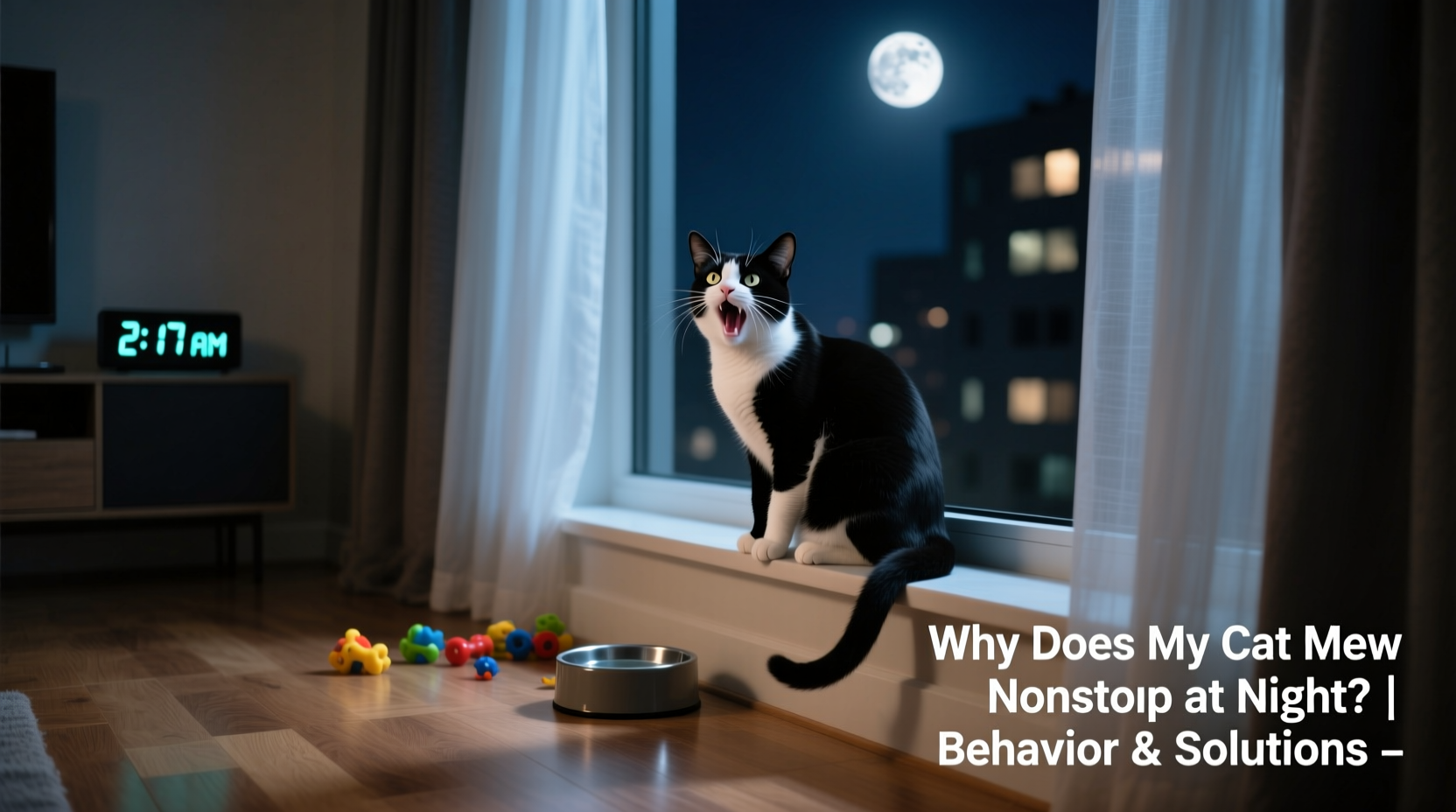
Before labeling your cat as “annoying” or “attention-seeking,” consider the range of reasons behind the vocalization. Cats don’t meow at humans without purpose. Each cry could be a request, a protest, or even a distress signal.
- Hunger or feeding schedule misalignment: If your cat is used to being fed late at night or early morning, they may wake you expecting food.
- Boredom or lack of stimulation: Indoor cats without sufficient daytime activity often become restless at night, using vocalization to self-entertain.
- Attention-seeking behavior: Some cats learn that meowing gets results—whether it’s petting, play, or simply someone getting out of bed.
- Medical issues: Hyperthyroidism, high blood pressure, dental pain, or arthritis can cause discomfort and vocalization, especially in older cats.
- Cognitive dysfunction syndrome (CDS): Similar to dementia in humans, CDS affects senior cats, leading to confusion, disorientation, and nighttime crying.
- Anxiety or environmental stress: Changes in routine, new pets, moving homes, or loud noises can trigger anxiety-driven vocalization.
- Reproductive behavior: Unspayed or unneutered cats may vocalize intensely during heat cycles or in response to nearby animals.
Behavior Changes That Signal a Deeper Issue
Nighttime meowing alone might not seem alarming, but when paired with other shifts in behavior, it becomes a red flag. Watch for these accompanying signs:
- Sudden litter box avoidance
- Increased clinginess or withdrawal
- Pacing or aimless wandering, especially in dark rooms
- Changes in appetite or grooming habits
- Vocalizing while staring at walls or into corners
- Difficulty jumping or climbing
These behaviors, particularly in cats over 10 years old, may indicate cognitive decline or chronic pain. A study published in the *Journal of Feline Medicine and Surgery* found that over 55% of cats aged 11–15 show at least one sign of cognitive dysfunction, with nighttime vocalization being one of the most commonly reported symptoms.
“Persistent nighttime meowing in older cats should never be dismissed as ‘just aging.’ It’s often the first clue to underlying pain or neurological change.” — Dr. Sarah Wooten, DVM, Veterinary Contributor, American Animal Hospital Association
Step-by-Step Guide to Reducing Nighttime Meowing
Addressing nighttime vocalization requires a structured approach. Reacting inconsistently—sometimes ignoring, sometimes rewarding—only reinforces the behavior. Follow this timeline to create lasting change:
- Week 1: Rule Out Medical Causes
Schedule a veterinary check-up. Blood work, thyroid testing, and a physical exam can rule out hyperthyroidism, kidney disease, hypertension, or joint pain—all common culprits in older cats. - Week 2: Adjust Feeding and Play Schedule
Shift your cat’s active period earlier in the evening. Engage in 15–20 minutes of interactive play (using wand toys or laser pointers) around 7–8 p.m., followed by a meal. This mimics the natural hunt-eat-groom-sleep cycle. - Week 3: Optimize the Sleep Environment
Provide a comfortable sleeping area away from bedrooms if needed. Use pheromone diffusers like Feliway to reduce anxiety. Ensure access to fresh water, a clean litter box, and familiar bedding. - Week 4: Implement Consistent Ignoring Protocol
Do not respond to meowing with attention, food, or eye contact. Wait for a moment of silence before offering affection. This teaches that quiet behavior earns rewards—not noise. - Ongoing: Monitor and Reinforce
Keep a journal tracking meowing frequency, duration, and triggers. Adjust routines as needed. Celebrate progress, even if gradual.
Effective Solutions and Environmental Enrichment
Creating a stimulating daytime environment reduces nighttime restlessness. Cats need mental and physical engagement to stay balanced.
| Solution | How It Helps | Implementation Tips |
|---|---|---|
| Interactive Toys | Stimulates hunting instincts and burns energy | Use puzzle feeders or treat-dispensing balls; rotate toys weekly |
| Vertical Space | Provides security and observation points | Install cat shelves, window perches, or cat trees near windows |
| Automatic Feeders | Prevents hunger-induced meowing | Set to dispense small meals at 5 a.m. and 6 p.m. |
| Background Noise | Reduces startle responses and provides comfort | Leave a radio or TV on low volume overnight |
| Pheromone Diffusers | Calms anxiety and reduces stress | Plug in Feliway in main living areas; replace every 4 weeks |
A well-enriched environment doesn’t require expensive gear. Simple changes—like opening blinds during the day for bird watching or placing a cardboard box with hidden treats—can make a significant difference in your cat’s daily satisfaction.
Mini Case Study: Luna, the 12-Year-Old Siamese
Luna, a once-quiet Siamese cat, began yowling every night between 2 and 4 a.m. Her owner, Maria, initially assumed Luna wanted food. She started feeding her at 3 a.m., which only worsened the behavior. After two months of sleep deprivation, Maria consulted a veterinarian.
Blood tests revealed mild hyperthyroidism and elevated kidney values. Luna was prescribed medication and switched to a renal-support diet. The vet also suggested a nighttime routine adjustment: a vigorous play session with a feather wand at 8 p.m., followed by a warm meal.
Maria installed a Feliway diffuser and moved Luna’s bed into a quiet guest room with a nightlight and soft music. Within three weeks, the yowling decreased from 8–10 times per night to 1–2 isolated instances. By week six, Luna was sleeping through the night.
This case highlights how medical and behavioral factors often coexist—and must be addressed together.
Checklist: What to Do When Your Cat Won’t Stop Meowing at Night
Use this actionable checklist to systematically address the issue:
- ✅ Schedule a vet visit to rule out medical conditions
- ✅ Record meowing patterns (time, duration, triggers)
- ✅ Increase daytime play and mental stimulation
- ✅ Feed the last meal later in the evening (around 10–11 p.m.)
- ✅ Install automatic feeders for early morning snacks
- ✅ Create a calming nighttime environment (soft bedding, pheromones)
- ✅ Ignore vocalizations consistently—never reward with attention
- ✅ Consult a certified cat behaviorist if problems persist
Frequently Asked Questions
Why does my cat meow more at night than during the day?
Cats are biologically wired to be more active during twilight hours. However, if meowing intensifies at night, it’s often due to boredom, hunger, or medical discomfort. Indoor cats lacking stimulation may reverse their sleep cycles, becoming more alert when the house is quiet.
Is it okay to ignore my cat when they meow at night?
Yes—if you’ve ruled out medical issues and basic needs. Once food, water, litter, and health are confirmed, consistent ignoring is key. Responding intermittently teaches your cat that persistence pays off. Silence, followed by positive reinforcement when quiet, reshapes the behavior.
Can spaying or neutering stop nighttime meowing?
Yes, especially in unaltered cats. Unspayed females yowl during heat cycles, and unneutered males may vocalize in response to nearby females. Spaying/neutering eliminates these hormonal drives and often reduces overall vocalization, particularly in younger cats.
Conclusion: Restoring Harmony for You and Your Cat
Nighttime meowing isn’t a behavior to endure—it’s a communication to decode. With patience, observation, and proactive care, most indoor cats can return to quieter nights. The goal isn’t to silence your cat entirely but to understand their needs and meet them in healthier ways.
Start with a vet visit, then implement environmental and routine changes. Track progress, stay consistent, and remember that even small improvements add up. Your cat isn’t trying to annoy you; they’re expressing something important. By listening—without reinforcing the noise—you build trust and improve quality of life for both of you.




 浙公网安备
33010002000092号
浙公网安备
33010002000092号 浙B2-20120091-4
Comments
No comments yet. Why don't you start the discussion?