
It’s a familiar holiday frustration: you bring home a lush, fragrant Christmas tree, set it up with care, decorate it beautifully—and within just a few days, needles start dropping, branches feel brittle, and the room fills with the faint scent of drying pine. What went wrong? Despite best intentions, many households unknowingly subject their trees to conditions that accelerate dehydration. The truth is, a freshly cut tree can stay vibrant indoors for four weeks or more—but only if its basic needs are met from the moment it arrives.
The rapid drying of an indoor Christmas tree isn’t inevitable. It’s usually the result of preventable mistakes in selection, handling, placement, and maintenance. Understanding the biology of a cut tree and aligning your care routine with its natural requirements can make all the difference between a short-lived centerpiece and a lasting symbol of the season.
How Cut Trees Lose Moisture
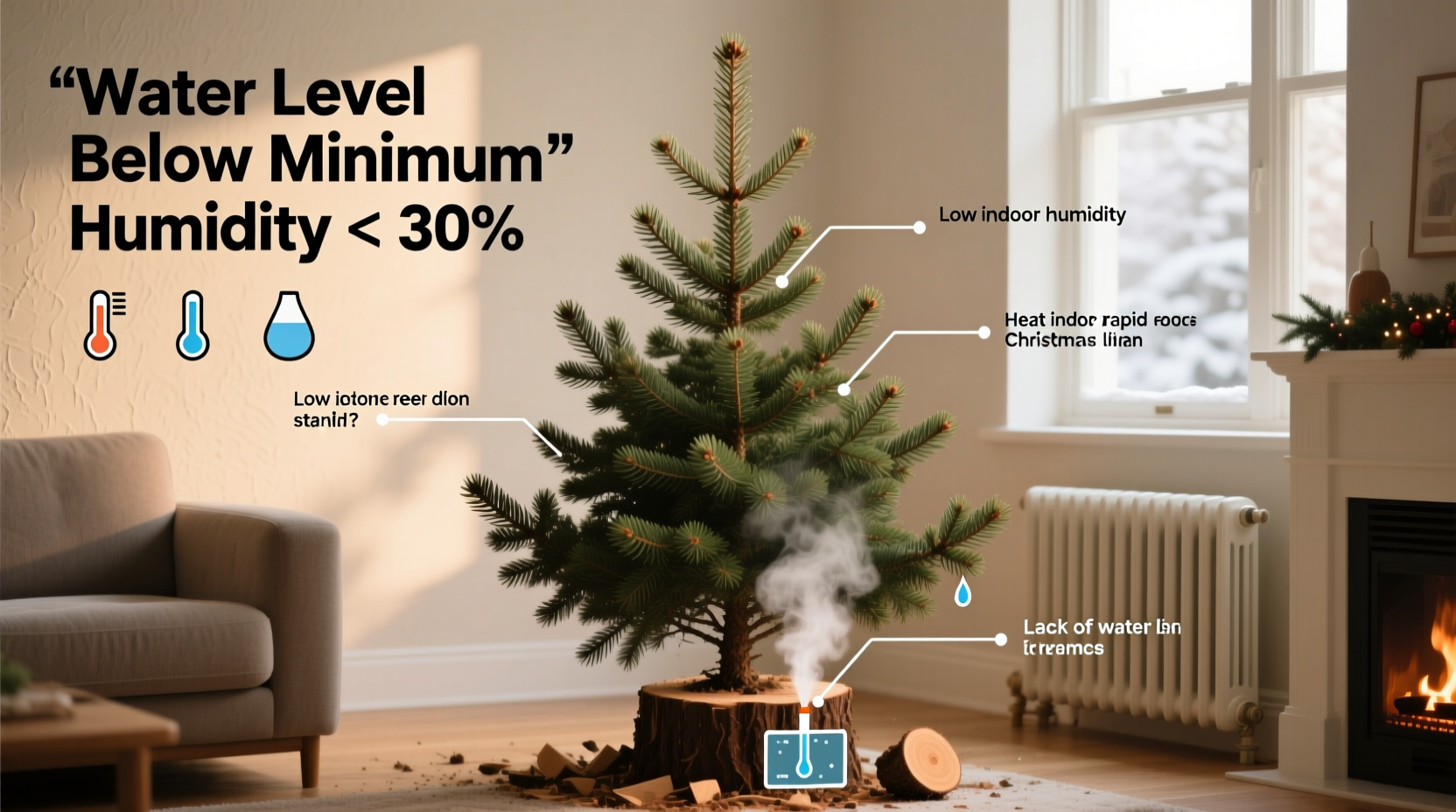
Once a Christmas tree is cut, it no longer receives water from roots. However, it remains a living organism for several weeks, continuing to transpire—losing moisture through its needles—especially in warm indoor environments. If water uptake isn’t maximized immediately after cutting, the exposed trunk end seals over with sap, forming a barrier that prevents future absorption. This process, known as “sap sealing,” is one of the primary reasons trees fail to rehydrate once indoors.
Species also play a role. Some varieties like Fraser fir and Balsam fir retain moisture better than others such as Colorado blue spruce or Scotch pine. But even drought-resistant types will dry out rapidly under poor conditions. Indoor heating systems, low humidity, and delayed watering compound the problem, turning what should be a month-long display into a week-long disappointment.
Common Mistakes That Accelerate Drying
Even with good intentions, everyday decisions can sabotage a tree’s longevity. These errors often go unnoticed until it’s too late.
- Buying a tree too far in advance: Storing a cut tree in a garage or unheated porch without water leads to early dehydration. Every hour out of water reduces its lifespan.
- Using an undersized water reservoir: Many stands hold less than a quart of water, but a healthy tree can drink over a gallon per day during peak transpiration.
- Placing the tree near heat sources: Radiators, fireplaces, HVAC vents, and even clusters of incandescent lights increase ambient temperature and drying effect.
- Delaying setup and watering: Waiting more than 4–6 hours after purchase to place the tree in water allows sap to seal the trunk base.
- Skipping the fresh cut: Pre-cut trees sold on lots may have been harvested weeks earlier. Without a new cut, they cannot absorb water effectively.
“Most tree drying issues stem from one thing: inadequate water uptake. A tree that can’t drink won’t last, no matter how cool your home is.” — Dr. Laura Simmons, Horticulture Specialist, University of Vermont Extension
Step-by-Step Guide to Keeping Your Tree Fresh
Follow this timeline to ensure your tree stays hydrated and vibrant throughout the holiday season.
- Day 1: Purchase and Prepare
Buy your tree as close to setup day as possible. If storing temporarily, keep it outside in a shaded, upright position with the base submerged in a bucket of water. Avoid stacking or laying flat. - Immediate Action: Make a Fresh Cut
Before placing the tree in its stand, use a handsaw to remove 1–2 inches from the base. Do this within hours of setup. Angled cuts are not recommended—they reduce surface contact with water. - Choose the Right Stand
Select a stand that holds at least one quart of water per inch of trunk diameter. For most trees, this means a minimum 1-gallon capacity. Test it by filling with water before inserting the tree. - Initial Watering
Fill the stand completely. Check water levels every 4–6 hours for the first 48 hours. Most trees absorb the most water in the first two days. - Ongoing Maintenance (Daily)
Check water levels twice daily. Never let the reservoir run dry. Refill with plain tap water—no additives needed. Remove fallen needles regularly to prevent bacterial growth in the water. - Environmental Control
Keep the tree away from heat sources, direct sunlight, and drafty areas. Use LED lights, which emit less heat than incandescent bulbs. Consider using a humidifier nearby to combat dry winter air. - Final Days
Monitor needle flexibility. When more than 10% of needles snap easily when bent, it’s time to remove the tree. Do not wait until it becomes a fire hazard.
Do’s and Don’ts: Tree Care Comparison Table
| Do | Don’t |
|---|---|
| Make a fresh 1-inch cut before placing in stand | Use a pre-cut tree without recutting the base |
| Use a stand with a large water capacity (≥1 gallon) | Use a small decorative stand that can't hold enough water |
| Place tree in a cool room away from heat sources | Set up near radiators, fireplaces, or sunny windows |
| Refill water daily—twice if needed | Assume weekly watering is sufficient |
| Use energy-efficient LED lights | String multiple strands of hot-burning incandescent bulbs |
| Add plain water only—no bleach, aspirin, or commercial mixes | Pour in home remedies that lack scientific backing |
Real Example: The Thompson Family’s Tree Turnaround
The Thompsons in Columbus, Ohio, had grown skeptical of real trees. For three years running, their Fraser fir turned brown by December 20th, despite careful decoration and placement. In 2023, they decided to troubleshoot. They switched from a small metal stand (holding 1.5 quarts) to a sturdy plastic reservoir model rated for 1.3 gallons. On arrival, they waited only 30 minutes before making a fresh cut and setting the tree in water. They moved it from beside the fireplace to a cooler corner of the living room and replaced old incandescent lights with LEDs.
The results were dramatic. The tree remained supple and aromatic through January 5th. Daily water checks showed consistent intake of ¾ to 1 gallon per day for the first week. By New Year’s Eve, only minimal needle drop occurred. “We finally figured out it wasn’t the tree—it was how we were treating it,” said homeowner Megan Thompson. “Now it feels like a real part of the season, not just a countdown to cleanup.”
What About Additives? Debunking Myths
Many people turn to DIY solutions—adding sugar, aspirin, soda, bleach, or commercial tree preservatives—to extend freshness. However, research from agricultural universities consistently shows these offer little to no benefit over plain water.
A study conducted by the Christmas Tree Research Center at North Carolina State University tested multiple additives across various species. Results showed no significant difference in needle retention or water uptake between trees given plain water and those given chemical mixtures. In some cases, additives promoted bacterial growth in the stand, blocking water absorption.
The consensus among experts is clear: clean water, frequent monitoring, and proper environmental control are the only proven methods for prolonging tree life.
Checklist: Ensuring a Long-Lasting Tree
Use this checklist before, during, and after setup to maximize your tree’s freshness.
- ☐ Buy the tree no more than 3–5 days before display
- ☐ Store upright with base in water if not setting up immediately
- ☐ Recut at least 1 inch from the trunk base before setup
- ☐ Use a stand holding ≥1 gallon of water
- ☐ Fill stand immediately and check water every 6 hours for first 48 hours
- ☐ Place away from heat sources, vents, and direct sun
- ☐ Use LED holiday lights to reduce heat exposure
- ☐ Refill water daily—never let it run dry
- ☐ Remove tree when needles become brittle or excessive drop occurs
- ☐ Recycle properly through local curbside pickup or drop-off programs
Frequently Asked Questions
How long should a real Christmas tree last indoors?
A well-cared-for tree can remain fresh for 4 to 5 weeks. Key factors include immediate watering after cutting, adequate reservoir size, cool room temperature, and daily maintenance. Species like Fraser fir, Noble fir, and Balsam fir tend to last longest.
Can I revive a dried-out tree by adding more water?
No. Once a tree’s trunk has sealed and needles have begun to desiccate, rehydration is impossible. Water must be available continuously from the moment of setup. If the reservoir runs dry for more than a few hours, the tree may not recover.
Is it safe to leave the tree up past New Year’s?
Safety depends on condition, not date. If the tree remains green, flexible, and well-watered, it can stay up. However, dry trees pose a fire risk. The National Fire Protection Association recommends removing the tree when it shows signs of drying—typically within 3–4 weeks of setup.
Conclusion: A Fresh Tree Is Within Reach
Your indoor Christmas tree doesn’t have to be a fleeting decoration. With informed choices and consistent care, it can thrive as a centerpiece of holiday warmth and tradition. The key lies not in magic formulas or expensive products, but in understanding the simple biological needs of a cut evergreen: immediate hydration, continuous water access, and a stable, cool environment.
Start with a fresh cut, choose the right stand, monitor water diligently, and avoid heat traps. These steps, grounded in horticultural science and real-world testing, transform the typical drying disaster into a lasting seasonal joy. This year, give your tree the chance it deserves to shine through the holidays.




 浙公网安备
33010002000092号
浙公网安备
33010002000092号 浙B2-20120091-4
Comments
No comments yet. Why don't you start the discussion?