
Using a virtual private network (VPN) is one of the most effective ways to protect your online privacy, bypass geo-restrictions, and secure your data on public networks. However, many users report a significant drop in internet speed after connecting to a VPN—sometimes cutting their bandwidth in half or more. This slowdown can disrupt streaming, gaming, video calls, and general browsing. The question isn’t whether it happens, but why—and more importantly, what you can do about it.
The truth is, some speed loss with a VPN is expected. Encryption, routing detours, and server load all contribute to reduced performance. But when the drop becomes drastic, it’s worth understanding the underlying causes and identifying solutions that restore usability without compromising security.
How a VPN Affects Internet Speed: The Core Mechanisms
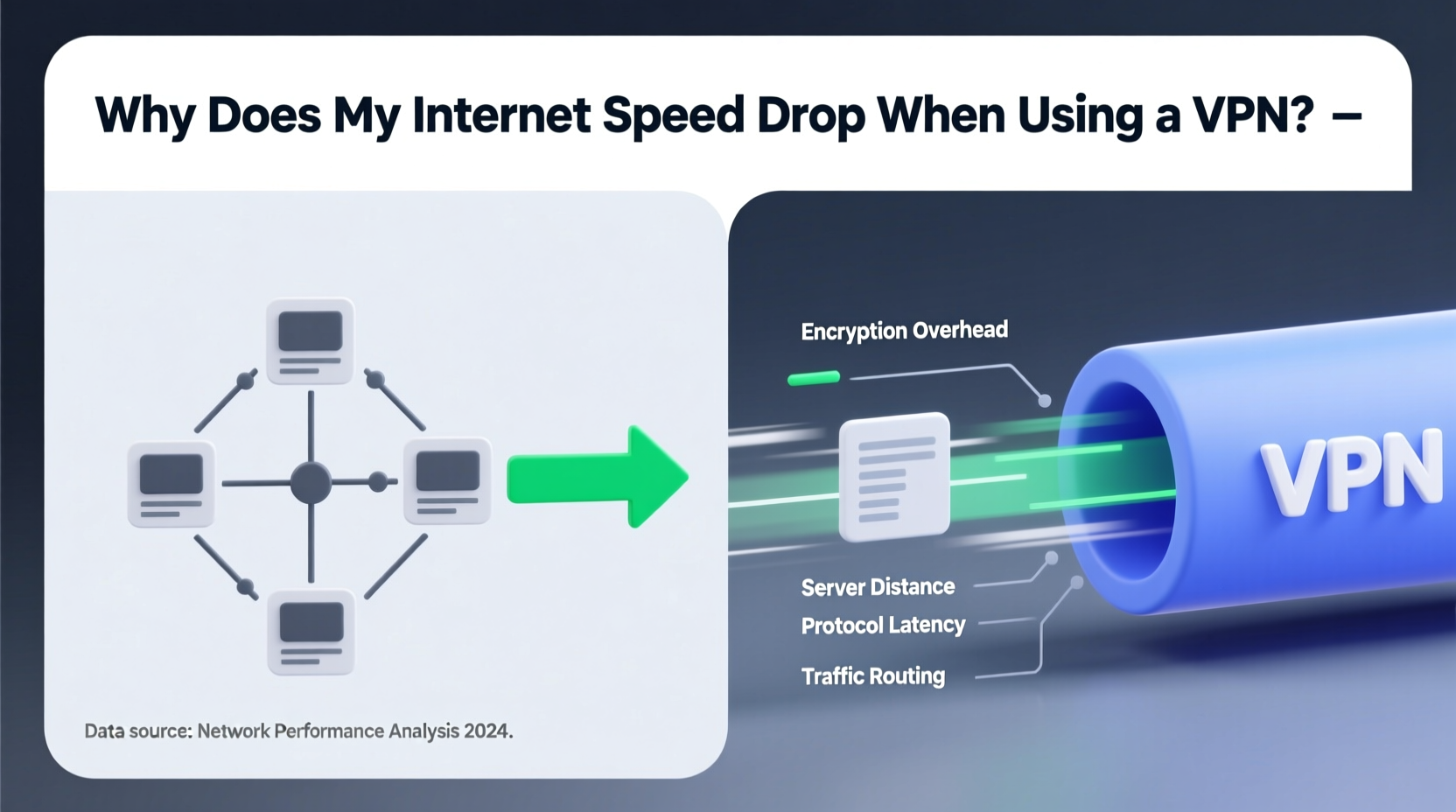
A VPN works by encrypting your internet traffic and routing it through an intermediary server before reaching its final destination. This rerouting adds several layers between your device and the websites or services you access. Each layer introduces latency and potential bottlenecks:
- Encryption Overhead: All data sent through a VPN is encrypted for security. While essential, this process consumes processing power on both your device and the server, slowing down transmission.
- Server Distance: The farther the VPN server is from your physical location, the longer it takes for data packets to travel back and forth—a phenomenon known as latency or ping time.
- Server Load: Popular servers often serve thousands of users simultaneously. High demand leads to congestion, just like rush-hour traffic on a highway.
- Rerouting Path: Instead of taking the most direct route, your data may travel across multiple continents before exiting the VPN server, increasing transit time.
According to cybersecurity expert Dr. Lena Patel, “A well-configured VPN should reduce speeds by no more than 10–20% under normal conditions. Anything beyond that usually indicates suboptimal configuration or infrastructure limitations.”
“Encryption is non-negotiable for privacy, but poor implementation can cripple performance. It's about balance.” — Dr. Lena Patel, Cybersecurity Researcher at MITRE Institute
Common Causes of Drastic Speed Drops
While minor speed reduction is normal, certain factors can cause severe degradation. Identifying these is key to troubleshooting.
1. Suboptimal Server Selection
Connecting to a distant or overloaded server significantly increases latency and reduces throughput. For example, a user in Sydney connecting to a server in London will experience higher ping and slower download speeds than if they chose a server in Singapore.
2. Weak Encryption Protocols or Misconfigured Settings
Some older protocols like OpenVPN over TCP add more overhead than necessary. Meanwhile, newer options such as WireGuard are designed for speed and efficiency, often delivering better performance even under heavy encryption.
3. ISP Throttling or Network Interference
Some Internet Service Providers (ISPs) throttle bandwidth for encrypted traffic or detect and deprioritize VPN usage. Although less common today, this practice still occurs in regions with strict data monitoring policies.
4. Device Limitations
Older routers, smartphones, or laptops may struggle with the computational demands of modern encryption standards. CPUs without hardware acceleration for AES encryption will see noticeable slowdowns during high-bandwidth tasks.
5. Wi-Fi Congestion or Poor Signal Strength
If you're already on a weak wireless connection, adding a VPN into the mix amplifies existing issues. Bandwidth caps, interference from other devices, and outdated Wi-Fi standards (like 802.11n) compound the problem.
Comparative Impact of Different Factors on Speed Loss
| Factor | Average Speed Reduction | Solution Difficulty |
|---|---|---|
| Long-distance server (e.g., US to Asia) | 40–60% | Easy (switch server) |
| Overloaded server | 30–50% | Easy (change server) |
| Outdated protocol (OpenVPN TCP) | 25–40% | Moderate (app settings) |
| Poor local Wi-Fi signal | 20–70% | Moderate (network upgrade) |
| Device CPU bottleneck | 15–35% | Hard (hardware upgrade) |
Step-by-Step Guide to Improve Your VPN Speed
You don’t have to accept slow speeds as inevitable. Follow this structured approach to diagnose and resolve performance issues:
- Test baseline speed: Run a speed test (using sites like fast.com or speedtest.net) without the VPN active. Note your download, upload, and ping values.
- Connect to the nearest server: Choose a server geographically close to your location. Most VPN apps include a “Recommended” or “Fastest Server” option—use it.
- Switch to a lighter protocol: In your app settings, change from OpenVPN (TCP) to UDP or enable WireGuard if available. These reduce handshake delays and packet overhead.
- Restart your router and device: Temporary glitches or memory leaks can degrade performance. A reboot clears cached processes and resets connections.
- Check for background applications: Cloud sync tools, software updates, and streaming apps consume bandwidth silently. Close unnecessary programs before testing again.
- Run another speed test: Compare results with your baseline. If improvement is minimal, proceed to next steps.
- Try different servers manually: Test 3–5 servers in the same region. Performance varies even within the same country due to load balancing and peering agreements.
- Upgrade your plan or provider: Some free or budget providers limit bandwidth or use overcrowded infrastructure. Premium services often offer dedicated high-speed servers.
Real-World Example: Streaming Frustration Resolved
Consider Mark, a remote worker in Toronto who uses a popular free-tier VPN to access international news platforms. He noticed his Netflix streams constantly buffering, dropping from 4K to 480p despite having a 100 Mbps home connection.
After running diagnostics, he discovered his traffic was routed through a congested server in Germany. By switching to a nearby Canadian server provided by a paid subscription tier and enabling the WireGuard protocol, his effective speed improved from 18 Mbps to 76 Mbps—enough for smooth 4K playback.
This case illustrates how simple adjustments—server proximity and protocol choice—can yield dramatic improvements, even without upgrading internet service.
Actionable Tips and Best Practices
- Use wired connections: Ethernet eliminates Wi-Fi variability and provides stable throughput, especially important when encryption overhead is present.
- Update your apps and firmware: Outdated VPN clients may lack optimizations found in newer versions. Keep your OS, router firmware, and app updated.
- Monitor server status: Many providers publish real-time server load dashboards. Avoid red-flagged servers during peak hours.
- Limit simultaneous devices: Running multiple devices on one VPN connection splits bandwidth and increases strain on your home network.
Do’s and Don’ts When Troubleshooting VPN Speed
| Do | Don't |
|---|---|
| Choose servers near your location | Select distant servers unless required for content access |
| Use modern protocols like WireGuard | Stick with outdated OpenVPN TCP unnecessarily |
| Test speed across multiple times of day | Assume the issue is constant without logging variations |
| Reboot equipment regularly | Ignore router overheating or outdated firmware |
| Upgrade to a premium provider if needed | Expect free services to deliver consistent high speeds |
Frequently Asked Questions
Is it normal for a VPN to slow down my internet?
Yes, some slowdown is normal—typically 10–20% due to encryption and rerouting. However, drops exceeding 50% suggest avoidable issues like poor server choice, outdated protocols, or network congestion.
Can I make my VPN faster without compromising security?
Absolutely. Modern protocols like WireGuard offer both strong encryption and high speed. Additionally, choosing closer servers, using wired connections, and closing background apps improve performance safely.
Why does my speed vary so much between different servers?
Server performance depends on physical distance, number of connected users, quality of internet backbone, and peering arrangements with major networks. Even within the same city, two servers can perform very differently based on load and optimization.
Conclusion: Reclaim Speed Without Sacrificing Security
Dramatic internet speed drops when using a VPN are frustrating but rarely unavoidable. The root causes—distance, protocol inefficiency, server load, and local network conditions—are largely diagnosable and fixable. With the right combination of server selection, updated technology, and smart configuration, you can enjoy both robust privacy and reliable performance.
Start by measuring your baseline speed, experiment with nearby servers and modern protocols, and consider upgrading your service if persistent bottlenecks remain. Remember, a good VPN shouldn’t force you to choose between safety and speed—it should provide both.




 浙公网安备
33010002000092号
浙公网安备
33010002000092号 浙B2-20120091-4
Comments
No comments yet. Why don't you start the discussion?