
If you’ve noticed a clicking, popping, or grinding sensation in your jaw while chewing, speaking, or even opening your mouth wide, you’re not alone. Millions of people experience these symptoms, often without understanding the underlying cause. While occasional jaw noise may seem harmless, persistent clicking can signal temporomandibular joint (TMJ) dysfunction—a condition that affects jaw movement, facial comfort, and overall quality of life. Understanding the mechanics behind jaw clicking and the root causes of TMJ symptoms is essential for timely intervention and effective management.
Understanding the Temporomandibular Joint (TMJ)
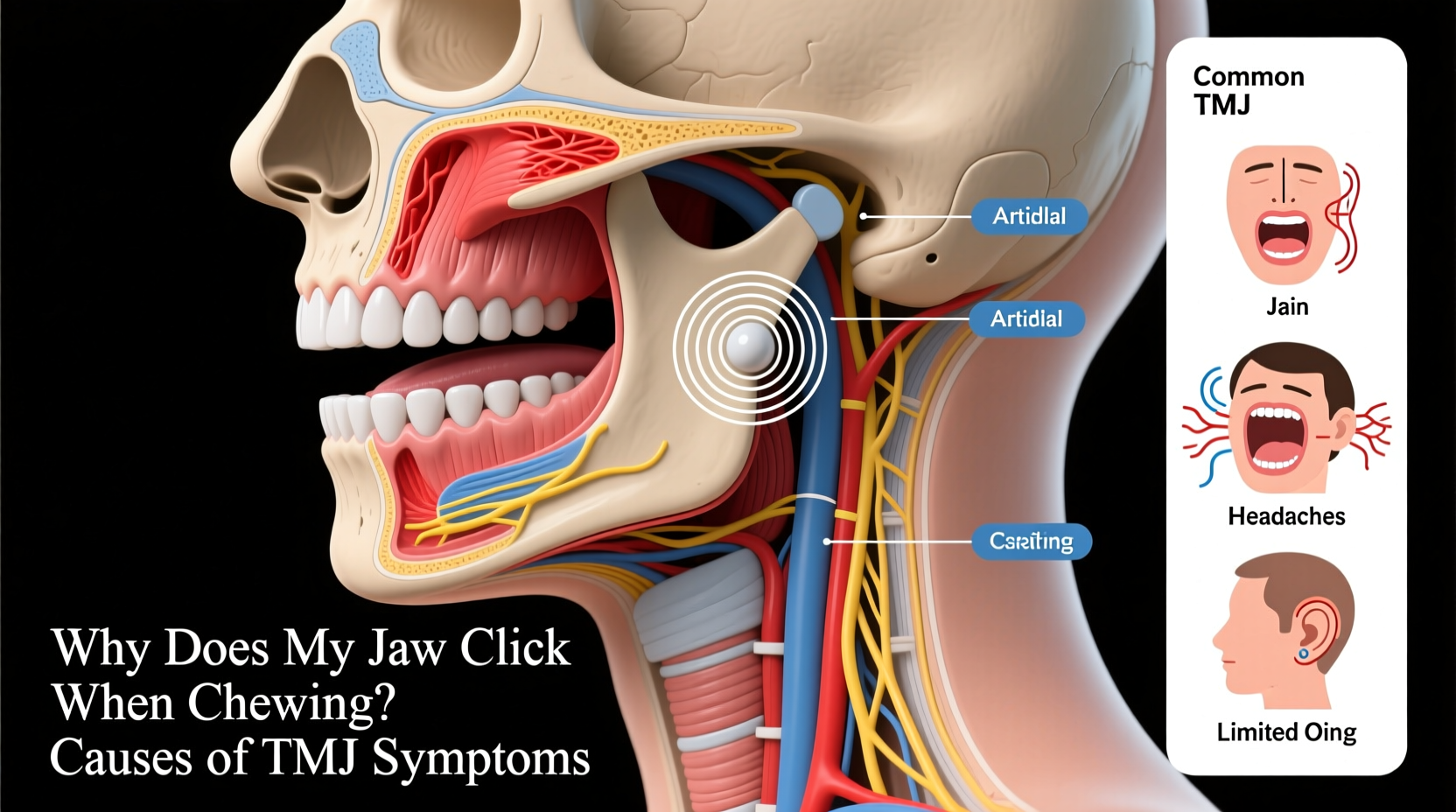
The temporomandibular joint connects your jawbone to your skull, just in front of each ear. These paired joints are among the most complex in the human body, allowing for hinge-like rotation and sliding motions that enable talking, chewing, yawning, and swallowing. A small disc of cartilage sits between the bones of the joint, acting as a cushion and facilitating smooth movement.
When functioning properly, the TMJ operates silently and efficiently. However, if the disc becomes displaced, inflamed, or damaged—or if surrounding muscles and ligaments are strained—the joint may produce audible sounds like clicking, popping, or grating. These noises often accompany discomfort, limited jaw motion, or a feeling of misalignment.
“Jaw clicking isn’t always a sign of serious damage, but it’s a warning signal your body sends when the joint mechanics are off.” — Dr. Lena Patel, Orofacial Pain Specialist
Common Causes of Jaw Clicking and TMJ Symptoms
Jaw clicking during chewing is rarely caused by a single factor. Instead, it typically results from a combination of structural, behavioral, and physiological influences. Below are the most frequent contributors:
- Disc displacement: The articular disc within the TMJ can shift out of place due to injury, repetitive strain, or degenerative changes. When this occurs, the jaw may click as the disc slips back into position during movement.
- Muscle tension and bruxism: Clenching or grinding teeth—especially at night—places excessive pressure on the TMJ and surrounding muscles. This chronic strain can lead to inflammation, muscle fatigue, and joint noise.
- Arthritis: Osteoarthritis or rheumatoid arthritis can degrade the joint surfaces, leading to stiffness, pain, and crepitus (a crackling sound).
- Trauma: A direct blow to the jaw, whiplash, or dental procedures requiring prolonged mouth opening can disrupt joint alignment.
- Poor posture: Forward head posture, common with prolonged computer or phone use, alters jaw positioning and increases muscle tension in the neck and face.
- Stress: Emotional stress triggers unconscious jaw clenching and shallow breathing, both of which contribute to TMJ irritation.
Recognizing TMJ Disorder: Key Symptoms Beyond Clicking
While jaw clicking is a hallmark sign, TMJ disorders (often referred to as TMD) involve a spectrum of symptoms that may worsen over time if ignored. Common indicators include:
- Pain or tenderness in the jaw, especially near the joint
- Aching pain around the ear during chewing or speaking
- Difficulty or discomfort while opening the mouth fully
- Locking of the jaw in an open or closed position
- Headaches, particularly in the temples
- Neck and shoulder pain
- Radiating facial pain or dizziness in severe cases
It’s important to distinguish between occasional, benign joint sounds and persistent symptoms that interfere with daily function. If clicking is accompanied by pain, restricted motion, or worsening frequency, professional evaluation is recommended.
Diagnosis and Medical Evaluation
No two TMJ cases are identical, so diagnosis requires a thorough assessment. Dentists, oral surgeons, or orofacial pain specialists typically begin with a clinical examination, evaluating jaw range of motion, muscle sensitivity, and joint sounds. Imaging tools such as panoramic X-rays, MRI, or CT scans may be used to visualize soft tissue damage or structural abnormalities.
In some cases, patients are referred to physical therapists specializing in craniofacial rehabilitation or to sleep specialists if nocturnal bruxism is suspected. Early diagnosis improves outcomes by preventing progressive joint deterioration and chronic muscle adaptation.
Do’s and Don’ts for Managing TMJ Symptoms
| Do’s | Don’ts |
|---|---|
| Eat soft foods to reduce jaw strain | Chew gum or eat tough, chewy foods |
| Apply warm compresses to relax muscles | Rest your chin on your hand frequently |
| Practice gentle jaw stretches | Open your mouth too wide (e.g., yawning, biting large sandwiches) |
| Use a prescribed night guard if grinding is present | Ignore signs of increasing pain or locking |
| Manage stress through mindfulness or therapy | Sleep on your stomach, which strains the neck and jaw |
Effective Treatment Options and Relief Strategies
Treatment for TMJ-related jaw clicking depends on the underlying cause and severity. Most cases respond well to conservative, non-invasive approaches. Here’s a step-by-step guide to managing symptoms effectively:
- Modify habits: Avoid chewing gum, hard candies, and large bites. Cut food into small pieces and chew slowly using both sides of the mouth.
- Apply heat or ice: Use a warm towel for 15 minutes twice daily to relax tight muscles. Ice packs can help reduce acute inflammation after flare-ups.
- Practice jaw rest: Limit unnecessary jaw movements. Speak softly and avoid singing, shouting, or yawning widely.
- Use a custom night guard: A dentist-fabricated occlusal splint redistributes bite forces and prevents tooth wear from grinding.
- Engage in physical therapy: Targeted exercises improve joint mobility and strengthen supporting muscles. A therapist may also use ultrasound or manual manipulation techniques.
- Address stress and sleep: Cognitive behavioral therapy (CBT), meditation, or biofeedback training can reduce subconscious clenching.
- Consider medical interventions: In persistent cases, corticosteroid injections, Botox for muscle relaxation, or minimally invasive arthroscopy may be recommended.
Real-Life Example: Sarah’s Journey with TMJ
Sarah, a 34-year-old graphic designer, began noticing jaw clicking six months after switching to a remote job. Long hours hunched over her laptop led to poor posture and frequent headaches. At first, she dismissed the occasional pop when eating apples, but soon the clicking became constant and painful. One morning, her jaw locked halfway open while yawning.
After visiting a TMJ specialist, Sarah was diagnosed with anterior disc displacement and muscle hyperactivity due to stress-induced bruxism. Her treatment plan included a custom night guard, ergonomic workstation adjustments, and weekly physical therapy sessions focusing on neck and jaw alignment. Within three months, her clicking reduced significantly, and she regained full jaw mobility. “I didn’t realize how much my posture and stress were affecting my jaw,” she said. “Fixing those made all the difference.”
Prevention Checklist: Reduce Your Risk of TMJ Issues
Even if you’re currently symptom-free, adopting preventive habits can protect your jaw health. Follow this checklist to minimize future risks:
- ✅ Maintain good posture, especially while working at a desk
- ✅ Avoid resting your chin on your hand or cradling your phone between shoulder and ear
- ✅ Stay hydrated—dehydration can increase muscle tension
- ✅ Practice mindful jaw awareness throughout the day
- ✅ Get regular dental checkups to monitor bite alignment
- ✅ Address teeth grinding early with a dentist’s guidance
- ✅ Incorporate stress-reducing routines like yoga, walking, or journaling
“Early intervention is key. Many patients wait years before seeking help, allowing minor issues to become chronic conditions.” — Dr. Marcus Tran, TMJ Rehabilitation Specialist
Frequently Asked Questions
Is jaw clicking always a sign of TMJ disorder?
Not necessarily. Occasional, painless clicking without restriction in movement may be benign and require no treatment. However, if the clicking becomes frequent, painful, or limits jaw function, it likely indicates TMJ dysfunction and should be evaluated.
Can anxiety really cause jaw problems?
Yes. Anxiety often leads to increased muscle tension, including involuntary clenching of the jaw muscles. Over time, this contributes to TMJ strain, inflammation, and joint noise. Managing stress through therapy, breathing exercises, or medication can significantly reduce symptoms.
Will jaw clicking go away on its own?
In mild cases related to temporary strain or minor injury, symptoms may resolve with rest and self-care. However, persistent clicking usually indicates an ongoing mechanical issue that won’t correct itself without intervention. Ignoring it can lead to worsening pain and joint damage.
Take Control of Your Jaw Health
Your jaw plays a vital role in communication, nutrition, and comfort. Clicking shouldn’t be dismissed as normal aging or a minor quirk—it’s a signal that something in your jaw mechanics needs attention. Whether the cause is muscular, structural, or lifestyle-related, effective solutions exist. By recognizing early signs, making targeted changes, and seeking expert care when needed, you can restore smooth, silent jaw function and prevent long-term complications.




 浙公网安备
33010002000092号
浙公网安备
33010002000092号 浙B2-20120091-4
Comments
No comments yet. Why don't you start the discussion?