
Many people notice a clicking or popping sound in their jaw while chewing, speaking, or opening their mouth wide. While occasional noise may not be alarming, persistent or painful clicking can signal an underlying issue. The temporomandibular joint (TMJ), which connects your jawbone to your skull, is one of the most complex joints in the body—involved in everything from eating to talking. When it doesn’t function smoothly, symptoms like clicking, pain, or stiffness can arise. Understanding the root causes and knowing how to respond can help prevent long-term complications.
Understanding the Temporomandibular Joint (TMJ)
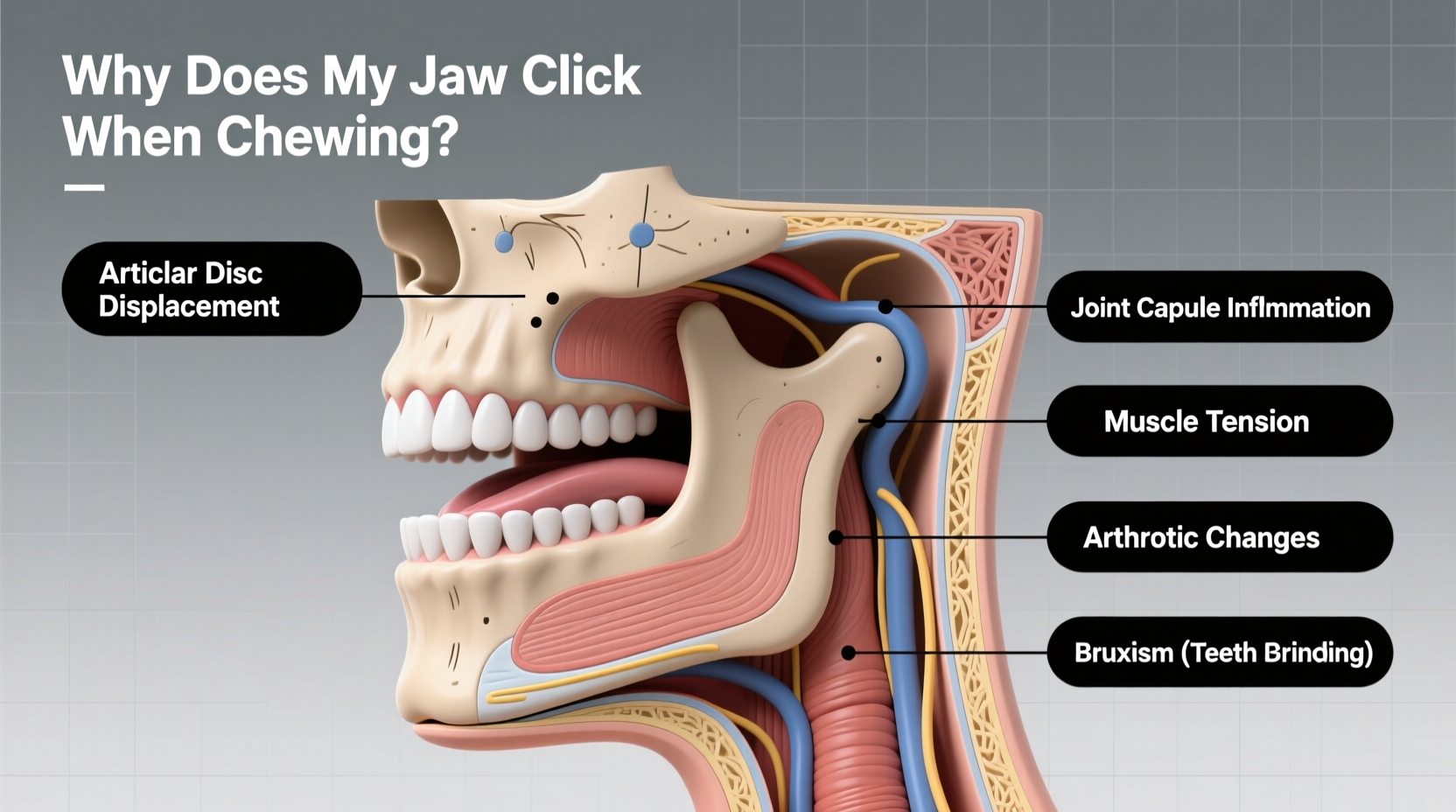
The TMJ acts like a sliding hinge, allowing your jaw to move up and down, side to side, and forward and backward. It’s supported by muscles, ligaments, and a small disc that cushions movement between the jawbone and skull. This disc normally sits perfectly between the bones, absorbing pressure and ensuring smooth motion. When this alignment is disrupted—due to injury, stress, or overuse—the joint may make audible sounds such as clicking, popping, or grating.
Clicking occurs when the disc slips out of place and then snaps back during jaw movement. In mild cases, this may cause no pain. However, if the misalignment worsens, it can lead to discomfort, limited jaw mobility, headaches, or even locking of the jaw.
“Over 10 million Americans experience TMJ-related symptoms at some point. Clicking is often the first sign patients report before more serious dysfunction develops.” — Dr. Alan Weiss, Orofacial Pain Specialist
Common Causes of Jaw Clicking During Chewing
Jaw clicking isn't a condition in itself but a symptom of mechanical changes within the joint. Several factors can contribute to this phenomenon:
1. Temporomandibular Joint Disorder (TMD)
TMD refers to a group of conditions affecting the TMJ and surrounding muscles. One of the hallmark signs is clicking or popping during jaw movement. TMD can result from disc displacement, arthritis, or muscle tension. Over time, inflammation and wear can degrade joint function, making symptoms more frequent and intense.
2. Bruxism (Teeth Grinding or Clenching)
Chronic clenching or grinding—often occurring during sleep—places excessive strain on the TMJ. This repetitive force can displace the joint disc, leading to clicking. Many people with bruxism are unaware they do it until a partner hears the grinding or a dentist notices tooth wear.
3. Poor Posture and Neck Alignment
Forward head posture, commonly seen in people who spend long hours at a desk, alters the position of the jaw. This misalignment increases pressure on the TMJ and can trigger joint noises. The cervical spine and jaw work in tandem; poor neck posture often correlates with TMJ dysfunction.
4. Arthritis in the Jaw Joint
Osteoarthritis or rheumatoid arthritis can affect the TMJ just like other joints. Cartilage deterioration leads to rougher joint surfaces, causing grinding or clicking sounds. Arthritis-related jaw issues are more common in older adults but can occur earlier in inflammatory conditions.
5. Trauma or Injury
A direct blow to the jaw, whiplash, or even dental procedures requiring prolonged mouth opening can damage the TMJ. Such injuries may dislocate the disc or stretch supporting ligaments, resulting in post-traumatic clicking.
6. Stress and Muscle Tension
Emotional stress triggers unconscious jaw clenching and tightening of facial muscles. This constant tension reduces the joint’s range of motion and may displace the disc temporarily, causing intermittent clicking. Stress is a major exacerbating factor for many TMJ patients.
When to Be Concerned: Red Flags
Not all jaw clicking requires immediate medical attention. However, certain symptoms indicate the need for professional evaluation:
- Pain during chewing or speaking
- Jaw locking (inability to open or close the mouth fully)
- Frequent headaches or earaches near the jaw
- Swelling around the joint area
- Symptoms lasting more than two weeks
- Noticeable changes in bite alignment
If clicking progresses from occasional to daily occurrence or begins interfering with daily activities, it's time to consult a dentist or TMJ specialist.
Practical Tips to Reduce Jaw Clicking
In many cases, early intervention can prevent minor joint issues from becoming chronic. These evidence-based strategies can help reduce or eliminate jaw clicking:
- Practice Gentle Jaw Exercises: Simple movements like slow mouth opening and closing, lateral jaw glides, and resisted protrusion can improve joint mobility and strengthen supporting muscles.
- Avoid Excessive Jaw Strain: Limit gum chewing, hard foods (like nuts or raw carrots), and wide yawning. Use both hands to support your jaw when sneezing or laughing widely.
- Apply Warm Compresses: Heat helps relax tight muscles and increase blood flow. Apply a warm towel to the joint area for 10–15 minutes, 2–3 times daily.
- Improve Posture: Keep your head aligned over your shoulders. Adjust your computer monitor to eye level and use ergonomic chairs to support spinal alignment.
- Manage Stress: Incorporate relaxation techniques such as deep breathing, meditation, or yoga to reduce muscle tension.
- Use a Night Guard: Custom-fitted oral appliances from a dentist can prevent teeth grinding and reduce pressure on the TMJ during sleep.
Step-by-Step Guide to Self-Care for Jaw Clicking
Follow this five-day plan to assess and begin managing your symptoms:
- Day 1: Monitor Symptoms
Keep a journal noting when the clicking occurs, any associated pain, diet, stress levels, and habits like clenching or gum chewing. - Day 2: Modify Diet and Habits
Switch to soft foods (soups, mashed potatoes, yogurt). Avoid chewy or tough items. Stop chewing gum and biting nails or pens. - Day 3: Begin Heat Therapy and Stretching
Apply a warm compress twice daily. Perform gentle jaw stretches: open slowly until slight resistance, hold 5 seconds, repeat 5 times. - Day 4: Evaluate Posture and Ergonomics
Check your workspace setup. Ensure your screen is at eye level, elbows bent at 90 degrees, and feet flat on the floor. - Day 5: Schedule a Dental Check-Up
Visit your dentist to rule out bruxism, malocclusion, or other dental causes. Discuss whether a night guard might help.
Do’s and Don’ts: Managing Jaw Health
| Do’s | Don’ts |
|---|---|
| Eat soft, easy-to-chew foods | Chew gum or eat hard/crunchy snacks |
| Use heat therapy for muscle relaxation | Apply ice unless there’s acute swelling |
| Practice good posture throughout the day | Crane your neck forward when using devices |
| Stay hydrated to maintain joint lubrication | Open your mouth too wide (e.g., large bites, yawns) |
| Seek professional care if pain persists | Ignore worsening symptoms or jaw locking |
Mini Case Study: Sarah’s Experience with Jaw Clicking
Sarah, a 34-year-old graphic designer, began noticing a faint clicking in her right jaw while eating apples. At first, she ignored it—until the sound became louder and was accompanied by morning jaw stiffness. After weeks of working late with poor posture and stress-induced teeth clenching, the clicking turned into consistent discomfort.
She visited her dentist, who diagnosed early-stage TMD linked to bruxism. Sarah was fitted with a custom night guard and advised on posture correction and jaw exercises. Within six weeks of consistent self-care and reduced screen time, her clicking decreased significantly. By addressing the root causes—not just the symptom—Sarah regained comfortable jaw function.
Expert Insight: What Dentists Recommend
“The key to managing jaw clicking is early awareness. Many patients wait until pain becomes severe. But simple lifestyle adjustments and timely dental intervention can halt progression and restore joint health.” — Dr. Lena Torres, TMJ and Occlusion Specialist
FAQ: Common Questions About Jaw Clicking
Is jaw clicking dangerous?
Occasional, pain-free clicking is usually harmless. However, persistent or painful clicking may indicate developing TMJ dysfunction and should be evaluated by a professional.
Can a dentist fix jaw clicking?
Yes. Dentists trained in TMJ disorders can diagnose the cause and recommend treatments such as oral splints, bite correction, physical therapy referrals, or coordination with specialists for advanced cases.
Will jaw clicking go away on its own?
In some cases, yes—especially if caused by temporary strain or minor trauma. However, without addressing underlying habits like clenching or poor posture, symptoms often return or worsen over time.
Conclusion: Take Action Before It Gets Worse
Jaw clicking when chewing is more than just a quirky sound—it’s a signal from your body that something in your jaw mechanics needs attention. Whether due to stress, injury, or habitual strain, ignoring the symptom can lead to chronic pain, limited movement, or degenerative joint changes. The good news is that most causes are manageable with early intervention, proper care, and lifestyle adjustments.
You don’t have to live with discomfort or worry about what the clicking means. Start today by observing your habits, trying gentle relief methods, and consulting a dental professional if needed. Your jaw plays a vital role in daily life—give it the care it deserves.




 浙公网安备
33010002000092号
浙公网安备
33010002000092号 浙B2-20120091-4
Comments
No comments yet. Why don't you start the discussion?