
If you've noticed a clicking or popping sound every time you chew, speak, or yawn, you're not alone. Millions of people experience jaw noises that can range from harmless quirks to signs of a deeper issue involving the temporomandibular joint (TMJ). While occasional clicking may not be cause for concern, persistent discomfort, pain, or restricted movement warrants attention. Understanding the mechanics behind jaw clicking, recognizing associated symptoms, and knowing what relief options are available can make a significant difference in your daily comfort and long-term oral health.
Understanding the Temporomandibular Joint (TMJ)
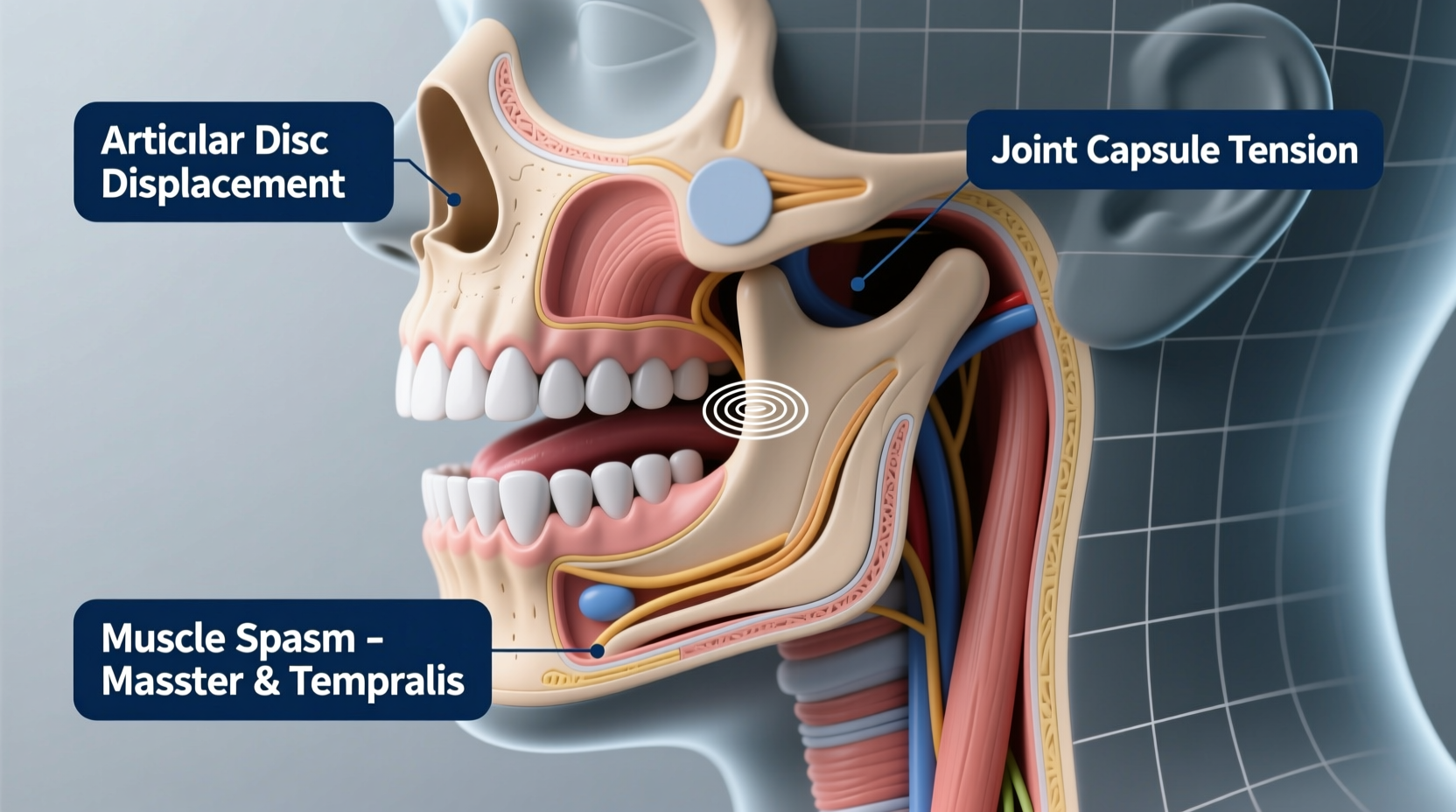
The temporomandibular joint connects your jawbone to your skull, just in front of each ear. It's one of the most complex joints in the body, allowing for multidirectional movement—up and down, side to side, and forward and back—so you can chew, talk, and yawn. The joint functions with the help of a small disc of cartilage that cushions the bones and ensures smooth motion.
When this disc becomes misaligned, inflamed, or damaged, it can lead to abnormal sounds like clicking, popping, or grinding. These noises often occur during jaw movement because the disc doesn’t glide properly between the bones. Over time, repetitive strain or trauma can worsen the condition, leading to what’s commonly referred to as temporomandibular joint disorder (TMD).
“More than 10 million Americans are affected by TMD at any given time, and jaw clicking is one of the earliest and most frequently reported symptoms.” — Dr. Alan Schwartz, Orofacial Pain Specialist
Common Causes of Jaw Clicking When Chewing
Jaw clicking isn’t random—it usually has an underlying mechanical or physiological cause. Identifying the root reason helps determine whether intervention is needed. Below are some of the most common contributors:
- Disc displacement: The articular disc within the TMJ can shift out of place, causing a pop or click as it snaps back during movement.
- Muscle tension: Stress-induced clenching or teeth grinding (bruxism) tightens the jaw muscles, increasing pressure on the joint.
- Arthritis: Osteoarthritis or rheumatoid arthritis can degrade the joint surfaces, leading to irregular motion and noise.
- Injury or trauma: A blow to the jaw or whiplash can damage the joint structure or displace the disc.
- Poor bite alignment: Misaligned teeth or jaw positioning can create uneven forces during chewing.
- Excessive gum chewing or nail biting: Repetitive motions strain the joint over time.
Recognizing TMJ Disorder Symptoms Beyond Clicking
While jaw clicking is a hallmark sign, it’s rarely the only symptom. Many people dismiss the noise until other issues arise. Being aware of the full spectrum of TMD symptoms allows for earlier detection and treatment.
| Symptom | Description | Frequency Indicator |
|---|---|---|
| Jaw pain or tenderness | Aching near the ear, jawline, or temples, especially after chewing | Daily or activity-triggered |
| Locking of the jaw | Inability to fully open or close the mouth temporarily | Episodic, often after prolonged talking |
| Headaches | Tension-type headaches originating from jaw muscle strain | Recurrent, often in mornings |
| Ear-related symptoms | Ringing (tinnitus), ear fullness, or pain without infection | Chronic, unexplained |
| Facial pain | Dull ache across cheeks or lower face | Worsens with stress or eating hard foods |
It’s important to note that not all jaw clicking leads to full-blown TMD. Some individuals have asymptomatic joint noises throughout life without pain or dysfunction. However, if clicking is paired with any of the above symptoms, particularly pain or limited motion, evaluation by a dental professional is recommended.
Effective Relief Strategies for TMJ-Related Jaw Clicking
Relief from TMJ symptoms often begins with conservative, non-invasive approaches. Most cases improve significantly with lifestyle adjustments and self-care. Only a small percentage require surgical intervention.
Step-by-Step Guide to Immediate and Long-Term Relief
- Modify your diet: Switch to soft foods like soups, yogurt, mashed potatoes, and smoothies to reduce strain on the joint.
- Apply heat and ice: Use a warm compress for 15 minutes to relax muscles, followed by ice if there’s swelling.
- Practice jaw rest: Avoid excessive talking, chewing gum, or biting nails. Keep your teeth slightly apart, not clenched.
- Manage stress: Engage in mindfulness, deep breathing, or yoga to reduce subconscious clenching.
- Use a night guard: Custom-fitted oral appliances prevent grinding and help reposition the jaw during sleep.
- Seek physical therapy: Specialized exercises can strengthen jaw muscles and improve alignment.
- Consult a specialist: If symptoms persist, see a dentist trained in TMD or an orofacial pain specialist.
“Early intervention with conservative therapies stops progression in over 80% of TMD cases. Patients who wait often develop chronic pain patterns that are harder to reverse.” — Dr. Lena Patel, Physical Therapist specializing in Craniofacial Disorders
Real-Life Example: Sarah’s Journey with Jaw Clicking
Sarah, a 34-year-old graphic designer, began noticing a distinct click in her right jaw while eating apples or yawning. At first, it didn’t hurt, so she ignored it. But over six months, the clicking grew louder and was soon accompanied by morning headaches and difficulty opening her mouth wide.
After researching her symptoms, she scheduled an appointment with a dentist who specialized in TMJ disorders. An examination revealed moderate disc displacement and evidence of nighttime bruxism. Sarah was fitted with a custom night guard and given jaw-stretching exercises. She also started attending weekly stress management sessions, as her job involved long hours and high pressure.
Within three months, her clicking reduced significantly, and the headaches disappeared. By focusing on both physical and emotional factors, Sarah regained normal jaw function without invasive treatment.
Do’s and Don’ts for Managing TMJ Symptoms
| Do’s | Don’ts |
|---|---|
| Use over-the-counter pain relievers like ibuprofen for temporary relief | Chew on hard or chewy foods like bagels, taffy, or jerky |
| Keep your lips together and teeth apart when resting | Rest your chin on your hand or cradle your phone between shoulder and ear |
| Perform gentle jaw stretches as advised by a therapist | Open your mouth too wide (e.g., during dental visits or yawning) |
| Sleep on your back to avoid jaw pressure | Ignore persistent pain or locking episodes |
| Track symptoms in a journal to identify triggers | Self-diagnose or attempt jaw manipulation without professional guidance |
Frequently Asked Questions About Jaw Clicking and TMJ
Is jaw clicking always a sign of TMJ disorder?
No. Many people experience painless jaw clicking without any underlying disorder. It becomes concerning when clicking is accompanied by pain, limited movement, or locking. Asymptomatic clicking may not require treatment but should still be monitored.
Can anxiety really affect my jaw?
Yes. Anxiety often manifests physically through muscle tension, including in the jaw. Chronic stress leads to clenching and grinding, especially at night, which increases pressure on the TMJ and can trigger or worsen symptoms. Managing stress is a critical part of TMJ relief.
What kind of doctor treats TMJ problems?
Dentists with training in orofacial pain or neuromuscular dentistry are typically the first point of contact. In complex cases, you may be referred to an ENT specialist, physical therapist, or oral and maxillofacial surgeon. Always seek providers experienced in TMJ diagnosis and treatment.
Action Plan: What to Do If Your Jaw Clicks When Chewing
If you’re experiencing jaw clicking, take these practical steps to assess and address the issue:
- Monitor symptoms: Keep a log of when clicking occurs, whether it’s painful, and any related symptoms like headaches or ear pain.
- Reduce strain: Avoid chewing gum, hard foods, and wide yawning. Cut food into small pieces.
- Try home care: Apply moist heat twice daily and practice relaxation techniques.
- See a dentist: Schedule a consultation with a dentist familiar with TMJ disorders for a proper evaluation.
- Consider imaging: In persistent cases, MRI or CT scans may be needed to assess disc position and joint integrity.
Conclusion: Take Control of Your Jaw Health
Jaw clicking when chewing is more than just a curious noise—it can be an early signal from your body that something needs attention. Whether it’s due to stress, injury, or structural changes in the joint, understanding the causes and taking proactive steps can prevent minor symptoms from becoming chronic pain. With the right combination of self-care, professional guidance, and lifestyle adjustments, most people find meaningful relief and regain comfortable jaw function.




 浙公网安备
33010002000092号
浙公网安备
33010002000092号 浙B2-20120091-4
Comments
No comments yet. Why don't you start the discussion?