
If you’ve ever heard a clicking or popping sound coming from your jaw while chewing, speaking, or opening your mouth wide, you’re not alone. Millions of people experience this sensation at some point in their lives. While occasional jaw clicking is often harmless, persistent or painful clicking can signal an underlying issue that deserves attention. Understanding the mechanics behind the sound, its common causes, and when it becomes a medical concern can help you make informed decisions about your oral health.
The jaw joint, known as the temporomandibular joint (TMJ), is one of the most complex joints in the human body. It allows for smooth movement in multiple directions—up and down, side to side, and forward and back—making it essential for talking, chewing, and yawning. When something disrupts this delicate system, you may hear or feel a pop, click, or even a grinding noise. But not all clicks are created equal. Some are fleeting and painless; others come with discomfort, limited motion, or chronic headaches.
What Causes Jaw Clicking During Chewing?
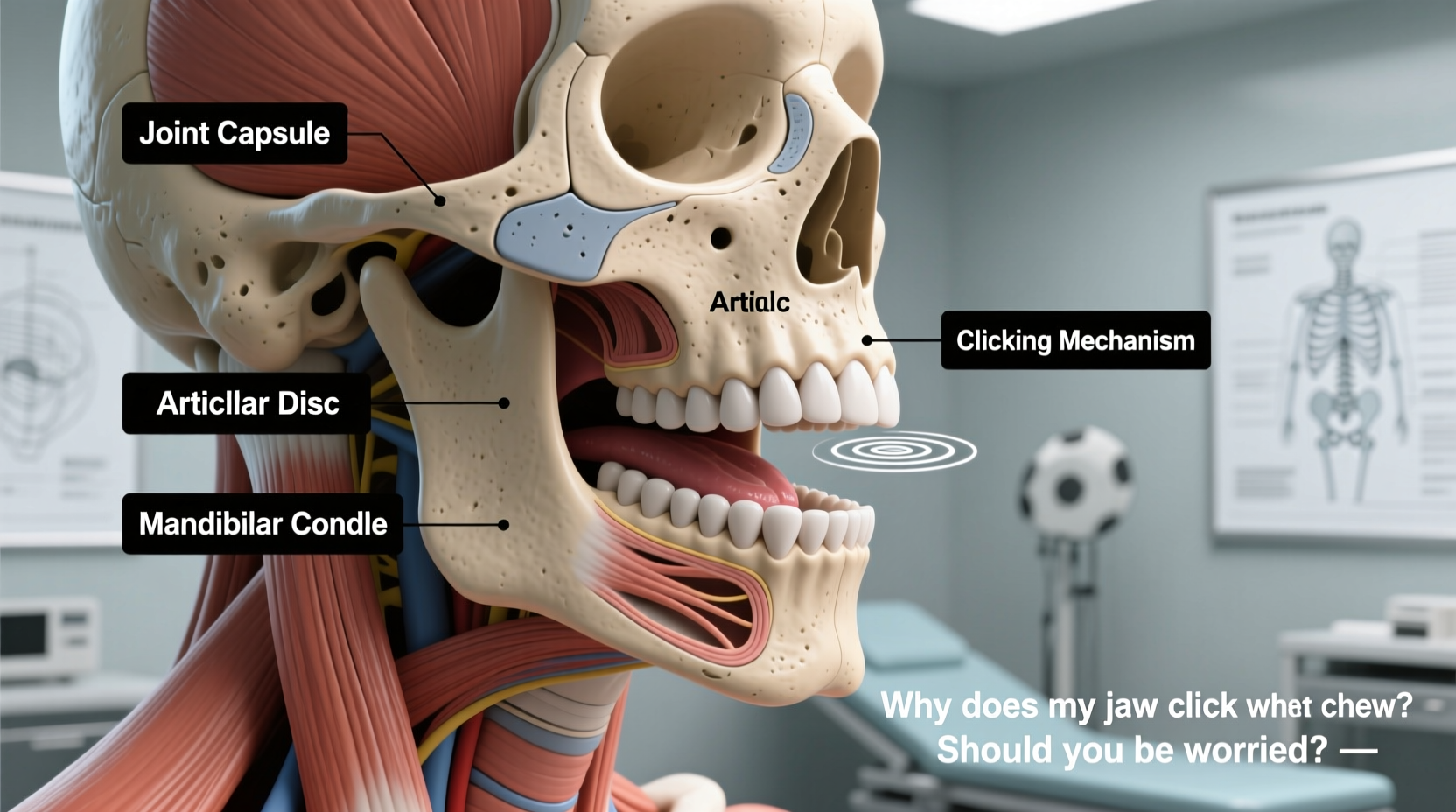
Jaw clicking occurs when the temporomandibular joint doesn’t function smoothly. The TMJ consists of a rounded bone (the condyle) that fits into a socket in the skull, separated by a small disc of cartilage that acts as a cushion. When you open your mouth, the condyle slides forward over the disc. If the disc becomes displaced, misaligned, or damaged, it can create a clicking or popping sound as it snaps back into place—or fails to do so properly.
Common mechanical causes include:
- Disc displacement: The articular disc shifts out of position, causing a click when the jaw moves.
- Joint laxity: Loose ligaments allow excessive movement, leading to audible pops.
- Arthritis: Degeneration of joint tissues due to osteoarthritis or rheumatoid arthritis can cause rough surfaces to grind against each other.
- Bruxism (teeth grinding): Chronic clenching or grinding wears down joint components and strains muscles.
- Trauma: A blow to the jaw or prolonged dental work with the mouth open can displace the joint.
In many cases, the click happens when opening the mouth and disappears during closure—a sign of reducible disc displacement. However, if the disc remains stuck, the jaw may lock, limiting movement and increasing discomfort.
When Should You Be Concerned?
Not every jaw click requires immediate intervention. In fact, up to one-third of adults report TMJ noises without pain or dysfunction. However, certain red flags suggest it’s time to consult a dentist or specialist:
- Pain in the jaw, face, neck, or ears during movement
- Frequent locking of the jaw (inability to open or close fully)
- Headaches or migraines linked to jaw activity
- Symptoms worsening over time
- Dental changes such as uneven bite or tooth wear
- Sleep disturbances related to nighttime grinding
Chronic clicking with pain may indicate temporomandibular disorder (TMD), a broader condition affecting the joint and surrounding muscles. Left untreated, TMD can lead to long-term joint damage, muscle fatigue, and reduced quality of life.
“Many patients delay seeking help because they assume jaw popping is normal. But when pain or functional limitations appear, early diagnosis significantly improves outcomes.” — Dr. Linda Chen, Oral & Maxillofacial Specialist
Diagnosis and Evaluation Process
If you're experiencing persistent jaw clicking, especially with discomfort, a healthcare provider will typically begin with a clinical assessment. This includes:
- Medical and dental history review
- Physical examination of jaw movement and muscle tenderness
- Auscultation (listening to the joint with a stethoscope)
- Imaging studies like panoramic X-rays, MRI, or CT scans to visualize disc position and joint integrity
An MRI is particularly useful in confirming disc displacement and assessing soft tissue damage. Based on findings, your provider may classify your condition as:
| Type | Description | Symptoms |
|---|---|---|
| Muscle-related TMD | Caused by muscle tension or spasms | Pain, tightness, fatigue after chewing |
| Internal derangement | Disc displacement with or without reduction | Clicking, locking, limited opening |
| Osteoarthritis | Joint degeneration over time | Grinding sensation, stiffness, swelling |
| Myofascial pain | Pain originating in jaw muscles | Dull ache, referred pain to temples or shoulders |
Accurate diagnosis guides effective treatment. Self-diagnosis can be misleading, so professional input is crucial.
Effective Treatment Options and Relief Strategies
Treatment for jaw clicking depends on severity, underlying cause, and individual response. Most cases respond well to conservative, non-invasive approaches. Surgery is rarely needed and usually reserved for severe structural issues unresponsive to other therapies.
Non-Surgical Treatments
- Occlusal splints (night guards): Custom-fitted devices worn at night to prevent teeth grinding and reduce joint strain.
- Physical therapy: Exercises to strengthen jaw muscles, improve alignment, and increase range of motion.
- Medications: Short-term use of NSAIDs for inflammation, muscle relaxants for spasms, or low-dose antidepressants for chronic pain modulation.
- Injections: Corticosteroid or Botox injections may be used in select cases to reduce inflammation or relax overactive muscles.
- Lifestyle modifications: Avoiding hard foods, reducing gum chewing, and managing stress to minimize clenching.
Step-by-Step Home Care Routine
- Monitor symptoms: Keep a journal of when clicking occurs, associated pain levels, and possible triggers (e.g., stress, diet).
- Modify diet: Switch to soft foods (soups, mashed potatoes, yogurt) to reduce joint load.
- Practice gentle stretches: Slowly open and close your mouth, stopping before pain begins. Repeat 5–10 times, 2x/day.
- Use heat therapy: Apply a warm towel to the joint area before stretching.
- Manage stress: Incorporate breathing exercises, meditation, or yoga to reduce subconscious jaw clenching.
- Avoid extreme jaw movements: Limit yawning, loud singing, or biting large sandwiches.
- Schedule a dental check-up: Rule out malocclusion, missing teeth, or bruxism contributing to joint stress.
Mini Case Study: Sarah’s Journey with Jaw Clicking
Sarah, a 34-year-old graphic designer, began noticing a distinct clicking in her right jaw while eating apples or chewing gum. Initially painless, the sound became more frequent over six months. Eventually, she experienced morning jaw soreness and headaches that interfered with her focus at work.
After visiting her dentist, Sarah learned she had developed nocturnal bruxism due to high job-related stress. An occlusal guard was prescribed, and she started attending weekly physical therapy sessions focusing on jaw posture and relaxation techniques. Within eight weeks, the clicking decreased significantly, and her headaches resolved. Follow-up imaging showed improved disc alignment.
Sarah’s case highlights how early intervention—even for seemingly minor symptoms—can prevent progression and restore function.
Prevention Checklist
To reduce the risk of developing or worsening jaw clicking, follow this practical checklist:
- ✅ Avoid chewing gum or tough foods like jerky or raw carrots
- ✅ Practice good posture, especially while working at a desk
- ✅ Use a custom night guard if you grind your teeth
- ✅ Stay hydrated to maintain joint lubrication
- ✅ Manage stress through mindfulness or counseling
- ✅ Visit your dentist regularly for TMJ screening
- ✅ Stop habits like pen-chewing, nail-biting, or resting your chin on your hand
Frequently Asked Questions
Is jaw clicking always a sign of a serious problem?
No. Many people experience painless jaw clicking without any underlying disease. It becomes concerning only when accompanied by pain, limited movement, or worsening symptoms over time.
Can poor posture affect my jaw joint?
Yes. Forward head posture alters the alignment of the cervical spine and jaw, increasing strain on the TMJ. Sitting with your head tilted forward for long periods—common among desk workers—can contribute to muscle imbalances and joint dysfunction.
Will jaw clicking go away on its own?
Sometimes. Mild cases related to temporary strain or minor disc displacement may resolve with rest and lifestyle adjustments. However, persistent or painful clicking often requires targeted treatment to prevent long-term complications.
Conclusion: Listen to Your Jaw, Act Before Pain Sets In
Your jaw’s clicking may seem like a small annoyance today, but it can be an early warning sign of deeper musculoskeletal imbalance. Ignoring it could lead to chronic pain, reduced mobility, and unnecessary stress on your daily life. The good news is that most causes of jaw clicking are manageable with timely care and consistent self-management.
Whether it’s adjusting your diet, wearing a night guard, or simply becoming aware of unconscious clenching, small changes can yield significant improvements. Don’t wait until the pain starts—take action now to protect your jaw health.




 浙公网安备
33010002000092号
浙公网安备
33010002000092号 浙B2-20120091-4
Comments
No comments yet. Why don't you start the discussion?