
Many people experience a clicking, popping, or cracking sound in their jaw while chewing, talking, or even opening their mouth wide. While occasional noise might not be alarming, persistent or painful jaw cracking can signal an underlying issue with the temporomandibular joint (TMJ). Understanding the causes and knowing how to manage symptoms can help prevent long-term complications such as chronic pain, limited jaw movement, or joint degeneration.
The jaw joint is one of the most complex in the body—used thousands of times a day for speaking, eating, and facial expressions. When it starts making noise, especially with discomfort, it’s worth paying attention. This article explores the science behind jaw cracking, identifies common triggers, and offers practical solutions to reduce strain and restore comfort.
Understanding the Temporomandibular Joint (TMJ)
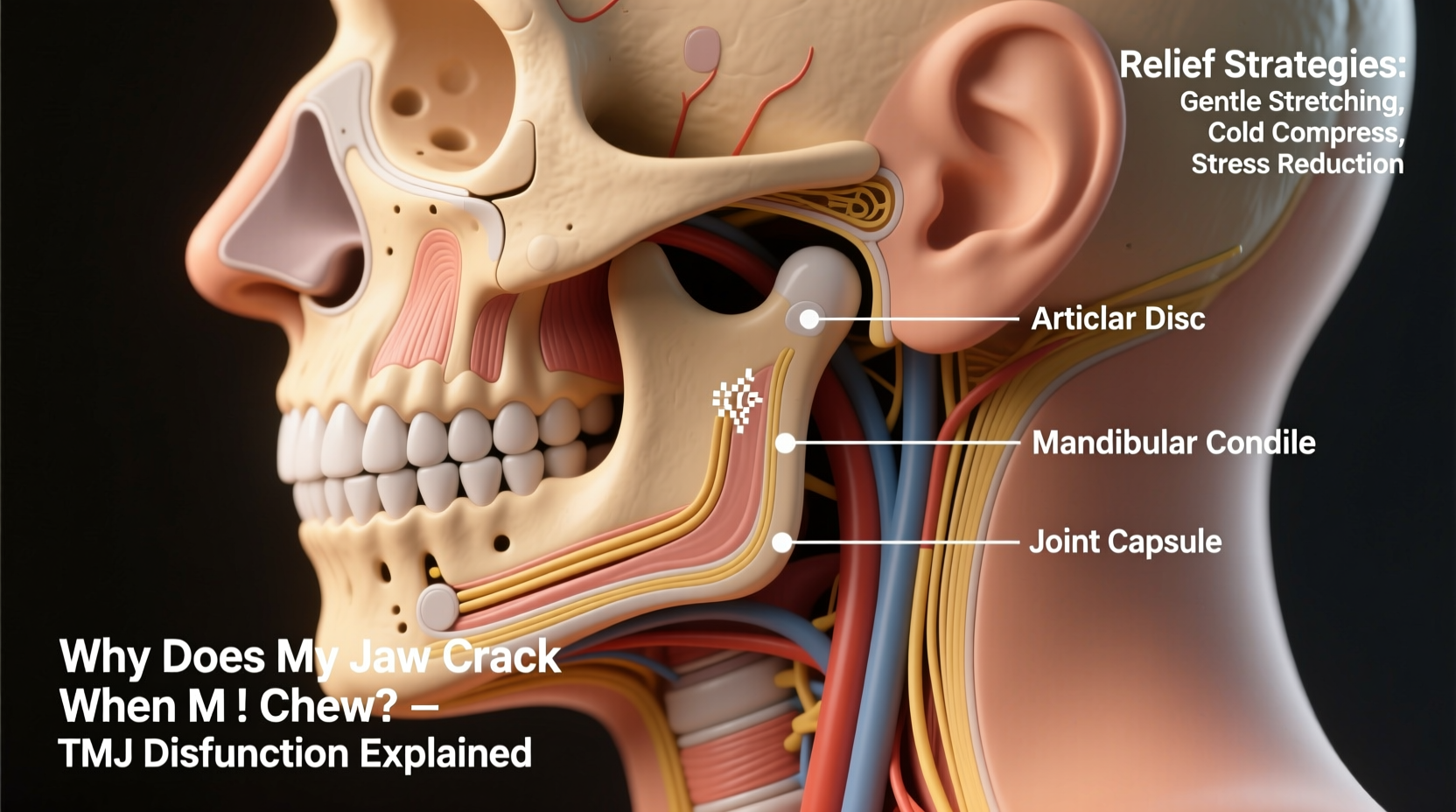
The temporomandibular joint connects your jawbone to your skull, just in front of each ear. It allows for smooth up-and-down and side-to-side movements essential for chewing and speaking. The joint functions with the help of a small disc of cartilage that cushions the bones and absorbs shock during movement.
When this disc becomes misaligned, inflamed, or worn down, the joint may produce audible sounds like popping or cracking. These noises often occur when the disc temporarily slips out of place and then snaps back during motion—a phenomenon known as “joint noise.” While not always painful, it can indicate early stages of temporomandibular disorder (TMD).
“Over 10 million Americans experience TMJ-related symptoms at some point, yet many dismiss the signs until pain becomes severe.” — Dr. Alan Weiss, Orofacial Pain Specialist
Common Causes of Jaw Cracking During Chewing
Jaw cracking isn’t random—it usually results from specific mechanical or behavioral factors. Identifying the root cause is crucial for effective treatment.
- Misaligned Jaw Disc: The articular disc within the TMJ can shift due to injury, clenching, or grinding, leading to snapping sounds as it repositions.
- Bruxism (Teeth Grinding): Chronic grinding or clenching, especially at night, places excessive pressure on the joint and surrounding muscles, accelerating wear and tear.
- Arthritis: Osteoarthritis or rheumatoid arthritis can degrade the joint surfaces, causing rough movements and crepitus (a grating sensation).
- Jaw Injury: Trauma from sports, accidents, or dental procedures may damage the joint structure directly.
- Excessive Chewing Habits: Constant gum chewing, nail biting, or eating hard foods increases repetitive stress on the TMJ.
- Stress-Induced Muscle Tension: Emotional stress often manifests as tightened facial and jaw muscles, altering joint mechanics.
When to Be Concerned About Jaw Popping
Not all jaw noises require immediate medical intervention. However, certain red flags suggest the need for professional evaluation:
- Pain during chewing or speaking
- Difficulty opening or closing the mouth fully
- Jaw locking in an open or closed position
- Frequent headaches or earaches near the jawline
- Asymmetrical jaw movement (one side moves more than the other)
- Swelling around the joint area
If any of these accompany the cracking sound, it could indicate progressive TMD. Left untreated, TMD may lead to chronic pain, muscle fatigue, and structural changes in the joint. Early diagnosis improves outcomes significantly.
Differentiating Harmless vs. Problematic Jaw Sounds
| Harmless Cracking | Potentially Problematic Cracking |
|---|---|
| Occasional pop with no pain | Frequent popping with sharp pain |
| No limitation in jaw movement | Jaw locks or gets stuck |
| Only happens once per motion cycle | Continuous grinding or grating sound |
| No associated headaches or ear symptoms | Linked to facial pain, tinnitus, or dizziness |
| No history of trauma or grinding | History of bruxism, injury, or arthritis |
Effective Ways to Ease Jaw Discomfort and Reduce Cracking
Most cases of mild to moderate jaw cracking respond well to conservative, non-invasive strategies. The goal is to reduce inflammation, correct muscle imbalances, and minimize joint strain.
1. Apply Warm and Cold Therapy
Cold packs reduce acute inflammation and numb pain after flare-ups. Use an ice pack wrapped in cloth for 10–15 minutes several times a day. After 48 hours, switch to moist heat to relax tight muscles and improve blood flow.
2. Modify Your Diet
Avoid hard, chewy, or large-bite foods that force wide jaw opening or excessive grinding. Opt for soft meals like soups, steamed vegetables, yogurt, and smoothies. Cut food into small pieces to minimize effort.
3. Practice Jaw Exercises
Gentle stretching and strengthening exercises can stabilize the joint. A few proven ones include:
- Resisted Opening: Place thumb under chin and gently press upward while slowly opening mouth against light resistance. Hold for 5 seconds, repeat 5 times.
- Lateral Jaw Movement: Move jaw side to side slowly, staying within a pain-free range. Do 10 reps per side.
- Chin Tuck: Sit upright, gently tuck chin toward chest without tilting head. Hold 5 seconds; strengthens postural support for the jaw.
4. Manage Stress and Relax Facial Muscles
Stress contributes heavily to jaw tension. Incorporate relaxation techniques such as deep breathing, meditation, or progressive muscle relaxation. Be mindful of daytime clenching—set reminders to check if your teeth are touching (they shouldn't be unless chewing).
5. Use a Night Guard
If you grind your teeth at night, a custom-fitted dental guard can protect both teeth and TMJ by creating a cushion between upper and lower arches. Over-the-counter guards may work short-term, but dentist-prescribed ones offer better fit and longevity.
“A properly fitted occlusal splint can reduce nocturnal muscle activity by up to 70%, giving the joint time to heal.” — Dr. Lena Patel, Prosthodontist and Sleep Medicine Consultant
Step-by-Step Guide to Reducing Jaw Cracking Over 4 Weeks
Follow this structured plan to address jaw cracking systematically and track improvement:
- Week 1 – Awareness & Assessment
- Note when cracking occurs and rate discomfort on a scale of 1–10.
- Eliminate gum chewing and hard foods.
- Apply cold therapy after meals if soreness follows chewing.
- Week 2 – Introduce Gentle Care
- Begin daily jaw stretches (morning and evening).
- Use warm compresses before bed to relax muscles.
- Practice mindfulness to catch clenching episodes.
- Week 3 – Address Underlying Triggers
- Schedule a dental visit to assess for bruxism or malocclusion.
- Start using a night guard if recommended.
- Incorporate stress-reduction practices like yoga or journaling.
- Week 4 – Evaluate Progress & Adjust
- Reassess frequency of cracking and pain levels.
- Continue successful habits; discontinue ineffective ones.
- Consult a TMJ specialist if symptoms persist beyond four weeks.
Mini Case Study: Recovery from Chronic Jaw Popping
Sarah, a 34-year-old graphic designer, began noticing loud jaw cracking six months after a car accident where her head snapped forward. Initially painless, the sound grew louder and was soon accompanied by morning stiffness and headaches. She avoided apples and sandwiches because chewing triggered discomfort.
After visiting an orofacial pain clinic, she was diagnosed with internal derangement of the TMJ—her joint disc had become displaced. Her treatment plan included wearing a stabilization splint at night, performing prescribed jaw exercises, and attending physical therapy focused on neck and jaw alignment.
Within eight weeks, Sarah reported a 70% reduction in noise and complete resolution of pain. By modifying her workstation ergonomics and managing stress through regular exercise, she prevented recurrence over the next year.
Do’s and Don’ts for Jaw Health
| Do’s | Don’ts |
|---|---|
| Keep lips together, teeth apart when resting | Rest your chin on your hand or cradle your phone between shoulder and ear |
| Open your mouth slowly when yawning or biting | Take large bites or bite into food with front teeth (e.g., burgers, apples) |
| Stay hydrated to maintain joint lubrication | Chew gum or chewy candies regularly |
| Use both sides of your mouth evenly when chewing | Ignore persistent pain or locking episodes |
| Seek professional advice early | Rely solely on painkillers without addressing root causes |
FAQ: Common Questions About Jaw Cracking
Can jaw cracking lead to permanent damage?
Occasional, pain-free popping is unlikely to cause harm. However, repeated trauma from grinding, poor posture, or untreated disc displacement may accelerate joint degeneration over time. Early intervention prevents progression to osteoarthritis or fibrosis within the joint space.
Is it normal for my jaw to crack every time I eat?
No. While some people experience occasional clicks, consistent cracking with every chew suggests abnormal joint dynamics. If it’s been ongoing for more than a few weeks—even without pain—it’s wise to consult a dentist or TMJ specialist for evaluation.
Will surgery fix a cracked jaw sound?
Surgery is rarely the first-line treatment. Most patients improve with conservative care like physical therapy, oral appliances, and behavioral modifications. Surgical options (like arthroscopy or disc repositioning) are reserved for severe cases involving structural damage or chronic locking unresponsive to other therapies.
Conclusion: Take Action Before Discomfort Becomes Chronic
Jaw cracking during chewing is more than just a quirky bodily noise—it can be an early warning sign of joint dysfunction. Ignoring it may lead to escalating pain, reduced mobility, and diminished quality of life. The good news is that most cases respond well to timely, proactive care.
By understanding the causes, adopting protective habits, and seeking expert guidance when needed, you can preserve jaw function and enjoy meals without wincing at every crunch. Don’t wait for symptoms to worsen. Start today by assessing your chewing patterns, reducing strain, and scheduling a dental check-up if necessary.




 浙公网安备
33010002000092号
浙公网安备
33010002000092号 浙B2-20120091-4
Comments
No comments yet. Why don't you start the discussion?