
It’s a familiar sensation: as you bite into an apple or chew gum, your jaw emits a distinct popping or cracking sound. For many, this is a minor annoyance—something that comes and goes without consequence. But for others, the noise is accompanied by pain, stiffness, or difficulty moving the jaw. While occasional jaw cracking is common and often harmless, persistent or painful symptoms can signal an underlying condition that requires professional attention.
The temporomandibular joint (TMJ) is one of the most complex joints in the body. It connects your jawbone to your skull, just in front of your ears, and allows for smooth up-and-down and side-to-side motion essential for speaking, chewing, and yawning. Because of its intricate structure and constant use, it's susceptible to strain, misalignment, and dysfunction. Understanding what causes jaw cracking—and knowing when it crosses the line from normal to problematic—is key to protecting your oral health and overall comfort.
What Causes Jaw Cracking During Chewing?
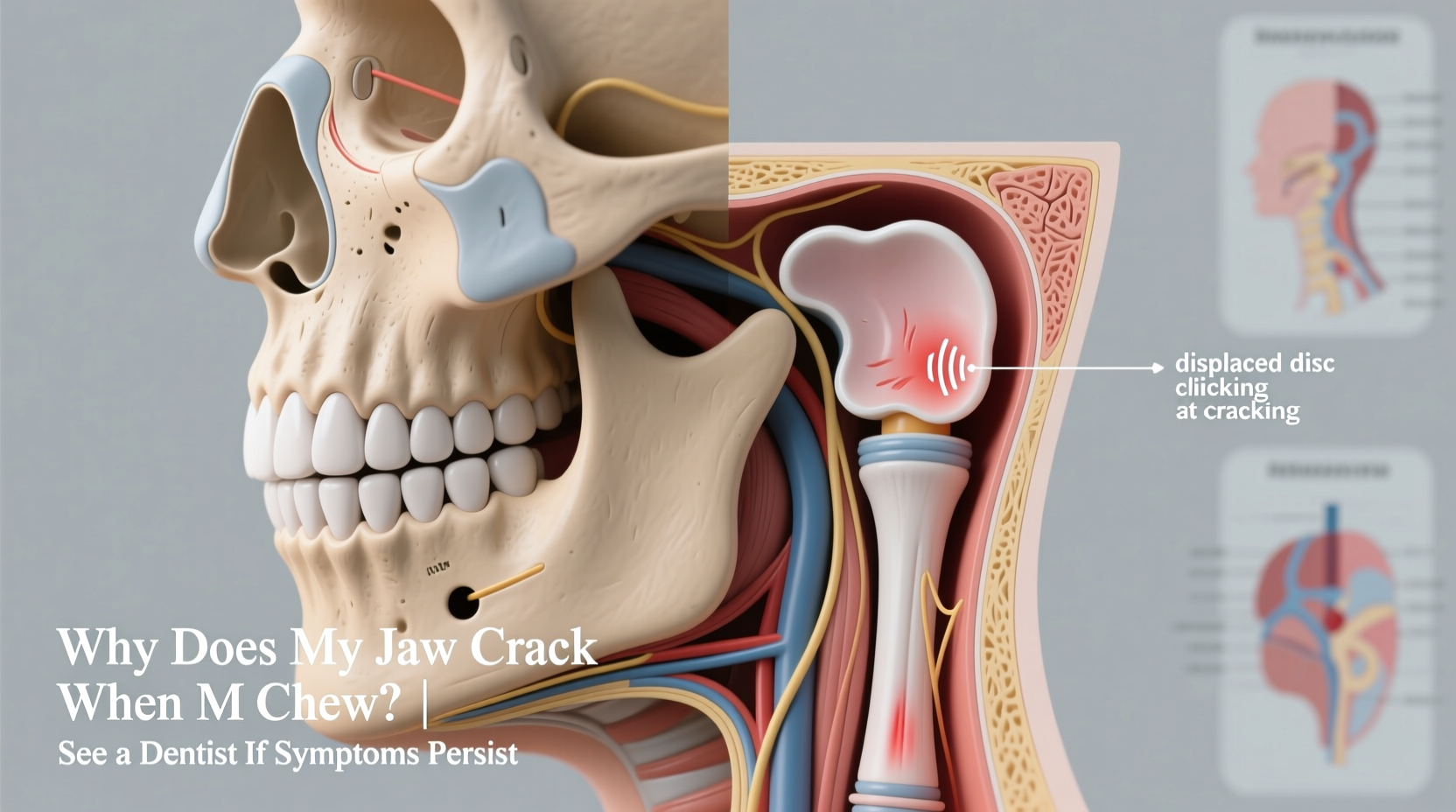
Jaw cracking occurs when the temporomandibular joint moves out of its ideal alignment during motion. The joint functions with a small disc of cartilage between the mandible (jawbone) and the temporal bone of the skull. This disc acts as a cushion and facilitates smooth movement. When the disc becomes displaced, inflamed, or worn, it can cause audible pops, clicks, or grating sounds—especially during activities like chewing.
Several factors contribute to these noises:
- Disc displacement: The articular disc may shift forward or become misaligned, causing a pop when the jaw opens or closes.
- Joint laxity: Some people naturally have looser ligaments, which can allow the joint to move more freely and produce noise.
- Muscle tension: Tightness in the muscles surrounding the jaw—often due to stress or teeth grinding—can alter joint mechanics.
- Arthritis: Osteoarthritis or inflammatory arthritis can degrade joint surfaces, leading to crepitus (a grating sensation or sound).
- Previous injury: Trauma to the jaw or face can disrupt joint function long after the initial injury has healed.
In many cases, jaw cracking is painless and intermittent. These instances are typically benign and don’t require treatment. However, when the sound is consistent, worsening, or paired with discomfort, it may indicate temporomandibular joint disorder (TMD).
When Is Jaw Cracking Normal vs. a Sign of Trouble?
Not all jaw noises are cause for alarm. In fact, studies suggest that up to one-third of adults experience some form of TMJ noise at some point, often without pain or functional issues. The critical distinction lies in whether the cracking is isolated or part of a broader pattern of symptoms.
Here’s how to differentiate between harmless and concerning jaw sounds:
| Normal Jaw Cracking | Potentially Problematic TMD Signs |
|---|---|
| Occurs occasionally | Happens every time you chew or open your mouth |
| No associated pain | Pain in the jaw, ear, face, or temples |
| One quick pop, then silence | Repeated clicking, grinding, or locking |
| Jaw moves freely | Limited range of motion or jaw locking |
| No history of trauma or bruxism | History of teeth grinding or clenching |
If your jaw cracking fits the “normal” column, it’s likely a mechanical quirk rather than a medical issue. But if multiple “problematic” signs apply, especially pain or restricted movement, it’s time to consider evaluation by a dental professional.
“While joint sounds alone aren’t always pathological, their persistence combined with pain or dysfunction should never be ignored. Early intervention can prevent long-term joint damage.” — Dr. Lena Patel, Oral & Maxillofacial Specialist
Common Conditions Linked to Jaw Cracking
Recurrent jaw cracking often stems from specific disorders affecting the TMJ or surrounding musculature. Recognizing these conditions helps clarify when self-care is sufficient and when expert care is needed.
Temporomandibular Joint Disorder (TMD)
TMD is an umbrella term for conditions affecting the TMJ and related muscles. It affects an estimated 10–15% of adults and is more common in women aged 20–40. Symptoms include:
- Clicking, popping, or grating sounds
- Pain while chewing or speaking
- Jaw fatigue or muscle soreness
- Earaches or tinnitus (ringing in ears)
- Headaches originating near the temples
Internal Derangement of the TMJ
This refers to structural changes within the joint, most commonly anterior disc displacement. The disc moves out of place, causing a pop when the jaw opens as the condyle snaps over the displaced disc. In severe cases, the disc becomes permanently stuck, leading to chronic locking.
Osteoarthritis and Inflammatory Arthritis
Wear-and-tear arthritis can affect the TMJ, especially in older adults or those with systemic conditions like rheumatoid arthritis. This leads to degeneration of cartilage and bone, resulting in crepitus—a rough, grating sound during jaw movement.
Myofascial Pain Syndrome
This muscle-related condition involves trigger points in the jaw, neck, and shoulder muscles. Though not directly a joint issue, it alters jaw mechanics and can contribute to abnormal joint loading and secondary cracking.
Mini Case Study: Sarah’s Jaw Pain Journey
Sarah, a 34-year-old graphic designer, began noticing her jaw made a loud pop every time she opened her mouth wide or chewed on the right side. At first, she dismissed it—until she started waking up with headaches and jaw soreness. Over several weeks, the popping became constant, and one morning, her jaw locked halfway open.
She visited her dentist, who diagnosed her with anterior disc displacement with reduction—a form of internal derangement. An MRI confirmed the disc was slipping forward during opening and snapping back into place. Sarah was fitted with a custom night guard, prescribed gentle jaw exercises, and advised to avoid hard foods and unilateral chewing. Within two months, her symptoms improved significantly, and the locking episodes ceased.
Sarah’s case illustrates how seemingly minor symptoms can escalate if left unmanaged. Early diagnosis prevented further joint deterioration and avoided the need for more invasive treatments.
Step-by-Step Guide: What to Do If Your Jaw Cracks Frequently
If you’re concerned about jaw cracking, follow this practical sequence to assess and manage the issue:
- Monitor symptoms for one week: Keep a log of when the cracking occurs, whether it’s painful, and any associated symptoms (headaches, ear pain, etc.).
- Practice jaw rest: Avoid excessive chewing, gum, wide yawning, and nail-biting. Eat soft foods and cut food into small pieces.
- Apply warm compresses: Use a warm towel on the jaw area for 10–15 minutes twice daily to relax muscles.
- Check for teeth grinding: Look for signs like flattened tooth edges, morning jaw fatigue, or partner-reported nighttime grinding.
- Schedule a dental evaluation: See your dentist or an orofacial pain specialist if symptoms persist beyond two weeks or worsen.
- Follow professional recommendations: This may include imaging (like a panoramic X-ray or MRI), a splint or night guard, physical therapy, or medication.
Checklist: When to See a Dentist About Jaw Cracking
Use this checklist to determine if professional evaluation is warranted:
- ☑ Jaw cracking occurs every time you chew or open your mouth
- ☑ You feel pain in the jaw joint or surrounding muscles
- ☑ Your jaw locks or gets stuck open or closed
- ☑ You have difficulty fully opening your mouth (less than three fingers’ width)
- ☑ You experience frequent headaches, earaches, or facial pain
- ☑ You grind or clench your teeth, especially at night
- ☑ You’ve had facial or jaw trauma in the past
- ☑ Symptoms last longer than two weeks despite self-care
If you check off two or more items, consult a dentist or TMJ specialist promptly. Delaying care can lead to chronic pain, joint degeneration, or irreversible disc displacement.
Frequently Asked Questions
Is it bad if my jaw cracks every time I eat?
Occasional cracking isn’t harmful, but consistent, repetitive popping—especially with pain or limited motion—can indicate joint dysfunction. It’s worth having evaluated to rule out disc displacement or early arthritis.
Can a dentist fix a clicking jaw?
Yes. Dentists trained in TMD management can diagnose the cause using clinical exams and imaging. Treatments may include occlusal splints, bite adjustments, physical therapy referrals, or in rare cases, surgical consultation. Most cases respond well to conservative care.
Will jaw cracking get worse over time?
It depends. Without intervention, progressive disc displacement or untreated bruxism can worsen joint wear. However, with proper habits and early treatment, many people stabilize or even reverse symptoms.
Conclusion: Listen to Your Jaw—It’s Telling You Something
Your jaw is designed for thousands of movements each day, but it’s not indestructible. Cracking sounds are often the first warning sign that something is off—whether it’s muscle tension, joint misalignment, or inflammation. Ignoring these signals can lead to chronic discomfort, reduced function, and unnecessary suffering.
The good news is that most jaw issues are manageable when caught early. Simple lifestyle adjustments, professional guidance, and timely dental care can restore comfort and prevent long-term complications. Don’t wait until your jaw locks or the pain becomes unbearable. Pay attention to the signs, take proactive steps, and seek expert advice when needed.




 浙公网安备
33010002000092号
浙公网安备
33010002000092号 浙B2-20120091-4
Comments
No comments yet. Why don't you start the discussion?