
If your morning cup from the Keurig no longer delivers the bold, satisfying flavor you remember, you're not alone. Many users report their coffee suddenly tasting weak or watered down—like they’re drinking hot water with a hint of coffee rather than a proper brew. While this can be frustrating, the cause is often simpler than it seems. More times than not, mineral buildup from hard water is silently sabotaging your brew quality. The good news? With a few straightforward descaling steps, you can restore your Keurig to peak performance and enjoy full-bodied coffee again.
Coffee strength depends on consistent water temperature, flow rate, and brewing pressure—all of which are compromised when scale accumulates inside your machine. Over time, calcium and magnesium deposits from tap water clog internal components, reducing efficiency and altering extraction. This article explains exactly how and why this happens, offers practical solutions, and walks you through an easy descaling process that takes less than 30 minutes.
Why Your Keurig Coffee Tastes Watered Down
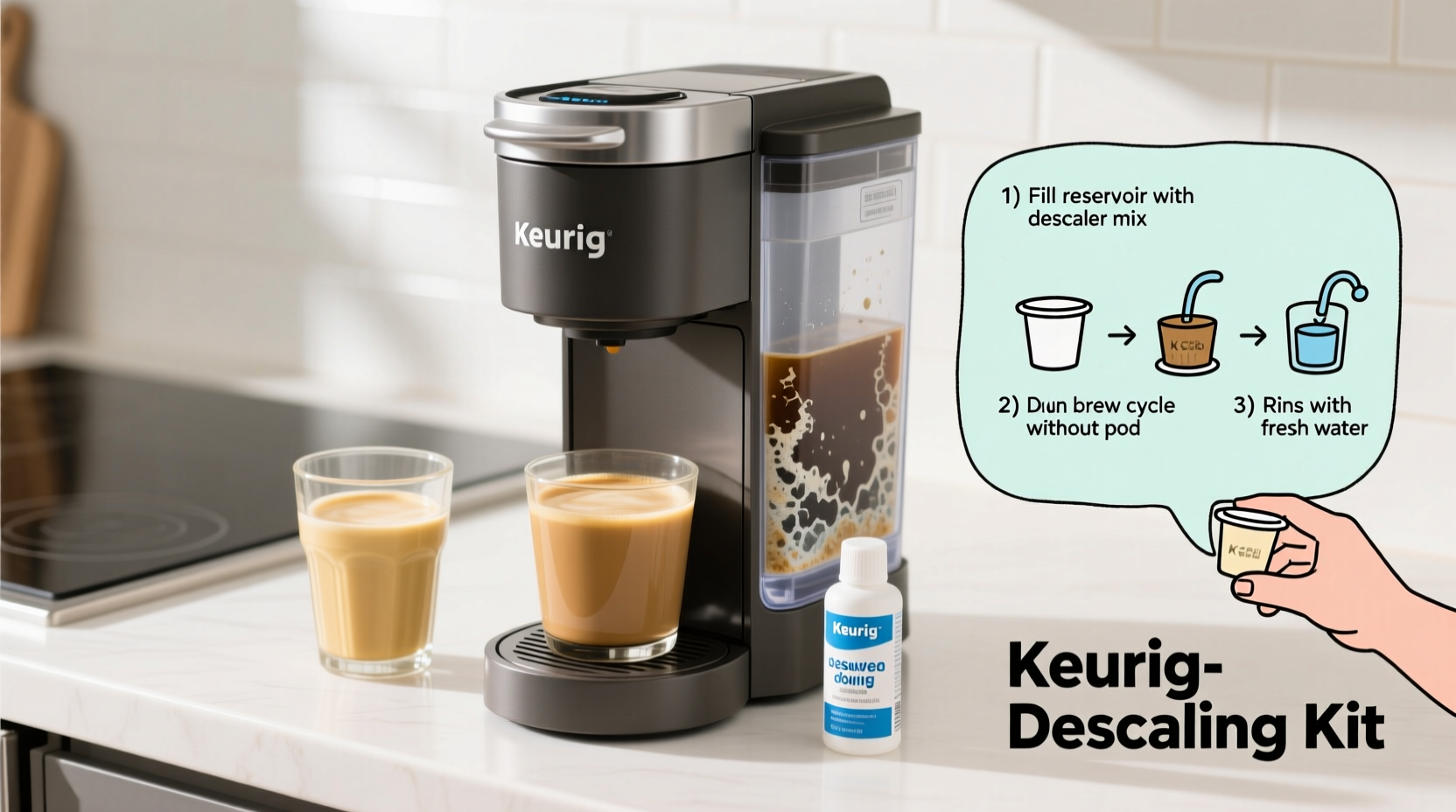
The most common reason for weak-tasting coffee from a Keurig isn’t low-quality beans or old K-Cups—it’s mineral buildup inside the machine. As water heats and flows through narrow tubing and valves, dissolved minerals like calcium and magnesium precipitate out, forming limescale. This buildup restricts water flow, lowers brewing temperature, and disrupts the precise timing needed for optimal extraction.
When water moves too slowly or at suboptimal temperatures, it fails to extract the full range of flavors from the coffee grounds. The result? A thin, flat, watery brew—even if you’re using premium pods.
Other contributing factors include:
- Inconsistent water levels: Overfilling the reservoir doesn’t improve strength; it just increases the risk of overflow or improper heating.
- Using the wrong brew size: Selecting a larger cup size with the same pod dilutes the coffee.
- Old or low-quality K-Cups: Stale coffee loses its aromatic compounds and oils, leading to dull flavor.
- Clogged exit needle: If the needle that punctures the bottom of the K-Cup is blocked, water can’t evenly saturate the grounds.
While these issues matter, scale remains the silent culprit behind most long-term flavor decline.
How Scale Affects Brewing Performance
Keurig machines rely on precision engineering. Water must heat rapidly and flow under controlled pressure through tiny channels. When scale builds up, it interferes with every stage of this process:
- Heating Element Insulation: Scale coats the heating element, acting as a thermal barrier. This slows heating and prevents water from reaching the ideal 192–205°F (88–96°C) range needed for proper extraction.
- Flow Restriction: Narrow tubes and valves become partially blocked, reducing water volume and pressure. Less water contact means incomplete saturation of coffee grounds.
- Temperature Fluctuations: Inconsistent heating leads to under-extraction, where sour, weak flavors dominate instead of balanced richness.
- Pump Strain: The internal pump works harder to push water through clogged pathways, shortening the machine’s lifespan.
A study by the Water Quality Association found that just 1/16 inch of scale can reduce heating efficiency by up to 12%. For a coffee maker that heats water in seconds, even minor inefficiencies translate directly into weaker brews.
“Regular descaling isn’t optional maintenance—it’s essential for preserving both flavor and function.” — Dr. Alan Reynolds, Appliance Efficiency Researcher at the National Home Labs
Simple Step-by-Step Descaling Guide
Descaling your Keurig should be part of routine care—ideally every 3 to 6 months, depending on usage and water hardness. Here’s how to do it correctly using either Keurig’s official solution or a DIY alternative.
What You’ll Need:
- Descaling solution (Keurig brand or white vinegar)
- Clean mug
- Water
- Paper clips or soft brush (for cleaning needles)
- Soft cloth
Steps to Descale Your Keurig:
- Power Off and Empty Reservoir: Unplug the machine. Remove the water reservoir and empty any remaining water.
- Prepare Descaling Solution: Mix 16 oz of white vinegar with 16 oz of water, or use the entire bottle of Keurig descaling solution diluted in 48 oz of water (follow package instructions).
- Refill Reservoir: Pour the solution into the water tank. Place it back into the machine.
- Start Descaling Mode: Plug in the machine. Press and hold the “Brew” button for 3 seconds until the “Descale” indicator lights up (on newer models). If your model lacks this mode, proceed manually.
- Brew Without Pod: Place a large mug on the drip tray. Press “Brew” to start a cycle. Let the solution run through—do not stop it mid-cycle.
- Repeat Until Reservoir Is Empty: The machine may pause between cycles. Wait 30 minutes after each brew to allow solution to dissolve scale. Continue until all solution has been used.
- Rinse Thoroughly: Discard the mug. Refill the reservoir with fresh water. Run multiple brewing cycles (10–12) until the water runs clear and you no longer smell vinegar.
- Clean Needles and Exterior: Use a paper clip to gently clear debris from the top and bottom needles. Wipe the exterior with a damp cloth.
- Restart Machine: Once rinsed, plug the machine back in and brew a test cup with a K-Cup to confirm flavor improvement.
Do’s and Don’ts of Keurig Maintenance
| Do’s | Don’ts |
|---|---|
| Use filtered or bottled water to reduce mineral intake | Use undiluted vinegar or harsh chemicals like bleach |
| Descale every 3–6 months based on usage | Ignore the “Descale” indicator light |
| Clean the needle monthly to prevent clogs | Run vinegar through more than once without rinsing |
| Wipe the lid and pod chamber weekly | Submerge the base in water or clean with abrasive pads |
| Remove and rinse the water reservoir weekly | Use citrus-based descalers unless specified by Keurig |
Following these guidelines extends your machine’s life and ensures consistently strong coffee. Remember: prevention is easier than repair.
Real User Example: Sarah’s Morning Fix
Sarah, a teacher from Denver, relied on her Keurig for two cups every morning before school. After about eight months, she noticed her coffee tasted “like brown water.” She tried different brands of K-Cups, switched to stronger roasts, and even bought a new reservoir—but nothing helped.
After reading about descaling online, she decided to try the vinegar method. She followed the step-by-step guide, ran multiple rinse cycles, and brewed a fresh dark roast afterward. “It was like tasting real coffee again,” she said. “The aroma came back, the body thickened, and the bitterness was balanced, not harsh.” Now, she descales every three months and keeps a log on her fridge.
Sarah’s experience reflects what thousands of users discover: the machine wasn’t broken—the minerals were just blocking its potential.
Frequently Asked Questions
Can I use lemon juice instead of vinegar to descale?
Lemon juice contains citric acid, which can dissolve mild scale, but it’s less effective than acetic acid (vinegar) and may leave behind residues or odors. It’s also more expensive. White vinegar is recommended for its balance of effectiveness, availability, and safety when properly rinsed.
How do I know if I have hard water?
Signs of hard water include white chalky deposits on faucets, reduced lathering of soap, and frequent appliance scaling. You can check your local water report via the EPA’s Consumer Confidence Report tool. Areas like the Midwest, Southwest, and parts of California typically have high mineral content.
Will descaling fix slow brewing speed?
Often, yes. Slow brewing is frequently caused by restricted water flow due to scale buildup in the inlet valve or tubing. Regular descaling removes these deposits and restores normal flow rates. However, if the problem persists after descaling, the pump or solenoid valve may need professional service.
Final Checklist: Keep Your Keurig Brewing Strong
- ✅ Descale every 3–6 months
- ✅ Use filtered water to minimize future buildup
- ✅ Clean entrance and exit needles monthly
- ✅ Wipe down the pod holder and lid weekly
- ✅ Rinse the water reservoir every 3–4 days
- ✅ Replace the charcoal filter (if applicable) every 2 months
- ✅ Run a plain water brew after every few uses to flush residual coffee oils
Maintaining your Keurig isn’t just about convenience—it’s about protecting your investment and ensuring every cup meets your expectations. Flavor degradation isn’t inevitable. With minimal effort, you can prevent scale-related issues and enjoy café-quality coffee at home.
Conclusion: Take Control of Your Coffee Quality
Your Keurig is designed to deliver consistent, flavorful coffee with minimal effort—but only if it’s properly maintained. A watered-down taste is usually not a flaw in the machine or the pods, but a sign that descaling is overdue. By understanding how mineral buildup affects brewing and taking proactive steps to remove it, you reclaim the rich, satisfying coffee experience you paid for.
Don’t wait for error messages or complete failure. Make descaling part of your routine, just like refilling the water tank. A few minutes every few months can extend your machine’s life by years and transform your daily ritual from disappointment to delight.




 浙公网安备
33010002000092号
浙公网安备
33010002000092号 浙B2-20120091-4
Comments
No comments yet. Why don't you start the discussion?