
Many people experience a clicking or popping sensation in their knees when squatting. While occasional noise without pain is usually harmless, persistent or painful clicking can signal underlying joint issues. Understanding the anatomy of the knee and the mechanisms behind these sounds is essential for determining whether intervention is needed. This article breaks down the most common anatomical causes of knee clicking during squats and offers evidence-based strategies for relief and prevention.
Anatomy of the Knee: What’s Behind the Click?
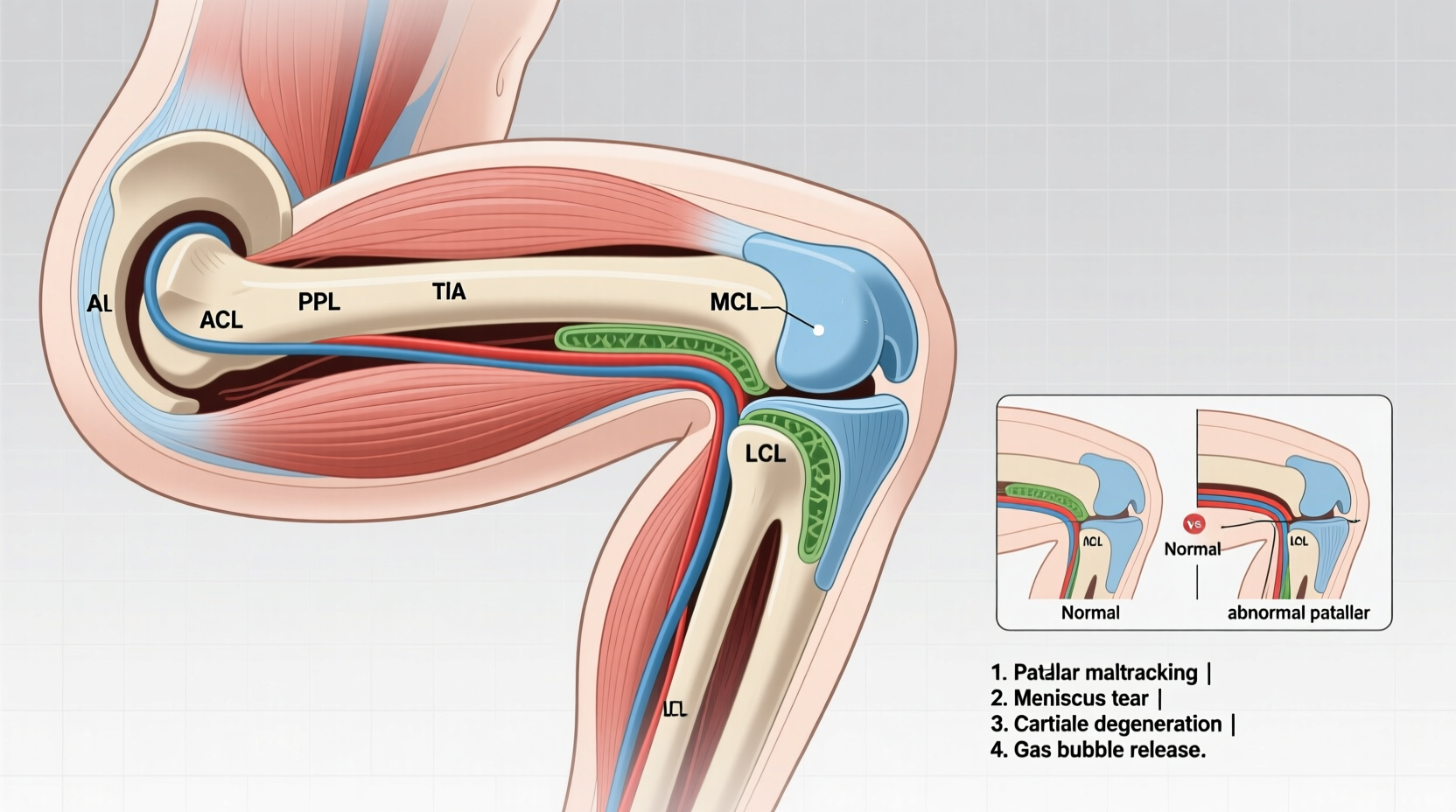
The knee joint is one of the most complex structures in the human body. It functions as a hinge joint connecting the femur (thigh bone), tibia (shin bone), and patella (kneecap). Several soft tissue components—including ligaments, tendons, cartilage, and synovial fluid—work together to allow smooth movement and stability.
Knee clicking, medically referred to as *crepitus*, occurs when tissues or gases within the joint shift during motion. The sound may originate from:
- Gas bubbles in synovial fluid: When pressure changes rapidly in the joint capsule, tiny gas bubbles can form and collapse, producing a pop.
- Patellar tracking: The kneecap gliding over the femoral groove may create noise if alignment is slightly off.
- Cartilage wear or damage: Roughened surfaces due to degeneration or injury can generate friction and audible clicks.
- Tendon or ligament snapping: Soft tissues moving over bony prominences may produce a snapping sensation.
While not all crepitus is pathological, context matters. Pain, swelling, instability, or reduced range of motion accompanying the click should prompt further evaluation.
Common Anatomical Causes of Knee Clicking During Squats
Squatting places significant load on the knee joint, especially during deep flexion. This makes it a common trigger for noticeable joint sounds. Below are five primary anatomical explanations for knee clicking during this movement.
1. Patellofemoral Crepitus
This refers to the kneecap (patella) rubbing against the femur. In ideal conditions, the patella tracks smoothly within the trochlear groove. However, muscle imbalances—particularly weak vastus medialis obliquus (VMO) or tight lateral retinaculum—can pull the patella slightly out of alignment, causing it to grind or click during movement.
2. Meniscus Tears or Degeneration
The menisci are C-shaped pieces of cartilage that cushion the knee joint. With age or trauma, they can develop tears. A torn meniscus may catch between the femur and tibia during squatting, resulting in a distinct click or pop, often accompanied by pain or locking.
3. Plica Syndrome
Synovial plicae are remnants of fetal tissue folds in the knee. In some individuals, these folds become irritated or thickened, especially with repetitive motion like squatting. When the plica snaps over the femoral condyle, it produces a clicking sensation, typically on the inner side of the knee.
4. Cavitation in the Joint Space
This is the scientific term for the formation and collapse of gas bubbles in synovial fluid. When you squat, rapid changes in joint pressure can cause nitrogen and other gases dissolved in the fluid to form microbubbles that pop audibly. This is similar to what happens when someone “cracks” their knuckles and is generally harmless.
5. Iliotibial Band (IT Band) Snapping
The IT band runs along the outside of the thigh and stabilizes the knee. As it moves over the lateral femoral epicondyle during flexion and extension, it can snap or flick, creating an audible pop. This is more common in runners or those with tight hip abductors.
“Not all knee noise is a red flag. The key differentiator is whether the sound is associated with pain, swelling, or functional limitation.” — Dr. Lena Torres, Sports Medicine Physician
When to Be Concerned: Red Flags and Warning Signs
Joint noise alone rarely indicates serious injury. However, certain symptoms suggest that clicking may be a sign of underlying pathology requiring medical attention.
| Symptom | Benign (Likely Normal) | Concerning (Seek Evaluation) |
|---|---|---|
| Pain | Absent or mild, fleeting discomfort | Persistent, sharp, or increasing pain |
| Swelling | None | Visible puffiness or stiffness after activity |
| Instability | No sense of giving way | Feeling of buckling or catching |
| Range of Motion | Full, unrestricted movement | Locking or inability to fully straighten |
| Frequency | Occasional, non-progressive | Increasing frequency or intensity |
If clicking is consistently paired with any of the concerning symptoms listed above, a visit to a physical therapist or orthopedic specialist is warranted. Diagnostic tools such as MRI or ultrasound may be used to assess soft tissue integrity.
Effective Relief Strategies and Prevention
For most people, knee clicking during squats can be managed through targeted exercises, lifestyle adjustments, and proper biomechanics. Here are proven methods to reduce or eliminate problematic crepitus.
Step-by-Step Guide to Reduce Knee Clicking
- Assess Your Squat Form
Improper technique increases stress on the knee. Ensure your feet are shoulder-width apart, toes slightly turned out, and weight distributed through the heels. Keep your chest up and initiate the movement by pushing hips back. - Strengthen the VMO and Glutes
Weakness in the inner quad and hip stabilizers contributes to poor patellar tracking. Incorporate terminal knee extensions, clamshells, and step-ups into your routine. - Stretch Tight Muscles
Tightness in the IT band, hamstrings, or calves alters knee mechanics. Use foam rolling and static stretching post-workout to maintain flexibility. - Improve Ankle Mobility
Limited dorsiflexion forces the knee to compensate during squats. Perform ankle mobility drills like wall stretches and banded mobilizations. - Reduce Load Gradually
If pain accompanies clicking, decrease squat depth or weight temporarily. Focus on controlled, pain-free repetitions before progressing. - Apply Ice After Activity
If inflammation is suspected, apply ice for 15–20 minutes after exercise to reduce swelling and discomfort.
Checklist: Daily Habits to Support Knee Health
- ✅ Warm up for 5–10 minutes before lower-body workouts
- ✅ Include quad, hamstring, and glute strengthening 2–3 times per week
- ✅ Stretch major leg muscles daily, especially after training
- ✅ Avoid prolonged sitting with knees bent (e.g., low car seats)
- ✅ Maintain a healthy body weight to reduce joint loading
- ✅ Wear supportive footwear during physical activity
Real-World Example: Recovery from Chronic Knee Clicking
James, a 34-year-old fitness enthusiast, began noticing a consistent clicking in his right knee during back squats. Initially painless, the sound became louder and was eventually accompanied by anterior knee discomfort after heavy sessions. He consulted a physical therapist who identified weak VMO activation and tight lateral structures.
His rehab plan included:
- Daily banded terminal knee extensions (3 sets of 15)
- Nightly IT band and quadriceps foam rolling
- Switching to goblet squats to improve upright posture
- Temporarily reducing squat depth to 90 degrees
Within six weeks, James reported a significant reduction in both clicking and pain. By week ten, he returned to full-depth barbell squats with improved control and no recurrence of symptoms. His case highlights how addressing muscular imbalances can resolve mechanical joint noise.
Frequently Asked Questions
Is knee clicking dangerous if it doesn’t hurt?
Not necessarily. Many people experience painless crepitus due to gas cavitation or normal tendon movement. As long as there's no swelling, weakness, or loss of function, it's typically considered benign. However, monitor for changes over time.
Can I keep squatting if my knee clicks?
Yes, if the clicking is pain-free and doesn't worsen with activity. Focus on perfecting your form and strengthening supporting muscles. If pain develops, modify your routine and consult a healthcare provider.
Will knee clicking get worse with age?
Some increase in joint noise is common with aging due to cartilage thinning and reduced synovial fluid quality. However, proactive strength training, mobility work, and maintaining a healthy weight can slow degenerative changes and preserve joint function.
Conclusion: Listen to Your Body, Take Action Early
Knee clicking during squats is a common phenomenon with varied causes—ranging from harmless gas release to early signs of cartilage wear. The presence of pain, swelling, or instability transforms a simple sound into a potential warning. By understanding knee anatomy and applying targeted interventions, most individuals can alleviate or prevent problematic crepitus.
Don’t ignore persistent symptoms, but also don’t fear every pop or crack. Equip yourself with knowledge, refine your movement patterns, and prioritize joint health through consistent care. Small changes today can prevent larger issues tomorrow.




 浙公网安备
33010002000092号
浙公网安备
33010002000092号 浙B2-20120091-4
Comments
No comments yet. Why don't you start the discussion?