
Many people notice a clicking, popping, or snapping sound in their knees when they squat. For some, it’s an occasional quirk; for others, it happens every time they bend their legs. While the sound can be startling, it isn’t always a cause for concern. However, understanding the root causes—and knowing when to seek help—is essential for preserving long-term joint function and mobility.
Knee noises are common and often harmless, but persistent clicking accompanied by pain, swelling, or instability may signal underlying issues. This article breaks down the science behind knee crepitus, explores potential causes, evaluates long-term risks, and provides actionable strategies to maintain knee health.
Understanding Knee Crepitus: What Causes the Click?
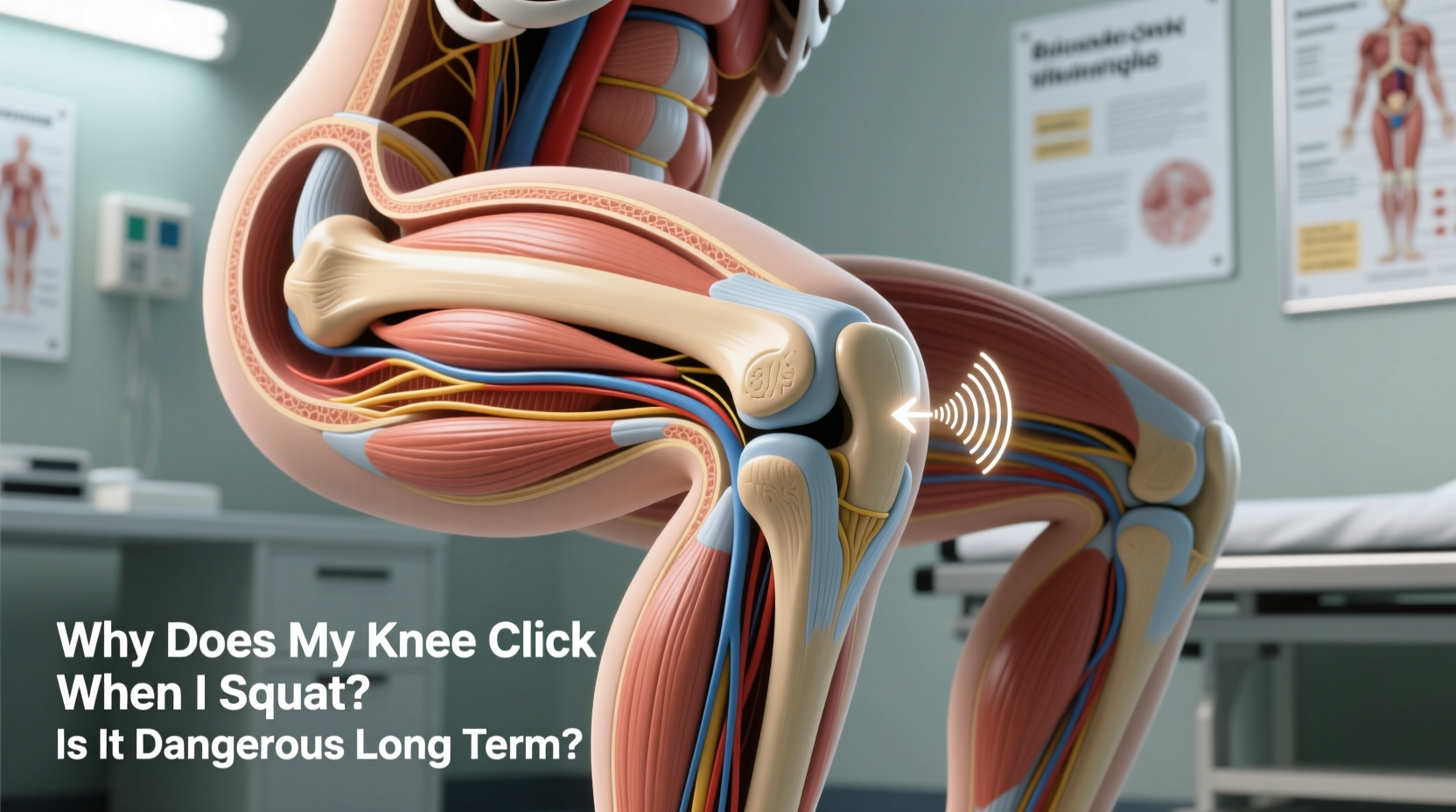
The medical term for joint noises like clicking, cracking, or popping is *crepitus*. In the knee, crepitus occurs due to several mechanical and physiological factors. Most of these are benign, especially if no pain or dysfunction is present.
One of the most common explanations is **cavitation**—the formation and collapse of gas bubbles within the synovial fluid that lubricates the joint. When you squat, changes in joint pressure can cause these bubbles to burst, producing a popping sound. This is similar to what happens when someone cracks their knuckles.
Another frequent cause is **tendon or ligament movement**. As the knee bends and straightens, tendons such as the patellar tendon or iliotibial (IT) band may shift slightly over bony prominences. This movement can create a snapping sensation or audible click, particularly if the tissues are tight or slightly misaligned.
In some cases, the cartilage surface under the kneecap (patella) may not glide smoothly over the femur. This condition, known as patellar maltracking, leads to uneven pressure and friction, resulting in noise during motion. While this might not hurt initially, it can contribute to wear over time.
When Is Knee Clicking a Cause for Concern?
Not all knee sounds are equal. The key factor in determining whether clicking is problematic lies in accompanying symptoms. Here’s how to assess risk:
- Pain: Clicking with sharp or persistent pain, especially during or after activity, suggests tissue irritation or damage.
- Swelling: Inflammation around the joint may indicate injury or degeneration.
- Instability: Feeling like the knee might give out or buckle requires evaluation.
- Reduced Range of Motion: Difficulty fully bending or straightening the knee could point to internal derangement.
- Repetition and Progression: If the clicking becomes more frequent or louder over time, especially with discomfort, it warrants attention.
Structural issues such as meniscus tears, cartilage defects, or early osteoarthritis can manifest initially as intermittent clicking. A torn meniscus, for example, may create a flap of tissue that catches during movement, causing both noise and pain. Similarly, articular cartilage damage can lead to rough surfaces grinding against each other.
“Crepitus without symptoms is usually nothing to worry about. But once pain enters the picture, it’s time to investigate further.” — Dr. Alan Reyes, Sports Medicine Physician
Common Causes of Knee Clicking During Squatting
Squatting places significant load and range of motion demands on the knee joint, making it a common trigger for audible feedback. Below are the most frequent contributors:
| Cause | Description | Symptoms Beyond Clicking |
|---|---|---|
| Gas Cavitation | Release of nitrogen bubbles in synovial fluid | None – isolated pop, non-painful |
| Tendon Snapping | Patellar or IT band moving over bone | Mild discomfort, localized to one side |
| Patellar Maltracking | Kneecap not gliding centrally in groove | Front-of-knee pain, worsened by stairs |
| Meniscus Tear | Ripped cartilage cushion between bones | Pain, locking, swelling, catching |
| Chondromalacia | Softening or breakdown of cartilage under kneecap | Aching after sitting, grinding sensation |
| Early Osteoarthritis | Joint surface degeneration | Stiffness, swelling, activity-related pain |
Among athletes and fitness enthusiasts, improper squat mechanics can exacerbate these conditions. Poor alignment—such as knees caving inward (valgus collapse)—increases stress on the medial compartment and patellofemoral joint, potentially accelerating wear.
Mini Case Study: Recreational Lifter Experiences Knee Clicks
Mark, a 32-year-old office worker who started weight training six months ago, began noticing a consistent click in his right knee during back squats. Initially, he ignored it because there was no pain. Over time, however, he developed a dull ache beneath the kneecap, especially after leg day.
After consulting a physical therapist, Mark learned he had mild chondromalacia patellae caused by weak vastus medialis obliquus (VMO) muscles and tight lateral structures. His squat form also showed excessive knee valgus. With targeted strengthening, soft tissue work, and technique correction, his symptoms improved within eight weeks, and the clicking diminished significantly.
This case illustrates how seemingly minor biomechanical imbalances can evolve into clinical issues if unaddressed—even in otherwise healthy individuals.
Long-Term Risks of Ignoring Painful Knee Clicking
Occasional, pain-free clicking poses minimal long-term danger. However, chronic symptomatic crepitus can lead to progressive joint deterioration. The primary concern is accelerated cartilage wear, which increases the risk of developing osteoarthritis later in life.
Cartilage has limited regenerative capacity. Once damaged, the body cannot fully repair it. Repetitive microtrauma from poor tracking, muscle imbalances, or untreated injuries can create a cycle of inflammation, degeneration, and functional decline.
Studies show that individuals with persistent patellofemoral pain and crepitus are more likely to exhibit cartilage changes visible on MRI, even in their 30s and 40s. While this doesn’t mean everyone will develop arthritis, it highlights the importance of early intervention.
Additionally, compensatory movement patterns—like shifting weight to one leg or avoiding deep knee bends—can lead to secondary problems in the hips, lower back, or opposite knee. These adaptations reduce overall mobility and increase injury risk across the kinetic chain.
Do’s and Don’ts for Knee Joint Health
| Do’s | Don’ts |
|---|---|
| Strengthen quadriceps, hamstrings, and glutes | Ignore persistent knee pain |
| Improve ankle and hip mobility | Continue painful exercises without modification |
| Use proper squatting technique | Overload weight before mastering form |
| Warm up before workouts | Train through sharp joint pain |
| Seek professional assessment if symptoms persist | Self-diagnose based on internet research |
Step-by-Step Guide to Addressing Knee Clicking
If you’re experiencing knee clicking—especially with discomfort—follow this structured approach to identify and resolve the issue:
- Assess Symptoms Honestly
Note when the clicking occurs, whether it’s painful, and if any swelling, stiffness, or weakness is present. Track frequency and triggers. - Review Movement Mechanics
Record yourself squatting from the front and side. Look for:- Knees collapsing inward
- Excessive forward lean
- Heels lifting off the ground
- Perform Basic Mobility Tests
Check ankle dorsiflexion (knee-over-toe test), hip rotation, and hamstring flexibility. Restrictions here often contribute to knee strain. - Begin Targeted Strengthening
Focus on:- VMO activation (short arc quads at 30°)
- Glute medius (clamshells, lateral band walks)
- Hamstring and core stability (bridges, dead bugs)
- Modify Exercise Routine Temporarily
Reduce depth or load in squats. Substitute with split squats, step-ups, or leg presses to maintain strength while decreasing irritation. - Consult a Professional
If symptoms don’t improve within 2–3 weeks, see a physical therapist or sports medicine specialist. Imaging may be needed to rule out structural damage.
FAQ: Common Questions About Knee Clicking
Is knee clicking normal when squatting?
Yes, occasional clicking without pain, swelling, or instability is considered normal. It often results from gas release or soft tissue movement and is not harmful.
Can knee clicking lead to arthritis?
Clicking alone does not cause arthritis. However, if it stems from cartilage damage, poor alignment, or repeated trauma, those underlying factors can increase the risk of joint degeneration over time.
Should I stop squatting if my knee clicks?
Only if it’s painful or accompanied by other symptoms. Otherwise, focus on improving form, mobility, and strength. Eliminating squats entirely may weaken supporting muscles and worsen the issue long-term.
Conclusion: Take Control of Your Knee Health
Hearing your knee click when you squat doesn’t automatically mean something is wrong. But dismissing persistent or painful symptoms can compromise joint longevity. The knee is a complex hinge joint designed for stability and motion—when mechanics falter, even small imbalances can snowball into larger problems.
The best defense is proactive care: build balanced strength, maintain flexibility, and move with awareness. Pay attention to your body’s signals, refine your technique, and don’t hesitate to seek expert guidance when needed. Joint health isn’t just about avoiding injury—it’s about preserving function for decades to come.




 浙公网安备
33010002000092号
浙公网安备
33010002000092号 浙B2-20120091-4
Comments
No comments yet. Why don't you start the discussion?