
Knee clicking during squats is a surprisingly common experience. Whether you're a seasoned athlete, a weekend warrior, or someone just starting to incorporate movement into daily life, hearing or feeling a pop, snap, or grind in your knee can be unsettling. While many instances are harmless, others may signal underlying issues that warrant professional evaluation. Understanding the mechanics behind knee noise—and knowing when to take action—can help protect long-term joint health and prevent minor concerns from escalating.
The Science Behind Knee Clicking: What Causes the Noise?
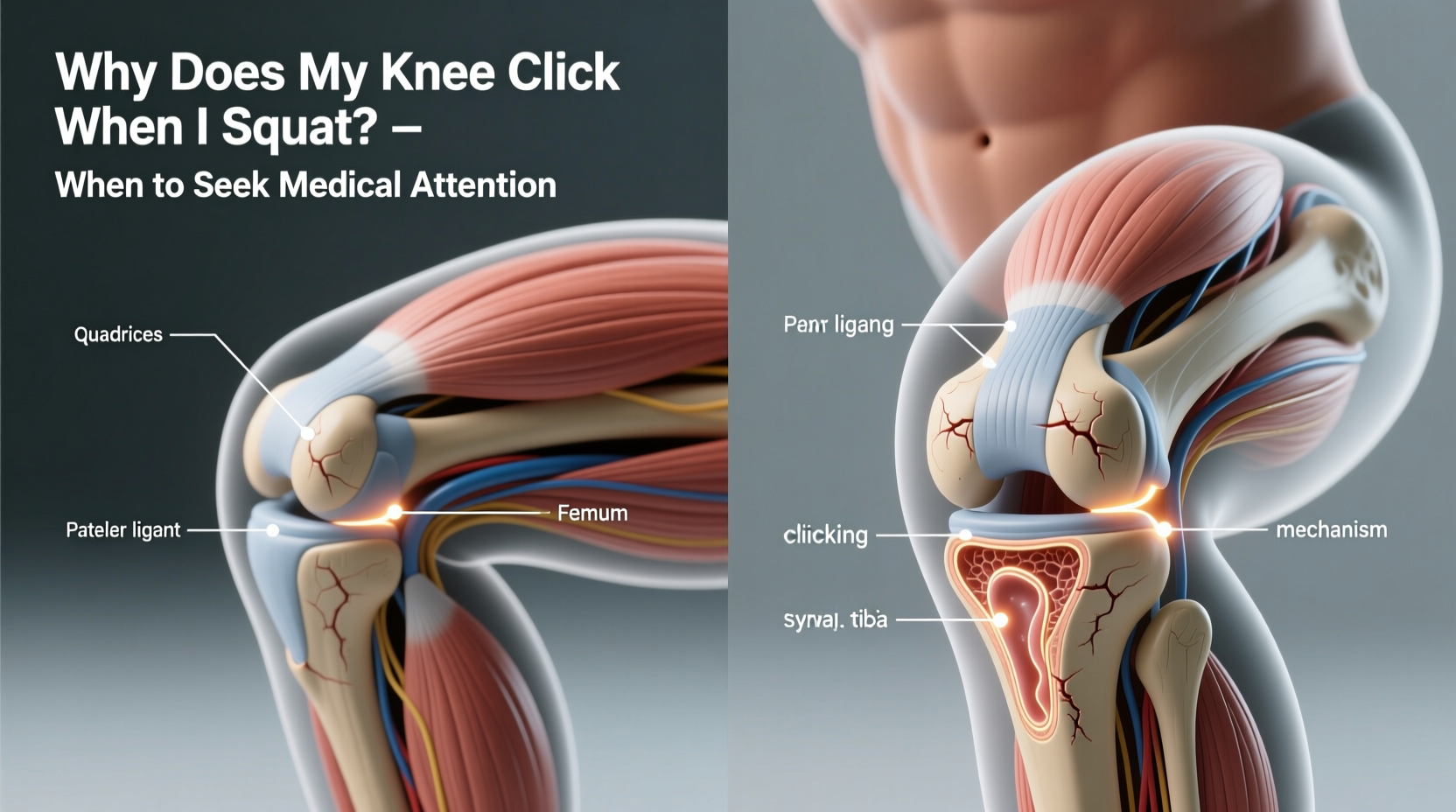
The human knee is a complex hinge joint formed by the femur (thigh bone), tibia (shin bone), and patella (kneecap). It relies on ligaments, tendons, cartilage, and synovial fluid to function smoothly. When you squat, multiple structures shift under load, creating changes in pressure and alignment. Several physiological mechanisms can produce audible or palpable clicks:
- Cavitation: This occurs when nitrogen bubbles form and collapse within the synovial fluid during joint movement. The sound resembles cracking knuckles and is typically painless.
- Soft Tissue Snapping: Tendons or ligaments may momentarily shift over bony prominences as the knee bends, producing a snapping sensation. The iliotibial (IT) band or patellar tendon are common culprits.
- Cartilage Wear or Irregularities: Over time, articular cartilage can develop rough patches or soften due to wear, causing a grinding or grating sensation known as crepitus.
- Plica Syndrome: An internal fold of synovial tissue (plica) may catch during motion, leading to clicking accompanied by mild discomfort.
In most cases, these noises occur without pain or swelling and do not indicate damage. However, context matters. A silent joint isn’t necessarily healthier than a noisy one—but a painful or swollen clicking knee demands closer scrutiny.
When Knee Clicking Is Normal vs. When It's a Warning Sign
Distinguishing between normal biomechanical noise and symptomatic joint dysfunction is essential for timely intervention. Consider the following distinctions:
| Factor | Normal Clicking | Potentially Problematic |
|---|---|---|
| Pain | No pain associated | Pain with or after clicking |
| Swelling | Absent | Noticeable inflammation or stiffness |
| Frequency | Occasional, inconsistent | Repetitive with every squat or movement |
| Function | No impact on strength or mobility | Weakness, instability, or locking sensation |
| History | No prior injury | Previous trauma or repetitive strain |
For example, a recreational lifter who hears an occasional pop during deep squats but experiences no pain, swelling, or loss of motion likely has no cause for concern. Conversely, someone whose knee clicks consistently with sharp pain, especially after a sports injury, should seek assessment.
Common Conditions Linked to Symptomatic Knee Clicking
Several diagnosable conditions may present with clicking as a primary symptom. These include:
- Meniscus Tears: The meniscus acts as a shock absorber between the femur and tibia. A tear—often caused by twisting motions—can create a distinct click or pop, sometimes followed by locking or catching.
- Patellofemoral Pain Syndrome (PFPS): Misalignment or excessive stress on the kneecap can lead to irregular tracking, resulting in crepitus during flexion.
- Chondromalacia Patellae: Softening of the cartilage beneath the kneecap causes grinding sensations, particularly after prolonged sitting or descending stairs.
- Loose Bodies: Fragments of bone or cartilage may break off inside the joint, floating freely and causing intermittent clicking or mechanical blockage.
- Osteoarthritis: Degenerative joint disease leads to cartilage breakdown, increasing friction and producing chronic crepitus.
Mini Case Study: From Benign Click to Meniscus Tear Diagnosis
James, a 34-year-old CrossFit enthusiast, began noticing a soft click in his right knee during back squats. Initially dismissed as normal, the sound became more pronounced over six weeks. He then experienced a sudden “catch” while rising from a deep squat, followed by localized pain and mild swelling. Despite maintaining full range of motion, he felt instability during lateral movements.
After consulting a sports medicine physician, an MRI revealed a bucket-handle tear in the medial meniscus. Arthroscopic surgery repaired the damage, followed by eight weeks of rehabilitation. James returned to training with modified depth and improved warm-up routines. His case illustrates how a seemingly innocuous click can evolve into a significant structural issue if ignored.
“Knee noise alone isn’t diagnostic, but when combined with pain, swelling, or functional limitation, it becomes a red flag worth investigating.” — Dr. Lena Torres, Sports Orthopedic Specialist
Action Plan: What to Do If Your Knee Clicks When You Squat
If you’re concerned about knee clicking, follow this step-by-step approach to assess severity and determine next steps:
- Monitor Symptoms: Track when the clicking occurs, whether it’s painful, and if any swelling, warmth, or instability develops.
- Modify Activity Temporarily: Reduce high-load exercises like deep squats or lunges until symptoms are clarified.
- Assess Range of Motion: Check if you can fully straighten and bend the knee without restriction or discomfort.
- Apply RICE if Needed: For acute discomfort, use Rest, Ice, Compression, and Elevation to reduce inflammation.
- Consult a Professional: See a physical therapist or orthopedic specialist if symptoms persist beyond 7–10 days or worsen.
- Request Imaging if Indicated: X-rays rule out bone abnormalities; MRIs detect soft tissue injuries like meniscal tears.
Checklist: Signs That Warrant Medical Evaluation
- ✅ Pain during or after squatting
- ✅ Swelling or warmth around the joint
- ✅ Feeling of the knee “giving way” or buckling
- ✅ Locking or inability to fully extend the leg
- ✅ Clicking that has recently increased in frequency or intensity
- ✅ History of trauma (e.g., fall, twist, direct impact)
- ✅ Reduced performance or avoidance of certain movements
Prevention and Long-Term Joint Health Strategies
Maintaining knee resilience involves proactive care. Even if current clicking is benign, adopting preventive habits supports joint longevity:
- Strengthen Supporting Muscles: Focus on quadriceps, hamstrings, glutes, and hip abductors to improve tracking and stability.
- Improve Flexibility: Regular stretching of the IT band, calves, and hip flexors reduces tension across the knee.
- Optimize Movement Mechanics: Ensure proper squat form—feet shoulder-width apart, knees aligned over toes, neutral spine.
- Progress Gradually: Avoid rapid increases in weight, volume, or depth during resistance training.
- Maintain Healthy Body Weight: Excess weight amplifies compressive forces on the knee joint.
Additionally, incorporating low-impact cross-training such as swimming or cycling allows for cardiovascular fitness without overloading the knees. Foam rolling and mobility drills before workouts may also reduce tissue tightness contributing to abnormal joint dynamics.
Frequently Asked Questions
Is knee clicking dangerous if there’s no pain?
Generally, no. Painless clicking is often due to cavitation or benign soft tissue movement. As long as there’s no swelling, weakness, or change in function, it’s unlikely to indicate injury. However, monitor for new symptoms over time.
Can strengthening exercises stop my knee from clicking?
They may help—if the clicking stems from muscular imbalances or poor patellar tracking. Targeted strengthening, especially of the vastus medialis obliquus (VMO), can improve kneecap alignment and reduce abnormal movement during squats.
Should I stop squatting if my knee clicks?
Not necessarily. If the movement is pain-free and mechanically sound, continuing with attention to form is usually safe. However, avoid pushing through pain or compensating with altered technique. Consider reducing depth temporarily while addressing potential contributors.
Conclusion: Listen to Your Body, But Don’t Panic
Knee clicking during squats is more common than many realize, and in most cases, it’s nothing to fear. The human body is full of noises—some simply reflect normal physiology in action. However, pain, swelling, instability, or mechanical symptoms like locking are signals that shouldn’t be ignored. Early assessment can differentiate between a harmless quirk and a condition requiring treatment.
By understanding the causes, monitoring symptoms carefully, and taking preventive steps, you can maintain strong, functional knees for years to come. If in doubt, consult a healthcare provider specializing in musculoskeletal health. Your joints carry you through life—give them the attention they deserve.




 浙公网安备
33010002000092号
浙公网安备
33010002000092号 浙B2-20120091-4
Comments
No comments yet. Why don't you start the discussion?