
Knee clicking during squats is one of the most common concerns among gym-goers, athletes, and even people performing daily activities like climbing stairs or standing up from a chair. While occasional popping or cracking sounds may be harmless, persistent clicking—especially when accompanied by pain, swelling, or instability—can signal an underlying issue that requires professional attention. Understanding the mechanics behind knee noise and knowing when to consult a physiotherapist can prevent minor discomfort from turning into chronic injury.
The knee joint is complex, involving bones, ligaments, tendons, cartilage, and synovial fluid. Any disruption in this system can lead to audible or palpable sensations during movement. This article explores the science behind knee clicking, differentiates between benign and concerning symptoms, and provides clear guidance on when and why to seek help from a physiotherapist.
What Causes Knee Clicking During Squats?
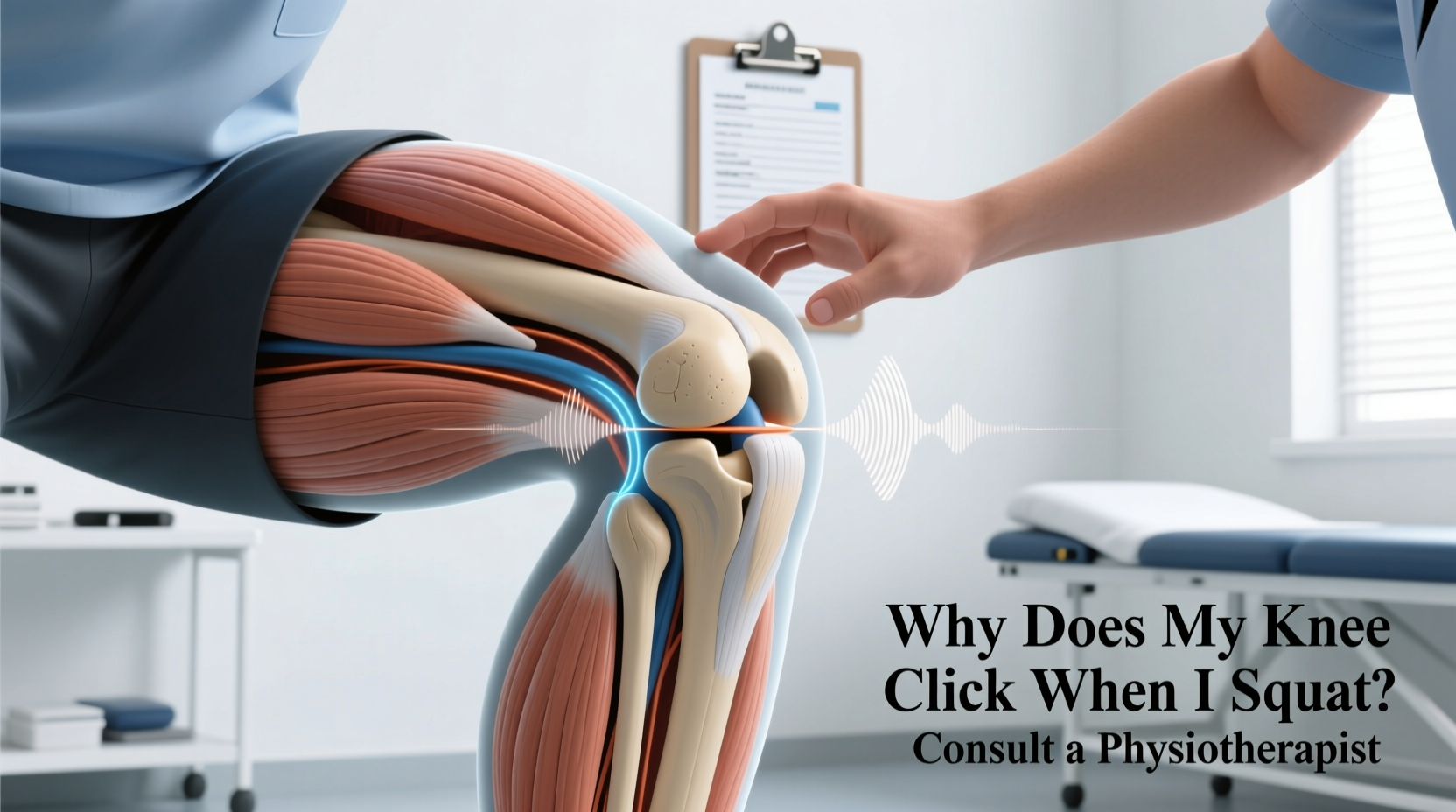
The sound of a knee \"clicking\" or \"popping\" when squatting is medically referred to as crepitus. It can originate from several sources within the joint:
- Gas release in synovial fluid: Tiny bubbles form in the lubricating fluid inside the joint. When pressure changes during movement—like bending the knee—the bubbles burst, creating a popping sound. This is usually painless and harmless.
- Patellar tracking issues: The kneecap (patella) glides over the femur during flexion and extension. If it shifts slightly off its normal path due to muscle imbalances or alignment issues, it can create a snapping or grinding sensation.
- Cartilage wear or damage: Over time, especially with repetitive stress or aging, the smooth cartilage under the patella or between the femur and tibia can become roughened or worn. As the joint moves, irregular surfaces rub together, causing noise.
- Tendon or ligament movement: Tendons like the iliotibial (IT) band or quadriceps tendon may snap over bony prominences during motion, producing a clicking sound.
- Meniscus tears: A torn meniscus—a C-shaped piece of cartilage acting as a shock absorber—can cause mechanical catching or locking in the joint, often with audible clicks.
Not all knee noise is created equal. The key factor isn't the sound itself but whether it’s associated with other symptoms.
When Is Knee Clicking a Cause for Concern?
Sporadic, pain-free knee sounds are typically not dangerous. However, certain red flags indicate that the clicking may stem from a structural or functional problem requiring assessment:
- Pain localized around the kneecap or deep in the joint
- Swelling or warmth after activity
- Feeling of the knee “giving way” or buckling
- Stiffness lasting more than 30 minutes after rest
- Repetitive catching or locking during movement
- Clicking that worsens over time or begins after an injury
A 2021 study published in the Journal of Orthopaedic & Sports Physical Therapy found that individuals reporting painful knee crepitus were significantly more likely to show early signs of patellofemoral osteoarthritis on imaging, even if no trauma had occurred. This underscores the importance of symptom context over isolated noise.
“Crepitus alone isn’t diagnostic, but when combined with pain on stair descent or prolonged sitting, it often points to patellofemoral dysfunction.” — Dr. Lena Torres, MSK Physiotherapist and Biomechanics Researcher
Common Conditions Linked to Painful Knee Clicking
Beyond general wear and tear, several specific conditions can manifest as clicking during squats. Identifying patterns helps determine the root cause:
1. Patellofemoral Pain Syndrome (PFPS)
Also known as “runner’s knee,” PFPS involves irritation beneath or around the kneecap. Muscle imbalances—particularly weak glutes or tight lateral structures—can pull the patella out of alignment, leading to uneven contact and clicking. Pain typically increases with prolonged sitting, descending stairs, or deep squats.
2. Meniscal Tears
The menisci absorb shock in the knee. A tear, often from twisting motions or degeneration, can create a flap of tissue that catches during flexion. This results in sharp pain, swelling, and a distinct click or pop at a specific point in the range of motion.
3. Chondromalacia Patellae
This condition refers to softening or breakdown of the cartilage behind the kneecap. Early stages may only produce noise; later stages involve dull, aching pain aggravated by activity.
4. Plica Syndrome
Synovial folds (plicae) in the knee can become inflamed or thickened, causing them to snap over the femur during movement. Often mistaken for a meniscus tear, plica syndrome produces intermittent clicking and medial knee pain.
5. Osteoarthritis
In older adults or those with prior injuries, progressive joint degeneration leads to bone-on-bone contact and irregular joint surfaces. Clicking, grinding, stiffness, and reduced mobility are hallmark features.
| Condition | Typical Symptoms | Aggravating Activities | Relief Strategies |
|---|---|---|---|
| Patellofemoral Pain Syndrome | Dull anterior knee pain, clicking, stiffness after sitting | Squats, stairs, running downhill | Glute strengthening, foot orthotics, activity modification |
| Meniscus Tear | Sharp pain, locking, swelling, clicking at mid-bend | Twisting, pivoting, deep knee bends | Rest, physiotherapy, possible arthroscopy |
| Chondromalacia Patellae | Grinding under kneecap, ache after use | Extended walking, kneeling | Quadriceps rehab, anti-inflammatory measures |
| Plica Syndrome | Snapping, medial knee pain, swelling | Repeated knee flexion | Stretching, corticosteroid injection, surgery if refractory |
| Osteoarthritis | Stiffness, grating, pain with weight-bearing | Walking long distances, standing | Weight management, low-impact exercise, NSAIDs |
When Should You See a Physiotherapist?
While self-monitoring is useful, delaying professional evaluation can allow correctable dysfunctions to progress into irreversible damage. Here are clear indicators it’s time to book a session with a registered physiotherapist:
- Pain persists beyond 7–10 days despite rest and basic self-care.
- Clicking is accompanied by swelling that recurs after activity.
- You feel instability—your knee gives out or feels unreliable during movement.
- Range of motion is limited, such as inability to fully straighten or bend the knee.
- There’s a history of trauma, such as a fall, twist, or sports injury, even if it seemed minor at the time.
- You’re modifying your routine—avoiding squats, stairs, or exercise due to discomfort.
Physiotherapists are trained to perform detailed musculoskeletal assessments, including gait analysis, strength testing, joint mobility checks, and functional movement screens. They can differentiate between muscular, neurological, and structural causes of knee noise and design targeted rehabilitation programs.
Mini Case Study: Resolving Chronic Knee Clicking in a Fitness Trainer
James, a 34-year-old personal trainer, noticed his right knee began clicking during back squats six months ago. Initially painless, the sound grew louder and was soon followed by a dull ache behind the kneecap. He ignored it, assuming it was normal wear. Over time, he started avoiding deep squats and lunges due to increasing discomfort.
After three months of worsening symptoms, he consulted a physiotherapist. Assessment revealed weak gluteus medius muscles, excessive foot pronation, and lateral patellar tracking. His vastus lateralis was tight, pulling the kneecap outward during flexion.
The treatment plan included:
- Soft tissue release for the IT band and quadriceps
- Targeted glute and hip abductor strengthening
- Taping to improve patellar alignment during workouts
- Gait retraining and footwear assessment
Step-by-Step Guide to Managing Knee Clicking at Home
Before seeing a professional, you can take proactive steps to assess and potentially reduce symptoms:
- Stop aggravating activities temporarily. Avoid deep squats, lunges, or high-impact exercise until pain subsides.
- Apply ice for 15–20 minutes after activity if swelling or warmth is present.
- Perform gentle mobility drills: Heel slides, straight leg raises, and ankle pumps promote circulation without stressing the joint.
- Check your footwear. Worn-out shoes or poor arch support can alter lower limb alignment.
- Test your movement pattern. Record yourself squatting from the side and front. Look for knees caving inward (valgus collapse), which suggests muscle imbalance.
- Begin low-load strengthening: Clamshells, bridges, and step-ups activate stabilizing muscles without compression.
- Maintain healthy body weight. Every extra kilogram increases compressive forces on the knee by up to four times during squatting.
FAQ: Common Questions About Knee Clicking
Is knee clicking dangerous if there’s no pain?
Generally, no. Painless crepitus is common and often related to gas release or soft tissue movement. However, if new or sudden, it’s wise to monitor for emerging symptoms.
Can physiotherapy fix knee clicking without surgery?
Yes, in most cases. Over 80% of non-traumatic knee conditions respond well to conservative care, including manual therapy, neuromuscular re-education, and progressive loading exercises.
How long does it take to recover from patellofemoral dysfunction?
With consistent physiotherapy, most people experience significant improvement within 6–12 weeks. Full recovery depends on adherence to exercises and addressing biomechanical contributors.
Final Checklist: Know When to Seek Help
- ✅ Knee clicks occasionally with no pain or swelling → Monitor
- ✅ Clicking + mild soreness after intense workout → Rest, ice, modify activity
- ✅ Clicking with sharp pain or locking → See a physiotherapist promptly
- ✅ Knee feels unstable or gives way → Do not ignore—seek assessment
- ✅ Symptoms persist beyond two weeks despite self-care → Book professional evaluation
Take Action for Long-Term Joint Health
Your knees are designed to handle immense loads, but they rely on proper alignment, balanced musculature, and intelligent movement habits. Ignoring persistent clicking—even without severe pain—can set the stage for accelerated joint wear. A physiotherapist doesn’t just treat symptoms; they identify the root cause and equip you with tools to move safely and confidently for years to come.
If you’ve been wondering whether your knee noise is normal, the answer lies in the details: location, timing, frequency, and associated symptoms. Don’t wait for pain to dictate your next step. Early intervention preserves function, enhances performance, and keeps you active without limitations.




 浙公网安备
33010002000092号
浙公网安备
33010002000092号 浙B2-20120091-4
Comments
No comments yet. Why don't you start the discussion?