
Knee clicking during walking is a surprisingly common experience. Many people hear or feel a popping, snapping, or grinding sensation with each step and immediately worry about serious joint damage. While in some cases, knee crepitus—medical terminology for joint noise—can signal an underlying issue, it's often harmless. Understanding the root causes, recognizing red flags, and knowing which stretches and habits support joint health can make all the difference between persistent discomfort and long-term knee resilience.
The knee is one of the most complex joints in the body, bearing significant weight and facilitating movement across multiple planes. When air bubbles pop within the synovial fluid, tendons shift over bony structures, or cartilage wears unevenly, audible clicks can occur. The key is not just whether your knee clicks, but whether it’s accompanied by pain, swelling, instability, or reduced mobility. This article explores the science behind knee sounds, identifies potential causes, and provides practical, evidence-based stretches and lifestyle adjustments to maintain knee function.
Understanding Knee Crepitus: What Causes the Click?
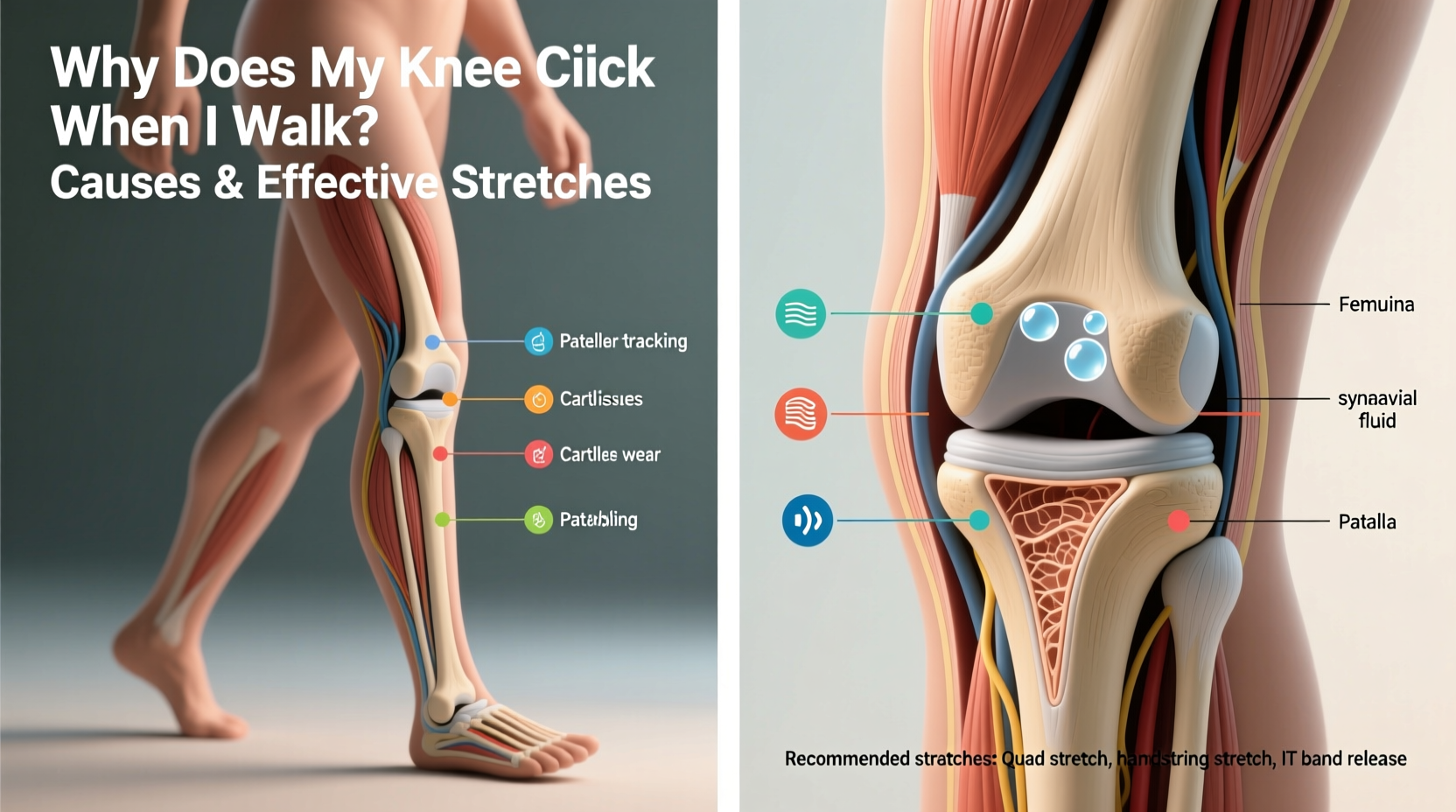
The sound of a knee clicking isn’t inherently dangerous. In fact, studies show that up to 90% of people experience some form of joint noise at some point, particularly in the knees. However, the origin of the sound determines whether intervention is necessary.
- Gas release in the joint: Synovial fluid lubricates the knee joint and contains gases like oxygen, nitrogen, and carbon dioxide. Sudden changes in joint pressure—such as bending or extending the knee—can cause these gases to form and rapidly collapse tiny bubbles, producing a popping sound. This is similar to what happens when you crack your knuckles.
- Tendon or ligament movement: As tendons like the patellar tendon or iliotibial (IT) band glide over bony prominences, they may snap or flick, creating a clicking sensation. This is especially common during repetitive motions like walking or climbing stairs.
- Cartilage wear (chondromalacia): Over time, the smooth cartilage on the underside of the kneecap (patella) can soften or become roughened due to overuse, misalignment, or age. As it moves against the femur, it may produce a grinding or grating sound known as crepitus.
- Meniscus tears: The menisci are C-shaped pieces of cartilage that cushion the knee. A tear—often from twisting or degeneration—can create a flap of tissue that catches during movement, resulting in clicking, locking, or catching sensations.
- Osteoarthritis: In older adults, progressive cartilage loss leads to bone-on-bone contact, inflammation, and irregular joint surfaces, all of which contribute to audible grinding or cracking.
“Not all joint noises are created equal. If there’s no pain or dysfunction, knee clicking is usually benign. But if it’s paired with swelling or giving way, it deserves clinical evaluation.” — Dr. Lena Patel, Sports Medicine Physician
When Should You Be Concerned About Knee Clicking?
Silent symptoms are often more telling than the noise itself. Occasional clicking without pain, swelling, or limitation is typically not a cause for concern. However, certain warning signs indicate the need for professional assessment.
Red Flags That Warrant Medical Attention
- Pain during or after clicking
- Swelling or warmth around the joint
- Feeling of instability or “giving out”
- Locking or inability to fully straighten the knee
- Reduced range of motion
- Clicking that worsens over time
For example, a sudden onset of clicking following a sports injury—especially with a history of twisting or impact—may suggest a meniscal tear or ligament strain. Similarly, persistent morning stiffness combined with grinding could point to early osteoarthritis.
Mini Case Study: Runner with Recurring Knee Clicks
Mark, a 34-year-old recreational runner, began noticing a consistent clicking in his right knee during long runs. Initially painless, the sound became bothersome after increasing his weekly mileage. After six weeks, he developed mild pain beneath the kneecap, especially when running downhill. A physical therapist diagnosed him with early-stage chondromalacia patella caused by muscle imbalances and overuse. With targeted strengthening and stretching, Mark resolved both the pain and clicking within three months—without stopping running entirely.
Effective Stretches to Reduce Knee Clicking
Many cases of knee clicking stem from muscular tightness, imbalance, or poor tracking of the patella. Stretching key lower-body muscles improves joint alignment, reduces stress on connective tissues, and enhances overall biomechanics.
The following stretches should be performed daily or after physical activity. Hold each stretch for 30 seconds and repeat 2–3 times per side. Avoid bouncing; focus on steady, deep breathing.
1. Quadriceps Stretch
Stand on one leg, grab the opposite ankle, and gently pull your heel toward your glutes. Keep your knees close together and avoid arching your back. This stretch targets the front thigh muscles, which can pull the kneecap upward if overly tight.
2. Hamstring Stretch (Seated)
Sit on the floor with one leg extended and the other bent inward. Reach toward the toes of the extended leg while keeping your back straight. Tight hamstrings alter pelvic tilt and affect knee mechanics indirectly.
3. IT Band Stretch
Stand sideways next to a wall, cross your non-support leg behind the other, and lean your hip toward the wall. You should feel a stretch along the outer thigh. The IT band runs from the hip to the knee and can snap over the lateral femoral condyle during walking.
4. Calf Stretch (Gastrocnemius and Soleus)
Face a wall, place hands on it, and step one foot back. Keep the rear heel down and knee straight to stretch the gastrocnemius. Then, slightly bend the back knee to target the deeper soleus muscle. Limited ankle dorsiflexion increases knee strain during gait.
5. Hip Flexor Stretch (Lunge Position)
Kneel on one knee with the other foot forward in a lunge. Tuck your pelvis slightly and press hips forward. This opens up the front of the hip, where tight psoas and rectus femoris muscles can contribute to abnormal patellar tracking.
Strengthening Exercises to Support Knee Stability
Stretching alone isn’t enough. Balanced strength in the quadriceps, hamstrings, glutes, and hip abductors ensures the knee moves smoothly through its range of motion. Weak gluteus medius muscles, for instance, can lead to inward knee collapse (valgus), increasing friction under the patella.
Recommended Strengthening Routine (3x per week)
- Clamshells: Lie on your side with knees bent. Keeping feet together, lift the top knee like a clamshell opening. Targets gluteus medius.
- Wall Sits: Lean back against a wall and slide down into a seated position with knees at 90 degrees. Builds quad endurance without impact.
- Step-Ups: Use a low stair or platform. Step up with one leg, then bring the other up. Step down in reverse. Improves coordination and single-leg stability.
- Glute Bridges: Lie on your back, knees bent, feet flat. Lift hips off the floor by squeezing glutes. Hold for 2 seconds before lowering.
- Straight Leg Raises: Lie on your back, one leg bent, the other straight. Lift the straight leg to the height of the opposite knee. Strengthens quads without compressing the joint.
Progress slowly. Start with 2 sets of 10–12 reps and increase as tolerated. Stop any exercise that causes sharp pain or increased clicking with discomfort.
Do’s and Don’ts for Managing Knee Clicking
| Do | Don’t |
|---|---|
| Warm up before walking or exercising | Ignore persistent pain or swelling |
| Wear supportive, well-cushioned shoes | Overload your knees with sudden increases in activity |
| Practice proper squatting and stair-climbing form | Lock your knees when standing |
| Incorporate low-impact cardio (e.g., swimming, cycling) | Continue high-impact activities if pain worsens |
| Maintain a healthy body weight | Rely solely on painkillers without addressing root causes |
When to See a Healthcare Professional
If home care doesn’t improve symptoms within 4–6 weeks, or if new symptoms develop, consult a physical therapist, orthopedic specialist, or sports medicine doctor. Diagnostic tools such as MRI or ultrasound can identify meniscal tears, ligament damage, or cartilage defects.
Early intervention prevents minor issues from progressing into chronic conditions. For instance, untreated patellar maltracking can accelerate cartilage wear, leading to early-onset arthritis.
Frequently Asked Questions
Is knee clicking dangerous if there’s no pain?
Generally, no. Painless clicking is often due to normal gas release or soft tissue movement. However, monitor for changes. If pain, swelling, or stiffness develops later, reassessment is recommended.
Can losing weight reduce knee clicking?
Yes. Every pound of body weight exerts 3–4 pounds of force on the knee during walking. Weight loss reduces joint load, improves alignment, and decreases mechanical stress that contributes to cartilage wear and tendon snapping.
Should I stop exercising if my knee clicks?
Not necessarily. If the clicking is pain-free, most activities are safe. Modify exercises that aggravate symptoms—like deep squats or lunges—and focus on form and control. Low-impact training is often beneficial.
Conclusion: Take Control of Your Knee Health
Knee clicking when walking doesn’t have to be a lifelong nuisance or a sign of inevitable decline. With awareness, targeted stretching, and smart strengthening, most people can reduce or eliminate bothersome joint sounds. The goal isn’t silence—it’s function. A knee that moves freely, supports your body, and allows you to stay active is far more important than whether it makes a sound.
Start integrating the stretches and habits outlined here. Listen to your body, respect pain signals, and don’t hesitate to seek expert guidance when needed. Small, consistent actions today build stronger, quieter knees tomorrow.




 浙公网安备
33010002000092号
浙公网安备
33010002000092号 浙B2-20120091-4
Comments
No comments yet. Why don't you start the discussion?