
It’s a familiar sound—creaks, pops, or snaps in the knee as you lower into a squat. For many people, this is just part of their daily movement routine, especially during exercise or after sitting for long periods. But when should a simple knee crack raise concern? Understanding the mechanics behind joint noise and recognizing warning signs can help differentiate between harmless crepitus and potential underlying issues.
Knee cracking, medically referred to as crepitus, is common and often benign. However, when accompanied by pain, swelling, or instability, it may point to cartilage damage, arthritis, or misalignment. This article breaks down the science behind knee sounds, explores causes, identifies red flags, and offers practical strategies for maintaining knee health.
The Science Behind Knee Cracking
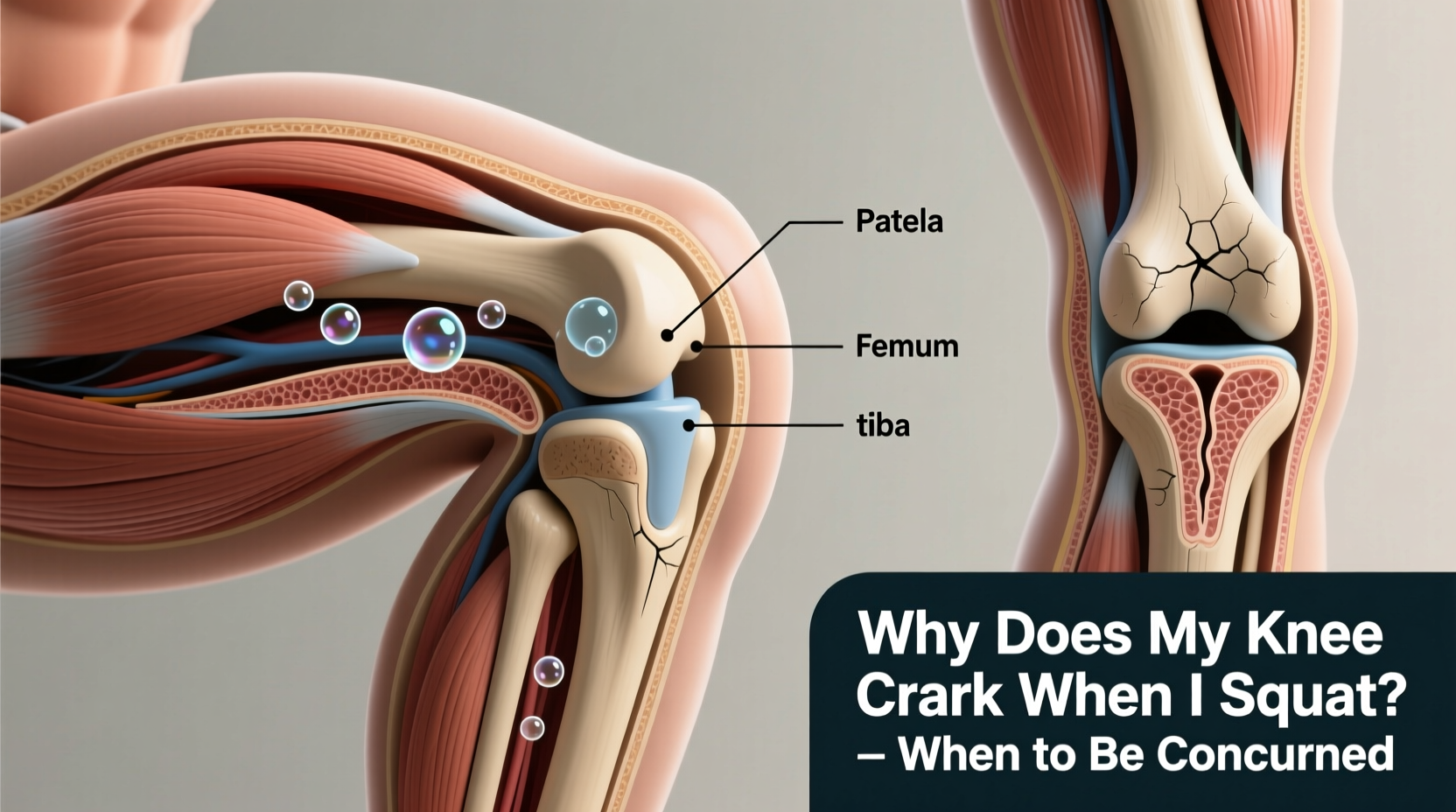
The human joint is a complex system of bones, ligaments, tendons, and synovial fluid. When you move, small gas bubbles can form and collapse within the synovial fluid that lubricates your joints. This process, known as cavitation, produces the popping sound often heard during stretching or squatting.
In the knee, several structures contribute to audible noises:
- Synovial fluid dynamics: Movement shifts pressure in the joint capsule, releasing nitrogen and carbon dioxide bubbles.
- Tendon snapping: Tendons like the patellar or iliotibial (IT) band may shift over bony prominences, creating a snapping sensation.
- Cartilage wear: Roughened surfaces from degeneration can produce grinding noises during motion.
Most of the time, these sounds are painless and temporary—what doctors call \"benign crepitus.\" Studies suggest that up to one-third of asymptomatic individuals experience knee noise without any structural problems.
“Joint sounds alone are not diagnostic. It’s the combination with symptoms like pain, swelling, or locking that warrants further evaluation.” — Dr. Lena Torres, Sports Medicine Physician
Common Causes of Knee Popping During Squatting
Squatting places significant load on the knee joint, engaging the quadriceps, hamstrings, and patellofemoral mechanism. The increased pressure and range of motion make it a prime activity for triggering audible joint responses.
1. Cavitation in the Joint
As the squat compresses the knee joint, pressure changes in the synovial fluid can cause rapid bubble formation and collapse. This is typically a single pop at the beginning of the movement and doesn’t recur until the joint has rested.
2. Patellar Tracking Issues
If the kneecap (patella) doesn’t glide smoothly over the femur due to muscle imbalances or alignment issues, it may shift slightly and snap back into place. This often creates a repetitive clicking sound during flexion and extension.
3. Meniscus Degeneration or Tears
The meniscus acts as a shock absorber between the tibia and femur. With age or injury, fraying or tearing can occur. A torn meniscus may catch during movement, producing a consistent pop or click—sometimes accompanied by pain or catching sensations.
4. Arthritis-Related Changes
Osteoarthritis leads to cartilage breakdown, resulting in rough joint surfaces. As the knee bends, these irregularities grind against each other, creating a grating or crunching sound (crepitus). Unlike occasional pops, arthritic crepitus tends to worsen with activity and is often paired with stiffness.
5. Ligamentous Laxity or Scar Tissue
Previous injuries or surgeries can alter joint mechanics. Scar tissue or loose ligaments may allow slight shifts in joint components, leading to snapping or popping, particularly if scar bands rub over bone.
When to Be Concerned: Red Flags to Watch For
Not all knee noise requires medical attention. However, certain symptoms indicate that the sound is more than just mechanical noise—it may signal tissue damage or progressive joint disease.
| Symptom | May Indicate | Action Step |
|---|---|---|
| Pain with each pop | Meniscus tear, tendonitis, or early arthritis | See a physical therapist or orthopedic specialist |
| Swelling after activity | Inflammation, synovitis, or internal derangement | Rest, ice, and consult a doctor if persistent |
| Feeling of instability or “giving way” | Ligament injury (e.g., ACL) or severe cartilage loss | Seek immediate evaluation; avoid high-risk movements |
| Locking or catching | Mechanical block from meniscal fragment or loose body | Requires imaging (MRI) and possible intervention |
| Progressive worsening over weeks | Chronic degeneration or overuse injury | Modify activity and initiate rehab program |
If you experience any of these symptoms consistently, especially after minor exertion, professional assessment is recommended. Early diagnosis can prevent long-term joint damage and preserve mobility.
Real-World Example: A Runner’s Experience
Mark, a 38-year-old recreational runner, began noticing a sharp pop in his right knee during deep squats and downhill running. Initially painless, the sound became more frequent over six months. Eventually, he started feeling a twinge behind the kneecap, particularly after long runs.
After consulting a sports medicine clinic, an MRI revealed mild chondromalacia—softening of the cartilage under the patella—due to overtraining and weak hip stabilizers. His treatment plan included targeted strengthening, gait analysis, and a temporary reduction in mileage. Within three months, both the pain and the popping decreased significantly.
Mark’s case illustrates how seemingly harmless joint noise can evolve into a functional issue if ignored. Addressing biomechanical imbalances early prevented further deterioration.
Step-by-Step Guide to Assessing and Managing Knee Noise
If your knee cracks when you squat, follow this structured approach to determine whether it’s normal or needs attention:
- Observe the context: Does the sound happen only once per movement cycle, or repeatedly throughout the squat?
- Note associated symptoms: Record any pain, swelling, warmth, or instability. Use a journal for consistency.
- Test function: Perform bodyweight squats, step-ups, and single-leg balances. Note difficulty or discomfort.
- Evaluate training load: Have you recently increased intensity, volume, or changed footwear?
- Try conservative measures: Incorporate mobility drills, foam rolling, and quad/hip strengthening for 2–4 weeks.
- Reassess: If symptoms persist or worsen, schedule an appointment with a physical therapist or orthopedic specialist.
- Consider imaging: X-rays or MRI may be needed if mechanical symptoms (locking, catching) are present.
This method helps filter out benign noise from potentially serious conditions, empowering informed decisions about care.
Prevention and Long-Term Knee Health Strategies
Maintaining healthy knees isn’t just about avoiding injury—it’s about optimizing joint mechanics through consistent habits.
Strengthen Supporting Muscles
The quadriceps, hamstrings, glutes, and hip abductors play critical roles in stabilizing the knee. Weakness in any of these areas can lead to abnormal tracking and increased stress.
Improve Flexibility and Mobility
Tightness in the IT band, calves, or hip flexors alters force distribution across the knee. Regular stretching and soft-tissue work help maintain balanced tension.
Optimize Movement Technique
Poor squat or landing mechanics increase shear forces on the patella. Film yourself or work with a coach to correct form issues like knee valgus (inward collapse).
Avoid Overloading Too Quickly
Rapid increases in activity—such as starting a new workout program or ramping up running distance—can overwhelm joint tissues. Follow the 10% rule: don’t increase weekly volume by more than 10%.
FAQ: Common Questions About Knee Cracking
Is it bad to crack your knees like knuckles?
No, occasional cracking without pain is not harmful. Unlike popular myth, joint popping does not cause arthritis. The concern arises only when pain, swelling, or dysfunction accompany the sound.
Can knee crepitus go away?
Yes, especially if caused by muscular imbalances or poor mechanics. With proper strengthening, flexibility work, and activity modification, many people see improvement within weeks to months.
Should I stop squatting if my knees crack?
Not necessarily. If there’s no pain or swelling, continue but focus on perfecting form and building strength. However, if symptoms develop, pause and reassess before resuming loaded movements.
Checklist: What to Do If Your Knees Crack When You Squat
- ☐ Determine if the sound is painful or painless
- ☐ Check for swelling, redness, or warmth around the joint
- ☐ Evaluate recent changes in activity level or footwear
- ☐ Perform bodyweight movement tests (squat, lunge, step-up)
- ☐ Begin a basic strengthening program focusing on quads, glutes, and hips
- ☐ Incorporate daily stretching for hamstrings, quads, and calves
- ☐ Monitor symptoms for 2–4 weeks
- ☐ Consult a healthcare provider if pain persists or worsens
Conclusion: Listen to Your Body, Not Just the Sound
Knee cracking during squats is usually a normal physiological phenomenon. The key lies in distinguishing harmless noise from signals of underlying dysfunction. Pain, swelling, instability, or mechanical symptoms are not to be ignored—they are your body’s way of asking for attention.
By understanding the causes, applying preventive strategies, and knowing when to seek help, you can maintain strong, resilient knees for years to come. Don’t wait for pain to become chronic. Take proactive steps today to support your joint health and keep moving confidently.




 浙公网安备
33010002000092号
浙公网安备
33010002000092号 浙B2-20120091-4
Comments
No comments yet. Why don't you start the discussion?